A telecoms lawyer who supports South Africa’s 30% ownership requirement for telecoms licensees believes business group Sakeliga’s court challenge has put Icasa in a difficult spot.
Sakeliga asked the high court in Pretoria this week to set aside the ICT sector regulator’s decision that it cannot implement communications minister Solly Malatsi’s policy direction on equity-equivalent investment programmes (EEIPs) without a change in the law. EEIPs would let multinationals such as Elon Musk’s Starlink invest in skills and local businesses instead of selling 30% of their South African operations to historically disadvantaged groups.
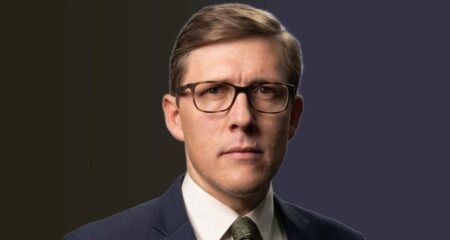
“As much as I am a proponent of the 30% HDI requirement … my view is that Sakeliga has Icasa in a difficult position,” said Lucien Pierce, partner at PPM Attorneys, using the abbreviation for historically disadvantaged individuals. He stressed that he had not had time to consider every legal angle.
The case turns on section 9(2)(b) of the Electronic Communications Act, which requires ownership by historically disadvantaged groups of “not less than 30%, or such other conditions or higher percentage as may be prescribed”. Sakeliga argues that “or such other conditions” gives Icasa a choice.
As much as I am a proponent of the 30% HDI requirement … my view is that Sakeliga has Icasa in a difficult position.
PPM Attorneys’ Lucien Pierce
Pierce reads the words more narrowly, saying the section “was intended that ownership be maintained at no less than 30%”. But he said Sakeliga’s other argument, that the Broad-Based Black Economic Empowerment (B-BBEE) Act overrides the Electronic Communications Act, is correct “on a strict reading of the law”. That leaves a conflict between the two acts that needs to be resolved, and an amendment would give certainty. “This may be why Icasa argues that an amendment is required,” he said.
Icasa only has to consider ministerial policy directions, not follow them. Its position is that it considered Malatsi’s direction but the law prevents it from implementing it. “If Sakeliga is correct — that section 9(2)(b) permits Icasa to recognise EEIPs as ‘other conditions’ — then Icasa would be wrong on the law and its decision would be capable of being reviewed,” Pierce said.
He considers Sakeliga’s fallback argument, that the section is unconstitutional if Icasa’s reading is correct, weaker. Telecoms, like mining, depends on a scarce national resource, radio frequency spectrum, he said. Just as the state imposes minimum ownership requirements on mining licences, “I believe that it would not be unconstitutional to have licensing provisions in the electronic communications sector that have similar provisions”.
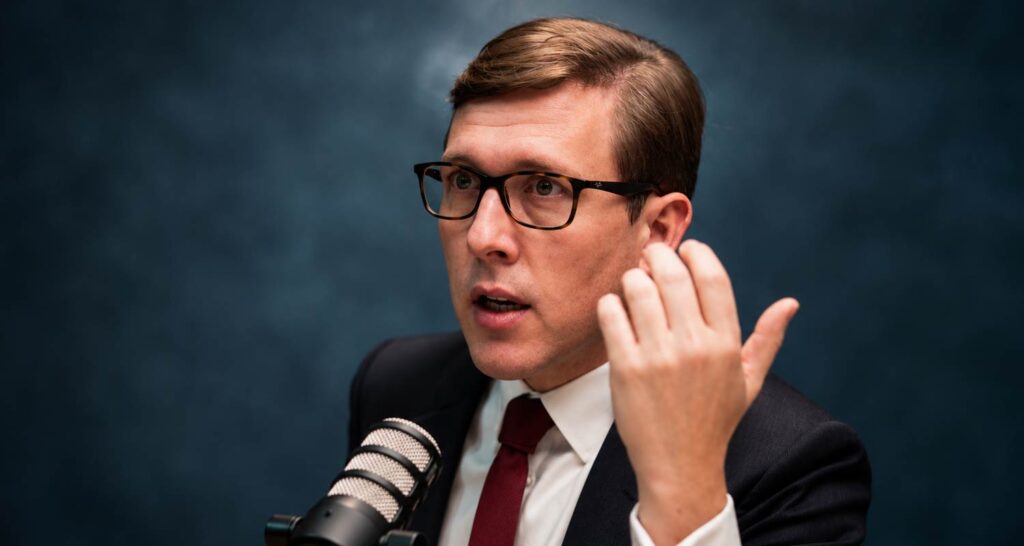
Sakeliga CEO Piet le Roux told the TechCentral Show on Friday that Icasa had “clearly misunderstood” the act. “No litigation is perfect, no litigation is a silver bullet, but this litigation is much better than not having a litigation programme,” he said.
Icasa now has to file the record of its decision. “The kind of application we brought here forces Icasa to play their hand,” Le Roux said. “Once they’ve provided that record, they can’t change it afterwards…”
Sakeliga has not spoken to Malatsi, who is cited as a respondent. “We’ve not coordinated anything or asked anything from him, and I think that’s appropriate,” Le Roux said.
‘A tax on being not black enough’
Le Roux called B-BBEE “a very harmful policy programme” and said almost all of Sakeliga’s litigation consists of “stepping stones to the jurisprudence that we want to create”.
Sakeliga also objects to EEIPs, which would keep an empowerment requirement in place. A company with 30% black shareholding would not have to fund an EEIP, Le Roux said. “So it’s actually a tax on being not black enough. I disdain speaking in these terms, but the legislation and the regulator force us to speak about it like this.”
Sakeliga has already won cases against other licensing regulators. The high court ruled in August 2025 that domestic air service licences could not be tied to B-BBEE criteria, and in June that the same applied to international airlines. In September, it declared unconstitutional a requirement for estate agents to hold a B-BBEE certificate.
Unwinding BEE deals
Asked whether Vodacom, MTN and Telkom, which have spent years meeting the 30% rule, should be able to switch to EEIPs or unwind existing ownership deals, Le Roux said deals made “under a form of duress for race-restrictive purposes should be revisable”. But “it’s not that simple”, he said. Each would have to be approached case by case because “it’s a mix of commercial contract and state duress”.
Telkom has told Icasa, in a submission first reported by TechCentral, that any new empowerment rules must apply equally to all licensees. Le Roux said companies that had complied with the rules should not insist on keeping them: “I don’t think that it’s a justifiable argument for maintaining a bad system because you were a victim of it.”
Who funds Sakeliga
Le Roux dismissed online claims that Elon Musk or Starlink is funding the case. “I’d be very happy to take any contribution from him. But no, we are funded by local people,” he said.
Sakeliga has just over 8 000 funders, and no single funder accounts for more than 5% of its funding, he said, though it does not publish their names. “We’ve been fighting BEE long before Starlink became interested in expanding into South Africa.”
Catch the full interview with Piet le Roux on the TechCentral Show. — (c) 2026 NewsCentral Media