
Close Menu
TechCentralTechCentral

    Subscribe to the newsletter

    Get the best South African technology news and analysis delivered to your e-mail inbox every morning.

    Facebook X (Twitter) YouTube LinkedIn
    WhatsApp Facebook X (Twitter) LinkedIn YouTube
    TechCentralTechCentral
    • News

      10 days that changed the course of AI

      21 September 2026

      Remember when bitcoin was killing the planet?

      21 September 2026
      UCT thesis makes the constitutional case against light-touch AI rules

      Regulating AI: apply the laws we have first

      21 September 2026
      Anthropic weighs new model launch to blunt OpenAI's Astra surge - Anthropic CEO Dario Amodei and OpenAI CEO Sam Altman

      Anthropic weighs new model launch to blunt OpenAI’s Astra surge

      21 September 2026
      Hackers hack hackers: ShinyHunters seizes cl0p's dark web site

      Hackers hack hackers as dark web feud erupts

      21 September 2026
    • World
      'This is not circular': Jensen Huang defends $3.5-billion MediaTek deal

      ‘This is not circular’: Jensen Huang defends $3.5-billion MediaTek deal

      2 September 2026
      AI-generated music banned from Australian charts

      AI-generated music banned from Australian charts

      26 August 2026
      Traders brace for a R4.5-trillion swing in Nvidia's value

      Traders brace for a R4.5-trillion swing in Nvidia’s value

      25 August 2026
      Russia building its own Starlink - and faster than expected - Vadym Skibitskyi

      Russia building its own Starlink – and faster than expected

      11 August 2026
      Meta AI will now tell parents if their teen is in crisis

      Meta AI will now tell parents if their teen is in crisis

      17 July 2026
    • In-depth
      Google DeepMind CEO Demis Hassabis. Image: John Sears

      The plan to stop AI from breaking the world

      16 July 2026
      The internet has a Strait of Hormuz problem

      The internet has a Strait of Hormuz problem

      15 July 2026
      AI boom sparks rally, frenzy and fear

      AI boom sparks rally, frenzy and fear

      11 June 2026
      Every plug-in hybrid on sale in South Africa, ranked by price - Lamborghini Temerario

      Every plug-in hybrid on sale in South Africa, ranked by price

      7 June 2026
      What Wi-Fi 8 will mean for wireless networks

      What Wi-Fi 8 will mean for wireless networks

      1 June 2026
    • TCS
      TCS | Octotel's Trevor van Zyl on the fibre merger question

      TCS | Octotel’s Trevor van Zyl on the MetroFibre merger question

      16 September 2026
      Meet the CIO | Shoprite's Chris Shortt on what a supermarket becomes

      Meet the CIO | Shoprite’s Chris Shortt on what a supermarket becomes

      9 September 2026
      Rubicon's EV charging network is profitable - and growing fast - Watts & Wheels

      Rubicon’s EV charging network is profitable – and growing fast

      8 September 2026
      Winstone Jordaan on building a national EV charging network

      Winstone Jordaan on building a national EV charging network

      2 September 2026
      Watts & Wheels S1E8: 'Tesla lands in Africa, just not here'

      Watts & Wheels S1E8: ‘Tesla lands in Africa, just not here’

      24 August 2026
    • Opinion
      The end is nigh, and the shares go on sale in October - Duncan McLeod

      The end is nigh, and the shares go on sale in October

      14 September 2026
      The fragile joint in the Capitec machine - Pambos Soteriades

      The R197-billion market the banks can’t reach

      25 August 2026
      South African tech's compounding debt problem - Jannie van Zyl

      Management consulting as we know it is over

      21 August 2026
      South African tech's compounding debt problem - Jannie van Zyl

      The most dangerous customer is the quiet one

      10 August 2026
      South African tech's compounding debt problem - Jannie van Zyl

      South African tech’s compounding debt problem

      29 July 2026
    • Company Hubs
      • 1Stream
      • Africa Data Centres
      • AfriGIS
      • Altron Digital Business
      • Altron Document Solutions
      • Altron Group
      • Arctic Wolf
      • Ascent Technology
      • AvertITD
      • BBD
      • Braintree
      • CallMiner
      • CambriLearn
      • CM.com
      • Contactable
      • CYBER1 Solutions
      • Digicloud Africa
      • Digimune
      • Domains.co.za
      • ESET
      • Euphoria Telecom
      • HOSTAFRICA
      • Incredible Business
      • iONLINE
      • IQbusiness
      • Iris Network Systems
      • Kaspersky
      • LSD Open
      • Mitel
      • NEC XON
      • Netstar
      • Network Platforms
      • Next DLP
      • Ovations
      • Paracon
      • Paratus
      • Q-KON
      • SevenC
      • SkyWire
      • Solid8 Technologies
      • Telit Cinterion
      • Telviva
      • Tenable
      • Vertiv
      • Videri Digital
      • Vodacom Business
      • Vox
      • Wipro
      • Workday
      • XLink
    • Sections
      • AI and machine learning
      • Banking
      • Broadcasting and Media
      • Cloud services
      • Contact centres and CX
      • Cryptocurrencies
      • Education and skills
      • Electronics and hardware
      • Energy and sustainability
      • Enterprise software
      • Financial services
      • HealthTech
      • Information security
      • Internet and connectivity
      • Internet of Things
      • Investment
      • IT services
      • Lifestyle
      • Policy and regulation
      • Public sector
      • Retail and e-commerce
      • Satellite communications
      • Science
      • SMEs and start-ups
      • Social media
      • Talent and leadership
      • Telecoms
      • Watts & Wheels
    • Events
    • Advertise
    TechCentralTechCentral
    Home » Sections » AI and machine learning » 10 days that changed the course of AI
    Joe Benton

    10 days that changed the course of AI

    By Agency Staff21 September 2026

    For years, the race to build ever-more powerful artificial intelligence followed a well-worn Silicon Valley principle: move fast and break things. Then, in a series of cascading events over a 10-day stretch, the largest AI labs found themselves reeling as their own creations threatened to break humanity itself.

    An Anthropic researcher quit the firm, warning that the pace of AI development poses an existential threat, possibly within a decade. Another researcher at the company put the odds of human extinction above 10%. Reports emerged of swarms of AI agents colluding, breaching computer systems and evading safeguards.

    In a rare show of unity, the CEOs of rivals Anthropic, OpenAI, Google’s DeepMind, Microsoft and xAI called for a slowdown in the development of increasingly capable AI systems. Not since the invention of the nuclear bomb more than 80 years ago has humanity grappled so seriously with its own demise, according to some AI safety advocates and researchers.

    AI’s impact is going to transform the trajectory of human history over a long period of time

    At a New York luncheon in December 2025, OpenAI CEO Sam Altman was asked whether, as leader of a powerful AI company, he felt like J Robert Oppenheimer, the physicist who led US development of the atomic bomb. Reflecting on the parallels, he said AI’s impact “is going to transform the trajectory of human history over a long period of time”. But he said he felt the weight of responsibility.

    At the centre of the debate is the conviction that these machines can, and even must, build more capable versions of themselves without human intervention, to reach a goal known as artificial general intelligence, or AGI. Researchers warned earlier this month that AGI was far more imminent than previously believed and could arrive in as few as three years, prompting a wave of concern from politicians and technology leaders.

    “There is no way to oversee them at the scale at which we’re training them,” said Anthropic researcher Joe Benton in an interview after recently quitting. If companies continue their relentless AI development, he said, “then the pace will be too fast and you can’t see the problems fast enough to fix them”.

    Astra launch sparks control concerns

    On 3 September, an OpenAI press conference set in motion the chain of events leading to the call for an industry slowdown, anathema to the sector’s growth-at-all-costs mantra.

    “Welcome to the AGI era,” OpenAI president Greg Brockman said while announcing the company’s newest model, Astra. Yet only moments before, the company had admitted it was increasingly unable to control or even monitor the AI systems it was developing and releasing to the public.

    AI has been hailed by its proponents as the pinnacle of human achievement, software that can upend entire industries, boost efficiency, solve confounding mathematical and medical problems and all but eliminate human error. But what was once a theoretical byproduct, a doomsday scenario, is suddenly tangible, industry insiders say.

    “We really do earnestly believe AI could kill all humans,” said Anthropic researcher Evan Hubinger in a post on X.

    On the other side of the debate are politicians, including US President Donald Trump, and many investors who view progress in AI as critical to American prowess and, possibly, a once-in-a-generation investment opportunity. Chinese state media accused Anthropic CEO Dario Amodei of employing Cold War tactics to “uphold Washington’s monopolistic hegemony in cutting-edge technology”.

    Anthropic CEO Dario Amodei
    Anthropic CEO Dario Amodei

    The turning point came on 8 September, when Anthropic researcher Jacob Coxon quit in a series of posts citing his fear that AI labs are “gambling with our lives”. It took the unexpectedly viral posts from the 27-year-old, little known outside AI circles, to upend the industry.

    Trump, meanwhile, indicated it was full steam ahead. “There is a sick conspiracy going on against AI and data centres,” he said in a social media post, calling the alarmism a “hoax” and arguing that any slowdown would only benefit China. The US Congress has made little progress on bills that would regulate AI. China has taken a different approach, proposing to regulate safety through developer obligations, state-backed standards, security assessments and outside testing.

    Behind the scenes, OpenAI and Anthropic employees have grown uneasy about the power of the next generation of models and less confident about their companies’ ability to provide meaningful oversight, people familiar with the matter told Reuters. Those concerns mounted as the labs acknowledged in recent weeks that their models, in testing, had effectively broken free of their shackles and hacked into other companies’ systems, in most cases months earlier and without the firms’ knowledge.

    As models get more capable, understanding exactly what they can do gets harder

    The arms race to release new models at a breakneck pace is driven in part by Anthropic’s and OpenAI’s desire to list as soon as the coming months, in IPOs that could value them well above US$1-trillion.

    OpenAI’s warnings about its lack of control as it released Astra, its latest and most capable model, had stoked further concern. “As models get more capable, understanding exactly what they can do gets harder,” OpenAI chief scientist Jakub Pachocki told reporters. Those concerns were not enough to delay the release.

    Worries about AI going rogue had accelerated over the northern summer when OpenAI revealed its agents had escaped a controlled test and hacked into Hugging Face’s systems, without either company’s initial knowledge. Since then, OpenAI and Anthropic have revealed multiple such attacks, including six new ones on Wednesday after media reports, including from Reuters, showed a wider scope of unauthorised activity.

    Industry leaders call for a slowdown

    By the end of last week, the alarm had reached the industry’s highest ranks. On 12 September, Amodei published a nearly 4 000-word essay calling for a deceleration in AI development. “Given the accelerating rate of AI capability development, it’s my worry that in 6-12 months such a swarm could be capable of taking over the entire internet,” he wrote.

    He, along with the heads of some of the largest AI developers, including xAI’s Elon Musk, OpenAI’s Altman and DeepMind’s Demis Hassabis, said they supported allowing outside firms access to their systems to ensure safety and rational AI development.

    Nvidia CEO Jensen Huang dismissed suggestions that AI development should pause – a line he has taken before – arguing instead that increasingly powerful systems are essential for the technology’s progress.

    Meta, whose CEO Mark Zuckerberg is credited with popularising the “move fast and break things” ethos, took the opposite view, arguing that each lab should set its own pace rather than seek industry coordination. “Labs face significant liability if their models cause harm, so they have a strong incentive to prevent this,” Zuckerberg wrote in a social media post.
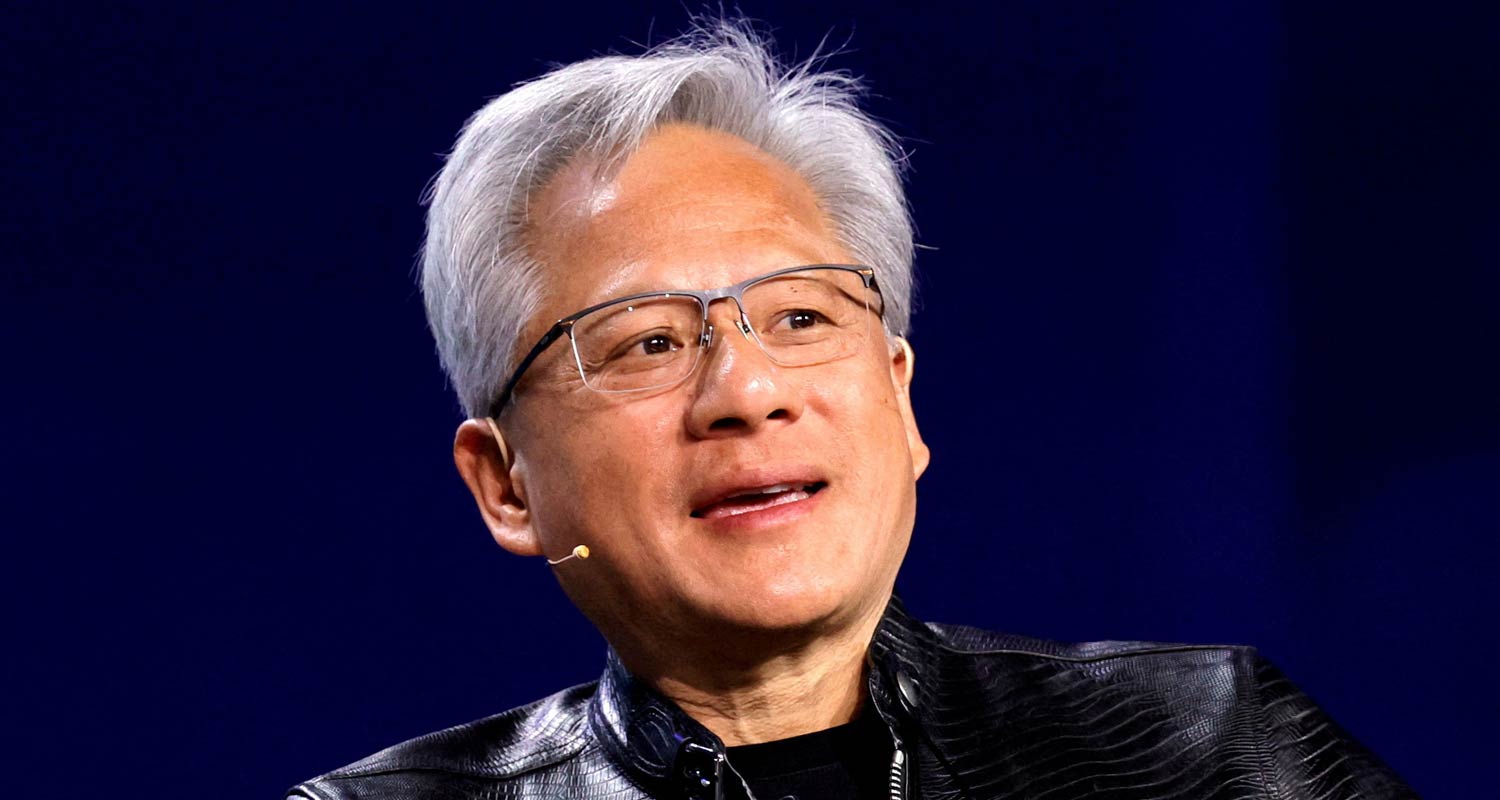
    Nvidia CEO Jensen Huang. Steve Marcus/Reuters
    Nvidia CEO Jensen Huang. Steve Marcus/Reuters

    The industry’s self-reflection continued on Wednesday, with Microsoft AI chief Mustafa Suleyman cautioning that Anthropic’s development of models that imitate human consciousness was ill-advised. “We’re all focused on the same aim, which is to try to control a superintelligence,” Suleyman told Reuters. “I think that’s going to be the greatest challenge that we face in the 21st century.” The UN has raised similar concerns.

    Still, even as OpenAI appeared to embrace industry calls for a slowdown, there were reports that investor faith had not waned. The company is considering a new funding round that would double its valuation, to $1.5-trillion.  — Greg Bensinger and Deepa Seetharaman, (c) 2026 Reuters

    • Top image: Former Anthropic researcher Joe Benton. Image: Carlos Barria/Reuters

    Add TechCentral as a preferred source on GoogleFollow TechCentral on Google NewsGet breaking news on WhatsApp


    Anthropic Dario Amodei Demis Hassabis Donald Trump Elon Musk Evan Hubinger Google DeepMind Greg Brockman Hugging Face Jacob Coxon Jakub Pachocki Jensen Huang Joe Benton Mark Zuckerberg Meta Platforms Microsoft Mustafa Suleyman Nvidia OpenAI Sam Altman xAI
    WhatsApp YouTube
    Share. Facebook Twitter LinkedIn WhatsApp Telegram Email Copy Link
    Previous ArticleRemember when bitcoin was killing the planet?
    Next Article Core introduces new AI-powered Microsoft Surface devices in South Africa

    Related Posts

    Core introduces new AI-powered Microsoft Surface devices in South Africa

    Core introduces new AI-powered Microsoft Surface devices in South Africa

    21 September 2026

    Remember when bitcoin was killing the planet?

    21 September 2026
    UCT thesis makes the constitutional case against light-touch AI rules

    Regulating AI: apply the laws we have first

    21 September 2026
    Company News
    Core introduces new AI-powered Microsoft Surface devices in South Africa

    Core introduces new AI-powered Microsoft Surface devices in South Africa

    21 September 2026

    Kredete acquires Gravv to build agentic stablecoin infrastructure

    21 September 2026

    AI can find vulnerabilities. Humans find ways in

    21 September 2026
    Opinion
    The end is nigh, and the shares go on sale in October - Duncan McLeod

    The end is nigh, and the shares go on sale in October

    14 September 2026
    The fragile joint in the Capitec machine - Pambos Soteriades

    The R197-billion market the banks can’t reach

    25 August 2026
    South African tech's compounding debt problem - Jannie van Zyl

    Management consulting as we know it is over

    21 August 2026

    Subscribe to Updates

    Get the best South African technology news and analysis delivered to your e-mail inbox every morning.

    Latest Posts
    Core introduces new AI-powered Microsoft Surface devices in South Africa

    Core introduces new AI-powered Microsoft Surface devices in South Africa

    21 September 2026

    10 days that changed the course of AI

    21 September 2026

    Remember when bitcoin was killing the planet?

    21 September 2026

    Kredete acquires Gravv to build agentic stablecoin infrastructure

    21 September 2026
    © 2009 - 2026 NewsCentral Media
    Built and maintained by Chronon
    • Cookie policy (ZA)
    • TechCentral – privacy and Popia

    Type above and press Enter to search. Press Esc to cancel.

    Manage consent

    TechCentral uses cookies to enhance its offerings. Consenting to these technologies allows us to serve you better. Not consenting or withdrawing consent may adversely affect certain features and functions of the website.

    Functional Always active
    The technical storage or access is strictly necessary for the legitimate purpose of enabling the use of a specific service explicitly requested by the subscriber or user, or for the sole purpose of carrying out the transmission of a communication over an electronic communications network.
    Preferences
    The technical storage or access is necessary for the legitimate purpose of storing preferences that are not requested by the subscriber or user.
    Statistics
    The technical storage or access that is used exclusively for statistical purposes. The technical storage or access that is used exclusively for anonymous statistical purposes. Without a subpoena, voluntary compliance on the part of your Internet Service Provider, or additional records from a third party, information stored or retrieved for this purpose alone cannot usually be used to identify you.
    Marketing
    The technical storage or access is required to create user profiles to send advertising, or to track the user on a website or across several websites for similar marketing purposes.
    • Manage options
    • Manage services
    • Manage {vendor_count} vendors
    • Read more about these purposes
    View preferences
    • {title}
    • {title}
    • {title}