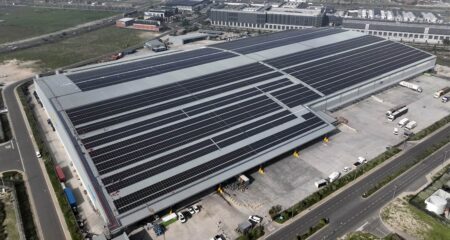
In the first half of 2026, 17 independent power producer projects reached commercial operation in South Africa, adding 1.92GW. According to the Power Futures Lab at the University of Cape Town’s Graduate School of Business, that is the highest capacity added in any single half-year, and it already exceeds the previous full-year record of 1.47GW, set in 2016.
The more revealing number is 124. That is how many generation facilities Nersa registered in the first quarter of 2026/2027 alone, carrying 804MW and R20.2-billion of investment. The grid stopped being a single-supplier system some time ago. But most of the organisations buying from it have not caught up with what that means for their own books.
The policy change came in two steps. In 2021, the generation licensing threshold moved from 1MW to 100MW. In January 2023, amendments to Schedule 2 of the Electricity Regulation Act removed licensing altogether for facilities wheeling power to customers across third-party networks, irrespective of size. Registration replaced permission. The pipeline responded.
Cape Town has pushed furthest on what follows. In May, Growthpoint, the trader Etana Energy and the city announced the first pooled wheeling of renewable electricity across multiple properties on the city’s municipal network. Power from the Boston hydroelectric plant near Clarens in the Free State, co-owned by Serengeti Energy and Growthpoint, is wheeled across Eskom’s network into the municipal grid and allocated across five Growthpoint buildings rather than matched to a single site. Growthpoint has set its sights on extending it to more than 30 of its properties in the city.
In February, Discovery Green CEO Andre Nepgen put it at about 80%: the share of newly closed private renewable generation channelled through traders over the preceding year, rather than through direct bilateral contracts. The buyer is no longer buying from a generator. It is buying from a market.
Measurement no longer the problem
Ten years ago, most organisations could not see what they were consuming. Readings were manual, monthly at best and often estimated. The technology has since settled that question: cheaper sensors, low-power wide-area networks and cloud platforms have made granular measurement ordinary.
Deployment is another matter. Eskom’s smart meter programme on load-reduction feeders targets 577 347 meters. By 11 September it had installed 513 022, or about 89% of that target, Eskom told Business Times – but the target was meant to be met by March 2026. Its wider smart meter programme runs to 2029. Some municipalities are moving too: Cape Town has committed R1.1-billion to the first phase of advanced water metering, about 83 000 meters between April 2026 and February 2029, inside a citywide plan covering more than 680 000 meters.
So measurement is solved as a technical problem and uneven as a deployed one.
The cost of the commodity being measured has not eased. Nersa approved an 8.76% increase in Eskom’s direct tariff for 2026/2027 and just over 9% for municipal distributors from 1 July, both revised up after a R54.7-billion correction to Eskom’s regulatory asset base. Water has moved the same way. Johannesburg’s water tariffs rose 12.5% from 1 July, after 13.9% a year earlier, and the city proposed raising the fixed water charge by roughly 66% for households in 2026/27 – a charge that applies whether or not anything is consumed.
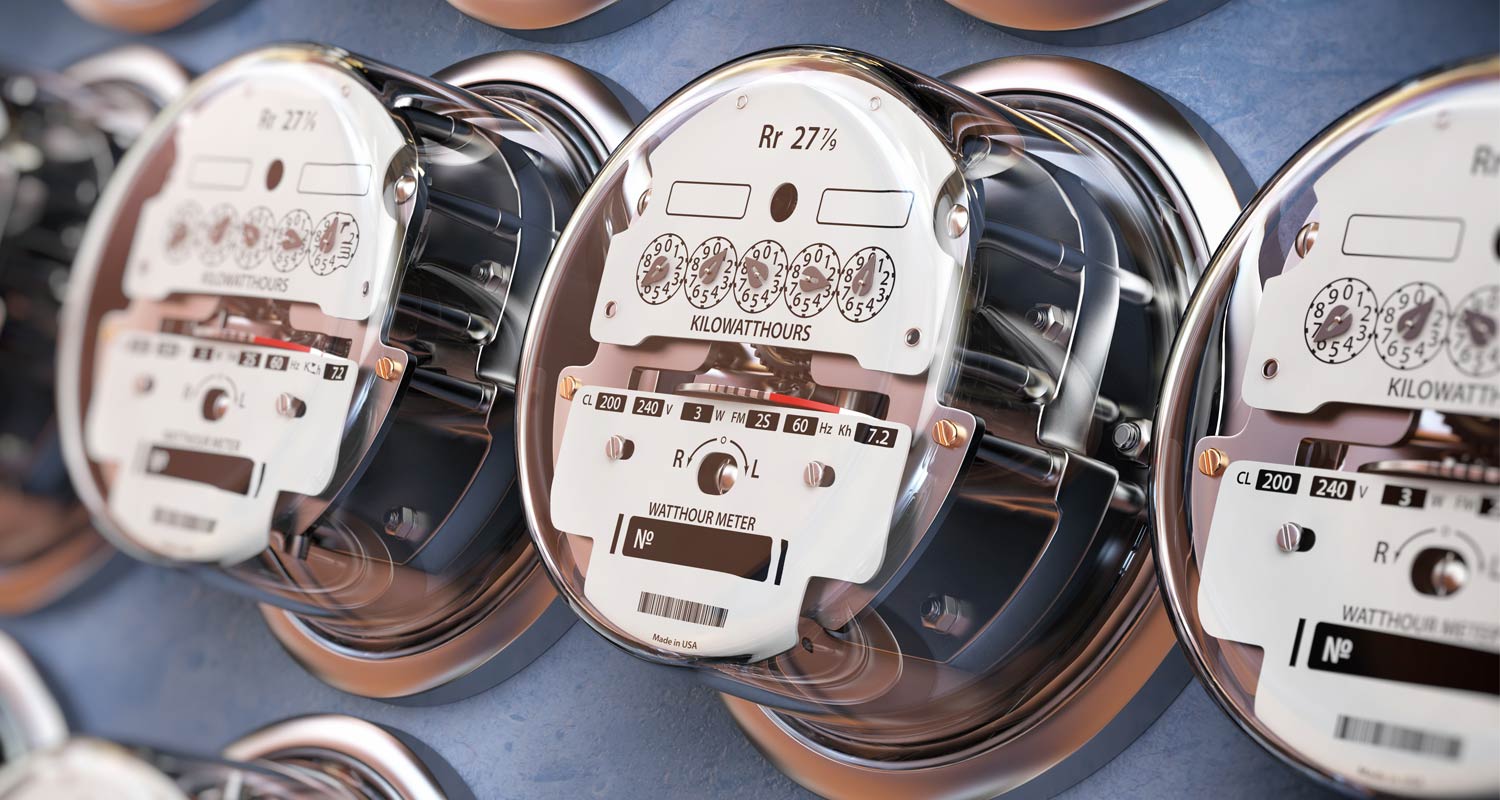
Now put the two movements together. A single site can draw from the municipal grid, from Eskom, from its own rooftop generation and from a trader aggregating several independent producers elsewhere in the country, in the same month, through the same connection. Each source carries its own commercial terms. Layered over them are time-of-use periods, seasonal rates, public holiday rules, demand charges, network use-of-system charges for wheeled energy (the fees for carrying it over Eskom’s and the municipality’s wires) and municipal surcharges. The meter can report all of it, yet few organisations can price it, allocate it to a tenant or a cost centre, and explain the result to whoever asks.
Pricing reform will put that gap on the bill itself. The revised electricity pricing policy, gazetted for comment in August 2026, requires bills to show a full breakdown of the constituent tariffs for each service consumed, itemising energy, demand, network charges, levies, subsidies and municipal surcharges, and sets a five-year path to cost-reflective tariffs. The policy makes it clear that how far a bill can be unbundled depends on the metering installed, because the metering sets the limit on what can be measured at all.
Who carries the cost of the gap
Two things have to happen before an organisation can price any of this, and neither is quick:
- Metering: Advanced metering is not a cheap retrofit. Cape Town’s own numbers for water – R1.1-billion for roughly 83 000 metering points – imply something in the order of R13 000 a point once installation, communications and supporting infrastructure are counted. Electricity metering costs differ, but a private portfolio faces similar arithmetic without a municipal balance sheet behind it. Metering competes for capital against projects that produce revenue this quarter, and it loses, which is why estates run years past their useful life while the tariffs they are measuring keep climbing.
- Reconciliation: This is the bigger challenge. Data arriving every 30 minutes from a portfolio drawing on several suppliers is not an answer. Tariff structures, lease terms and occupancy have to sit in one model, exceptions have to be inspected before a bill is issued rather than after a tenant disputes it, and the result has to be defensible to that tenant, to an auditor and to a board. Most of the software running South African property and industrial operations was built for a simpler problem, because until recently that is all there was. A single supplier and a flat tariff is a spreadsheet problem. Four suppliers, a wheeling contract and time-of-use periods is not.
AI will be offered as the shortcut
Applied to an estate that still estimates its readings, or to a settlement process with no structured tariff model behind it, AI produces faster versions of the same unreliable answer. Automating a process nobody can currently explain tends to make it less explicable, not more.
Downstream of those foundations, it does real work. Consumption that deviates from a site’s own history can be flagged before it reaches an invoice. A trader’s monthly statement can be checked line by line against what the meters recorded – a reconciliation few finance teams have the capacity to do by hand. Demand can be forecast against time-of-use periods so load is shifted before the peak rather than explained afterwards. The order is the thing: measure, then model, then automate.
Which leaves the question the market still faces. Someone has to carry the reconciliation function, and none of the obvious candidates is a comfortable fit.
The municipality is also the seller, which makes it an awkward arbiter of a disputed bill. The trader has a commercial interest in the number it presents. The customer is the party with the strongest incentive to get it right and usually the least capability to do so, particularly below the scale where a dedicated energy manager can be justified. Independent settlement is a recognised role in mature electricity markets and it barely exists here, because until the licensing reforms of 2021 and 2023 there was not much to settle.
The revised electricity pricing policy will force the issue. Once a bill has to show its constituent tariffs line by line, every party in the chain needs a number it can stand behind, and the five-year path to cost-reflective tariffs means the amounts in dispute will grow each year. That makes it a commercial question about market structure rather than a technical one about meters.
- Craig Holmes is a chartered accountant who spent more than 25 years at PwC Consulting and IBM in Europe, the Middle East and Africa. He is co-founder of Let’sCreate, a commerce and loyalty software business, and MD of Let’sEquip, which finances and manages mobile device and metering estates