Close Menu
TechCentralTechCentral

    Subscribe to the newsletter

    Get the best South African technology news and analysis delivered to your e-mail inbox every morning.

    Facebook X (Twitter) YouTube LinkedIn
    WhatsApp Facebook X (Twitter) LinkedIn YouTube
    TechCentralTechCentral
    • News
      South Africa's ATM network faces its biggest overhaul in decades

      South Africa’s ATM network faces its biggest overhaul in decades

      16 October 2026
      The R77 000 iPhone has arrived in South Africa

      The R77 000 iPhone has arrived in South Africa

      16 October 2026
      Africa's mobile operators pay more for less spectrum, GSMA says

      Africa’s mobile operators pay more for less spectrum, GSMA says

      16 October 2026
      Netflix is losing the battle for your screen time

      Netflix is losing the battle for your screen time

      16 October 2026
      Safaricom control to stay with Vodacom until appeal

      Safaricom control to stay with Vodacom until appeal

      16 October 2026
    • World
      AI is now holding up the world economy, says IMF

      AI is now propping up the world economy, says IMF

      12 October 2026
      SpaceX takes aim at US wireless carriers with spectrum acquisition

      Starlink is coming for your mobile operator

      9 October 2026
      The AI PC is finally here. It's just very expensive - Jensen Huang, Satya Nadella

      The AI PC is finally here. It’s just very expensive

      8 October 2026
      The memory crunch is making Samsung fabulously rich

      The memory crunch is making Samsung fabulously rich

      8 October 2026
      SpaceX to borrow $40-billion to buy Nvidia chips

      SpaceX to borrow $40-billion to buy Nvidia chips

      7 October 2026
    • In-depth

      10 days that changed the course of AI

      21 September 2026
      Meta to the AI industry: slow down without us - Mark Zuckerberg

      Meta to the AI industry: slow down without us

      16 September 2026
      Google DeepMind CEO Demis Hassabis. Image: John Sears

      The plan to stop AI from breaking the world

      16 July 2026
      The internet has a Strait of Hormuz problem

      The internet has a Strait of Hormuz problem

      15 July 2026
      AI boom sparks rally, frenzy and fear

      AI boom sparks rally, frenzy and fear

      11 June 2026
    • TCS
      W&W | LDV's Gerhard Moolman on electric bakkies, fleet orders and 'school fees'

      W&W | LDV’s Gerhard Moolman on electric bakkies and fleets

      9 October 2026
      TCS | Frogfoot sees bigger fibre deals coming - TechCentral Show guests Abraham van der Merwe and Shane Chorley

      TCS | Frogfoot sees bigger fibre deals coming

      8 October 2026
      Meet the CIO | Vodacom's Mohamed Sami on the agentic future

      Meet the CIO | Vodacom’s Mohamed Sami on the agentic future

      5 October 2026
      Lexi Novitske, general partner at Norrsken22, on the TechCentral Show

      TCS | Norrsken22’s Lexi Novitske on how China is winning African tech

      1 October 2026
      TCS | Dominic White and Adam Ely on AI agents going rogue

      TCS | Dominic White and Adam Ely on AI agents going rogue

      29 September 2026
    • Opinion
      When a machine can choose, who does it become? Fanie van Rooyen

      When a machine can choose, who does it become?

      9 October 2026
      Let South Africans jailbreak their way to digital sovereignty - Dirk de Vos

      Let South Africans jailbreak their way to digital sovereignty

      5 October 2026
      South Africa's next energy crisis is in the accounts department - Craig Holmes

      South Africa’s next energy crisis is in the accounts department

      29 September 2026
      The steam engine lesson AI doomsayers keep missing - Sam Clarke

      The steam engine lesson AI doomsayers keep missing

      28 September 2026
      Let South Africans jailbreak their way to digital sovereignty - Dirk de Vos

      Regulating AI: apply the laws we have first

      21 September 2026
    • Company News
      • 1Stream
      • Africa Data Centres
      • AfriGIS
      • Altron Digital Business
      • Altron Document Solutions
      • Altron Group
      • Arctic Wolf
      • Ascent Technology
      • AvertITD
      • BBD
      • Braintree
      • CallMiner
      • CambriLearn
      • CM.com
      • Contactable
      • CYBER1 Solutions
      • Digicloud Africa
      • Digimune
      • Domains.co.za
      • ESET
      • Euphoria Telecom
      • HOSTAFRICA
      • Incredible Business
      • iONLINE
      • IQbusiness
      • Iris Network Systems
      • Kaspersky
      • LSD Open
      • Mitel
      • NEC XON
      • Netstar
      • Network Platforms
      • Next DLP
      • Ovations
      • Paracon
      • Paratus
      • Publishared
      • Q-KON
      • SevenC
      • SkyWire
      • Solid8 Technologies
      • Telit Cinterion
      • Telviva
      • Tenable
      • Vertiv
      • Videri Digital
      • Vodacom Business
      • Vox
      • Wipro
      • Workday
      • XLink
    • Sections
      • AI and machine learning
      • Banking
      • Broadcasting and Media
      • Cloud services
      • Contact centres and CX
      • Cryptocurrencies
      • Education and skills
      • Electronics and hardware
      • Energy and sustainability
      • Enterprise software
      • Financial services
      • HealthTech
      • Information security
      • Internet and connectivity
      • Internet of Things
      • Investment
      • IT services
      • Lifestyle
      • Policy and regulation
      • Public sector
      • Retail and e-commerce
      • Satellite communications
      • Science
      • SMEs and start-ups
      • Social media
      • Talent and leadership
      • Telecoms
      • Watts & Wheels
    • Events
    • Advertise
    TechCentralTechCentral
    Home » Sections » IT services » Your last SQL Server end-of-support deadline

    Your last SQL Server end-of-support deadline

    Promoted | Every SQL Server deadline buys the same thing: a project that delivers nothing new. There is a version of that project you only ever run once.
    By Ascent Technology28 September 2026
    Twitter LinkedIn Facebook WhatsApp Email Telegram Copy Link
    Get breaking news on WhatsApp

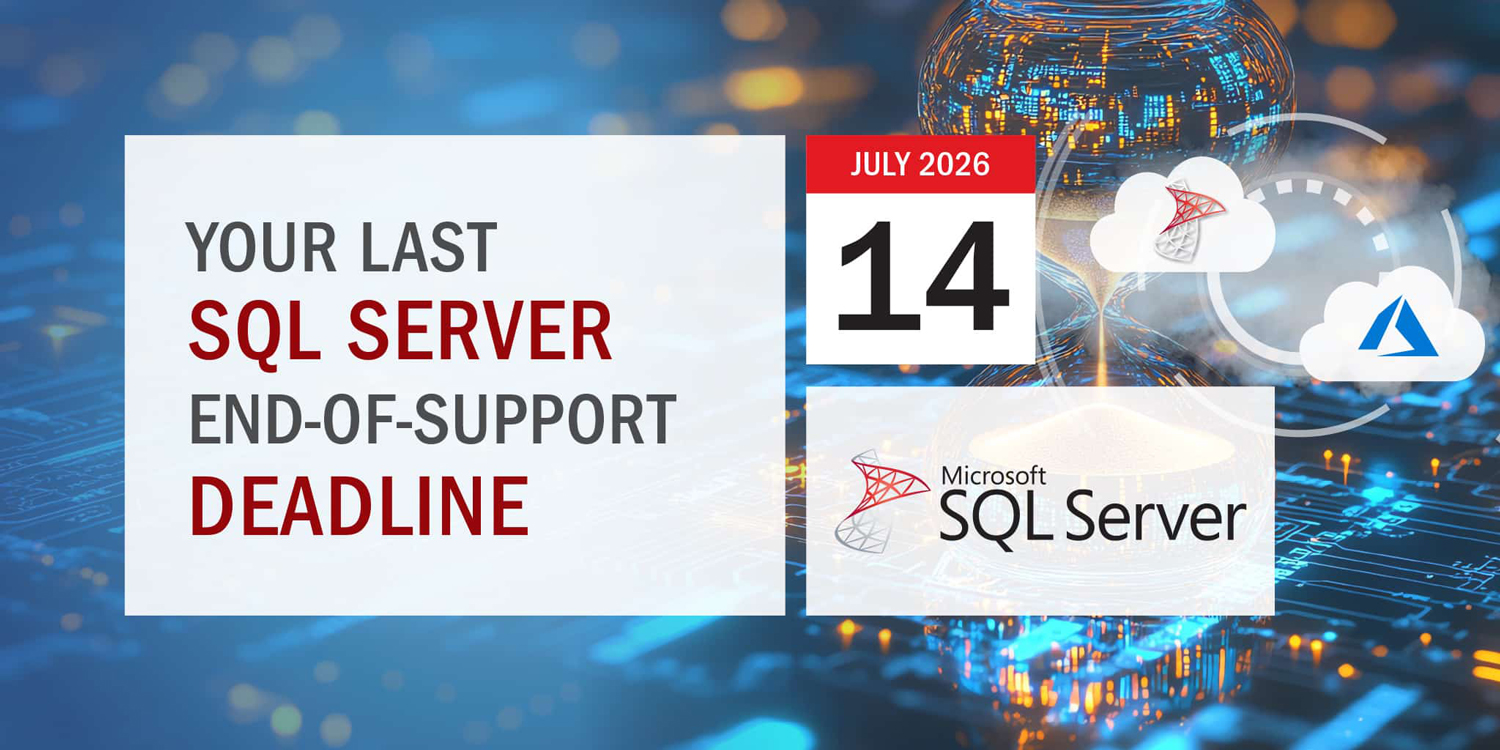
    Your last SQL Server end-of-support deadline - Ascent Technology

    Key takeaways

    • The standstill project: Much of what passes for modernisation is a project that delivers nothing new: months of testing and real budget spent so that everything works exactly as it did before.
    • A sequence, not an event: SQL Server 2016 fell out of support in July. Windows Server 2016 follows in January 2027, SQL Server 2017 in October – and 2019 and 2022 are already queued behind them.
    • Standing still is now priced: Extended Security Updates cost roughly a full licence fee per year, in every environment including Azure. The free exits Microsoft used to offer are gone.
    • There is a version of this project you run once: Azure SQL’s managed tiers carry no end-of-support date. Move a workload there properly and it never joins the queue again.

    Somewhere in your estate, a team is scoping a SQL Server 2016 project whose definition of success is that nobody notices anything. The applications must behave exactly as they did. The reports must reconcile to the cent. Months of discovery, regression testing and vendor certification – budgeted, staffed and signed off – to arrive precisely where you already are. I have watched South African enterprises run that project for every version since 2008, and its honest description rarely appears on the business case.

    We call it the standstill project: the recurring programme of work an organisation funds purely to keep what it already has. It is the tax the version lifecycle collects every few years – and July’s end of support for SQL Server 2016 has just issued the next invoice.

    A sequence, not an event

    The estates treating 14 July as an isolated fire are misreading it. Windows Server 2016 – the operating system under many of those same database servers – reaches end of support on 12 January 2027, drawing on the same change windows, the same teams and the same testing capacity. SQL Server 2017 follows on 12 October 2027. SQL Server 2019 and 2022 are already dated behind them, in 2030 and 2033.

    Each deadline re-runs the standstill project in full: the same estate discovery, the same regression cycles, the same cutover risk, the same quarter of consumed delivery capacity. Nothing new ships. The organisation pays in scarce engineering attention for the privilege of remaining where it is.

    The deadline is not the problem. The queue is.

    Standing still now has a price list

    For a decade there was a quiet escape from that queue: move the workload onto an Azure virtual machine and Microsoft supplied Extended Security Updates at no charge. That arrangement ended with this cycle. SQL Server 2016 ESUs are chargeable in every environment, including Azure, at roughly the full licence cost per year – and enrolment after an ESU year begins is back-billed to the start of that year, so hesitation saves nothing.

    The bridge also has a hard end. Coverage runs to July 2029 and no further; a 2016 estate still standing then has no supported option at any price. Three years of full licence fees, buying no capability, ending at a wall – that is not a plan. It is a countdown with invoicing attached.

    The strategic read matters more than the numbers. Microsoft has repriced inaction. Deferral used to be a default that cost nothing; it is now a metered product with a published rate. Any organisation still on 2016 is making a priced decision, whether or not it has recognised the price.

    The honest case for upgrading in place

    An upgrade to SQL Server 2025 is a legitimate answer, and we will say so plainly. Vendor applications not yet certified for cloud, workloads bound by data-sovereignty commitments, latency-critical systems, recently refreshed hardware – these are real constraints, and for estates governed by them, an in-place upgrade to a current, supported, capable platform is the disciplined move.

    Be clear about what it buys. SQL Server 2025 carries its own support clock, and the standstill project returns on schedule when that clock runs down. An in-place upgrade is a better version of the same transaction: this decade’s features, and the next decade’s deadline. Sometimes that is exactly the right purchase – but it should be made knowingly, not by default.

    The project you only run once

    Azure SQL Managed Instance and Azure SQL Database are versionless. There is no release to fall behind, no extended-support date to diarise, no ESU programme to price. The platform is patched and kept current continuously, under an engine that preserves near-complete compatibility with on-premises SQL Server, while Azure Hybrid Benefit carries your existing licence investment across.

    A workload migrated there properly has left the queue permanently. The 2016 project, the 2017 project, the 2019 and 2022 projects that estate was destined to fund – that entire category of work disappears for the workloads that make the move. Not every workload can: some genuinely need the control of SQL Server on an Azure virtual machine, and those remain on the version lifecycle. Knowing which is which is precisely the work that makes the exit real.

    The question is not whether you can afford the migration. It is how many more standstill projects you intend to fund.

    How Ascent delivers

    Ascent’s Migrate your SQL Server to Azure service is built assessment-first, because the assessment is what makes the exit permanent rather than cosmetic: it establishes which workloads can take the versionless tiers, which need the control of a virtual machine, and in what sequence the estate should move.

    Delivery then runs as a governed migration under the Modernise–Optimise–Protect framework – performance baselined before cutover, cost engineered through Azure Hybrid Benefit and right-sizing rather than discovered on the first invoice, security and compliance controls carried across by design.

    Because Ascent is a Microsoft Direct CSP, the commercial layer can sit under the same accountability as the delivery: licensing, Azure consumption and, where a short bridge is genuinely unavoidable, the ESU licensing itself.

    One partner accountable for the migration and for the commercial ground it stands on – that is what turns Migrate your SQL Server to Azure from a project into the end of a cycle.

    The 2016 deadline has already passed, and the next two are dated. The choice in front of a 2016 estate is between running the last standstill project deliberately – once, properly, to a destination without deadlines – or funding the next one by default.

    Contact Ascent Technology

    Contact Ascent to put your SQL Server estate on the table: which workloads can take the versionless exit, which genuinely need a virtual machine, what an ESU bridge would actually cost you, and what a controlled migration that ends the cycle looks like.

    Also see

    > Migrate your SQL Server(s) to Azure with Ascent Technology
    > Support Ended for SQL Server 2016. So Did the Microsoft Subsidy.
    > SQL Server 2016 Support Has Ended – and the Rules Have Changed

    • The author, Johan Lamberts, is MD at Ascent Technology
    • Read more articles by Ascent Technology on TechCentral
    • This promoted content was paid for by the party concerned

    Add TechCentral as a preferred source on GoogleFollow TechCentral on Google NewsGet breaking news on WhatsApp


    Ascent Technology Johan Lamberts Microsoft
    WhatsApp YouTube
    Share. Facebook Twitter LinkedIn WhatsApp Telegram Email Copy Link
    Previous ArticleThe CX automation boom has an intelligence gap
    Next Article Why ‘access’ is failing South Africa’s classrooms – and how we fix it

    Related Posts

    Data sovereignty in South Africa is not an address - Ascent Technology, Johan Lamberts

    Data sovereignty in South Africa is not an address

    15 October 2026
    MIP attackers rank fourth on ransomware leak sites, says Microsoft

    MIP attackers rank fourth on ransomware leak sites, says Microsoft

    14 October 2026
    The sovereignty paradox: who really controls your data when the rand drops? Cloud on Demand / Microsoft

    The sovereignty paradox: who really controls your data when the rand drops?

    13 October 2026
    Add A Comment

    Comments are closed.

    Company News
    Paratus Zambia delivers Starlink to thousands of children in Family Legacy schools

    Paratus Zambia delivers Starlink to thousands of children in Family Legacy schools

    15 October 2026
    Data sovereignty in South Africa is not an address - Ascent Technology, Johan Lamberts

    Data sovereignty in South Africa is not an address

    15 October 2026
    AI is only as good as your asset data

    AI is only as good as your asset data

    14 October 2026
    Opinion
    When a machine can choose, who does it become? Fanie van Rooyen

    When a machine can choose, who does it become?

    9 October 2026
    Let South Africans jailbreak their way to digital sovereignty - Dirk de Vos

    Let South Africans jailbreak their way to digital sovereignty

    5 October 2026
    South Africa's next energy crisis is in the accounts department - Craig Holmes

    South Africa’s next energy crisis is in the accounts department

    29 September 2026

    Subscribe to Updates

    Get the best South African technology news and analysis delivered to your e-mail inbox every morning.

    Latest Posts
    South Africa's ATM network faces its biggest overhaul in decades

    South Africa’s ATM network faces its biggest overhaul in decades

    16 October 2026
    The R77 000 iPhone has arrived in South Africa

    The R77 000 iPhone has arrived in South Africa

    16 October 2026
    Africa's mobile operators pay more for less spectrum, GSMA says

    Africa’s mobile operators pay more for less spectrum, GSMA says

    16 October 2026
    Netflix is losing the battle for your screen time

    Netflix is losing the battle for your screen time

    16 October 2026
    © 2009 - 2026 NewsCentral Media
    Built and maintained by Chronon
    • Cookie policy (ZA)
    • TechCentral – privacy and Popia

    Type above and press Enter to search. Press Esc to cancel.

    Manage consent

    TechCentral uses cookies to enhance its offerings. Consenting to these technologies allows us to serve you better. Not consenting or withdrawing consent may adversely affect certain features and functions of the website.

    Functional Always active
    The technical storage or access is strictly necessary for the legitimate purpose of enabling the use of a specific service explicitly requested by the subscriber or user, or for the sole purpose of carrying out the transmission of a communication over an electronic communications network.
    Preferences
    The technical storage or access is necessary for the legitimate purpose of storing preferences that are not requested by the subscriber or user.
    Statistics
    The technical storage or access that is used exclusively for statistical purposes. The technical storage or access that is used exclusively for anonymous statistical purposes. Without a subpoena, voluntary compliance on the part of your Internet Service Provider, or additional records from a third party, information stored or retrieved for this purpose alone cannot usually be used to identify you.
    Marketing
    The technical storage or access is required to create user profiles to send advertising, or to track the user on a website or across several websites for similar marketing purposes.
    • Manage options
    • Manage services
    • Manage {vendor_count} vendors
    • Read more about these purposes
    View preferences
    • {title}
    • {title}
    • {title}
    🇿🇦 Sign up to the TechCentral newsletter