The narrative surrounding South Africa’s digital transformation often leans on comfortable, macro-level statistics. We routinely hear that roughly 70% of public schools across the nation are “connected”. On paper, it looks like a triumph of public-private partnerships and infrastructure roll-outs.
But talk to any educator on the ground and a very different picture emerges.
The truth is that South Africa’s education system is defined by a deep digital divide. Broad definitions of “connectivity” often mask a troubling trend: a school is frequently counted as “connected” if a single, sluggish ADSL (copper-based broadband) line or LTE (4G mobile) router sits in the principal’s office for administrative use.
If the learners in the classrooms cannot access the network, a school is not digitally enabled. It is simply a statistic.
The three tiers of educational inequality
To understand the crisis of meaningful access, we must look at how connectivity is distributed. South Africa effectively operates a three-tiered school system:
- The fully connected (minority): Predominantly urban, well-funded public or private schools. Here, high-speed fibre is paired with individual smart devices, integrated into daily learning.
- The partially connected middle (large group): These schools, often in peri-urban environments, have internet on the property. However, the networks are chronically slow, overcrowded or restricted entirely to staff rooms.
- The completely disconnected (significant portion): Primarily rural schools and schools in lower-income areas that have no internet access at all. In 2025, more than 16 000 public schools remained completely offline.
This divide is heavily driven by geography. While urban schools boast about 70% connectivity, their rural counterparts sit at a dismal 20%. Deep rural districts across the Eastern Cape (particularly former Transkei regions), Limpopo, KwaZulu-Natal and the Northern Cape struggle against massive structural headwinds: a lack of backhaul infrastructure, long physical distances and minimal commercial incentive for traditional internet service providers (ISPs) to build out expensive networks.
Even in South Africa’s economic heartland, the cracks are visible. In Gauteng, despite high urbanisation, only about 13% to 13.5% of public schools have functional internet access for learners. The vast majority of classrooms remain entirely dark.
The cost of this disparity is immense. We aren’t just looking at unequal tech infrastructure; we are looking at the compounding inequality of future employment outcomes.
Moving the needle: Webafrica’s collaborative ecosystem
Overcoming these systemic hurdles requires shifting our focus from baseline infrastructure to meaningful access. True digital enablement means providing uncapped, high-speed, stable connectivity directly to the spaces where teaching happens.
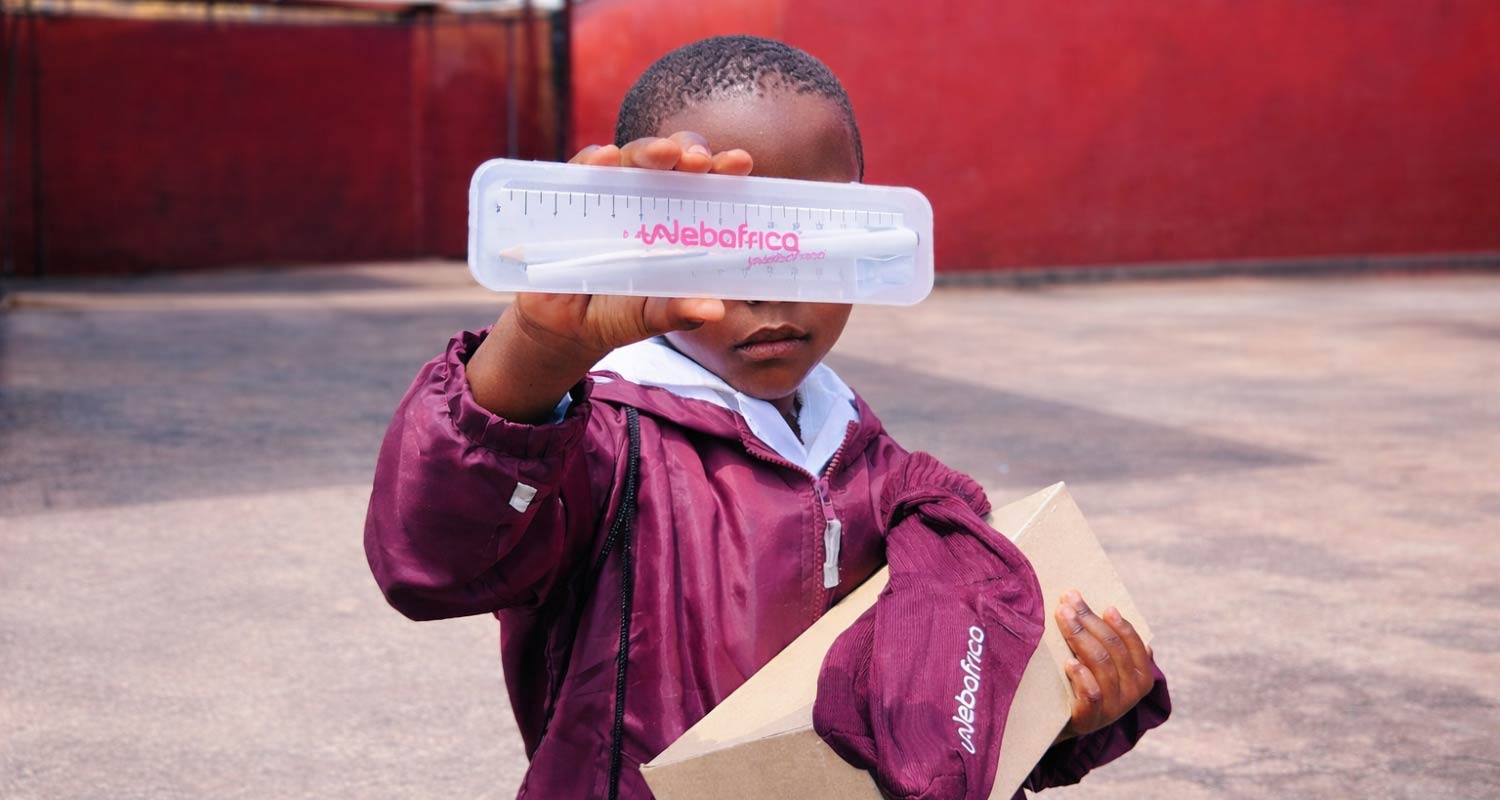
At Webafrica, we believe that no single entity can bridge this gap alone. It requires a collaborative ecosystem where internet service providers partner with established infrastructure leaders and non-profits to boost digital literacy. This is why we have partnered with two proven initiatives: Project Isizwe and Vumatel’s Fibre to Schools initiative.
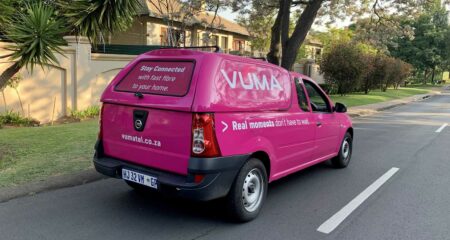
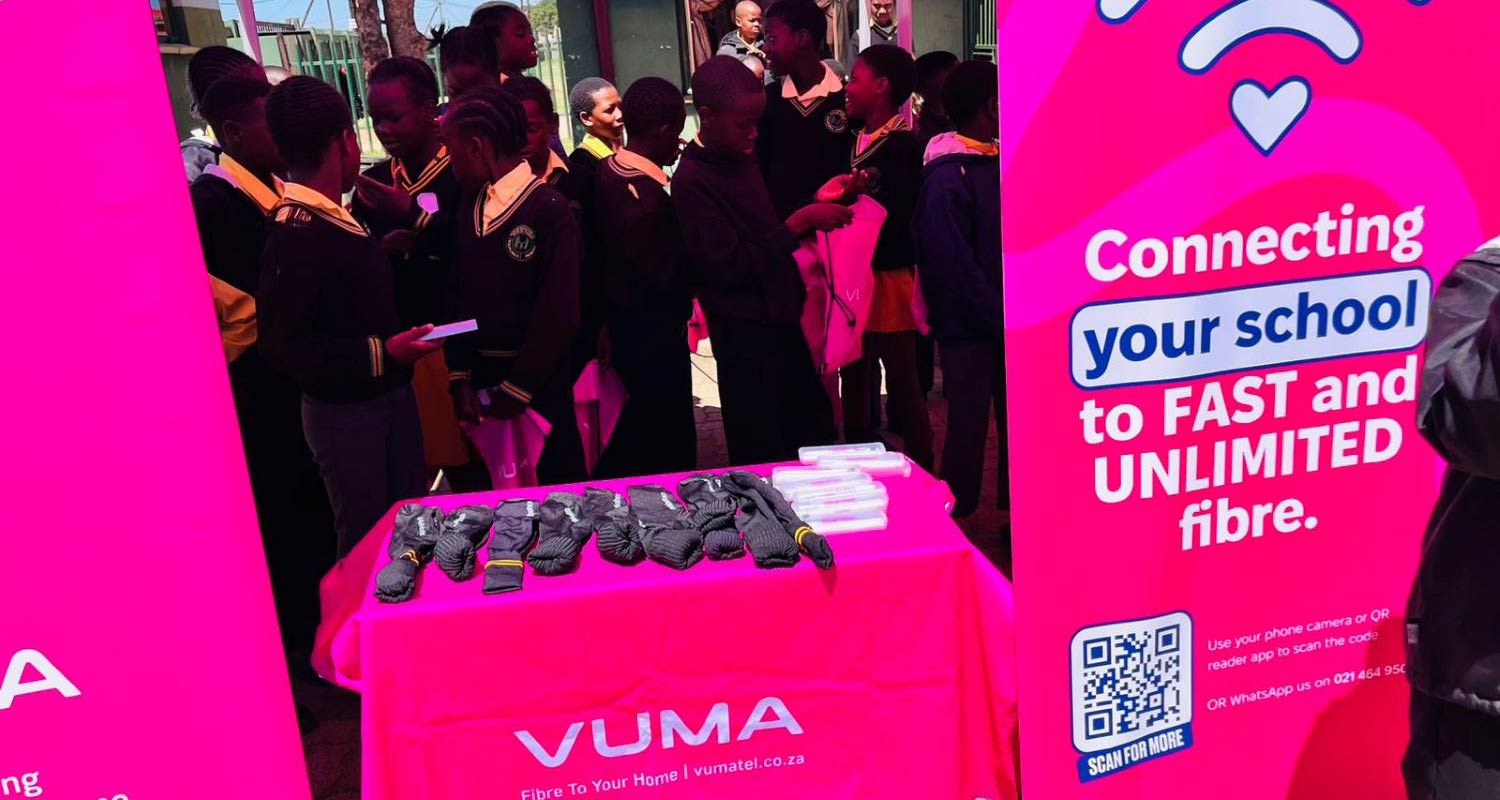
Vumatel’s project has already laid the groundwork by bringing free, uncapped 1Gbit/s fibre to more than 950 primary and high schools across South Africa, benefiting more than 655 000 learners and 25 000 teachers. By joining this ecosystem, Webafrica has been able to help accelerate this momentum, with about 400 schools benefiting from the partnership to provide free internet to underserved areas. In the past year alone, Webafrica has connected 60 more schools, helping to turn dark classrooms into digital hubs.
The results of this collaborative approach speak for themselves. In communities where these networks have been deployed – spanning Johannesburg, Ekurhuleni, Cape Town and KwaZulu-Natal – schools are reporting marked academic gains. Look no further than Thabo Secondary School in Soweto, which recorded a 98.4% matric pass rate in 2025 following its connectivity upgrade, or Zola Primary School, where the infrastructure powers the GirlCode coding club.
Voices from the ground: the direct impact of true connectivity
When high-speed fibre actually reaches the classroom, the change is immediate. The feedback from the ground moves the conversation from abstract infrastructure planning to real human impact.
- A J Mwelase Secondary School (KwaZulu-Natal): An educator from the school highlights how fibre bridges the resource gap: “The Wi-Fi has assisted the school in so many ways. The learning process is now easier as our educators are projecting lessons using the internet… Yes, we do have a shortage of textbooks. As I have said before, the school is still using Wi-Fi. We do virtual workshops, project lessons and download previous question papers and memorandums. This has changed the learners’ and educators’ teaching perspective. Everything is much easier to adapt to and it reduces time wasted. Lessons run very smoothly.”
- Walmer Secondary School (Western Cape): The school reports a complete shift in classroom dynamics and engagement: “The fibre connection has provided a stable network connection in classrooms, allowing teachers to access online resources, YouTube videos and digital learning material without needing to download content beforehand… From both a teaching and learner perspective, the free Wi-Fi has made lessons more engaging through multimedia and online tools. Teachers can easily access resources from their laptops and phones, while learners are developing valuable digital and research skills.”
- Pholosho Primary School (Alexandra, Gauteng): The school’s leadership emphasises how early-stage digital literacy has changed: “Fibre connectivity has made learning more fun, interactive and engaging for learners, while also improving teaching efficiency. Teachers can now access a wide range of online information, educational videos and digital resources to support lesson delivery. Internet access has improved language and mathematics teaching through the use of YouTube phonics videos, rhymes, Big Books and digital number charts. These tools are more colourful, clearer and easier for learners to understand, especially in classrooms with smartboards.”
The blueprint for sustainable ICT roll-outs
If we want to scale these successes nationally and eliminate the geographic lottery that dictates a child’s future, the information and communications technology (ICT) sector must adopt a new approach to corporate social responsibility:
- Prioritise classroom-first architecture: Stop measuring success by whether a school building is connected. Success must be measured by the number of classrooms and learners actively using high-speed bandwidth.
- Remove the data threat via zero-rating: School budgets should not be consumed by variable data costs. Providing uncapped, zero-rated fibre ensures that data limits never dictate a teacher’s curriculum or lesson plan.
- Build for ecosystem readiness: Connectivity is the foundation, but it requires support. Strategic roll-outs must be coordinated with hardware sponsors and teacher-training initiatives to ensure that when the 1Gbit/s pipe lights up, the school is ready to use it.
South Africa cannot afford to let another generation fall behind a digital wall. The infrastructure exists, and the commercial capability is there. Webafrica’s work over the past few years with these 400 schools is proof that when ISPs actively partner with initiatives such as Vumatel’s Fibre to Schools and Project Isizwe, we can change the educational trajectory of entire communities. It is time to pull the fibre out of the administrative offices and run it directly to the learners who need it most.
- This promoted content was paid for by the party concerned