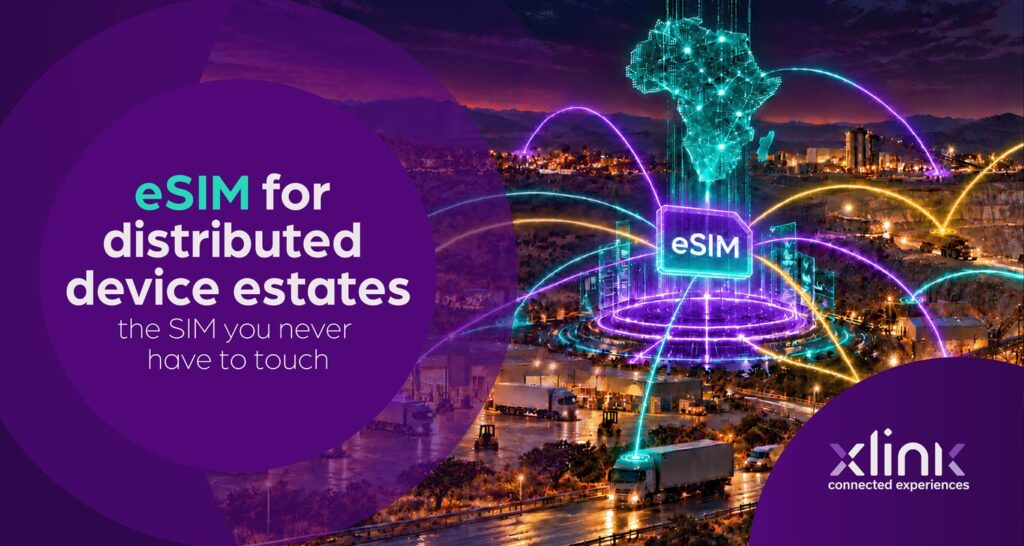
Ask your operations team one question. How long does it take, from the moment a device arrives on your loading bay, to that device being live on the network?
For most organisations still running a physical-Sim estate, the honest answer is weeks. Often it is not the device that is slow. It is the Sim.
Somewhere in that answer is a box of Sim cards in a warehouse, waiting to be paired with devices while a roll-out that should already be live stands still. Someone has to match devices to Sims, manage the stock and send a courier whenever a card needs replacing. Across hundreds or thousands of devices, those small delays add up.
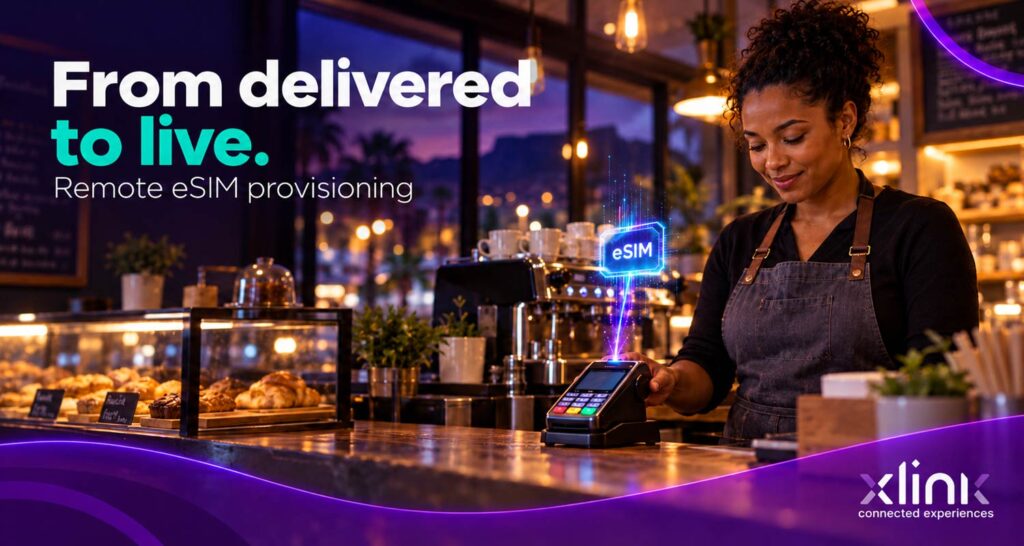
XLink eSim is live, and it removes that wait. Profiles are provisioned remotely, which moves activation from weeks to minutes. A device goes from delivered to live with no Sim stockpile, no manual pairing and no site visit.
The same holds after go-live. Consider a bank rolling out card machines to merchants in every province, a mine in Limpopo and a fleet crossing into Mozambique. Changing connectivity across that spread has meant shipping Sim stock or sending technicians to each site. With eSim, the change is made from one place.
Speed is the easy part
Most internet of things (IoT) eSim providers now make the same promise, so the better question is what the profile lands on. An eSim is how a connection is provisioned. What you provision it onto decides whether the site stays up.
A single-network connection gives you one link into the site and nothing behind it. Remote provisioning does not change that. If the network is weak where the device sits, the device is offline, and you are back to sending a technician to site.
A roaming or hybrid Sim looks like a second network on paper. It is not. It makes the device a guest on the second network, so it only moves after the first network has already failed, and it is never prioritised once it gets there. That is coverage, not uptime. Most eSim profile switching works the same way, moving only once a failure has been detected.
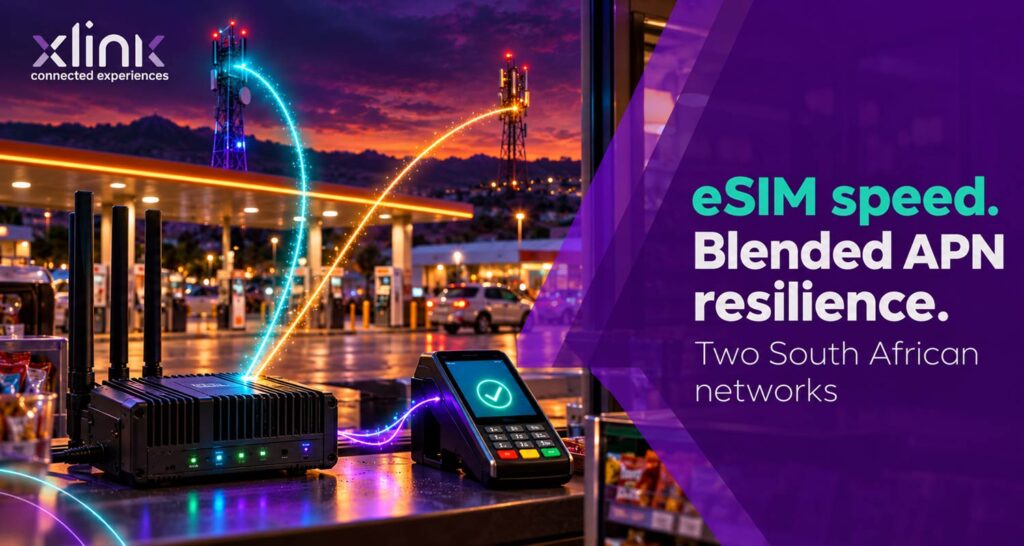
XLink Blended APN (access point name) closes that gap. Depending on the application, the eSim profile sits on a router or on the device itself, such as a card machine, and the service is the same as on plastic Sims.
The site is a full customer on two South African networks, so traffic moves before the session drops instead of after it fails. You never have to choose between provisioning a site remotely and making it resilient. It is the same service that keeps the card machines and ATM estates of four of South Africa’s five largest banks trading every day.
Blended APN is the most resilient option, not the only one. The same profile can provision a Secondary Failover path under an existing primary network, or an industrial build for ruggedised and remote sites. Protection should follow what each site costs you when it stops, not one standard applied flat across the estate.
Cross-border fleets are the one case where roaming is the right answer. Across the borders of the Southern African Development Community (Sadc), the service supports managed permanent roaming.
Once the devices are live
Someone still has to see the estate and fix it. Every physical Sim and eSim sits in one view on Helix, XLink’s connectivity management platform, so your team can see where problems are starting. When a problem needs a hand on the ground, 143 certified technicians work from 90 points of presence across all nine provinces, and 89% of service calls are executed within 100km of a technician.
Already running an eSim platform?
Some organisations have already made the move. If that is you, three questions are worth putting to your current provider. When a network fails, does the site move before the session drops, or after? When a device needs a hand on the ground, who arrives, and from how far away? And when something breaks, is one party accountable for every Sim in the estate, eSim and physical?
Moving to XLink does not change the eSim technology. XLink can answer all three, under one contract and one service-level agreement.
Start with the number
If you cannot say how long a device takes to go from delivered to live, start there.
XLink runs a complimentary deployment velocity assessment that maps your current device-to-live time, the field interventions behind it and what Sim logistics is costing you each year. You get the numbers whether or not you buy anything from us.
Name the three device roll-outs that took longest to go live this year. That is where we start.
Book a deployment velocity assessment.
- Read more articles by XLink Communications on TechCentral
- This promoted content was paid for by the party concerned