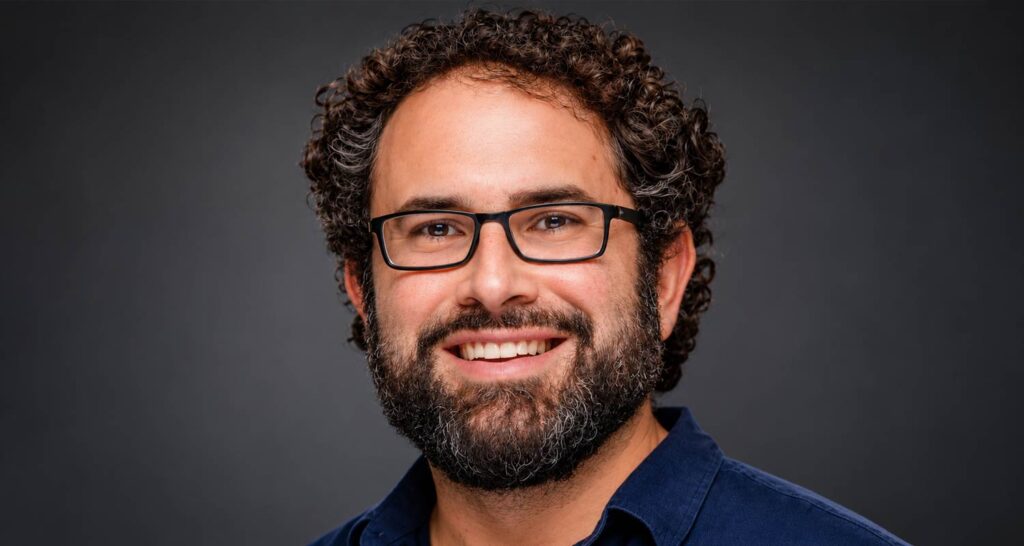
The academic leading the panel advising government on South Africa’s AI policy expects artificial intelligence to wipe out “ridiculous numbers of jobs” – but says there is too little evidence yet to deal with that properly in the policy.
Benjamin Rosman, who chairs the independent expert panel, told TechCentral on Wednesday that government is also free to ignore the panel’s advice, and that members may speak out about anything they saw on the inside.
The interview, for an upcoming episode of the TechCentral Show, took place five days before government’s drafting team must hand the redraft to communications minister Solly Malatsi on 30 November.
“This was something I was very interested in, and happy to see from the department – that they’ve kind of doubled down on us being an advisory panel and not taking responsibility for what’s in the final policy,” said Rosman, who directs the Wits Machine Intelligence and Neural Discovery (Mind) Institute.
I’m someone who got into the field very excited about the opportunities, but over time I’ve become more and more worried about the risks.
Benjamin Rosman
“The mandate for that is with the minister, which means that with us giving advice, the department can choose to follow it or not. We can have dissenting opinions. And in fact they even say that, if we want to come out … we’ve got the academic freedom to be able to criticise anything that we saw on the inside. And I really appreciate that.”
Malatsi withdrew the first draft in April after its reference list was found to contain fictitious sources, most likely generated by AI. In May, he appointed a seven-member panel of AI researchers, lawyers and governance specialists to ensure the revised policy was based on the “best available evidence”.
The pen, however, sits with a government drafting team led by the department of communications & digital technologies, which includes the presidency and the State Security Agency.
Rosman said the panel was about to receive “what should be the final version” for a last round of comments. “I haven’t seen how this is all catalysed together by the drafting team, taking all our ideas and just turning it into something that actually looks like a policy document,” he said. “But I’m excited based on the kinds of conversations we’ve been having.”
‘Lightweight’
The process was designed to be “lightweight”: a handful of formal meetings, individual sessions with the drafting team and a couple of rounds of written input on the major points members agreed or disagreed with, followed by email exchanges.
Asked why the State Security Agency sits on the drafting team, he said the aim was to involve any department that “could have written their own version of this document”. He added: “I would read less into the state security side of it, but more into other stakeholders in government that were thinking at this kind of level.”
The clearest signal of how the policy may change concerns the seven new institutions proposed in the withdrawn draft, among them a National AI Commission, an AI Ethics Board and an AI Insurance Superfund.
Rosman said the department itself recognised that those seven entities were not “particularly feasible by any means”. The panel’s discussions focused on where existing bodies could take on new functions instead.
“From the discussions we had, we’ve pruned that kind of completely down to: is there functionality that’s not really covered anywhere and doesn’t make sense to coalesce with any existing body? And that’s where something new needs to be created,” he said. “But otherwise we should be leveraging what we already have, in some cases strengthening capacity.”
Rosman also backed the department’s plan for individual sectors to write their own AI strategies from national guidelines. Listing a few priority sectors, as the original draft did, “almost closes the door on other areas”, he said.
Jobs and accountability
For Rosman, the central task was balancing opportunity against risk. “I’m someone who got into the field very excited about the opportunities, but over time I’ve become more and more worried about the risks,” he said.
“I don’t see a long game here where we don’t end up losing ridiculous numbers of jobs,” he said, noting that AI is now “solving these grand open challenges that no human’s been able to solve for hundreds of years”. (Days earlier, Anthropic mathematician Levent Alpöge had claimed a Claude-assisted proof of the Riemann hypothesis.)
Yet there was too little evidence to address job losses fully in the policy, Rosman said. “Because there isn’t a lot of evidence around this, this is early in the discussions around this topic. It’s hard to write this into the policy,” he said, adding that the panel had tried to find ways to talk about “sensitivity to these things”.
Because there isn’t a lot of evidence around this, this is early in the discussions around this topic. It’s hard to write this into the policy.
Benjamin Rosman
Given the scandal that sank the first draft policy, he said panel members were told “at the beginning and multiple times” to use AI responsibly. “If something comes out with your name on it, use all the tools and all the resources you have, but make sure you’re happy to have your name behind this thing.”
Internal government consultations are due to run from December to February, and the department aims to take the policy to cabinet by March 2027. Rosman said the process was “certainly moving a lot faster than I ever would have thought that it could”.
The timetable has slipped, though. In May, the department told parliament it was targeting cabinet by November. And on 17 November, officials told MPs they had no mandate to brief them on the redraft. The full TechCentral Show interview will be published next week. – (c) 2026 NewsCentral Media