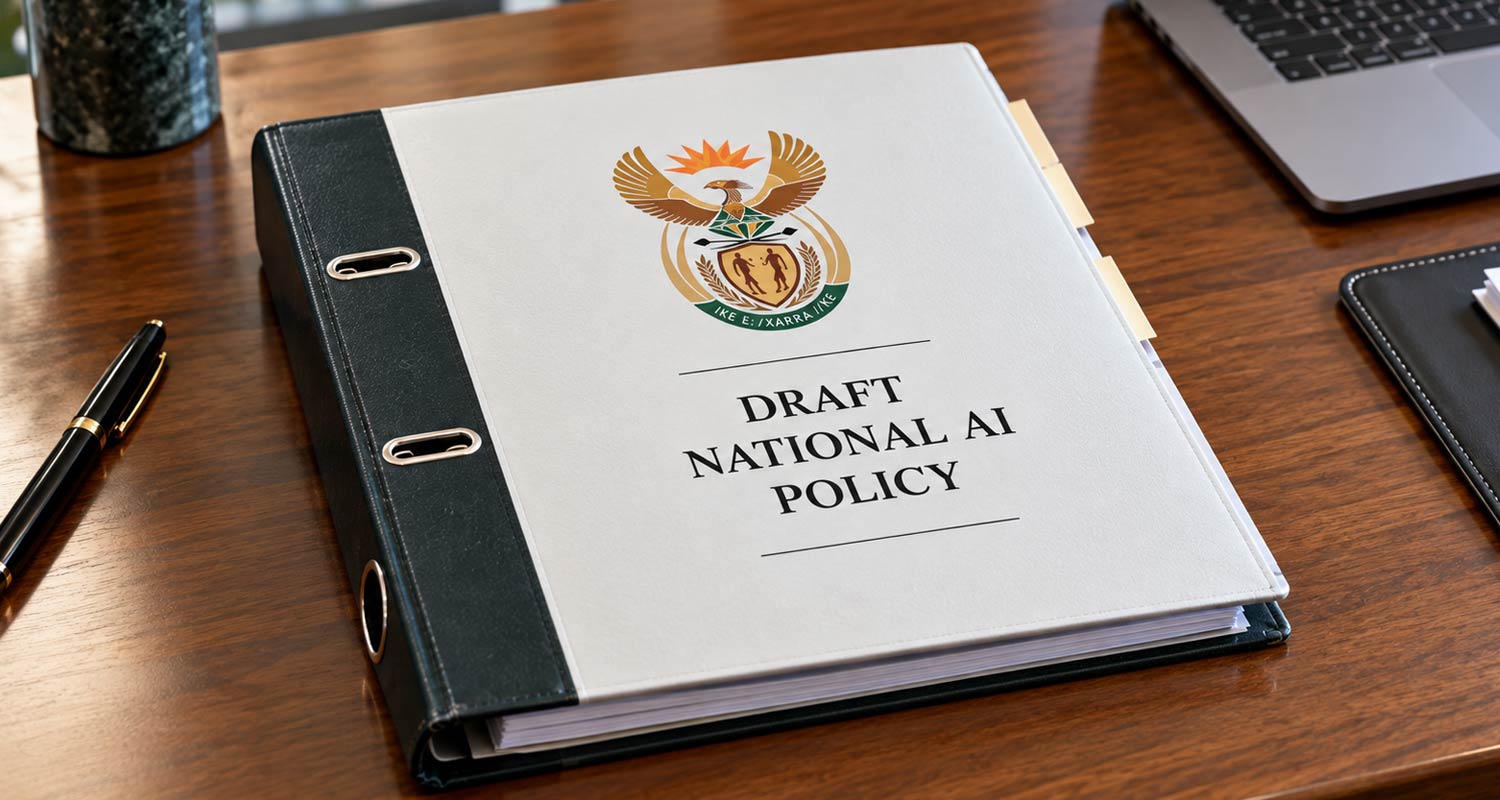
The public will not see South Africa’s redrafted national AI policy until cabinet approves it for comment, and it is now only due before cabinet by March 2027, months later than promised. The officials rewriting it have until 30 November to finish their draft.
Jeanette Morwane, acting deputy director-general at the department of communications & digital technologies and the project manager for the policy, set out the timetable on Thursday at a South Africa-Finland dialogue on AI, hosted by the Finnish embassy at the National Research Foundation in Pretoria.
“We are working really under pressure,” Morwane said. “We have a deadline of 30 November to submit to the minister.” By then, the drafting team must complete both the revised policy and a discussion document. Internal government consultations will follow from December to February, according to her presentation.
“There’s a whole lot of government process we have to go through to get consultations done before we can then submit to cabinet by March 2027,” she said.
Cabinet’s approval at that stage is mainly to gazette the policy for public comment, Morwane said. The department will then consolidate the comments and take the policy back to cabinet for final approval. She gave no date for that step.
Communications minister Solly Malatsi told Daily Maverick at GovTech in September that he aimed to have a draft before cabinet by the end of the financial year. That is four months later than the department told parliament in May, when it targeted cabinet by November and public comment in January 2027. In July, Morwane told TechCentral the policy would go to cabinet in November, with January as “the latest”.
The first draft was gazetted for comment on 10 April, but Malatsi withdrew it on 26 April after it emerged that its reference list contained fictitious sources. “This failure is not a mere technical issue,” he said at the time.
Implementation road map
In May, Malatsi appointed a seven-member independent expert panel chaired by Wits University AI researcher Benjamin Rosman. Morwane said the minister gave the panel a “policy framing document”, and each member then submitted advisory notes, which the drafting team is now analysing.
“To make sure that we don’t have similar challenges, the minister has also put in place a drafting team from government, led by the department,” she said. According to her presentation, the team also includes the presidency, the department of science, technology & innovation, the State Security Agency and the department of trade, industry & competition.
“The advantage as well, this time, is that as we are developing the policy in parallel. We are also developing an implementation road map so that we can immediately start implementing,” Morwane said.

Morwane said the policy discussions were focusing on compute and data sovereignty, and also on “model sovereignty”, to ensure large language models (LLMs) incorporate South Africa’s official languages. “What’s missing for us is there is a huge need for investing in computing infrastructure.”
One slide in her presentation said South Africa “holds a regional lead in AI readiness”, but that “regional peers are moving faster on AI implementation”. It cited Egypt’s Karnak, a national LLM launched this year. – © 2026 NewsCentral Media