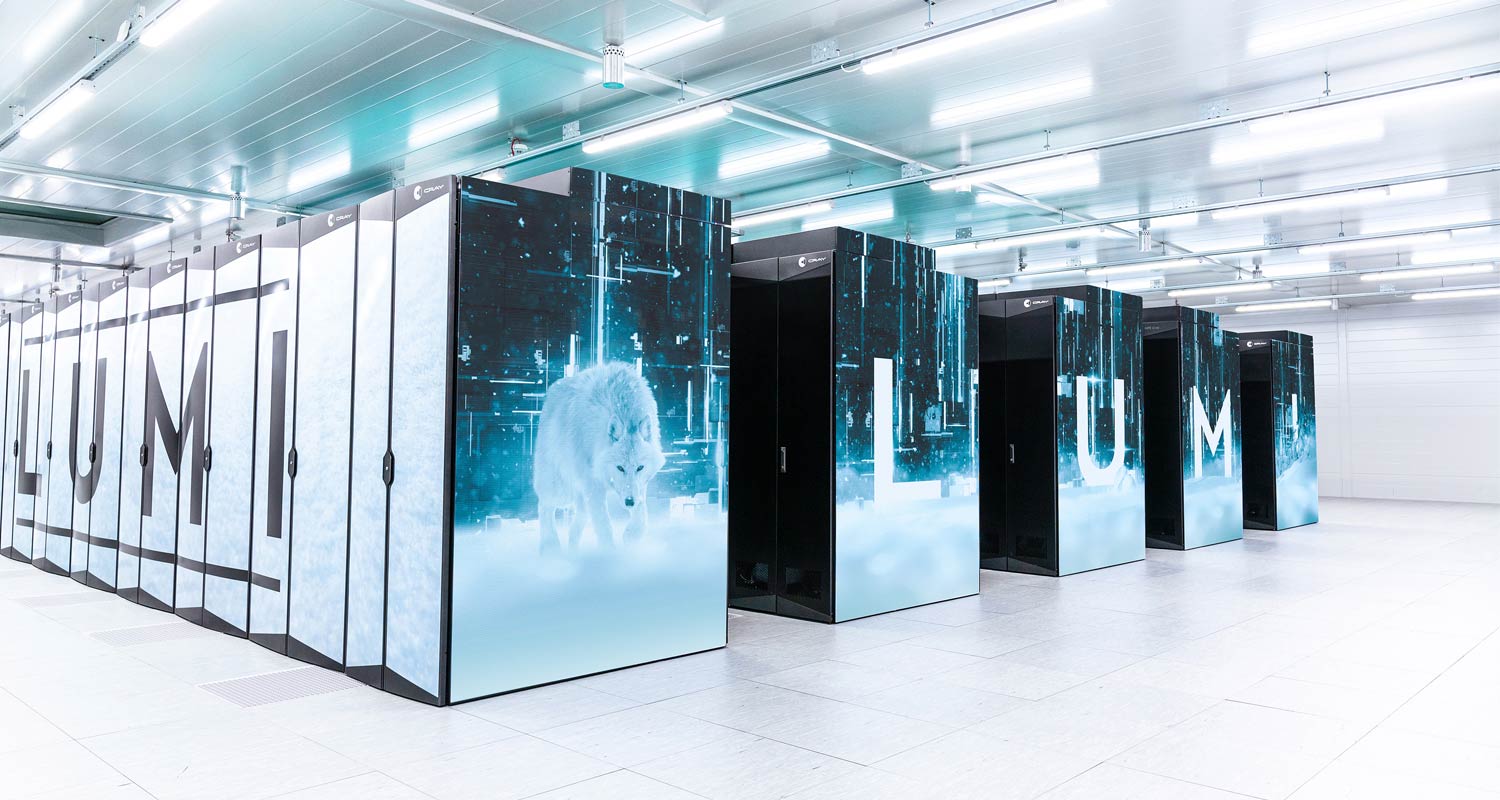
Finland has offered to help South African researchers gain access to Lumi, one of Europe’s most powerful supercomputers, as the two countries try to turn decades of goodwill into a formal partnership on AI.
The offer came at a South Africa-Finland dialogue on AI, hosted by the Finnish embassy at the National Research Foundation (NRF) in Pretoria on Thursday. For all the talk of friendship, no formal AI research agreement exists. Universities in both countries are already talking, Daan du Toit told TechCentral, “but there is no formal collaboration agreement yet. This dialogue is to set the foundation for that.”
Du Toit, deputy director-general for international cooperation and resources at the department of science, technology & innovation, said the government was willing to put money on the table.
He wants Finland involved in the Presidential PhD Programme, which President Cyril Ramaphosa called for in 2023 with an initial R1-billion to fund doctoral training at home and abroad. He also credited Finnish support in the 1990s and 2000s with helping to build the former Meraka Institute at the CSIR, which he said became the platform for the CSIR’s AI capabilities.
Damien Le Carpentier of CSC – IT Centre for Science, the company owned by the Finnish state and the country’s universities that runs Lumi — set out what Finland can offer. CSC will host South African staff and experts for short stays, provide training and exchanges for students and early-career researchers, and help researchers and companies gain access to Lumi or to Finnish AI expertise. It is also open to joint bids for EU funding through the EuroHPC Joint Undertaking, the EU body that funds and allocates supercomputer time, and Horizon Europe, the EU’s main research funding programme.
South African researchers cannot apply for time on Lumi on their own. The principal investigator on any project must be based in the EU or a country associated with its research programmes, according to Lumi’s own guidance. Partnering with European groups is the main route in.
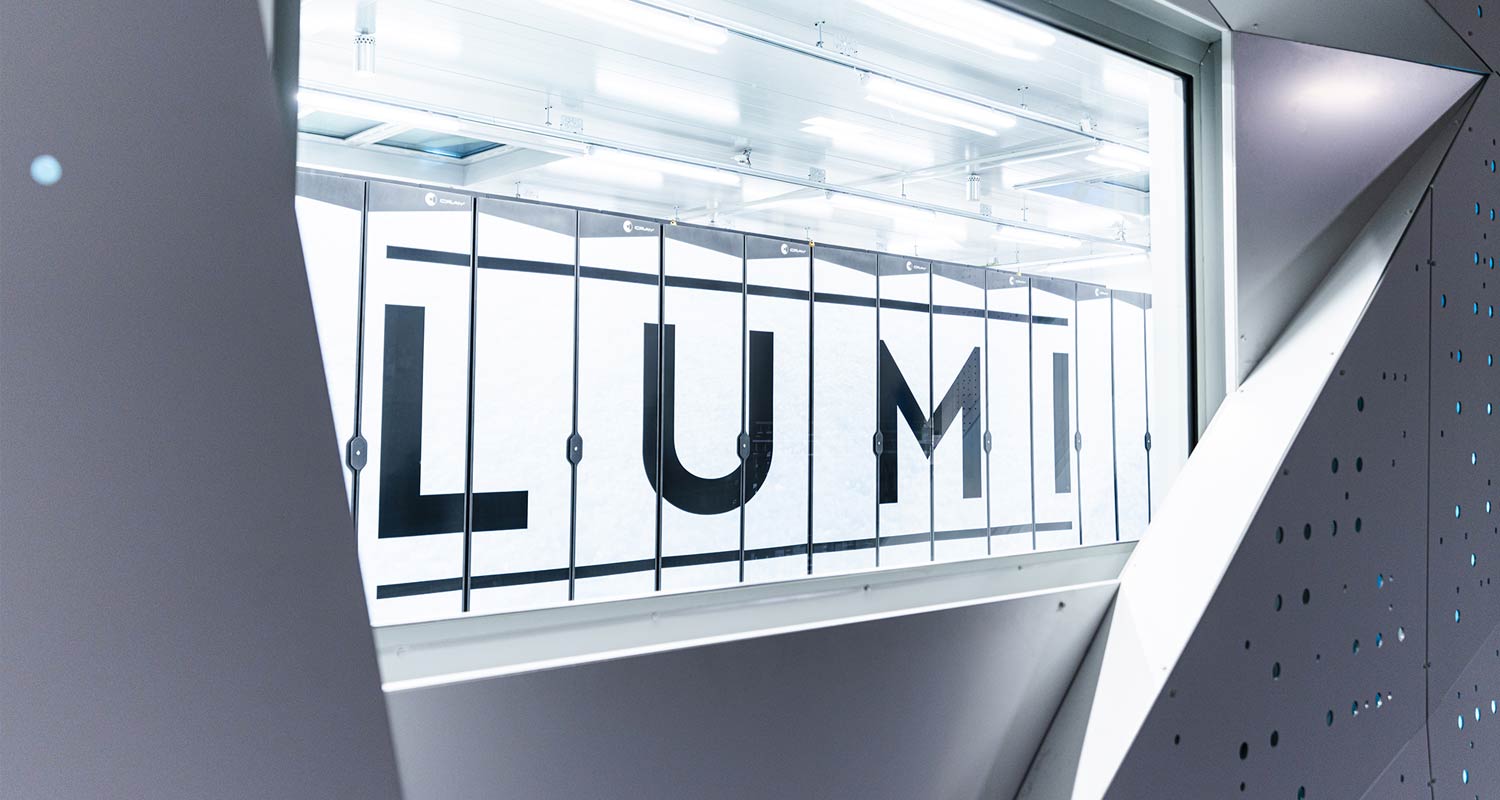
Lumi sits in a former paper mill in Kajaani, in eastern Finland. It is an HPE Cray EX system, and most of its muscle comes from GPUs. Its GPU partition has 2 978 nodes, each pairing a 64-core AMD processor with four AMD Instinct MI250X GPUs – 11 912 GPUs in all – while a separate partition offers more than 262 000 AMD Epyc processor cores for conventional workloads. It has about 120PB of storage across flash, disk and object systems, all linked by HPE’s Slingshot network at 200Gbit/s, according to Lumi’s published specifications.
On the Linpack benchmark used to rank the world’s fastest computers, Lumi sustains 379.7 petaflops, against a theoretical peak of 531.5 petaflops, and draws about 7.1MW of power. That made it the world’s third-fastest machine in 2023; newer systems have since pushed it down to 11th, as of June 2026. Even so, it is about 95 times as powerful as the 4 petaflop machine the CHPC is installing to replace Lengau. Lumi is jointly funded by the EuroHPC Joint Undertaking and a consortium of 11 European countries, led by Finland.
Le Carpentier said the data centre runs on 100% renewable energy and that waste heat from the computers warms the town. Finland could afford a machine of Lumi’s size only by pooling money with other European countries. “Everybody gets some share of a machine they could not have afforded alone,” he said.
Next is a Lumi AI Factory, part of an EU scheme that builds skills, data and services around a large supercomputer. The new system will cost more than €600-million, split equally between the European Commission and the participating countries, according to consortium member Cyfronet in Poland.
Buying the hardware is the easy part, Le Carpentier warned. A supercomputer lasts about five years, so funding has to be renewed constantly, and each generation costs more. “You need to have the ecosystem around. Without it, your machine is pretty much useless.”
A computing gap at home
South Africa’s own capacity is far smaller. Jabu Mtsweni, executive cluster manager for NextGen Enterprises and Institutions at the CSIR, said the Centre for High Performance Computing (CHPC) in Rosebank, Cape Town, has clusters of GPUs, the chips used to train and run AI models, “although limited”.
The CHPC’s Lengau supercomputer entered the top 500 list of the world’s fastest machines at 121st in 2016 but has since dropped off it. A 4 petaflop replacement, able to perform about four quadrillion calculations a second, is due by March, and Mtsweni said he hoped it would put South Africa back on the list.
“The computing gap still remains,” he said. “Sovereignty is not an event, but it is a journey.”
Mtsweni, who sits on the panel reviewing the national AI policy, said South Africa is seen as Africa’s leading adopter of AI but lags on policy. The draft policy “hit a snag”, as he put it, when communications minister Solly Malatsi withdrew it after it emerged that it cited fictitious sources. “AI adoption is outpacing policy,” Mtsweni said. – (c) 2026 NewsCentral Media