With 36% of votes counted by 2pm, the ANC had about 32% of the vote, narrowly ahead of the DA on 27%, results from the election commission showed.
Vote tallying was still at an early stage and the outcome could change significantly. But if those figures hold, the ANC would be down about 14 percentage points from its last municipal election result in 2021, which was already its worst in history.
The ANC, which has been South Africa’s largest party since it led the country out of apartheid in 1994, has tended to do worse in municipal elections than nationally and has acknowledged its failures in local governance.
The turnout suggests that ANC voters did not stay away – as many expected – but rather showed up and voted for alternative parties.
Louw Nel
But a dramatic loss could open up the field to more competition in the next national elections in 2029, when the pro-business DA hopes to become the country’s biggest party.
The 4 November vote was widely predicted to see the ANC lose ground nationally as voters punished it for high crime rates, corruption scandals and failing basic services such as water and electricity.
A projection by the CSIR suggested the ANC could end up in the final tally with the same percentage of votes as it has now. The CSIR projected a turnout of about 52%, which would be higher than in 2021, underscoring the level of frustration over municipal services.
‘Worst nightmare’
“The turnout suggests that ANC voters did not stay away – as many expected – but rather showed up and voted for alternative parties,” said Louw Nel, senior political analyst at Oxford Economics Africa, who said an outcome of 32% would be “the party’s worst nightmare coming true”.
The DA was performing strongly in several major cities, while in KwaZulu-Natal both former President Jacob Zuma’s uMkhonto weSizwe party and the Inkatha Freedom Party were ahead of the ANC, he said.
“It’s still early days. But I think we will do well and I am very excited,” said the DA’s mayoral candidate for Johannesburg, Helen Zille.
ANC chairperson Gwede Mantashe remained optimistic, telling journalists that the current result trends were not final. “We may improve… Major areas, townships and other areas have not been counted yet,” Mantashe said.
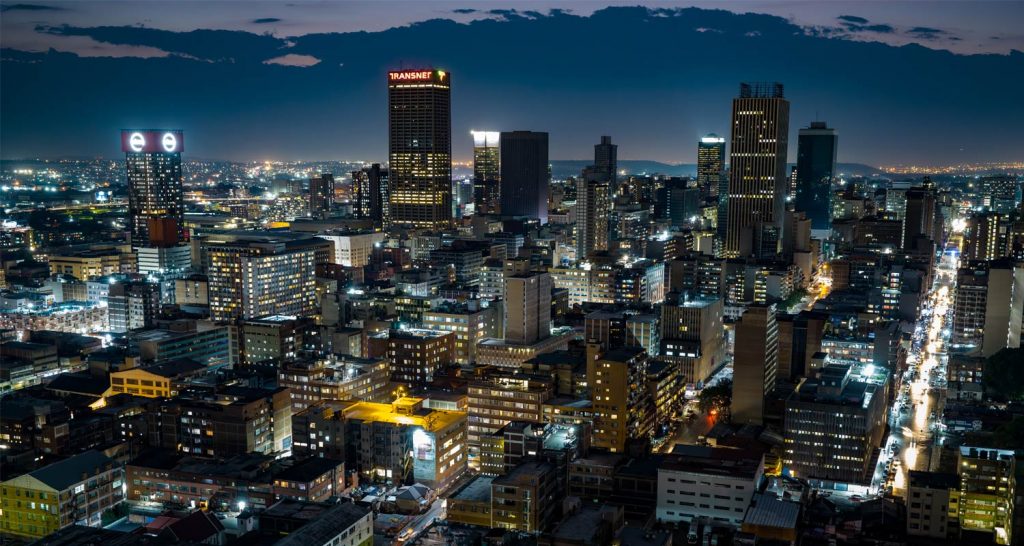
The DA declared an early victory in Cape Town, which was expected. Official data showed it had 60% of the votes counted so far in the city. In Johannesburg, the DA was leading, but the race was too close to call, with only 17% of votes counted.
Winning Johannesburg would be a major boost for the DA. But it is among several key municipalities where no party is expected to get an outright majority, meaning parties will have to negotiate to form coalition governments. They will have two weeks from the declaration of results – expected on Sunday – to do so.
Analysts have said the best option for stability in cities such as Johannesburg would be for the ANC to partner with the DA, mirroring the arrangement they have in national government. But the two are ideologically opposed on key issues such as racial redress. Action SA, a party founded by former Johannesburg mayor Herman Mashaba, was also performing strongly in early Johannesburg results and could emerge as a kingmaker. — Sfundo Parakozov and Nilutpal Timsina, with Anathi Madubela and Bate Felix, (c) 2026 Reuters