

Meta’s Ray-Ban and Oakley smart glasses go on sale officially in South Africa on Thursday, 26 November, priced from R8 399, a Meta spokesman has told TechCentral.
The date settles a question left open by Meta and its eyewear partner, EssilorLuxottica.
The cheapest model is the Oakley Meta HSTN, at R8 399. Ray-Ban Meta (Gen 3) costs from R8 599, Ray-Ban Meta Optics (Gen 2) from R8 999 and Oakley Meta Vanguard from R10 599, according to the companies’ “suggested entry pricing”.
That is roughly in line with US pricing. Meta sells the Gen 3 from US$449 in the US, or about R7 900 at current exchange rates. US prices exclude sales tax, whereas South African prices include VAT; add 15% and the US price works out at about R9 100.
The glasses will be available “nationwide at selected EssilorLuxottica optical retail partners, Oakley retail store and online”, the companies said, without naming the retailers.
Until now, they have been available locally only as parallel imports through retailers like Evetech. When TechCentral reported the launch plans in October, Evetech listed the standard Ray-Ban Meta Wayfarer from about R10 745, with warranty support running through the retailer rather than Meta.
Ray-Ban Meta (Gen 3) comes in Wayfarer, Aviator and Zena styles. For prescription wearers, there are “optical-first” Blayzer Optics and Scriber Optics frames (both Gen 2). The companies promise “unrestricted prescription options”, alongside Transitions lenses, which adjust their tint to ambient light, and polarised and blue-light-filter lenses.
Oakley Meta HSTN has a 3K camera and is rated IPX4 for water resistance. The Vanguard, aimed at runners and cyclists, has a 12MP ultra-wide camera with a 122° field of view, an IP67 rating for water and dust resistance, and integration with Strava and Garmin.
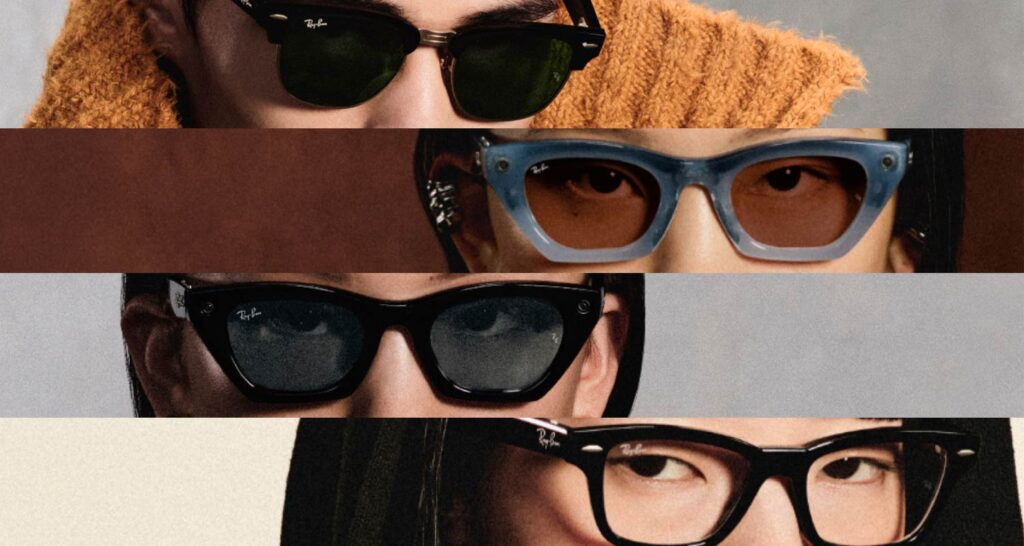
Ray-Ban Meta Audio, the brand’s first audio-only glasses, will follow in 2027 in Clubmaster and Burbank styles. It was not named when South Africa was added to the roll-out in September, and sells from $349 in the US.
The announcement does not mention Muse, Meta’s personal AI agent. In September, the companies said Muse would come to their AI glasses but be “available in US only”.
Privacy questions linger
The launch follows a September meeting at which Meta demonstrated the glasses to the Information Regulator. The watchdog told TechCentral in October that the Protection of Personal Information Act (Popia) could apply to footage in which people are identifiable, but that there is “no single law that would regulate such a product”. It also stressed that “any interaction with or awareness of a particular product or technology should not be seen as an endorsement”.
Section 6(1)(a) of Popia excludes processing “in the course of a purely personal or household activity”, a gap that could cover much everyday use of the devices. – (c) 2026 NewsCentral Media