As organisations race to deploy AI, a harder challenge is emerging: turning experimentation into measurable productivity without compromising data security, governance or resilience. An AvePoint webinar explored what it takes to make that transition.
AI has moved rapidly from boardroom ambition to everyday business reality. Organisations are investing in AI copilots, deploying AI agents and experimenting with increasingly sophisticated applications. Yet a fundamental question remains: is all this activity translating into meaningful business value?
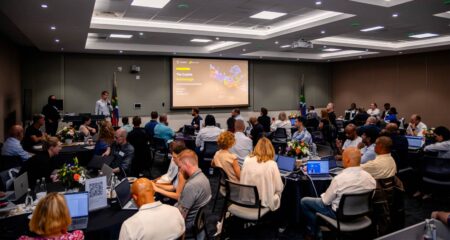
That question was central to a recent TechCentral-hosted webinar, Turn AI Hype into Enterprise-Grade Productivity, featuring Ashok Marimuthu, strategic consultant at AvePoint. Watch the webinar in full below.
The discussion moved beyond what AI technology can do to examine the foundations organisations need to deploy it confidently, securely and at scale.
The confidence gap
Marimuthu opened by highlighting what he described as an AI confidence paradox: organisations may believe they have adequate controls in place, yet still experience unauthorised AI access and related security incidents.
For him, the difference between a promising experiment and an enterprise-grade productivity programme rests on three interconnected foundations: data quality, data security and data resilience.
The first challenge is ensuring AI systems draw on accurate, relevant and current information. Organisations have accumulated enormous volumes of information, much of it redundant, obsolete or no longer appropriate for business use. Giving AI access to that information does not automatically make it more useful. It can simply allow outdated or unreliable information to influence decisions faster.
The second challenge is securing that information, and the third is ensuring the organisation can recover quickly when something goes wrong. Together, these foundations shift the AI conversation from technical possibility to operational confidence.
Watch the webinar
A recurring theme was the tension between innovation and control. Business teams want to move quickly, while technology, risk and compliance functions must protect the organisation.
Marimuthu argued that effective governance depends on shared responsibility and accountability, rather than placing the entire burden on administrators or central governance teams. “The success of governance actually depends on how easy we make it for the end users to take control of it,” he said. Using examples from AvePoint’s platform, he demonstrated how employees can identify risky documents, review access permissions and address potential exposures within their existing workflows.
The broader lesson was that governance should be embedded into how work happens, rather than introduced as an additional administrative obstacle. This becomes particularly important as organisations expand AI access across departments, business processes and external partnerships. Controls must reflect different types of information and risk, rather than relying on a single approach for every situation.
What happens when AI starts taking action
The conversation then turned to one of the more consequential developments in enterprise AI: the shift from assistants that answer questions to agents that perform tasks. These agents can access information, interact with other systems and carry out activities on behalf of users. Increasingly, they can also be created by employees without specialist development skills.
When AI moves from recommending actions to executing them, the governance challenge changes. Organisations need to know whether the information is accurate, and also whether they can control, trace and, when necessary, reverse what the technology does.
Organisations need visibility into which agents exist, who created them, what information they access and how they interact with other agents and applications. Marimuthu demonstrated how AvePoint approaches this challenge by providing an inventory of AI assets and visibility into their relationships, activities and associated risks. The discussion also highlighted why prevention alone is insufficient.
An agent designed to work with email, for example, could be granted permissions that allow it to modify or delete information. A configuration error, unintended action or compromised agent could therefore have consequences far beyond an inaccurate response. Even well-designed governance frameworks cannot eliminate every possibility of error. Organisations therefore need tested recovery capabilities, including reliable backups and clearly defined restoration priorities. Resilience means protecting information and also ensuring the business can recover when automation behaves unexpectedly.

Adoption is not the same as value and impact
Another important distinction emerged around how organisations measure AI success. Deploying hundreds of AI licences or measuring prompts, active users and adoption rates can demonstrate engagement, but not necessarily business value. Organisations also need to understand whether AI is reducing the time required to complete important tasks, improving quality, accelerating decisions or enabling employees to focus on higher-value work.
Marimuthu suggested examining how employees use AI in their daily work, identifying those achieving tangible benefits and learning from their practices. Those insights can inform targeted coaching, better use-case development and the reallocation of licences to employees who are more likely to benefit.
He also addressed the relationship between Microsoft’s native security capabilities and broader governance requirements. Microsoft Purview provides important native capabilities for information protection, data security and compliance. AvePoint complements these capabilities by helping organisations operationalise governance at scale, continuously assess their data environment and translate identified risks into practical remediation and ongoing controls.
The distinction matters: having policies and tools in place is not the same as ensuring they work consistently as information, users and AI applications change.
A practical route out of pilot mode
For leaders looking to move beyond experimentation, the discussion offered a practical starting point: understand your data, establish visibility over your AI environment and prioritise the governance gaps that matter most.
Asked what organisations should prioritise over the next 90 days, Marimuthu proposed three actions:
- First, assess the existing data estate to understand information quality, exposure and security risks.
- Second, establish visibility into the AI environment, including sanctioned and unsanctioned tools, deployed agents, usage patterns and interactions with enterprise information.
- Third, use those findings to build a prioritised road map for addressing risks, improving governance maturity and scaling adoption.
Organisations need not perfect every control before progressing. They do need to understand their current position and make deliberate decisions about where to invest and intervene.
The next phase of enterprise AI will be shaped less by how many tools organisations deploy, or how sophisticated their agents become, than by whether they can trust their information, govern increasingly autonomous systems and demonstrate meaningful business outcomes. As the discussion illustrated, AvePoint’s approach to data quality, security, governance and resilience provides an important foundation for that confidence.
The real test of enterprise AI is whether organisations can make it work safely, reliably and at scale, while delivering value that shows up beyond the pilot.
- Read more articles by AvePoint on TechCentral
- This promoted content was paid for by the party concerned