Microsoft on Wednesday unveiled an AI coding model that can run directly on PCs, and new security technology to prevent AI agents from accessing data without permission, challenging Apple’s push to bring more AI into personal devices.
At the event in San Francisco, the software company also presented a high-powered Surface laptop called Ultra, powered by Nvidia’s RTX Spark chips. Redmond, Washington-based Microsoft is seeking to turn Windows into a platform for AI agents to handle tasks such as writing computer code or tackling complex business projects on desktops and laptops.
For Microsoft, the move represents a bet that some work that now happens in its costly Azure cloud computing data centres can shift to high-powered Windows machines in businesses and homes – a market where the company retains a stronghold, and where its customers foot the hardware bills. It is a market opportunity rival Apple is also chasing with new Mac computers.
For Nvidia, cracking the Windows PC market could help it go after one of the last major markets dominated by Intel and AMD.
As a guardrail against increasingly autonomous AI agents that have created security risks, Microsoft said it was releasing Microsoft Execution Containers, a tool to prevent agents from accessing data and performing unauthorised tasks when running on a laptop or desktop machine. Anthropic, OpenAI and Nvidia will use the tools, said Pavan Davuluri, executive vice-president for Windows and devices.
“We needed to make the desktop the most secure place for agents to execute,” said Microsoft CEO Satya Nadella.
Davuluri said new tools would let IT departments set rules for agents, and the Windows operating system would enforce those rules on each employee’s machine.
Building and deploying agents
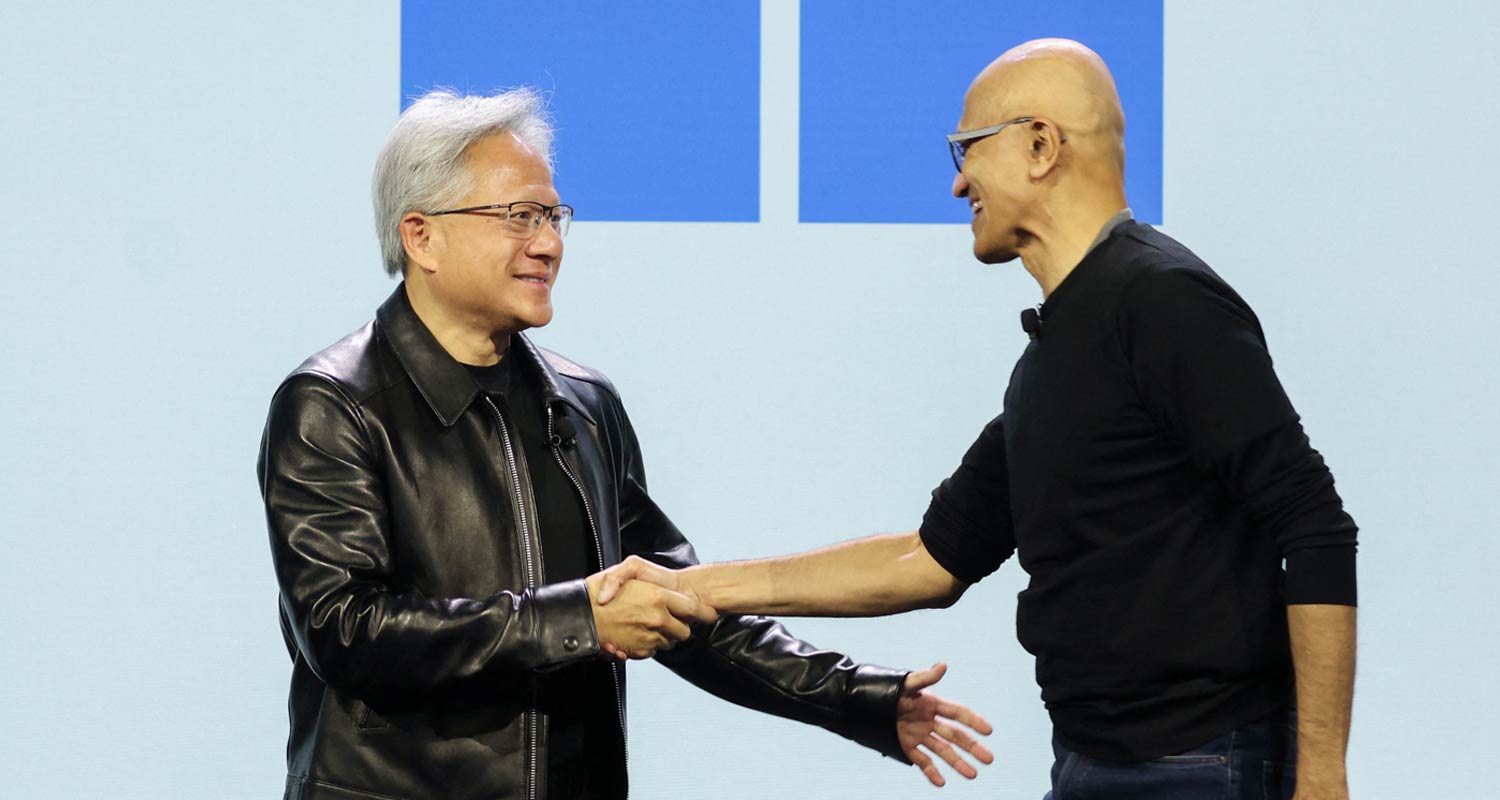
Nvidia CEO Jensen Huang, who joined Nadella on stage, said Microsoft’s new execution container technology, known as MXC for short, “is going to revolutionise how agents are built and deployed”.
“Without it, agents are a complete non-starter,” he said.
Nvidia is trying to prevent a repeat of the hack of AI hub Hugging Face, while Apple is looking to tighten up the process for giving AI agents full access to a Mac’s hard drive.
Microsoft also unveiled AI models that previously required cloud access but can now run locally on high-powered Windows desktops and laptops, including Nvidia’s open-source Nemotron model. Davuluri said a version of Chinese AI firm DeepSeek’s V4 model can run on machines with at least 60GB of memory and outperform OpenAI’s GPT-5 on some coding and reasoning tasks.
Microsoft is taking a similar approach with its own Copilot AI assistant, splitting tasks between the cloud and individual laptops.
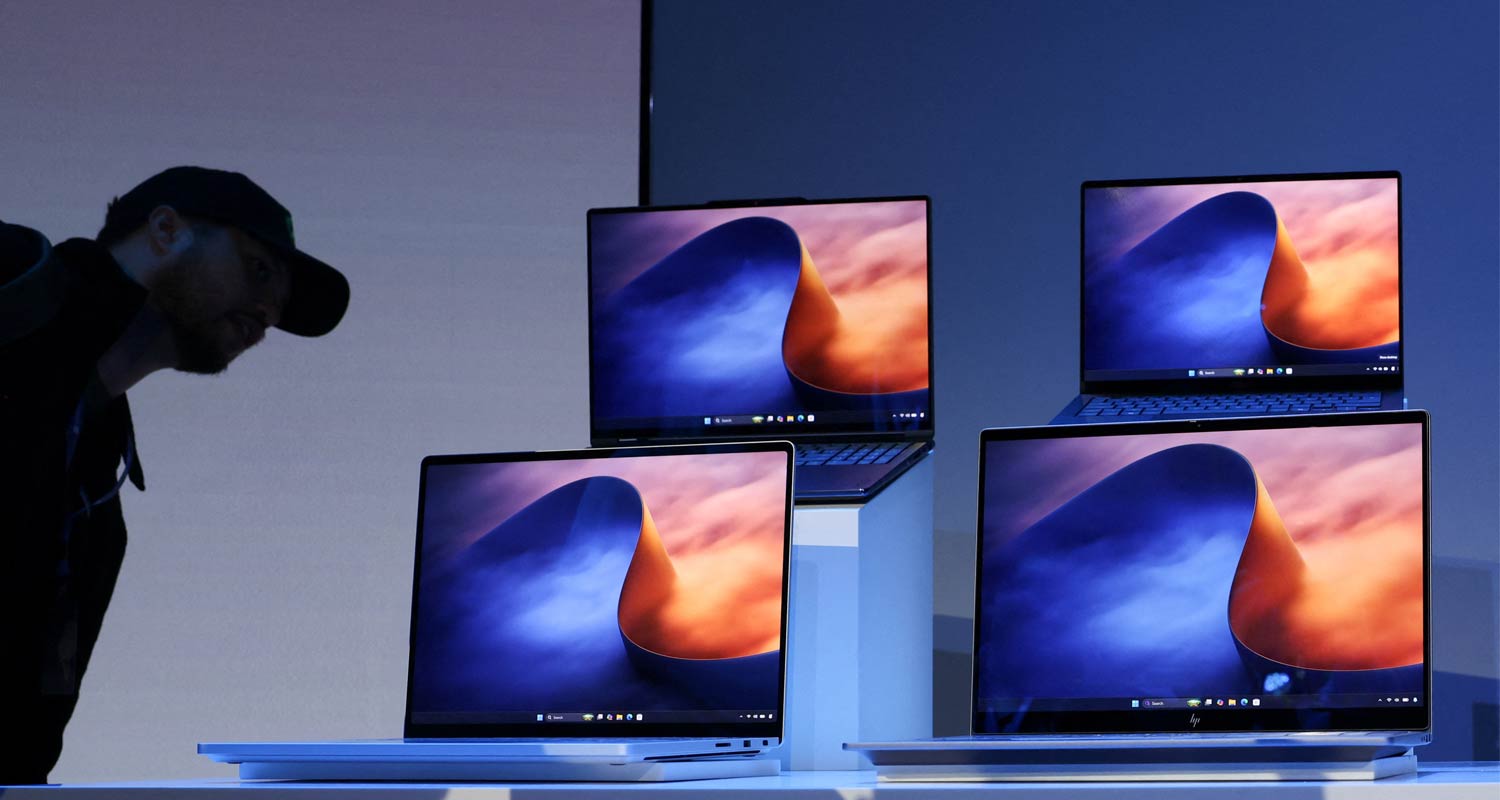
“Copilot will still use the cloud for the hardest tasks, but for times when cost or privacy matter more, it can delegate down to local models that run directly on your computer,” said Microsoft’s Copilot chief, Jacob Andreou.
Davuluri also said Meta’s Muse personal assistant will come to Windows devices as a native app, using some of Microsoft’s new security tools, and that OpenClaw, the open-source AI agent system, can also work with those tools.
Price barrier
One of the key challenges Microsoft and Nvidia face is the steep pricing of these devices after a memory chip crunch drove up costs.
The new Surface Laptop Ultra will start at US$2 599 and rise to $5 899 for a model with a 20-core processor, 128GB of memory and 1TB of storage.
Apple’s MacBook Pro with a 40-core graphics chip, 128GB of memory and 2TB of storage costs $6 700, although the machines are not directly comparable. Microsoft’s entry-level Ultra costs more than Apple’s $1 999 base MacBook Pro, but comes with 24GB of memory, compared with 16GB on Apple’s entry-level model.
When Microsoft first pitched the idea of running AI tasks on PCs two years ago to save costs, the laptops were mostly priced below $2 000. But Nvidia has raised the price of an AI desktop machine called the DGX Spark by about 75% since its launch, to $6 950, amid rising memory costs.
Two years ago, “the software wasn’t ready, but the hardware was. Now the software is ready and the hardware is too expensive to actually run it locally,” said Anshel Sag, an analyst at Moor Insights & Strategy. “So it’s becoming this thing where only the people who have the budget can really afford to run AI locally.” — Stephen Nellis in San Francisco, with Jaspreet Singh and Unnamalai L in Bengaluru, © 2026 Reuters