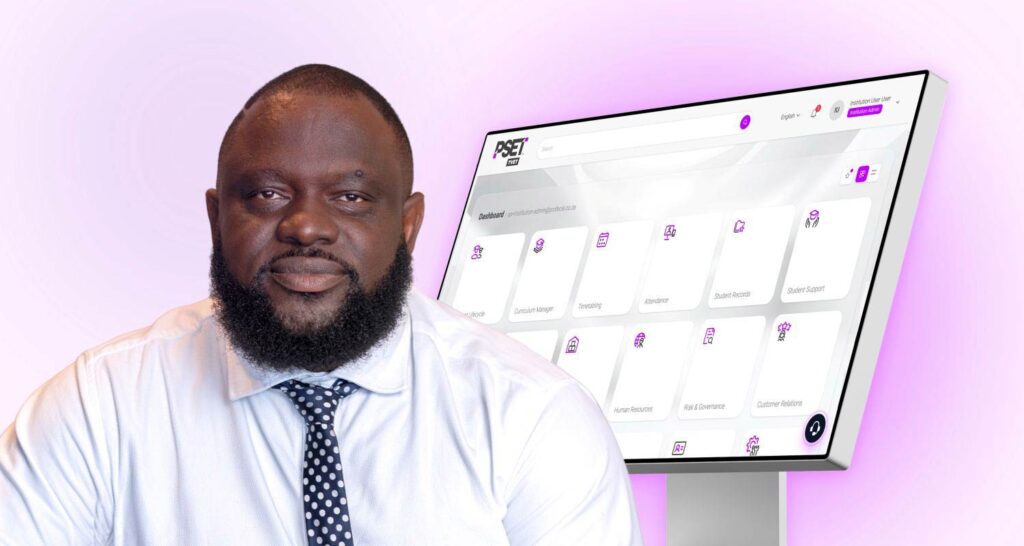
PSET launched its platform for universities and technical and vocational education and training (TVET) colleges in October at Purcon 2026, but its CEO says that is only the first step. The company’s longer-term goal is to follow learners through every stage of their education, from school to higher education and beyond.
“We have a bigger vision,” said Ebenezer Smith, CEO of PSET. “We’ve got PSET at universities and PSET at TVET colleges, and we are going to PSET schools. We really want to take the learner through all aspects of their journey in education. From school, into higher education and beyond.”
Data as the starting point
At the heart of that vision is a simple idea: education data should live in one place and move freely to the people who need it.
“Data is everything at this point,” Smith said. “Data is the new gold. We’ve heard that phrase for a while, and that’s where we start. We’re saying we need a single source of truth for all data.”
It is a need sector leaders recognise. Thembi Tabatha, director of procurement at the Vaal University of Technology, said institutions should be using data to get ahead of student needs. “We need to pay more attention to data mining, and collect as much data about students as possible, so we can respond proactively instead of waiting for something to happen,” she said.
To this day, much of the sector still runs on legacy systems. Information moves slowly between funders, institutions and students, and each institution pieces together its picture from several disconnected tools. PSET’s answer is one integrated ecosystem that links funders such as the National Student Financial Aid Scheme (Nsfas), institutions, students and other stakeholders.
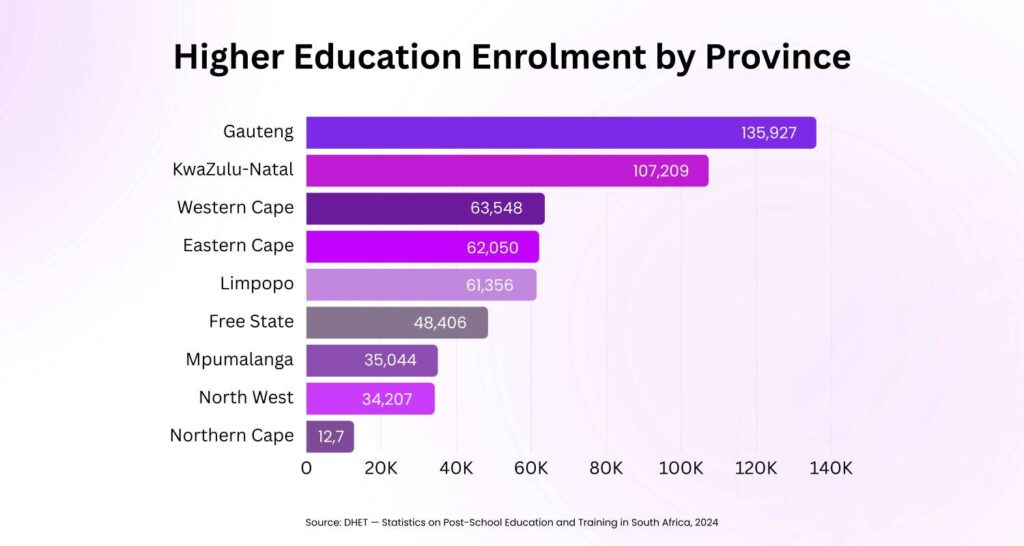
The pressure is felt most at large institutions. Nelson Mandela University enrols more than 34 000 students in an academic year. “That’s quite a lot of work that needs to be done,” said Sydney Maqoqa, deputy director: ICT customer services at the university. “A lot of automation is needed, especially at this time.”
“That’s really the problem we set out to fix,” Smith said. “It brings the best interfaces and user experience, and then core functionality as well, to the sector.”
Built for the post-school system
The company’s name reflects where it began. PSET stands for Post-School Education and Training, the sector term for all education after matric: universities, TVET colleges and community education and training colleges.
“We spent many hours trying to decide what the apt name for our product would be,” Smith said. “Because we initially set out to solve issues in the higher education space, we chose a term everybody in that space knows. We are effectively building the ERP for the PSET system.”
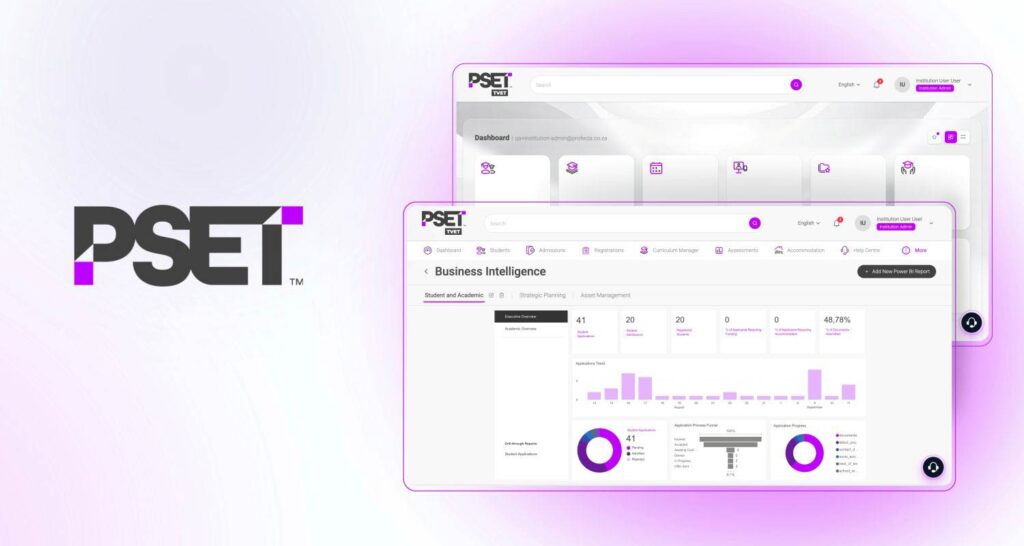
That focus shapes the platform. PSET UNI is designed for universities managing complex academic, research and governance operations. PSET TVET is designed for colleges running workplace learning, multi-campus operations, and reporting to the department of higher education & training and Nsfas. Both share the same foundation.
Why it matters for students
For Smith, connecting the system is ultimately about students. When admissions, finance, academic records and student services share the same information, institutions can respond faster and support students better at each milestone.
Tabatha agreed. “If we knew the thought process of students, it would enable us to design our product offering and our systems to suit that,” she said.
PSET’s own guiding principle puts it this way: when every stage of the student journey is connected, every student has a greater opportunity to succeed.
“That’s where we’re really going to see the difference,” Smith said, “where PSET comes in, disrupts, and ultimately adds value.”
PSET was launched at Purcon 2026, hosted by Purco SA at the Sandton Convention Centre on 13-16 October 2026. More information is available at pset.tech.
- Read more articles by PSET on TechCentral
- This promoted content was paid for by the party concerned