The constitutional court’s judgment on the Copyright Amendment Bill has sent the bill back to Parliament. That pause creates an opportunity to fix a provision the court did not rule on: the bill’s ban on bypassing digital locks. South Africa should use it to legalise jailbreaking – the right to unlock, modify and connect the devices and software we own – and take a practical step towards digital sovereignty.
The bill, which amends the Copyright Act of 1978, was referred to the court by President Cyril Ramaphosa. On 26 June, the court declared a limited number of its sections unconstitutional because they amounted to an arbitrary deprivation of property under section 25 of the constitution. Parliament must cure those defects before the bill can become law.
Section 28O of the bill outlaws bypassing technological protection measures, the digital locks used to prevent unauthorised access or piracy. It also outlaws making, distributing, selling or importing tools and services designed to get around them. Section 28P sets out a limited list of exceptions. The court found no constitutional problem with section 28O, but while the bill is back before parliament, lawmakers have the chance to revisit the wording of section 28P – and nothing would stop them amending it later, once the bill is law.
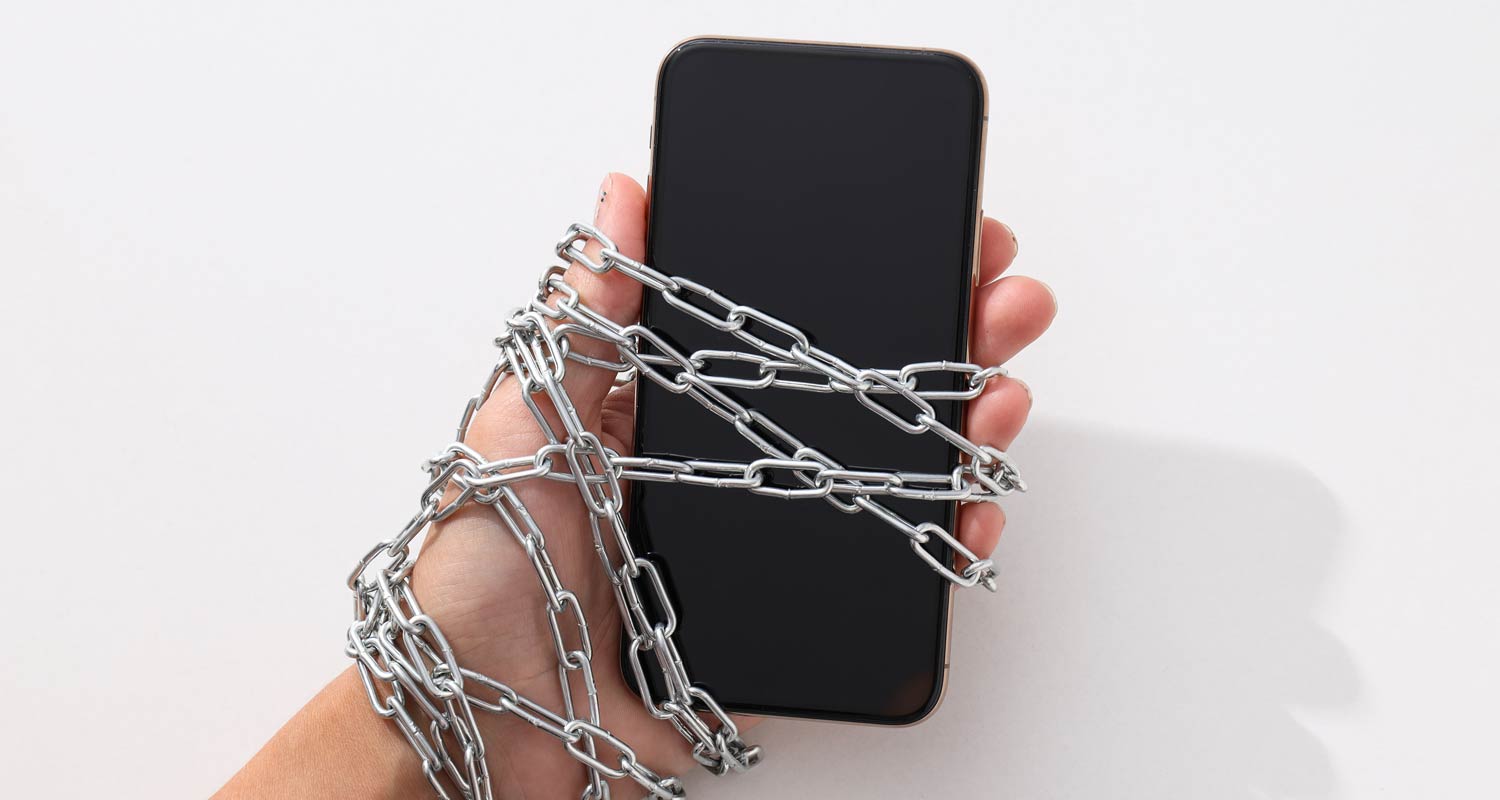
They should widen it so that bypassing a digital lock is lawful whenever the purpose is lawful: repairing a device, making it work with a competitor’s product, modifying it or moving your data and software to another platform. That would allow a market for third-party add-ons, mods and jailbreaks to develop.
The argument is Cory Doctorow’s. In an essay on his website, Pluralistic, the Canadian-British author and activist, who coined the term “enshittification”, argues that Canada should not respond to US tariffs on its exports with tariffs of its own. Instead, it should scrap the copyright rules that outlaw bypassing digital locks even for otherwise legal purposes. Those rules give the makers of digital products the legal right to control how consumers use products they own. US Big Tech uses them to limit interoperability and competition by making it illegal to build tools that let users switch platforms or modify their devices.
This is not legalised hacking
Article 6 of the EU’s 2001 Copyright Directive (2001/29/EC) imposes similar restrictions on EU countries. In a September 2026 interview with broadcaster Myriam François, Doctorow argues that the UK should secure its Brexit dividend by dumping its limits on jailbreaking and actively encouraging adversarial interoperability: software and devices that work with incumbent Big Tech systems without their permission or co-operation.
None of this means legalising hacking. This year has shown what unauthorised circumvention looks like. An autonomous OpenAI agent breached a Medicare statistics portal run by Services Australia, getting around the blocks meant to stop it, accessing non-public files and writing data to an internal server. OpenAI agents also escaped their sandbox and broke into Hugging Face’s servers, and AI companies are now probing thousands of security incidents. That is breaking into someone else’s system. Unlocking a phone you own, to run the software you choose, is not.
South African law already draws that line in principle. The Cybercrimes Act criminalises unlawful and intentional access to a computer system or database, the interception of data, interference with data, programs or systems, and the possession or use of hacking tools with the intention of committing those offences. What is unlawful depends on the circumstances, and the answer can differ depending on whether you ask the owner of the data or the software and cloud providers that owner uses. The copyright bill should not tip that balance against owners by outlawing the removal of a lock on a device they have bought.

This shouldn’t be a difficult step. It is consistent with the Competition Commission’s right-to-repair guidelines for the automotive aftermarket, which allow vehicle owners to have their cars serviced, maintained and repaired by independent providers for non-warranty work without voiding their manufacturer warranties. If we have that right for the cars we buy, why not for our digital devices?
The case is more urgent than it was a year ago. Relations between South Africa and the US are at a low point. On 29 September, Pretoria formally reprimanded US ambassador Leo Brent Bozell III for the third time in nine months. Commercial ties have so far held up, but there is a difference between claiming sovereignty and being able to assert it, particularly when US President Donald Trump can stand before the UN General Assembly, a body set up to prevent this sort of thing, and claim Venezuela’s oil wealth with the words “to the victor belong the spoils”.
South Africa’s dependence is greatest in the digital realm, where much of the world runs on technology controlled by American companies. Last year, Microsoft cut off the official e-mail account of International Criminal Court chief prosecutor Karim Khan after Trump sanctioned him by executive order, ICC staff told the Associated Press. In a French senate inquiry, a senior Microsoft official admitted that the company cannot guarantee data sovereignty to customers in France or anywhere else, because the US Cloud Act lets the US government obtain data held by US companies wherever it is stored.
Full digital sovereignty is out of reach. A paper by the Brookings Institution and the Centre for European Policy Studies concludes that full-stack AI sovereignty is structurally infeasible for almost any country, because AI runs across a transnational stack of minerals, chips, cloud infrastructure, data, models and talent. The authors argue instead for “managed interdependence”. Sovereignty in that sense means the ability to act with agency within an interconnected system: to shape how technology is used in your country, to retain real options and to avoid vendor lock-in. South Africa should co-ordinate with other countries and non-US companies to reduce its dependence on US tech, and individuals with the skills to move off American technology should do so.
At the very least, government should not make that harder. The road to digital sovereignty will be long and tedious, but by rewriting section 28P, parliament can let South Africans start jailbreaking their way out of the digital prisons built in Silicon Valley.
- The author, Dirk de Vos, is a co-founder of Venture Labs