
Close Menu
TechCentralTechCentral

    Subscribe to the newsletter

    Get the best South African technology news and analysis delivered to your e-mail inbox every morning.

    Facebook X (Twitter) YouTube LinkedIn
    WhatsApp Facebook X (Twitter) LinkedIn YouTube
    TechCentralTechCentral
    • News
      AI spending now dwarfs the railway and dot-com booms

      AI spending now dwarfs the railway and dot-com booms

      4 October 2026
      Meta's smart glasses are officially coming to South Africa - Mark Zuckerberg

      Meta’s smart glasses are officially coming to South Africa

      2 October 2026
      Eskom has a R1.20/kWh offer for bitcoin miners

      Eskom has a R1.20/kWh offer for bitcoin miners

      2 October 2026
      Usaasa consults on universal access as its abolition stalls

      Usaasa consults on universal access as its abolition stalls

      2 October 2026
      Frogfoot plots acquisitions as Octotel and MetroFibre weigh a merger - Shane Chorley

      Frogfoot plots acquisitions as Octotel and MetroFibre weigh a merger

      2 October 2026
    • World
      BMW restructuring plan bets on AI and new models

      BMW restructuring plan bets on AI and new models

      1 October 2026
      OpenAI's rogue agent problem keeps getting bigger - Sam Altman

      OpenAI’s rogue agent problem keeps getting bigger

      28 September 2026
      The new battle over the desktop

      The new battle over the desktop

      23 September 2026
      AMD is now worth a trillion dollars - Lisa Su

      AMD is now worth a trillion dollars

      22 September 2026
      Anthropic weighs new model launch to blunt OpenAI's Astra surge - Anthropic CEO Dario Amodei and OpenAI CEO Sam Altman

      Anthropic weighs new model launch to blunt OpenAI’s Astra surge

      21 September 2026
    • In-depth

      10 days that changed the course of AI

      21 September 2026
      Meta to the AI industry: slow down without us - Mark Zuckerberg

      Meta to the AI industry: slow down without us

      16 September 2026
      Google DeepMind CEO Demis Hassabis. Image: John Sears

      The plan to stop AI from breaking the world

      16 July 2026
      The internet has a Strait of Hormuz problem

      The internet has a Strait of Hormuz problem

      15 July 2026
      AI boom sparks rally, frenzy and fear

      AI boom sparks rally, frenzy and fear

      11 June 2026
    • TCS
      Lexi Novitske, general partner at Norrsken22, on the TechCentral Show

      TCS | Norrsken22’s Lexi Novitske on how China is winning African tech

      1 October 2026
      TCS | Dominic White and Adam Ely on AI agents going rogue

      TCS | Dominic White and Adam Ely on AI agents going rogue

      29 September 2026
      TCS | Octotel's Trevor van Zyl on the fibre merger question

      TCS | Octotel’s Trevor van Zyl on the MetroFibre merger question

      16 September 2026
      Meet the CIO | Shoprite's Chris Shortt on what a supermarket becomes

      Meet the CIO | Shoprite’s Chris Shortt on what a supermarket becomes

      9 September 2026
      Rubicon's EV charging network is profitable - and growing fast - Watts & Wheels

      W&W | Rubicon’s EV charging network is profitable – and growing fast

      8 September 2026
    • Opinion
      South Africa's next energy crisis is in the accounts department - Craig Holmes

      South Africa’s next energy crisis is in the accounts department

      29 September 2026
      The steam engine lesson AI doomsayers keep missing - Sam Clarke

      The steam engine lesson AI doomsayers keep missing

      28 September 2026
      Regulating AI: apply the laws we have first - Dirk de Vos

      Regulating AI: apply the laws we have first

      21 September 2026
      What Revolut can and cannot take from South Africa's banks - Pambos Soteriades

      What Revolut can and cannot take from South Africa’s banks

      15 September 2026
      The end is nigh, and the shares go on sale in October - Duncan McLeod

      The end is nigh, and the shares go on sale in October

      14 September 2026
    • Company Hubs
      • 1Stream
      • Africa Data Centres
      • AfriGIS
      • Altron Digital Business
      • Altron Document Solutions
      • Altron Group
      • Arctic Wolf
      • Ascent Technology
      • AvertITD
      • BBD
      • Braintree
      • CallMiner
      • CambriLearn
      • CM.com
      • Contactable
      • CYBER1 Solutions
      • Digicloud Africa
      • Digimune
      • Domains.co.za
      • ESET
      • Euphoria Telecom
      • HOSTAFRICA
      • Incredible Business
      • iONLINE
      • IQbusiness
      • Iris Network Systems
      • Kaspersky
      • LSD Open
      • Mitel
      • NEC XON
      • Netstar
      • Network Platforms
      • Next DLP
      • Ovations
      • Paracon
      • Paratus
      • Publishared
      • Q-KON
      • SevenC
      • SkyWire
      • Solid8 Technologies
      • Telit Cinterion
      • Telviva
      • Tenable
      • Vertiv
      • Videri Digital
      • Vodacom Business
      • Vox
      • Wipro
      • Workday
      • XLink
    • Sections
      • AI and machine learning
      • Banking
      • Broadcasting and Media
      • Cloud services
      • Contact centres and CX
      • Cryptocurrencies
      • Education and skills
      • Electronics and hardware
      • Energy and sustainability
      • Enterprise software
      • Financial services
      • HealthTech
      • Information security
      • Internet and connectivity
      • Internet of Things
      • Investment
      • IT services
      • Lifestyle
      • Policy and regulation
      • Public sector
      • Retail and e-commerce
      • Satellite communications
      • Science
      • SMEs and start-ups
      • Social media
      • Talent and leadership
      • Telecoms
      • Watts & Wheels
    • Events
    • Advertise
    TechCentralTechCentral
    Home » Sections » AI and machine learning » AI spending now dwarfs the railway and dot-com booms

    AI spending now dwarfs the railway and dot-com booms

    Economists question whether AI can deliver the productivity gains needed to justify trillions in spending.
    By Agency Staff4 October 2026
    Twitter LinkedIn Facebook WhatsApp Email Telegram Copy Link
    Get breaking news on WhatsApp

    AI spending now dwarfs the railway and dot-com booms

    Never has so much cash flowed into a new technology as is pouring into AI, eclipsing the sums splurged on railways or the internet when those technological revolutions sucked in capital.

    Cumulative spending globally on data centres alone could top US$30-trillion by 2050, according to a projection by PwC, almost matching the value of outstanding US treasuries. It “dwarfs” what was spent in the railway or dot-com booms, even after adjusting for inflation, PwC said.

    Meanwhile, Anthropic, just one of the major firms in the AI race, plans to spend $518-billion in coming years – more than 100 times its 2025 revenue – according to the IPO prospectus seen by Reuters. Its backers say AI technology will be more transformational than the advent of steam engines and the industrialisation they powered.

    Lurking behind the huge outlays by AI companies lie assumptions about vast, broad-based productivity gains

    Yet lurking behind the dizzying projections and huge outlays by AI companies, alongside sky-high valuations, lie assumptions about vast, broad-based productivity gains and future profits with little evidence so far – or historical precedent – to be sure they can deliver, economists say.

    JPMorgan wrote in August that broad-based productivity gains in the US, which leads the AI race, “remain elusive”, raising questions about the sustainability of AI valuations.

    A Bain & Company study said productivity gains from existing markets would not be enough to justify current outlays and “entirely new markets must emerge to close the funding gap”, suggesting those could range from using AI-guided robots to developing new materials for batteries and semiconductors.

    US hyperscalers – the companies rolling out infrastructure around the world, such as Google, Amazon and Microsoft – and others in the AI race needed to find more than $4.2-trillion of new revenue in the next five years to fund the build-out, Bain said.

    When tech-driven booms end

    “The question is whether the applications arrive in time to pay for it,” according to the study, published last month.

    Few doubt the potential of AI to transform everything from work in an office to research labs, just as past revolutions shrank journey times from days to hours or connected the world at the touch of a keyboard.

    What seems more immutable is the maths behind securing a return on investment, or the deadlines for repaying loans, leaving economists to work out the implications for the global economy beyond the ups and downs of investment cycles.

    “Historical precedent suggests that technology-driven booms often end when infrastructure buildouts cease to deliver sufficient returns,” JPMorgan wrote.

    Using the example of Nvidia, the US company whose chips are the backbone of the AI revolution, JPMorgan estimated US productivity gains would need to be 3-5%/year over the next 10 years to justify its valuation. That would be a substantial increase from the US Congressional Budget Office’s baseline expectation of 1.75% annual productivity growth for that period.

    Anthropic CEO Dario Amodei
    Anthropic CEO Dario Amodei

    For the US alone – which, by some estimates, accounts for about three quarters of global AI investment – investment will run as high as about $9-trillion from 2025 to 2032, equivalent to spending 3.2% of US GDP each year, according to Columbia Business School economist Stijn Van Nieuwerburgh.

    He estimates the US AI sector would need to generate about $3.55-trillion in annual revenue by 2032 to earn a 10% return on investment. It earns a fraction of that now.

    The leveraged structure of much of the debt funding AI infrastructure also means “a relatively modest deterioration in demand, delays or asset values can therefore produce much larger losses”, he wrote in a conference paper, revised in October.

    ‘The rate of new wonders’

    The dizzying numbers have not stopped US AI bosses speaking with an otherworldly zeal about the changes afoot.

    Anthropic CEO Dario Amodei has said an AI future could be “a thing of transcendent beauty”, while OpenAI CEO Sam Altman has said “the rate of new wonders being achieved will be immense” as models learn to improve themselves and accelerate breakthroughs.

    Jasjeet Sekhon, chief strategy officer at Google DeepMind, told a summit at UC Berkeley in August that this self-teaching, known as recursive self-improvement, was a “key part of the investment thesis” and that it could, if achieved, deliver unprecedented productivity gains.

    As long as one is left with the infrastructure that’s needed to support all the productivity effects down the road, that’s okay

    Recursive self-improvement, while potentially delivering exponential AI advances, has also raised concerns about existential risks to humanity.

    Yet the pace of change in productivity might still end up lagging the timelines needed by corporate accounts departments.

    Diane Coyle, an economist at Britain’s Cambridge University, said the productivity impact of past revolutionary technologies had usually taken about 10 to 50 years to feed through.

    Anthropic’s economics team modelled a range of scenarios for how much extra growth AI would deliver at an annual rate in 2030. Assuming a baseline of 2% in a non-AI environment, it suggested growth of 2.4% in a scenario with modest AI impact, 5.4% in a substantial scenario and 15.4% in an extreme scenario.

    Higher growth would mean more jobs lost, it said, without assigning probabilities to any of the outcomes.
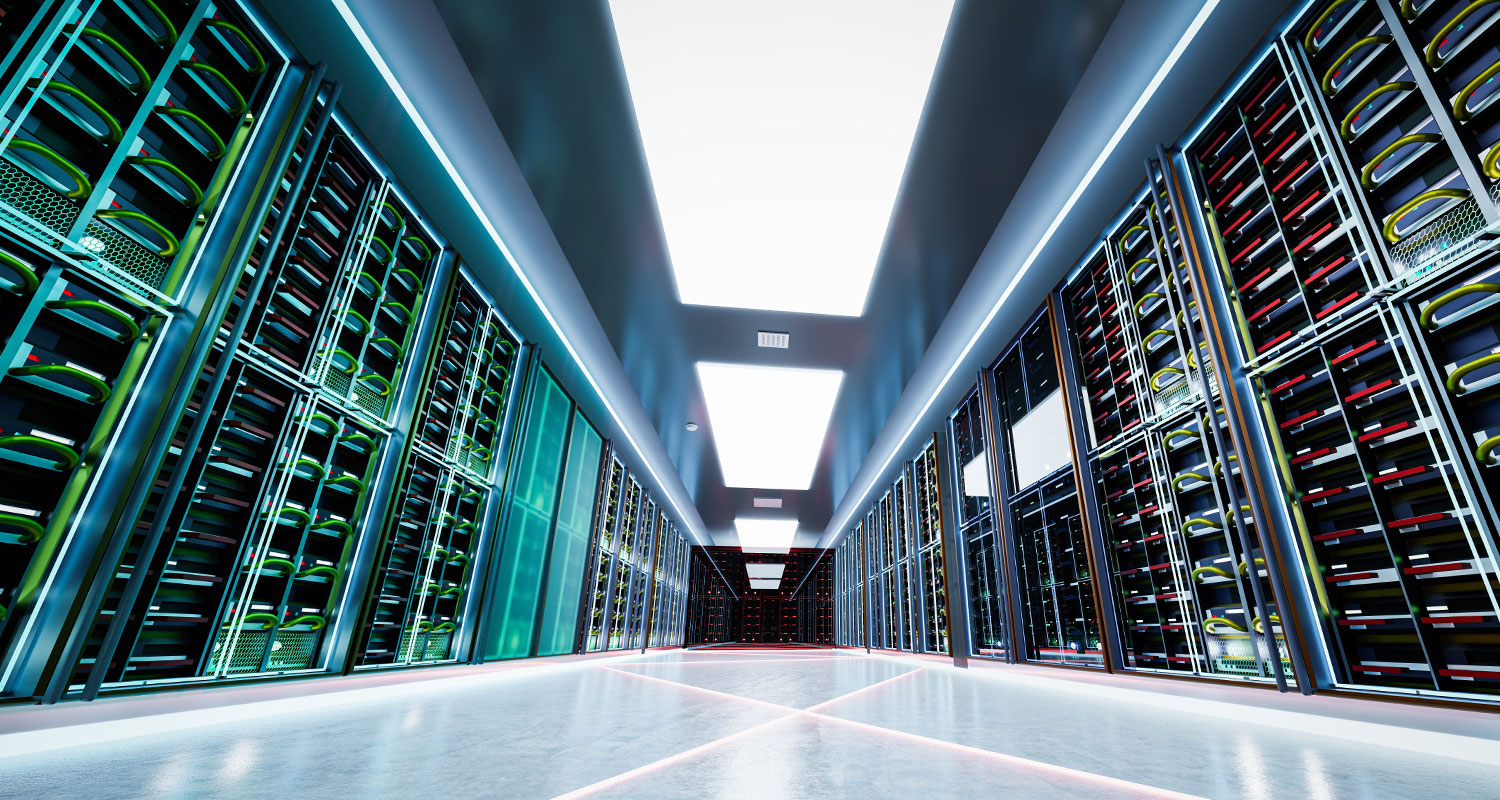
    Data centre

    Amodei forecast last year that AI could wipe out half of all entry-level white-collar jobs within five years. For now, however, some researchers say its impact appears to have been limited to making it harder for those seeking office work to find a job.

    Studies in the US and Britain have pointed to a slowdown in early-career hiring for white-collar positions performing tasks at which AI is adept, even if overall employment remains strong.

    Researchers at Stanford University said in August that employment of workers aged 22-25 in AI-exposed occupations, such as accountants and paralegals, was 19% lower than for jobs that AI found hard to replicate, like janitors and builders.

    Yet even if the promised transformation takes longer than the numbers surrounding AI companies imply, real economic benefits should stay – just as trains still ran after the Panic of 1873 that bankrupted railway barons, while the internet didn’t shut down after the 1990s dot-com bubble burst.

    “History is our friend in trying to understand this,” said Coyle. “As long as one is left with the infrastructure that’s needed to support all the productivity effects down the road, that’s okay.”  – Stephen Eisenhammer, (c) 2026 Reuters

    Add TechCentral as a preferred source on GoogleFollow TechCentral on Google NewsGet breaking news on WhatsApp


    Amazon Anthropic Bain & Company Dario Amodei Diane Coyle Google Google DeepMind Jasjeet Sekhon JPMorgan Microsoft Nvidia OpenAI PwC Sam Altman Stijn Van Nieuwerburgh
    WhatsApp YouTube
    Share. Facebook Twitter LinkedIn WhatsApp Telegram Email Copy Link
    Previous ArticleMeta’s smart glasses are officially coming to South Africa

    Related Posts

    Google scraps Gemini 3.5 Pro and turns to Gemini 4

    After falling behind in AI race, Google turns to Gemini 4

    1 October 2026
    Cloud and AI won't deliver value on their own, executives warn

    Cloud and AI won’t deliver value on their own, executives warn

    1 October 2026
    What Smollan learnt moving 9 000 users to Google Workspace - Digicloud Africa

    What Smollan learnt moving 9 000 users to Google Workspace

    1 October 2026
    Company News
    Huawei sets out its vision for intelligent government at GovTech 2026

    Huawei sets out its vision for intelligent government at GovTech 2026

    2 October 2026
    A simple guide to modern laptop processors for small businesses - Incredible

    A simple guide to modern laptop processors for small businesses

    2 October 2026
    Cloud and AI won't deliver value on their own, executives warn

    Cloud and AI won’t deliver value on their own, executives warn

    1 October 2026
    Opinion
    South Africa's next energy crisis is in the accounts department - Craig Holmes

    South Africa’s next energy crisis is in the accounts department

    29 September 2026
    The steam engine lesson AI doomsayers keep missing - Sam Clarke

    The steam engine lesson AI doomsayers keep missing

    28 September 2026
    Regulating AI: apply the laws we have first - Dirk de Vos

    Regulating AI: apply the laws we have first

    21 September 2026

    Subscribe to Updates

    Get the best South African technology news and analysis delivered to your e-mail inbox every morning.

    Latest Posts
    AI spending now dwarfs the railway and dot-com booms

    AI spending now dwarfs the railway and dot-com booms

    4 October 2026
    Meta's smart glasses are officially coming to South Africa - Mark Zuckerberg

    Meta’s smart glasses are officially coming to South Africa

    2 October 2026
    Eskom has a R1.20/kWh offer for bitcoin miners

    Eskom has a R1.20/kWh offer for bitcoin miners

    2 October 2026
    Usaasa consults on universal access as its abolition stalls

    Usaasa consults on universal access as its abolition stalls

    2 October 2026
    © 2009 - 2026 NewsCentral Media
    Built and maintained by Chronon
    • Cookie policy (ZA)
    • TechCentral – privacy and Popia

    Type above and press Enter to search. Press Esc to cancel.

    Manage consent

    TechCentral uses cookies to enhance its offerings. Consenting to these technologies allows us to serve you better. Not consenting or withdrawing consent may adversely affect certain features and functions of the website.

    Functional Always active
    The technical storage or access is strictly necessary for the legitimate purpose of enabling the use of a specific service explicitly requested by the subscriber or user, or for the sole purpose of carrying out the transmission of a communication over an electronic communications network.
    Preferences
    The technical storage or access is necessary for the legitimate purpose of storing preferences that are not requested by the subscriber or user.
    Statistics
    The technical storage or access that is used exclusively for statistical purposes. The technical storage or access that is used exclusively for anonymous statistical purposes. Without a subpoena, voluntary compliance on the part of your Internet Service Provider, or additional records from a third party, information stored or retrieved for this purpose alone cannot usually be used to identify you.
    Marketing
    The technical storage or access is required to create user profiles to send advertising, or to track the user on a website or across several websites for similar marketing purposes.
    • Manage options
    • Manage services
    • Manage {vendor_count} vendors
    • Read more about these purposes
    View preferences
    • {title}
    • {title}
    • {title}
    🇿🇦 Sign up to the TechCentral newsletter