
Close Menu
TechCentralTechCentral

    Subscribe to the newsletter

    Get the best South African technology news and analysis delivered to your e-mail inbox every morning.

    Facebook X (Twitter) YouTube LinkedIn
    WhatsApp Facebook X (Twitter) LinkedIn YouTube
    TechCentralTechCentral
    • News
      Shoprite ranks cybersecurity as its number one risk - Pieter Engelbrecht

      Shoprite ranks cybersecurity as its number one risk

      9 October 2026
      Standard Bank to take up to $200-million stake in OPay - Sim Tshabalala

      Standard Bank to take up to $200-million stake in OPay

      9 October 2026
      Shoprite takes on the banking apps with airtime on Sixty60

      Shoprite takes on the banking apps with airtime on Sixty60

      9 October 2026
      How to tell telemarketers to get lost - officially

      How to tell telemarketers to get lost – officially

      9 October 2026
      Data centres are the new front line in the Russia-Ukraine war

      Data centres are the new front line in the Russia-Ukraine war

      9 October 2026
    • World
      SpaceX takes aim at US wireless carriers with spectrum acquisition

      Starlink is coming for your mobile operator

      9 October 2026
      The AI PC is finally here. It's just very expensive - Jensen Huang, Satya Nadella

      The AI PC is finally here. It’s just very expensive

      8 October 2026
      The memory crunch is making Samsung fabulously rich

      The memory crunch is making Samsung fabulously rich

      8 October 2026
      SpaceX to borrow $40-billion to buy Nvidia chips

      SpaceX to borrow $40-billion to buy Nvidia chips

      7 October 2026
      South Pole neutrino hunter wins Nobel Prize in Physics - Francis Halzen

      South Pole neutrino hunter wins Nobel Prize in Physics

      7 October 2026
    • In-depth

      10 days that changed the course of AI

      21 September 2026
      Meta to the AI industry: slow down without us - Mark Zuckerberg

      Meta to the AI industry: slow down without us

      16 September 2026
      Google DeepMind CEO Demis Hassabis. Image: John Sears

      The plan to stop AI from breaking the world

      16 July 2026
      The internet has a Strait of Hormuz problem

      The internet has a Strait of Hormuz problem

      15 July 2026
      AI boom sparks rally, frenzy and fear

      AI boom sparks rally, frenzy and fear

      11 June 2026
    • TCS
      W&W | LDV's Gerhard Moolman on electric bakkies, fleet orders and 'school fees'

      W&W | LDV’s Gerhard Moolman on electric bakkies and fleets

      9 October 2026
      TCS | Frogfoot sees bigger fibre deals coming - TechCentral Show guests Abraham van der Merwe and Shane Chorley

      TCS | Frogfoot sees bigger fibre deals coming

      8 October 2026
      Meet the CIO | Vodacom's Mohamed Sami on the agentic future

      Meet the CIO | Vodacom’s Mohamed Sami on the agentic future

      5 October 2026
      Lexi Novitske, general partner at Norrsken22, on the TechCentral Show

      TCS | Norrsken22’s Lexi Novitske on how China is winning African tech

      1 October 2026
      TCS | Dominic White and Adam Ely on AI agents going rogue

      TCS | Dominic White and Adam Ely on AI agents going rogue

      29 September 2026
    • Opinion
      When a machine can choose, who does it become? Fanie van Rooyen

      When a machine can choose, who does it become?

      9 October 2026
      Let South Africans jailbreak their way to digital sovereignty - Dirk de Vos

      Let South Africans jailbreak their way to digital sovereignty

      5 October 2026
      South Africa's next energy crisis is in the accounts department - Craig Holmes

      South Africa’s next energy crisis is in the accounts department

      29 September 2026
      The steam engine lesson AI doomsayers keep missing - Sam Clarke

      The steam engine lesson AI doomsayers keep missing

      28 September 2026
      Let South Africans jailbreak their way to digital sovereignty - Dirk de Vos

      Regulating AI: apply the laws we have first

      21 September 2026
    • Company News
      • 1Stream
      • Africa Data Centres
      • AfriGIS
      • Altron Digital Business
      • Altron Document Solutions
      • Altron Group
      • Arctic Wolf
      • Ascent Technology
      • AvertITD
      • BBD
      • Braintree
      • CallMiner
      • CambriLearn
      • CM.com
      • Contactable
      • CYBER1 Solutions
      • Digicloud Africa
      • Digimune
      • Domains.co.za
      • ESET
      • Euphoria Telecom
      • HOSTAFRICA
      • Incredible Business
      • iONLINE
      • IQbusiness
      • Iris Network Systems
      • Kaspersky
      • LSD Open
      • Mitel
      • NEC XON
      • Netstar
      • Network Platforms
      • Next DLP
      • Ovations
      • Paracon
      • Paratus
      • Publishared
      • Q-KON
      • SevenC
      • SkyWire
      • Solid8 Technologies
      • Telit Cinterion
      • Telviva
      • Tenable
      • Vertiv
      • Videri Digital
      • Vodacom Business
      • Vox
      • Wipro
      • Workday
      • XLink
    • Sections
      • AI and machine learning
      • Banking
      • Broadcasting and Media
      • Cloud services
      • Contact centres and CX
      • Cryptocurrencies
      • Education and skills
      • Electronics and hardware
      • Energy and sustainability
      • Enterprise software
      • Financial services
      • HealthTech
      • Information security
      • Internet and connectivity
      • Internet of Things
      • Investment
      • IT services
      • Lifestyle
      • Policy and regulation
      • Public sector
      • Retail and e-commerce
      • Satellite communications
      • Science
      • SMEs and start-ups
      • Social media
      • Talent and leadership
      • Telecoms
      • Watts & Wheels
    • Events
    • Advertise
    TechCentralTechCentral
    Home » Sections » Financial services » What Revolut can and cannot take from South Africa’s banks

    What Revolut can and cannot take from South Africa’s banks

    As Revolut prepares to enter the market, a lengthy waitlist shows demand for a wallet but not a primary banking relationship.
    By Pambos Soteriades15 September 2026
    Twitter LinkedIn Facebook WhatsApp Email Telegram Copy Link
    Get breaking news on WhatsApp

    What Revolut can and cannot take from South Africa's banks

    Revolut’s application for a South African banking licence is progressing, and the company is still targeting a 2028 launch. That is a long wait in a market that keeps moving. By 2028 the app-quality gap Revolut exploits elsewhere will have narrowed, the newer entrants will have dug in and reform of the National Payment System will have changed what a licence is worth.

    The European model works like this: free accounts bring customers in, a share of them convert to paid subscriptions, and that revenue funds credit, savings and trading. It works where banking is fragmented, where foreign exchange fees are extractive and where money crosses borders with little friction. South Africa has the extractive fees. Its banking market is concentrated and its cross-border flows are controlled.

    Read: Revolut gears up to disrupt South African banking

    Exchange controls apply. An individual may move up to R2-million/year under the single discretionary allowance without tax clearance, and a further R10-million for foreign investment with it. Better design does not remove those ceilings. They cap the volume and the velocity that make the European model pay.

    Revolut can still beat the banks on the experience of moving money, inside the same regulatory envelope, by partnering with an authorised dealer. The authorised dealer network is dominated by the large banks. How closely Revolut can reproduce what it does in Europe – live rates, transparent pricing, fast transfers – depends on what a partner will enable and at what price. Its biggest advantage would rest on commercial decisions taken by the institutions it is trying to take customers from.

    South Africa has the extractive fees. Its banking market is concentrated and its cross-border flows are controlled

    Revolut’s target customer already banks with FNB, Standard Bank, Absa, Nedbank or Investec, and usually holds credit there, too – a home loan, vehicle finance, a business account – along with a rewards programme. A currency wallet is easy to add and easy to drop. A 20-year home loan is neither.

    Discovery Bank is the closest competitor. Its paid subscription model, Vitality integration and actuarial hooks aim at the same high-income, internationally mobile customer, and it passed a million clients in August 2024, two years ahead of its own target. Price is not what holds those customers in place.

    Concentration is high by any measure. World Bank figures put the three largest banks at about 79% of banking assets in 2021, and the Reserve Bank’s own risk assessment puts six large banks at roughly 93% of sector assets. The positions Revolut broke into in Europe looked nothing like this.

    The one route to something more durable

    There is a version of this in which Revolut builds more than a second wallet. It turns on a decision the company has not made publicly.

    In Europe, Revolut bundles a global eSim into its top tier as a retention perk for customers it already has. South Africa would need more: a local mobile proposition, through an MVNO or a wholesale deal, giving the customer a South African number they use every day. A traveller will carry a second Sim. Making it the everyday number means beating the inertia of an existing number, a configured handset and an existing mobile relationship.

    The reasoning is that connectivity becomes an acquisition and engagement tool among customers banked elsewhere. A travel eSim produces a thin dataset clustered around trips abroad. A local number produces recurring signals: when someone recharges, how heavily they use data, when they change handsets, when they roam. Combined with Revolut’s own payments data, and if those signals prove predictive, they could support a credit or savings offer timed to the moment a customer’s main bank is failing them. I have written before about what banks give up when they build on someone else’s network, and the same caution applies here.

    Capitec Connect shows the logic holds. Its MVNO produced R442-million in net income in the year to February 2026, up 129%, with 1.5 million subscribers active in the final three months of the period. Capitec runs that on top of roughly 25 million banking clients and their deposits. Revolut would be attempting it from outside, with no deposit base, funding any credit book from capital markets or a partner at higher cost and thinner margin.
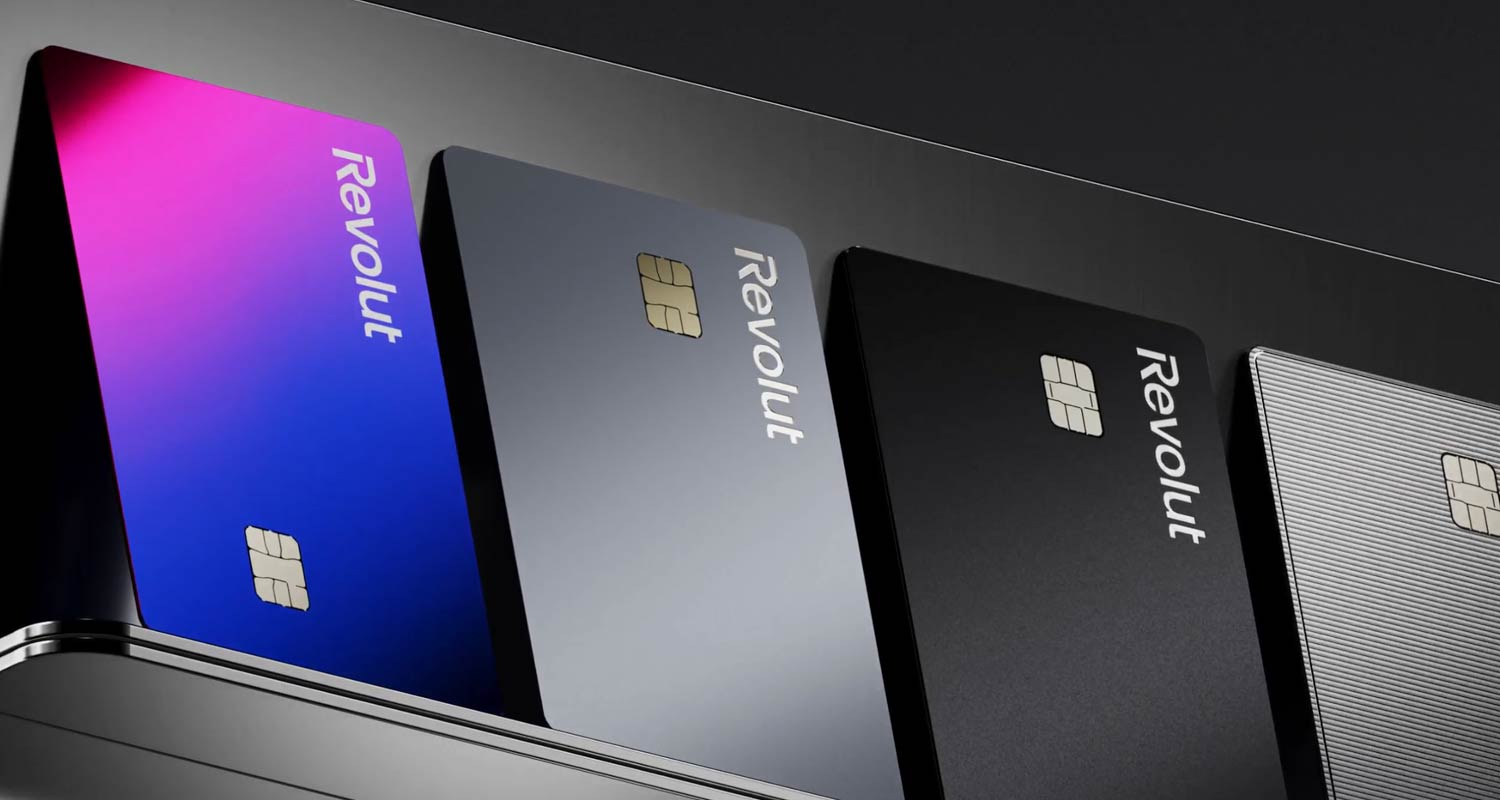
    Revolut gears up to disrupt South African banking

    Regulation bites here, too. Combining connectivity data with transaction data for credit scoring needs a lawful basis under Popia, a compatible purpose and, where the decision is automated, compliance with the act’s provisions on human review. A banking licence applicant must hold at least R250-million in capital. And the activity-based authorisation framework under National Payment System reform, still being built, will decide whether a lighter way in exists for a foreign applicant at all.

    A staged entry – payments first, a full licence later – would change the arithmetic. Arriving earlier with a thinner product builds transaction history, brand familiarity and habit before the bank opens. That is the version that gives the incumbents most to think about, and it depends on decisions nobody has taken yet.

    What comes after the wallet

    Revolut will find customers here. The travel and foreign exchange product is good, and the banks have been complacent about international money for years.

    The more difficult part is what follows. Selling credit, savings and subscriptions requires being the customer’s main bank, and a currency wallet does not produce that on its own. The moments when people actually move their banking – a new job, a house purchase, a service failure – are invisible to a travel wallet. Revolut can respond when a customer comes to it. It cannot yet see the moment coming.

    Revolut should take the FX wallet. The home loan stays where it is, unless it builds the local data and distribution layer it has not committed to building.

    • The author, Pambos Soteriades, has spent 28 years in mobile telecommunications, including executive roles at Vodacom Group and Telkom Kenya. He writes on strategy and technology in African mobile markets at African Comms Intelligence. He has declared no shareholding in, and no client, advisory or prospective business relationship with, any company named in this article

    Add TechCentral as a preferred source on GoogleFollow TechCentral on Google NewsGet breaking news on WhatsApp


    Absa Capitec Capitec Connect Discovery Bank FNB Gaby Magomola Investec Jacques Meyer Nedbank Pambos Soteriades Prudential Authority Revolut South African Reserve Bank Standard Bank
    WhatsApp YouTube
    Share. Facebook Twitter LinkedIn WhatsApp Telegram Email Copy Link
    Previous ArticleNvidia-backed chip designer pushes deeper into flagship phones
    Next Article Customers of 45 insurers exposed in South African cyber breach

    Related Posts

    Standard Bank to take up to $200-million stake in OPay - Sim Tshabalala

    Standard Bank to take up to $200-million stake in OPay

    9 October 2026
    Seacom CEO Alpheus Mangale quits Absa board

    Seacom CEO Alpheus Mangale quits Absa board

    9 October 2026
    Big money backs LekkeSlaap against Airbnb and Booking.com - Jonathan Womersley and Marcel van de Ghinste

    GT Ferreira backs LekkeSlaap as founders sell up

    8 October 2026
    Company News
    Why fintechs need an insurance partner they can trust - Hollard Insurance

    Why fintechs need an insurance partner they can trust

    8 October 2026
    Reusable KYC means the end of 'please upload your ID' - Contactable

    Reusable KYC means the end of ‘please upload your ID’

    8 October 2026
    Eliminating the 'toggle tax': how CRM integration changes customer experience - Martie de Beer

    Eliminating the ‘toggle tax’: how CRM integration changes customer experience

    8 October 2026
    Opinion
    When a machine can choose, who does it become? Fanie van Rooyen

    When a machine can choose, who does it become?

    9 October 2026
    Let South Africans jailbreak their way to digital sovereignty - Dirk de Vos

    Let South Africans jailbreak their way to digital sovereignty

    5 October 2026
    South Africa's next energy crisis is in the accounts department - Craig Holmes

    South Africa’s next energy crisis is in the accounts department

    29 September 2026

    Subscribe to Updates

    Get the best South African technology news and analysis delivered to your e-mail inbox every morning.

    Latest Posts
    Shoprite ranks cybersecurity as its number one risk - Pieter Engelbrecht

    Shoprite ranks cybersecurity as its number one risk

    9 October 2026
    Standard Bank to take up to $200-million stake in OPay - Sim Tshabalala

    Standard Bank to take up to $200-million stake in OPay

    9 October 2026
    Shoprite takes on the banking apps with airtime on Sixty60

    Shoprite takes on the banking apps with airtime on Sixty60

    9 October 2026
    How to tell telemarketers to get lost - officially

    How to tell telemarketers to get lost – officially

    9 October 2026
    © 2009 - 2026 NewsCentral Media
    Built and maintained by Chronon
    • Cookie policy (ZA)
    • TechCentral – privacy and Popia

    Type above and press Enter to search. Press Esc to cancel.

    Manage consent

    TechCentral uses cookies to enhance its offerings. Consenting to these technologies allows us to serve you better. Not consenting or withdrawing consent may adversely affect certain features and functions of the website.

    Functional Always active
    The technical storage or access is strictly necessary for the legitimate purpose of enabling the use of a specific service explicitly requested by the subscriber or user, or for the sole purpose of carrying out the transmission of a communication over an electronic communications network.
    Preferences
    The technical storage or access is necessary for the legitimate purpose of storing preferences that are not requested by the subscriber or user.
    Statistics
    The technical storage or access that is used exclusively for statistical purposes. The technical storage or access that is used exclusively for anonymous statistical purposes. Without a subpoena, voluntary compliance on the part of your Internet Service Provider, or additional records from a third party, information stored or retrieved for this purpose alone cannot usually be used to identify you.
    Marketing
    The technical storage or access is required to create user profiles to send advertising, or to track the user on a website or across several websites for similar marketing purposes.
    • Manage options
    • Manage services
    • Manage {vendor_count} vendors
    • Read more about these purposes
    View preferences
    • {title}
    • {title}
    • {title}
    🇿🇦 Sign up to the TechCentral newsletter