South Africans paid R26.92/l for 95 unleaded inland when prices rose on 2 September. Average Brent crude climbed to US$87.88 from $82.37 in the review period, on US-Iran tensions and renewed fears over the Strait of Hormuz.
That was the cheap month.
Brent has since pushed above $100 for the first time since July, and mid-September data from the Central Energy Fund points to increases of more than R2/l in October, as Business Day reported. If the projections hold to the 7 October adjustment, inland 95 will reach nearly R29/l, breaking the record of R28.06 set in June.
The fuel price shock lends weight to an argument now circulating in the solar industry.
Patrick Narbel, co-founder and CTO of rooftop solar subscription company GoSolr, contends that solar panels and electric vehicles have stopped being environmental purchases alone and become financial ones – a hedge against imported fuel shocks and Eskom tariffs that keep outrunning inflation. GoSolr sells rooftop solar, so the claim deserves testing.
Narbel is right that South Africa is unusually exposed.
Rod Crompton, a former fuel price regulator and Nersa board member now at Wits Business School’s African Energy Leadership Centre, and his colleague Bruce Young calculated in May that net imports of petrol, diesel and kerosene run at about 81% of consumption, against roughly eight million barrels of strategic stock.
‘Geopolitical disruptions’
On demand of about 600 000 barrels a day, that is 13 days of cover, or 18 counting Sasol’s output, against a policy target of 90 days. They caution that the underlying industry data is unreliable, which is itself part of the problem.
Cabinet has since approved a draft strategic petroleum stock policy, gazetted on 9 July, that would oblige the state to hold 60 days of net imports and licensed wholesalers and importers 21 days, at their own cost.
“The geopolitical disruptions we continue to witness have exposed the risks associated with excessive dependence on imported refined petroleum products,” mineral & petroleum resources minister Gwede Mantashe said.
However, the bad news is that entry into EVs is still expensive.
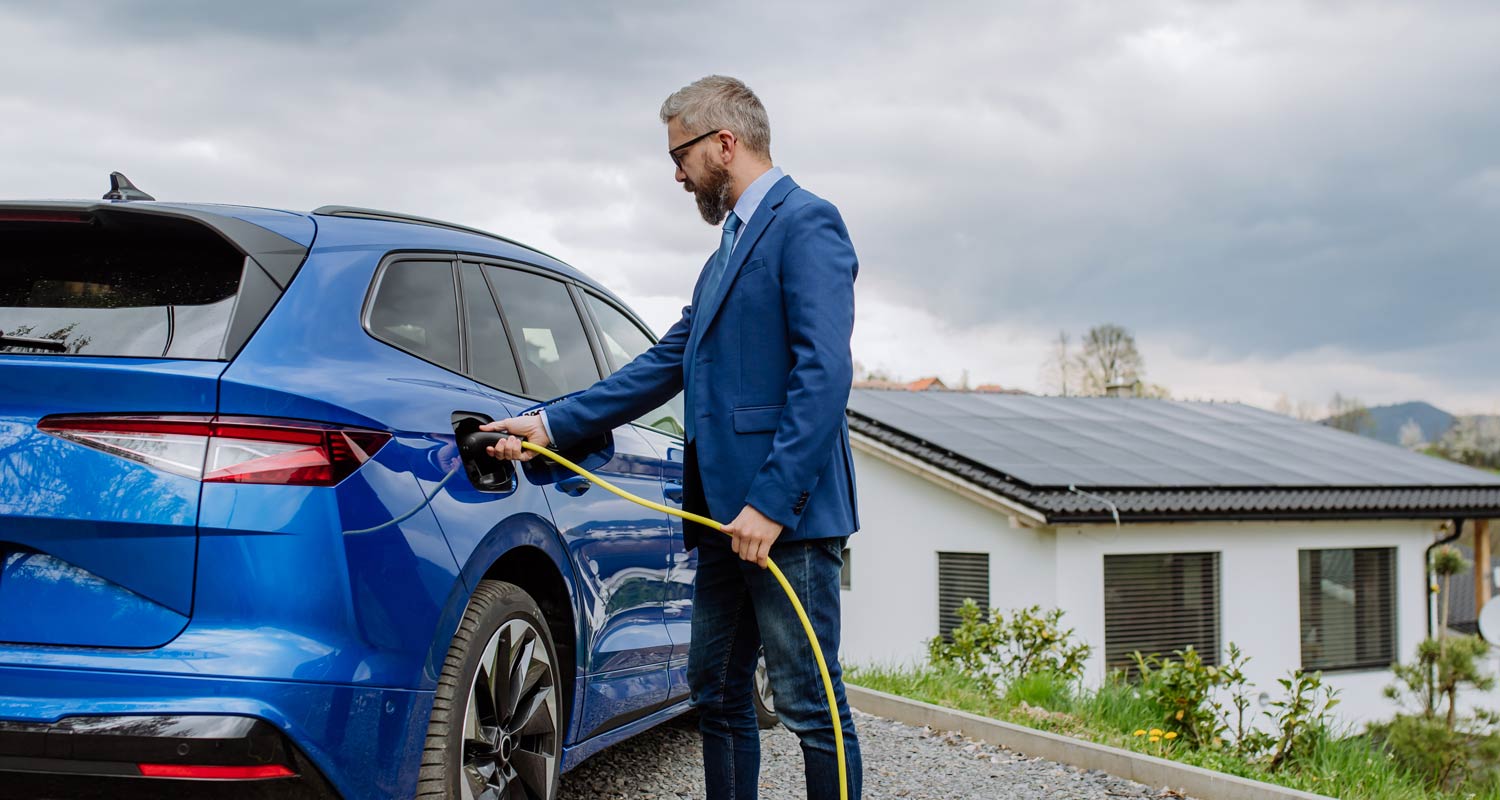
A petrol hatchback burning 7l/100km costs R188 in fuel per 100km at September’s inland price, or R1.88/km. An electric car drawing 18kWh/100km, charged at home on the City of Cape Town’s home user tariff above 600kWh/month – 469.06c/kWh including VAT – costs R84, or 84c/km. Over 15 000km/year, the difference is about R15 600. At the R29/l October is pointing towards, the savings widen to roughly R17 900/year.
The catch is what it costs to get in. The cheapest electric cars cost about R340 000, while 61% of new car sales happen below R400 000. Every R100 000 of premium over a comparable petrol car takes about six and a half years of average driving to recover on fuel alone at September prices, and closer to five and a half at October’s – before financing. Buyers are aware of this.
In South Africa, electric car sales remained at less than 1% of new car sales in 2025, with plug-in hybrids taking more than 70% of that. Of the 13 193 new-energy vehicles Naamsa has counted so far this year, just 1 903 were full battery-electric vehicles.
The sums already work for high-mileage fleets, though. “Instead of remaining fully exposed to unpredictable diesel pricing, they can lock a significant portion of their transport energy costs into a far more stable and manageable electricity-based model,” Everlectric CEO Ndia Magadagela told TechCentral in May, putting the threshold at about 3 500km/month.
Narbel cites the 12.74% Eskom direct-customer rise from FY2026; the latest number is 8.76% from 1 April 2026, with municipalities taking 9.01% from 1 July, and it would have been 5.36% had Nersa not miscalculated Eskom’s regulatory asset base by R54.7-billion.
The latest number helps his case rather than hurting it. The CSIR notes that national average tariffs have risen 190% since 2014, averaging 10%/year against 5.2% inflation, with this year’s increase again beating a 4.5% CPI forecast. Swapping petrol for grid electricity trades one escalating cost for another. It’s solar panels, not the plug, that fix the price.
The CSIR data put embedded rooftop solar at roughly 6.8GW by mid-2025, up about 400% since 2021, generating 5.3TWh in the first half of the year, or about 5% of system load, as TechCentral reported last year.
The weak link
The battery is the weak link. An EV covering 15 000km/year needs about 7.4kWh/day, which a rooftop array delivers easily between roughly 9am and 3pm – the hours the average commuter it is meant to fuel spend parked at an office, plugged into nothing.
Closing that gap takes a battery big enough to hold a day’s driving on top of household load, a workplace charger, or driving during daylight. In a TechCentral column in August last year, Narbel noted that most cars sit parked more than 20 hours a day. He argued tfor time-of-use pricing and said regulatory change was needed before EVs could discharge back into the grid. That change has not come.
So, the defensible version of the argument is narrower than the one being sold. Electrifying your driving more than halves the fuel bill, and adding solar turns a volatile imported cost into a fixed capital one. But doing both well needs storage, daylight flexibility or a workplace charger, on top of the R340 000 minimum to get through the door.
Petrol hedges do run both ways – inland 95 hit R28.06/l in June and fell back to R26.92 by September before turning again. What is changing the arithmetic faster than the oil price is the arrival of cheaper electric cars. — © 2026 NewsCentral Media