There is a sentence in Jason Goodall’s remarkable confession this week that I keep coming back to. “Our undisclosed interests were held through nominees in a structure designed to keep our names hidden,” the former Dimension Data and NTT Ltd CEO wrote, in the course of admitting that he had sat on both sides of the 2019 sale of the company’s Bryanston head office.
Four of the men he named – Jeremy Ord, Steven Nathan, Saki Missaikos and Grant Bodley – reject his account. They say its wording was dictated by his settlement with NTT and they are waiting on the supreme court of appeal.
That court will have its say soon. But whatever it decides, I fear that this – a fight over who hid what in an office park – is how Dimension Data will now be remembered. And that is a terrible shame, because for most of its 40 years, and despite its struggles after the dot-com bust, it was one of the great South African business stories.
Born in 1983
Dimension Data was founded in 1983 and listed on the JSE in 1987. At its heart was a group of school friends – including Ord, Bruce “Doc” Watson and, a little later, Richard Came – who, as Came once told me, went on to build something none of them could have imagined.
They built it on networking: selling, installing and running the Cisco gear that the internet would be built on. In the 1990s, that was a licence to print money. Gross margins on Cisco hardware were “about 50%”, Ord recalled in a 2020 interview. Came put it more ruefully: “Efficiencies hadn’t mattered as much when margins were high and the market was flying.”
And fly it did. As South Africa emerged from apartheid and its companies were finally free to look beyond its borders, Didata looked further than most. It bought Internet Solutions, one of the country’s pioneering internet service providers, for more than R400-million in 1998. It bought into Datacraft in Australia and Asia, and Comparex in Europe. It became, for a while, the stock every South African fund manager had to own.
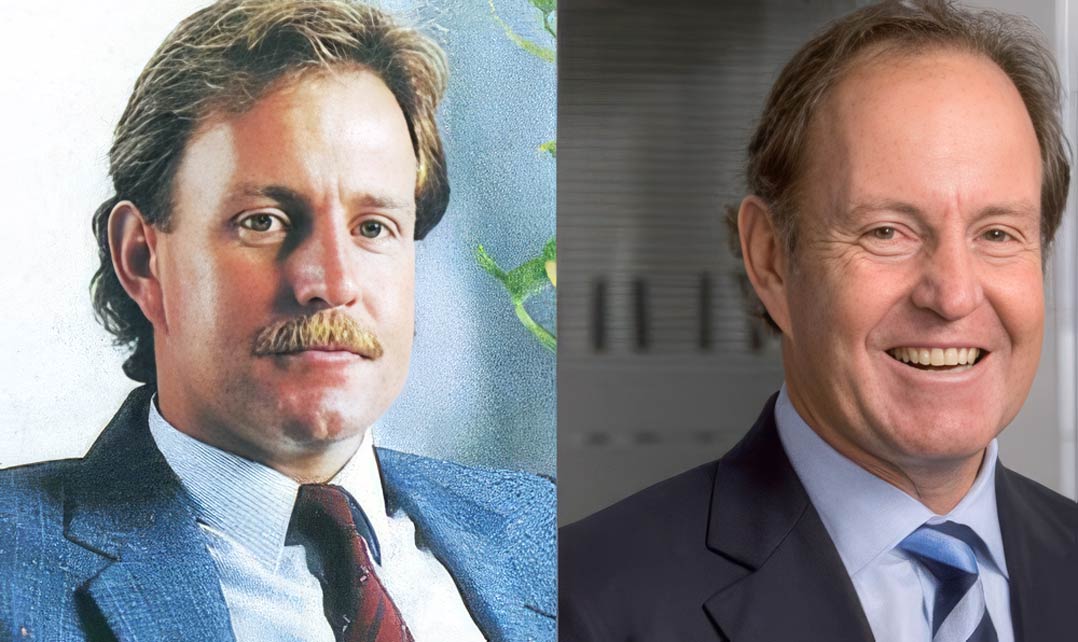
On 19 July 2000, Didata moved its primary listing to London. The government, Ord told me, had “rebuffed and rebuffed and rebuffed” the application since 1998, until he phoned Maria Ramos, then the treasury director-general, on the last possible day. Two months later, on 18 September, it entered the FTSE 100 at number 42, with a market value of about US$11-billion. On the JSE, it was worth R77.4-billion – briefly South Africa’s most valuable listed company. Its shares traded at R70.
“We went into the FTSE 100 straight away,” Ord told me. “Then a year later, almost to the day, everything crumbled.”
The fall
The crumbling came in two parts. The first was America. In June 2001, as the dot-com bubble was already deflating, Didata won a bidding war against Compaq for Proxicom, a Virginia-based internet consultancy, in a deal valued at $478-million then. It was terrible timing. Less than three years later it was sold. Ord says it fetched about $10-million.
The second, and bigger, was Europe, where the value of the Comparex acquisition was written down by more than $1.1-billion. In the year to September 2001, Didata lost $1.7-billion. The next year it lost $2.6-billion. The share price, which had touched £10 in London, fell as low as 13.75p. Margins collapsed “from 50% to 15% almost overnight”, Ord said, and 3 500 of 11 000 jobs went.
Ord’s verdict on Proxicom, given to TechCentral in 2009, was unequivocal: “Would we do the US deal again? Never!”
The comeback
What happened next is the part of the story that deserves to be remembered. Didata did not die. Brett Dawson – a chartered accountant who had come in through the Internet Solutions side of the business and been sent to sort out the North American finances in 2001 – became chief operating officer in 2002 and CEO in March 2004, with Ord moving to executive chairman. Came, who left after the bust, credited Dawson with “clawing the company back into a strong position”. By the time Dawson stepped down in 2016, he had quadrupled revenue to $8-billion.
It was that rebuilt business that caught Japan’s eye. NTT first came knocking in 2008. Management said no. “We still didn’t want to sell. We opposed it all the way,” Ord told me – but the big shareholders accepted. In July 2010, NTT offered 120p/share, valuing Didata at £2.1-billion, or about R24.4-billion at the time, and by the end of that year the company was delisted in Johannesburg and London.

For a while, the Japanese left it alone. “They haven’t interfered with the running of the business at all,” Ord said in 2011. But big Japanese conglomerates do not buy companies to leave them alone forever. In July 2019, Didata was folded into NTT Ltd, an $11-billion global operation run by Goodall from London, and the Dimension Data name survived only in the Middle East and Africa. Ord and his colleagues spent two years trying to buy the African business back. When NTT said no, they left. On 1 April 2024, the name itself disappeared.
The business, though, did not. It lives on as NTT Data in the Middle East and Africa – the same networks, data centres and client relationships, and many of the same people, under a Japanese name.
The Campus
Which brings us back to The Campus, the sprawling Bryanston office park that was, in many ways, the physical embodiment of Didata’s ambition. Its sale in December 2019 to a black women-led empowerment fund was, at the time, presented as a transformation milestone.
But in January 2022, TechCentral revealed for the first time that a forensic investigation had found that former executives had undisclosed interests in the buyer. In November 2024, Judge Denise Fisher declared the sale void, finding that six of them had “entered into an illegal scheme designed to appropriate for themselves a secret financial benefit”, and calling it “brazen and dishonest”.
Goodall has now admitted his part and agreed to pay NTT about R208.6-million. The others deny wrongdoing, and their appeal awaits judgment. They are entitled to that process. But it is hard to read the record so far and not conclude that, at the end, something went badly wrong in the culture of a company that once prided itself on its culture above all else. If the courts confirm what Fisher found, it will be hard to call it anything other than greed.
The people
That is not the whole story, and it should not be the only part of the story that’s remembered.
Dimension Data was, for three decades, one of the great talent factories of South African business. It produced people who went on to build and run companies of their own – Richard Came, David Frankel, Alon Apteker and Malcolm Rutherford among many others named in Duarte da Silva’s recollections of those pioneering days. It trained thousands of engineers, salespeople and project managers who now hold senior jobs across the industry, here and abroad.
Most of the tens of thousands of people who passed through Dimension Data and its subsidiaries over 40 years never went near a boardroom, never mind an office-park deal. They built networks, ran data centres, kept banks and retailers online, and made the company what it was. Many of them still do, at what is now NTT Data. They deserve to have the Dimension Data name remembered for what they built, not for how it ended. — (c) 2026 NewsCentral Media
- The author, Duncan McLeod, is editor of TechCentral