Close Menu
TechCentralTechCentral

    Subscribe to the newsletter

    Get the best South African technology news and analysis delivered to your e-mail inbox every morning.

    Facebook X (Twitter) YouTube LinkedIn
    WhatsApp Facebook X (Twitter) LinkedIn YouTube
    TechCentralTechCentral
    • News
      The millions Vodacom spends protecting its CEO - Shameel Joosub

      The millions Vodacom spends protecting its CEO

      14 June 2026
      The missing number in Vodacom's annual report - Nkosana Makate please call me

      The missing number in Vodacom’s annual report

      12 June 2026
      How Sixty60 turned lockdown luck into a lasting lead

      How Sixty60 turned lockdown luck into a lasting lead

      12 June 2026
      SABC+ buckles as 477 000 fans pile in for Bafana opener

      SABC+ buckles as 477 000 fans pile in for Bafana opener

      12 June 2026
      The dizzying scale of Elon Musk's fortune

      The dizzying scale of Elon Musk’s fortune

      12 June 2026
    • World
      Amazon CEO flagged Anthropic AI risks to Washington - Andy Jassy

      Amazon CEO flagged Anthropic AI risks to Washington

      14 June 2026
      Trouble at Xbox

      Trouble at Xbox

      11 June 2026
      Meta declares war on Israeli spyware firm

      Meta declares war on Israeli spyware firm

      8 June 2026
      Meta takes on OpenAI and Anthropic in enterprise AI

      Meta takes on OpenAI and Anthropic in enterprise AI

      4 June 2026
      AI demand sparks 'chipflation' warning

      AI demand sparks ‘chipflation’ warning

      4 June 2026
    • In-depth
      AI boom sparks rally, frenzy and fear

      AI boom sparks rally, frenzy and fear

      11 June 2026
      Every plug-in hybrid on sale in South Africa, ranked by price - Lamborghini Temerario

      Every plug-in hybrid on sale in South Africa, ranked by price

      7 June 2026
      What Wi-Fi 8 will mean for wireless networks

      What Wi-Fi 8 will mean for wireless networks

      1 June 2026
      Alfa's electric rebel - Alfa Romeo Junior Elettrica Veloce

      Alfa’s electric rebel

      29 April 2026
      Africa switches on as Europe dims the lights

      Africa switches on as Europe dims the lights

      9 April 2026
    • TCS
      Watts & Wheels S1E5: 'A Bentley of the bush and a car that swims'

      Watts & Wheels S1E5: ‘A Bentley of the bush and a car that swims’

      8 June 2026
      TCS | Charge's R1.8-billion bet on an off-grid EV future - Charge chairman Joubert Roux

      TCS | Charge’s R1.8-billion bet on an off-grid EV future

      18 May 2026
      TCS+ | The Up&Up Group on the hidden cost of AI - Jason Harrison

      TCS+ | The Up&Up Group on the hidden cost of AI

      13 May 2026
      Michael Rossouw

      TCS+ | The retirement decision most South Africans get wrong

      6 May 2026
      TCS | The Cape Town start-up listening for TB with AI - Braden van Breda

      TCS | The Cape Town start-up listening for TB with AI

      4 May 2026
    • Opinion
      The clock is ticking on South African banks' biggest advantage - Pambos Soteriades

      The clock is ticking on South African banks’ biggest advantage

      9 June 2026

      Clashing judgments leave South Africa’s crypto law unsettled

      2 June 2026
      The clock is ticking on South African banks' biggest advantage - Pambos Soteriades

      The trap inside South Africa’s banking MVNO boom

      1 June 2026
      The hidden cost of social media age bans is everyone's privacy - Petrus Potgieter

      The hidden cost of social media age bans is everyone’s privacy

      29 May 2026
      Treasury's crypto crackdown is a betrayal of Mandela's promise - Duncan McLeod

      Treasury’s crypto crackdown is a betrayal of Mandela’s promise

      22 May 2026
    • Company Hubs
      • 1Stream
      • Africa Data Centres
      • AfriGIS
      • Altron Digital Business
      • Altron Document Solutions
      • Altron Group
      • Arctic Wolf
      • Ascent Technology
      • AvertITD
      • BBD
      • Braintree
      • CallMiner
      • CambriLearn
      • CM Telecom
      • Contactable
      • CYBER1 Solutions
      • Digicloud Africa
      • Digimune
      • Domains.co.za
      • ESET
      • Euphoria Telecom
      • HOSTAFRICA
      • Incredible Business
      • iONLINE
      • IQbusiness
      • Iris Network Systems
      • Kaspersky
      • LSD Open
      • Mitel
      • NEC XON
      • Netstar
      • Network Platforms
      • Next DLP
      • Ovations
      • Paracon
      • Paratus
      • Q-KON
      • SevenC
      • SkyWire
      • Solid8 Technologies
      • Telit Cinterion
      • Telviva
      • Tenable
      • Vertiv
      • Videri Digital
      • Vodacom Business
      • Wipro
      • Workday
      • XLink
    • Sections
      • AI and machine learning
      • Banking
      • Broadcasting and Media
      • Cloud services
      • Contact centres and CX
      • Cryptocurrencies
      • Education and skills
      • Electronics and hardware
      • Energy and sustainability
      • Enterprise software
      • Financial services
      • HealthTech
      • Information security
      • Internet and connectivity
      • Internet of Things
      • Investment
      • IT services
      • Lifestyle
      • Motoring
      • Policy and regulation
      • Public sector
      • Retail and e-commerce
      • Satellite communications
      • Science
      • SMEs and start-ups
      • Social media
      • Talent and leadership
      • Telecoms
    • Events
    • Advertise
    TechCentralTechCentral
    Home » Sections » Motoring » Driving on sunshine – how EVs and solar could power South Africa forward
    Driving on sunshine - how EVs and solar could power South Africa forward

    Driving on sunshine – how EVs and solar could power South Africa forward

    By Patrick Narbel13 August 2025

    South Africa’s energy and mobility sectors are colliding in transformative ways. Electric vehicles have become more accessible, and CleanTechnica reports that local EV sales have grown by 35% between 2023 to 2024. Yet, this exciting growth is marred by a familiar challenge: the country’s fragile, overburdened national electricity grid.

    Can our electricity system support this electrified future? Not without help. The answer lies in not just expanding capacity, but in rethinking it entirely.

    South Africa’s National Development Plan 2030 aims to have an energy sector that promotes economic growth, job creation and environmental sustainability through a diversified energy mix. In this light, solar energy isn’t just an alternative; it’s fast becoming central to the country’s energy transformation strategy. As such, increasingly, it is emerging not as a backup but as a viable solution to South Africa’s energy future.

    Experiences from other countries show that users tend to charge their vehicles at home and work

    Our national grid is under extraordinary pressure, and our energy crisis is well documented. Decades of underinvestment, reliance on coal, deep-seated corruption and maintenance backlogs have left the nation vulnerable to widespread load shedding, load reduction, unexpected power outages and system inefficiencies.

    This has had a ripple effect across industries, with energy insecurity becoming a significant barrier to economic competitiveness. According to Stats SA, the country is grappling with an electricity availability that struggles to improve and raising concerns over energy reliability and economic stability. Figures show a 2.5% decline in electricity generation in early 2025 alone, providing a snapshot of the broader systemic strain.

    Globally, EV sales are expected to exceed 20 million this year. This figure is up 35% year on year, according to the new edition of the IEA’s annual Global EV Outlook, and is being fuelled by government incentives, manufacturing innovation and falling battery prices.

    Promising

    Locally, the potential is equally promising, with government’s draft EV white paper providing a foundation for EV industrialisation and infrastructure development. It outlines investment goals and policy frameworks designed to position South Africa as an EV manufacturing hub. However, it also acknowledges the risk of further grid instability without new approaches to energy generation and distribution.

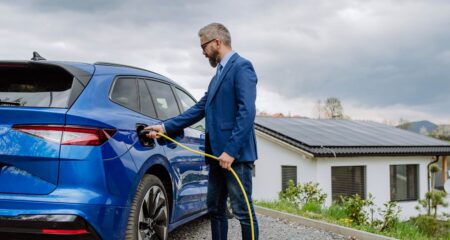
    EVs demand electricity. Experiences from other countries show that users tend to charge their vehicles at home and work, reserving the use of fast-charging stations for long-distance travel. At home, a user will be able to charge a vehicle from a standard plug, which will take six to 10 hours to charge the vehicle from empty to full, depending on the model. A user can upgrade and put a dedicated EV charger that will typically draw 3kW, 7kW or 11kW. For comparison, charging your car with an 11kW charger will greatly reduce the time it takes to fully charge your car, but that will be equivalent to running 11 swimming pool pumps at the same time.

    Watch: Watts & Wheels Ep 3: ‘We drive the new Dongfeng Box’

    It’s easy to jump to alarmist conclusions. Imagine 100 000 EVs being plugged in as their owners arrive home from work – that’s 100 000 x 11kW, or 1.1GW added to the evening peak. For Eskom, this means ramping up power plants faster (far from ideal) and dealing with higher peaks. Existing substations would also come under added strain. It doesn’t take much imagination for this kind of narrative to hit the headlines with dramatic titles like “EVs will collapse SA’s electricity infrastructure” and worse.

    The author, GoSolr's Patrick Narbel
    The author, GoSolr’s Patrick Narbel

    Although this scenario is possible, it doesn’t have to play out that way. Not all EVs will charge at the same time. After all, we don’t fill up with petrol every day, so why assume we’ll charge EVs daily? Plus, while EVs are relatively new in South Africa, the technology itself is mature and comes with built-in flexibility.

    The real need is a full battery before the next trip and not immediately upon arriving home. Most vehicles are parked for over 20 hours a day, offering ample time to shift charging to off-peak hours when the national grid capacity is underutilised.

    This shift doesn’t increase peak demand; it helps flatten it. By boosting off-peak usage, we can make better use of existing infrastructure and spread fixed costs over more kilowatt-hours, ultimately reducing the unit cost of electricity.

    Smart tariffs are key to encouraging this behaviour. Time-of-use pricing with higher rates during peak hours and lower rates off-peak can nudge EV owners to charge when it’s most efficient and affordable. (In short: don’t charge your EV at 6 pm if you don’t want it to cost you.)

    What about solar?

    South Africa’s electricity grid remains heavily dependent on coal, which means charging an EV with coal-fired power could increase a user’s carbon footprint. The solution? Clean electrons from renewable sources like solar PV.

    International experience shows that EV owners are more likely to invest in solar installations. If an EV is charged at a workplace equipped with solar PV, energy consumption is aligned with solar generation, maximising the use of clean power when it’s most abundant. That’s a clear win. At home, excess solar energy can be stored in the EV’s battery to be used at night or during the next day’s commute.

    Read: Fresh call to cut South Africa’s EV taxes

    A tech-savvy thinker might even go a step further – imagining a world where EVs help stabilise the grid, discharging power during peaks or when there’s a local shortfall. But to make this a reality, regulatory changes are needed to allow EVs to operate as part of the energy ecosystem. Smart, flexible tariffs are also key, enabling behaviours that reduce system-wide costs while ensuring vulnerable users aren’t unfairly affected (for example, by keeping time-of-use tariffs optional).

    Of course, challenges will remain, especially in rural areas where local infrastructure may struggle to handle increased demand. But the potential is clear: with the right incentives, planning and upgrades, EVs can be part of the solution, not the problem.

    In South Africa, the motoring industry body Naamsa reports that new energy vehicle sales, including hybrids, plug-in hybrids and fully electric vehicles, only represented 1.45% of total vehicle sales in 2023, a far cry from the global average of more than 20% for pure-electric vehicles. This slower uptake locally has been attributed to high upfront costs, import duties, sparse charging infrastructure and anxiety about how far they can range.

    Yet the tide is turning, and the complementarity to solar energy means that we can look forward to the future. Long relegated to a supplemental power option, solar is quickly becoming essential to infrastructure, especially in rural and remote areas of South Africa, where extending the national grid is impractical. The country has long enjoyed some of the highest solar irradiance in the world and, paired with declines in battery costs, solar can be combined with energy storage to offer a resilient, clean and decentralised power source to keep EVs running even when the grid is unable to. Even more than that, EVs and solar can be part of the solution in making the current infrastructure more resilient.

    Ultimately, this is about more than energy or transportation; it’s about securing South Africa’s long-term prosperity

    This evolution in solar technology is being driven not just by innovation but by necessity and presents a unique opportunity for South Africans wanting to reduce their reliance on the grid and Eskom. By adopting solar-powered EV charging solutions, we can lower our energy and transportation costs, gain independence from relying on fossil fuels, build resilience against power outages and contribute to a cleaner, more sustainable environment.

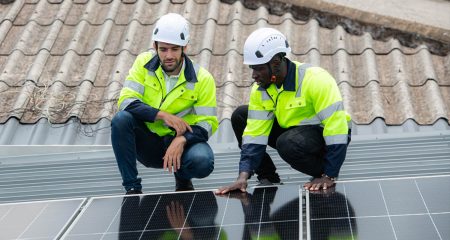
    In areas with recurring power outages (from cable theft, load shedding or load reduction, or a combination), savvy consumers and commercial businesses have already installed futureproofed rooftop solar and home energy management systems.

    The intersection between EVs and solar energy is undeniable – and unfolding in real time. By positioning solar as a critical enabler of electric mobility, South Africa can better navigate its energy crisis, accelerate EV adoption and build a more resilient energy future that advances the country’s goals of economic growth, job creation and sustainable development.

    Read: BYD reportedly launching sub-R400 000 electric car in SA

    Ultimately, this is about more than energy or transportation; it’s about securing South Africa’s long-term prosperity.

    Get breaking news from TechCentral on WhatsApp. Sign up here.

    • The author, Patrick Narbel, is chief technology officer at GoSolr

    Don’t miss:

    Every electric car you can buy in South Africa right now – with pricing

    Follow TechCentral on Google News Add TechCentral as your preferred source on Google


    Gosolr Patrick Narbel
    WhatsApp YouTube
    Share. Facebook Twitter LinkedIn WhatsApp Telegram Email Copy Link
    Previous ArticleEthereum price set for further big gains: Standard Chartered
    Next Article Rosebank Mall flips the switch on massive hybrid power system

    Related Posts

    Eskom vs solar users: Outa slams costly compliance rules

    Why AI could soon be managing your home solar system

    9 June 2025
    South Africa marks a full year without load shedding

    Eskom tariff proposal: the cost of getting it wrong

    11 December 2024
    TCS | Andrew Middleton on the state of rooftop solar in South Africa

    TCS | GoSolr CEO Andrew Middleton on the state of rooftop solar in South Africa

    31 October 2024
    Company News
    When jammers kill the signal, AI goes blind too - Rory Atkinson Orange Logistics Sigfox South Africa

    When jammers kill the signal, AI goes blind too

    12 June 2026
    Workday Horizon shows SA firms how to make AI deliver - Kiv Moodley

    Workday Horizon shows SA firms how to make AI deliver

    12 June 2026
    Hisense, Makro team up for winter laundry promotion

    Hisense, Makro team up for winter laundry promotion

    12 June 2026
    Opinion
    The clock is ticking on South African banks' biggest advantage - Pambos Soteriades

    The clock is ticking on South African banks’ biggest advantage

    9 June 2026

    Clashing judgments leave South Africa’s crypto law unsettled

    2 June 2026
    The clock is ticking on South African banks' biggest advantage - Pambos Soteriades

    The trap inside South Africa’s banking MVNO boom

    1 June 2026

    Subscribe to Updates

    Get the best South African technology news and analysis delivered to your e-mail inbox every morning.

    Latest Posts
    The millions Vodacom spends protecting its CEO - Shameel Joosub

    The millions Vodacom spends protecting its CEO

    14 June 2026
    Amazon CEO flagged Anthropic AI risks to Washington - Andy Jassy

    Amazon CEO flagged Anthropic AI risks to Washington

    14 June 2026
    The missing number in Vodacom's annual report - Nkosana Makate please call me

    The missing number in Vodacom’s annual report

    12 June 2026
    How Sixty60 turned lockdown luck into a lasting lead

    How Sixty60 turned lockdown luck into a lasting lead

    12 June 2026
    © 2009 - 2026 NewsCentral Media
    • Cookie policy (ZA)
    • TechCentral – privacy and Popia

    Type above and press Enter to search. Press Esc to cancel.

    Manage consent

    TechCentral uses cookies to enhance its offerings. Consenting to these technologies allows us to serve you better. Not consenting or withdrawing consent may adversely affect certain features and functions of the website.

    Functional Always active
    The technical storage or access is strictly necessary for the legitimate purpose of enabling the use of a specific service explicitly requested by the subscriber or user, or for the sole purpose of carrying out the transmission of a communication over an electronic communications network.
    Preferences
    The technical storage or access is necessary for the legitimate purpose of storing preferences that are not requested by the subscriber or user.
    Statistics
    The technical storage or access that is used exclusively for statistical purposes. The technical storage or access that is used exclusively for anonymous statistical purposes. Without a subpoena, voluntary compliance on the part of your Internet Service Provider, or additional records from a third party, information stored or retrieved for this purpose alone cannot usually be used to identify you.
    Marketing
    The technical storage or access is required to create user profiles to send advertising, or to track the user on a website or across several websites for similar marketing purposes.
    • Manage options
    • Manage services
    • Manage {vendor_count} vendors
    • Read more about these purposes
    View preferences
    • {title}
    • {title}
    • {title}