It was a surreal moment, standing in a Checkers in Stellenbosch in 2020, when I looked up from my trolley and caught sight of myself in a mirror, masked. This is real. This is the world now. I turned to my wife and said, “How is this real?”
It was the first time President Cyril Ramaphosa had allowed us to shop after the initial hard lockdown. The store was eerily quiet. The music played overhead as usual, but nobody spoke. Masked, wide-eyed shoppers shuffled around in silent pairs, making purchasing choices that felt like life-or-death decisions. The toilet paper aisle was stripped bare.
It is easy to forget how frightened everyone was. Nobody yet understood how Covid-19 worked – back then it was still Sars-CoV-2 to most of us – and every shopping trip felt like a brush with the grim reaper. My wife and I wiped down the packaging of every item we bought, our hands raw from sanitiser, before loading the groceries into the car.
Then we discovered Checkers Sixty60, which had just launched. For those first few weeks we still wiped down the deliveries, but staying home felt infinitely safer than risking a deadly virus to buy food.
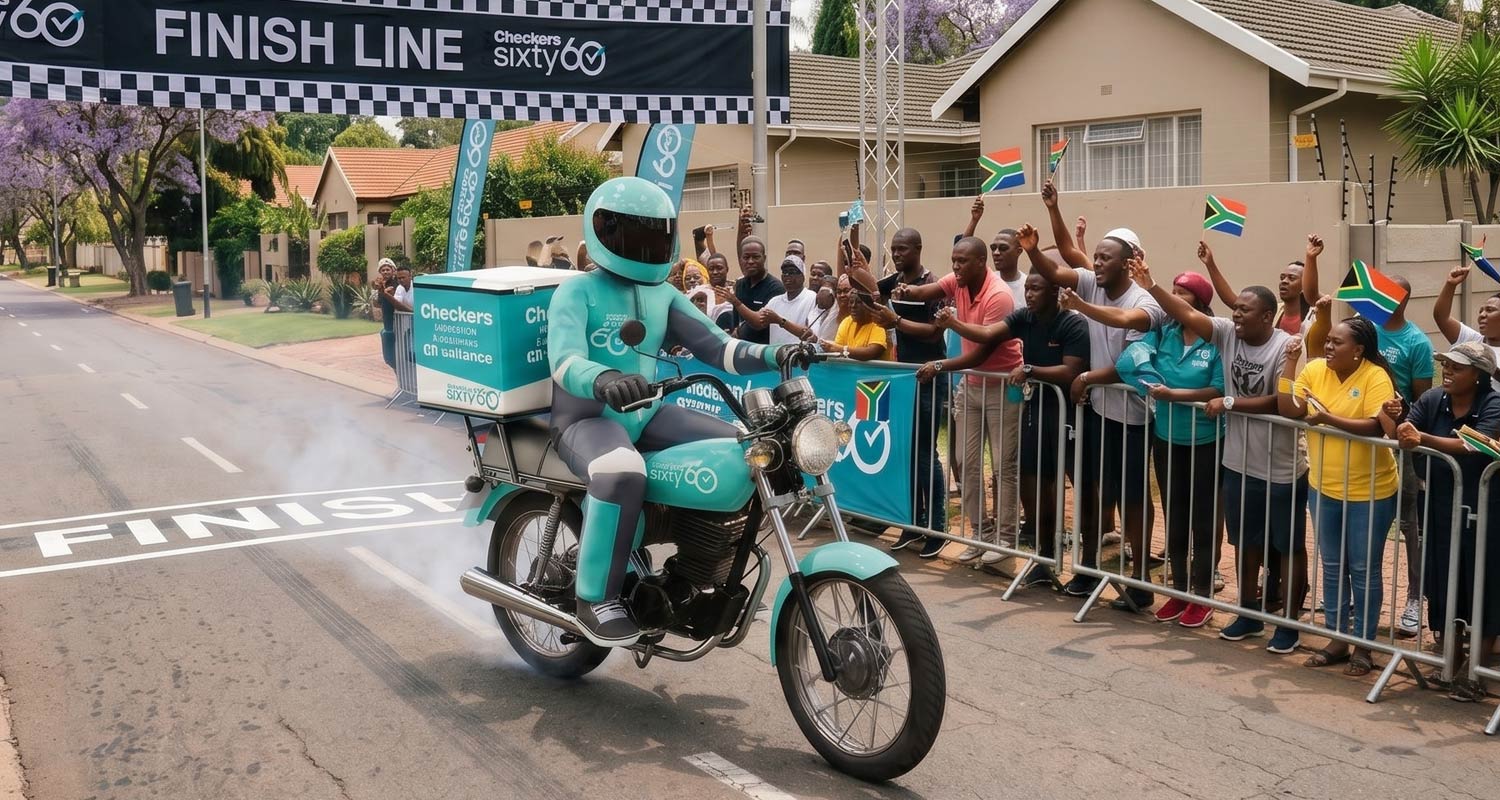
Many South Africans clearly felt the same, which is a big part of why Sixty60 became so deeply ingrained in the national psyche. Competitors followed – Pick n Pay’s asap!, Woolworths’ Woolies Dash and Spar’s Spar2U – but none has come close to its success or brand recognition. Checkers even produces Sixty60 replica delivery-bike toys for kids.
For a long time I called Sixty60 the best example of first-mover advantage I had seen. I have changed my mind. The more I look at it, the clearer it becomes that being first is not what won. What won was what Shoprite did next.
The timing was extraordinary
Sixty60 launched in November 2019, initially in a handful of neighbourhoods in Gauteng and the Western Cape. The timing – which Shoprite could not possibly have planned – was extraordinary. Within weeks, South Africa entered its first lockdown and home grocery delivery went from novelty to necessity overnight.
But a lucky break is only as good as the response to it. Shoprite did not sit back and ride the wave. It threw resources at the platform and scaled aggressively to meet the surge. By mid-2021, Sixty60 had passed one million downloads and established itself as the country’s dominant on-demand grocery app. As TechCentral reported in September 2023, it grew sales by 81% year on year in the 52 weeks to July 2023, extending a run of hypergrowth that had seen 150% gains the year before.
Read: Sixty60 notches up R11.9-billion in sales in six months
Crucially, the platform was not built in-house. Shoprite partnered with the South African technology firm Zulzi, which developed the original Sixty60 app and still maintains core functions, including the customer interface, the in-store operations app and the order-allocation engine. That gave Checkers a technically mature product unusually fast – and a head-start rivals have spent years trying to close.
Pick n Pay’s asap!, Woolies Dash and Spar2U have all grown since launching post-pandemic, but none has yet come close to denting Sixty60’s lead. In the 52 weeks to June 2025, Sixty60 sales rose 48% year on year while asap! grew more slowly, at 33%. Pick n Pay’s online turnover growth had slowed further, to 32.7%, TechCentral reported last month – by which point Sixty60 had passed 100 million cumulative orders, a milestone it reached in March 2025.

By late 2025, Sixty60 was turning over R11.9-billion in a single six-month period, fulfilling orders from roughly 875 stores through a fleet of about 10 000 Pingo drivers, after Shoprite acquired full control of the last-mile logistics provider in October 2024. Pick n Pay’s asap!, by comparison, was live in just over 620 stores with around 2 500 drivers.
The gap is structural, not just numerical. In platform markets, an early lead compounds: more stores mean shorter distances, which mean faster deliveries, which attract more customers, which justify more stores. Sixty60 has been locked in that virtuous cycle since 2020.
But network effects do not switch themselves on. They are the reward for execution – the stores Shoprite kept adding, the delivery times it kept cutting, the logistics it brought in-house.
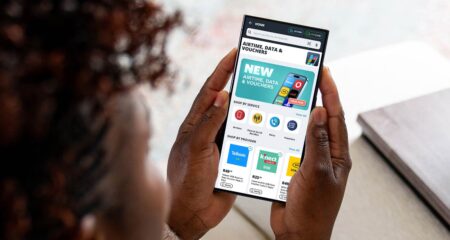
And Checkers has not rested. The store footprint serving Sixty60 grew from about 300 in 2022 to more than 875 by late 2025, and the platform expanded beyond Checkers to Shoprite stores, reaching lower-income consumers for the first time. The range widened from groceries into general merchandise, health and wellness, and speciality pet food, on a revamped app. The Xtra Savings Plus subscription, at R99/month, added a loyalty lock-in, and in late 2025 Sixty60 launched a web interface, removing the app download barrier for new customers.
The picture is one of deliberate moat-widening: more stores, a wider price-point spectrum, broader categories and ownership of the logistics layer. Shoprite is converting an early lead into structural barriers that are hard for late entrants to replicate.
Lessons
That moat has a cost, though, and it is not all borne by Shoprite. The logistics layer the company is so often praised for owning runs on Pingo, whose riders are independent contractors rather than employees – a structure critics say lets Shoprite hold the working conditions of its delivery fleet at arm’s length.
Safety is a live concern, too, given how many hours riders spend on dangerous roads. The Sixty60 success story has to sit alongside the question of who carries the risk behind that 60-minute promise.
So, what does Sixty60 actually teach about turning an opening into a lead?
- Timing matters, but you cannot manufacture it. You can almost never engineer being first. What you can control is how fast and how hard you move when fortune hands you an opening – and that is where Sixty60 won.
- Pick the right partners. The Zulzi partnership let Checkers move fast with something that actually worked, instead of spending years building from scratch.
- Get the technology right. Plenty of delivery services have stumbled because the app frustrated users – products that won’t load, payments that won’t go through, orders that vanish. Friction kills.
- Deliver, literally. Sixty60’s record of arriving on time, consistently, is the unglamorous core of the whole thing.
- Feed the network effects. More stores, shorter distances, faster deliveries, more customers, more stores. But the cycle only spins if you keep investing in it.
- Never coast. A head-start erodes the moment you stop running. Tesla enjoyed an enormous first-mover advantage in electric vehicles and is now watching Chinese rivals like BYD eat into it.
My wife and I still use Sixty60 most weeks, and it is still, reliably, on time. These days our 3-year-old runs outside to greet the driver, who is always friendly. That matters, too.
Perhaps that is the real lesson. Being first is often a stroke of luck. Staying ahead is a choice you have to keep making. – © 2026 NewsCentral Media
- The author, Dr Fanie van Rooyen, is TechCentral deputy editor
- Subscribe to TechCentral’s daily newsletter
- Get breaking news alerts on WhatsApp