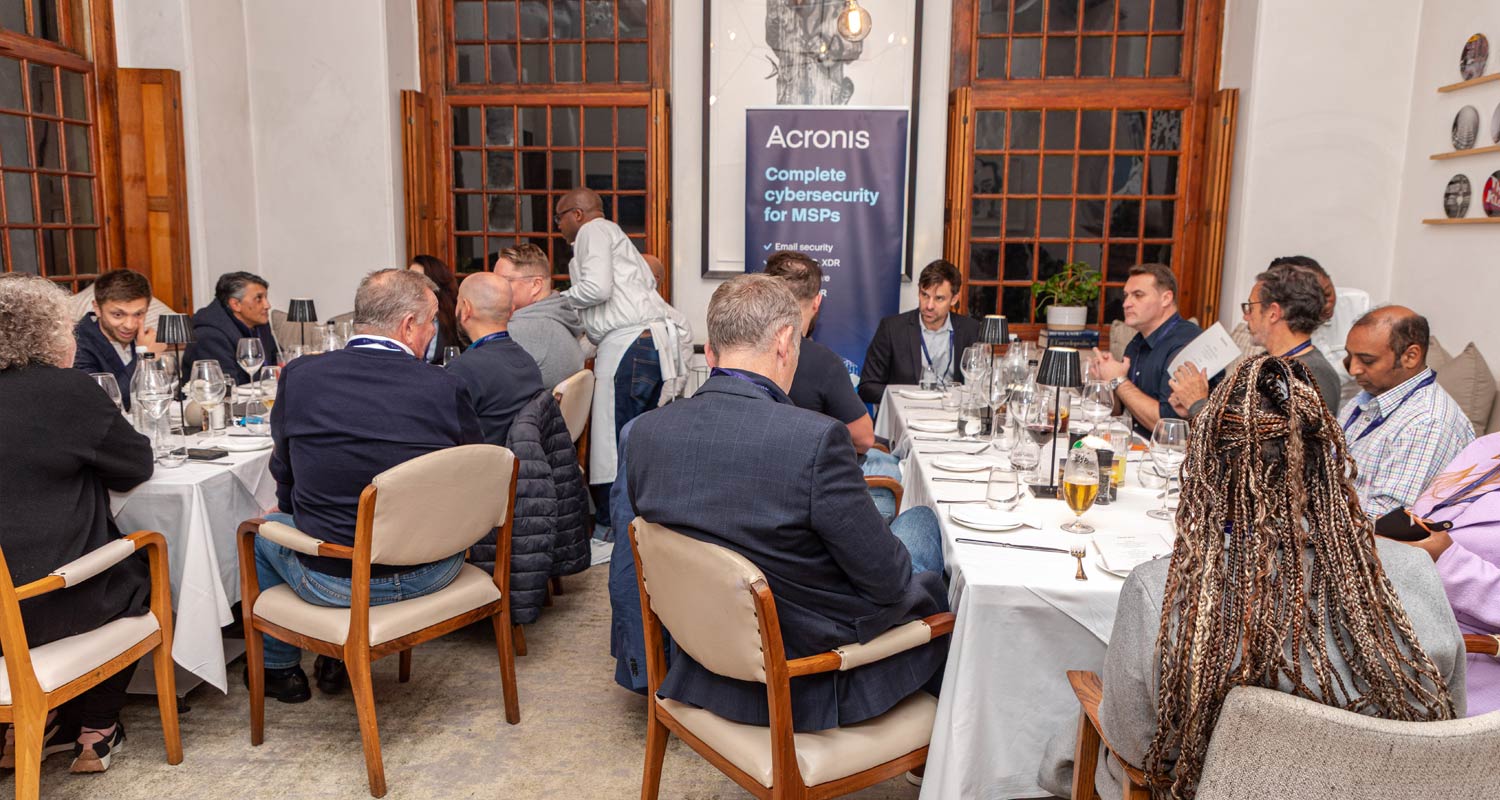
Acronis convened a group of Cape Town managed service providers, resellers and channel partners for an executive dinner roundtable in June, on a question that is becoming more urgent for the technology channel: how do security providers scale capability when skills are scarce, client expectations are rising and the threat environment is moving faster than traditional operating models?
The session was framed around the theme “The Autonomous MSP: How AI Is Solving the Security Talent Crisis MSPs Can’t Hire Their Way Out Of”. What unfolded was not a narrow product conversation but a candid market discussion about compliance, complexity, trust, talent and the changing role of intelligent platforms in helping managed service providers create capacity.
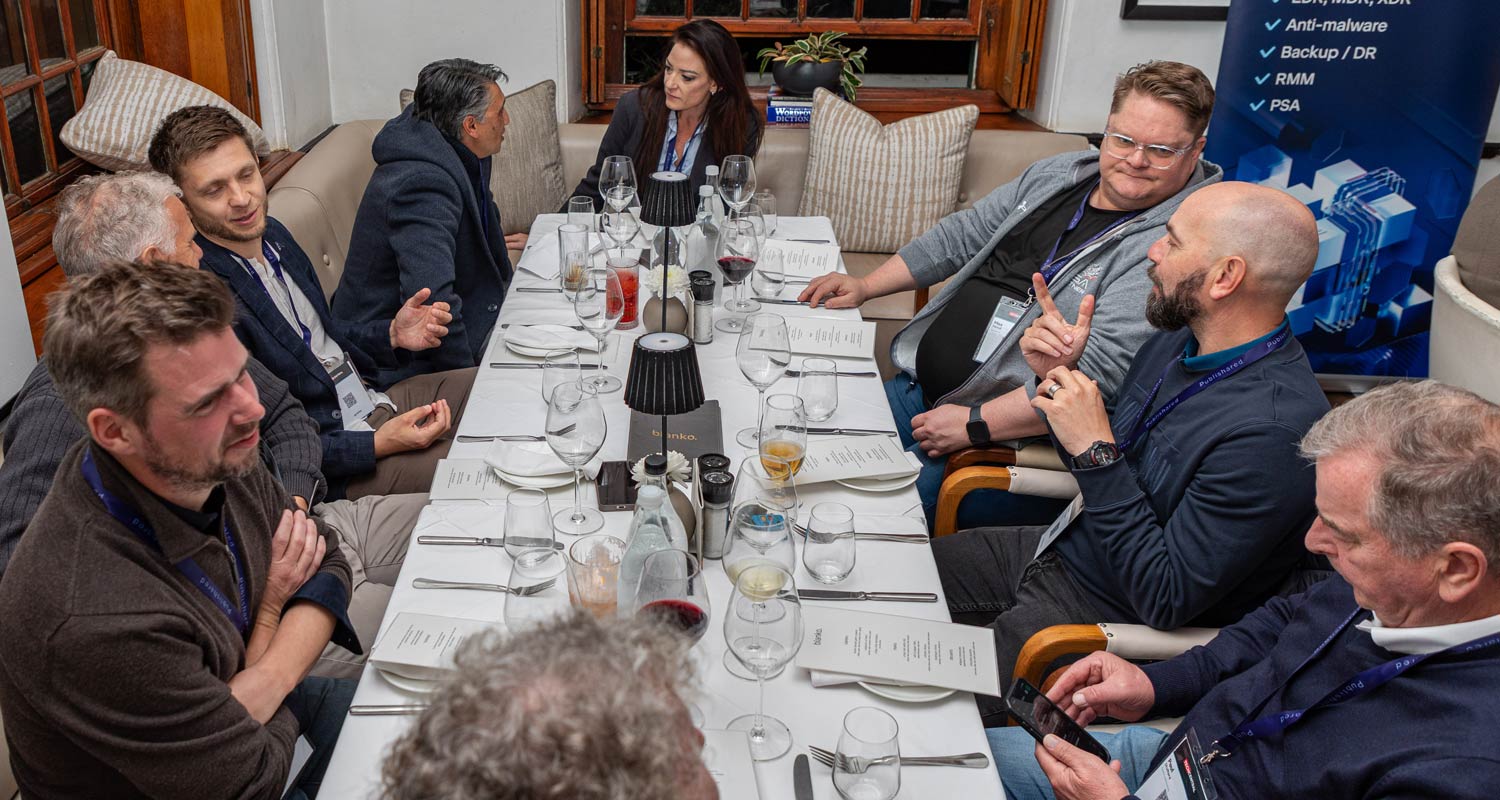
About 30 people gathered across two tables – a group that in other contexts competes for the same customers, talent and commercial opportunities. The tone was nonetheless open and engaged.
From the opening discussion, it was clear that the cybersecurity conversation has shifted. Clients are no longer only asking whether they have the right tools in place. They are asking harder questions about risk, resilience, reporting, compliance, recovery and business continuity.
Popia, Fica, cyber insurance and reporting obligations were all raised as real client concerns. But the group quickly moved beyond the idea that compliance is the same as security. Several participants pointed to the gap between regulatory frameworks and what happens on the ground. Regulation often lags the threat environment. Technology often moves faster than governance. And in some organisations, compliance becomes a tick-box exercise rather than a meaningful risk conversation.
Complexity is inside the stack
The question around the table was not “what do we need to do?” It was “what should we do?”
Compliance may satisfy a minimum requirement, but it does not automatically create resilience, and it does not guarantee faster response, clearer ownership or better decision-making in the moments that matter.
For MSPs, that creates both pressure and opportunity. The pressure is that clients increasingly expect them to interpret a complex security environment on their behalf. The opportunity is to help clients move from compliance anxiety to resilience confidence.
Complexity does not always live where clients think it does. It often sits inside the stack: across disconnected tools, legacy systems, overlapping vendors, fragmented processes and unclear ownership.
In many organisations, the risk is not that there are no tools. It is that there are too many moving parts and not enough clarity about how they work together when something goes wrong.
That is where cybersecurity becomes a business issue. A ransomware event, breach or outage is not only a technical incident: it can affect revenue, reputation, continuity, trust and leadership credibility. The conversation returned repeatedly to the point that cyber risk is now an overarching business and financial risk.
MSPs are being asked to deliver more comprehensive security services, better reporting, faster response and stronger advisory capability. At the same time, the talent market remains constrained. Skilled cybersecurity professionals are scarce, expensive and globally mobile. South African MSPs are not only competing locally; they are competing with international demand and international pay scales.
That makes time a strategic currency. Every minute spent managing avoidable complexity is a minute not spent on higher-value client engagement, proactive risk identification or faster response.
An autonomous MSP is not an MSP without people. It is one that uses intelligent platforms, automation and integrated services to reduce repetitive work, improve visibility and let people focus on judgement, prioritisation and client value. In simpler terms, it is about giving skilled people more room to do the work that matters.
Jacques Smit, Acronis country manager for South Africa, grounded the discussion in the realities of the local channel. The point was not that every MSP needs another tool, but that MSPs need platforms that give them leverage: the ability to reduce tool sprawl, consolidate cyber protection, strengthen recovery and deliver better outcomes without building every component themselves.
A vendor relationship becomes meaningful when it helps partners respond faster, reduce friction, strengthen reporting and create value that clients can feel. Acronis positioned itself not simply as a technology provider but as a partner helping MSPs build capacity in a market where capacity is increasingly difficult to buy.
From passive protection to active response
MDR and XDR both surfaced during the evening. MDR refers to managed detection and response, a service that helps monitor, detect and respond to threats. XDR, or extended detection and response, connects signals across different parts of the technology environment to identify threats more effectively.
The important point is not the acronym but the shift from passive protection to active identification, interpretation and response. For Acronis, that shift connects to its broader cyber protection approach: bringing cybersecurity, data protection and endpoint management together in a natively integrated platform, so MSPs can protect, detect, respond and recover through a more unified operating model.
As the evening drew to a close, the discussion became less about technology and more about what makes a vendor partnership worth building on. Ronan McCurtin, Acronis regional vice president for Europe, Israel and Africa, was clear that partnership has to create practical advantage – helping MSPs grow capability, serve clients better and build trust when pressure is highest.
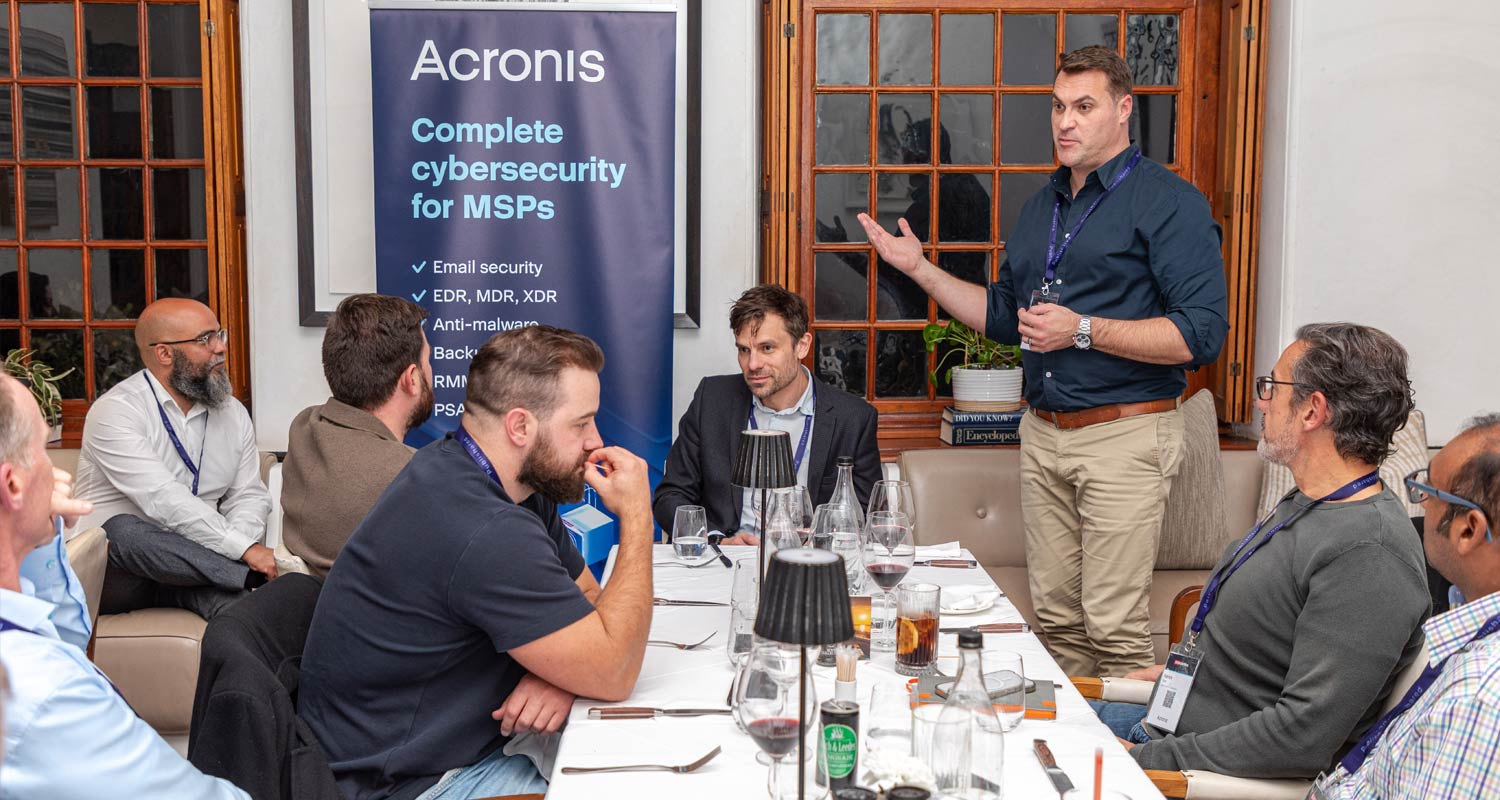
“We appreciate the hard work our partners do. Partnership is the secret sauce: it’s how we help MSPs grow capability, serve customers better and build trust,” McCurtin said.
When clients face a security event, they are not thinking about vendor architecture. They are thinking about whether their business can keep running. They want confidence, clarity and the knowledge that their provider can help them recover quickly.
The MSP of 2027 will not be defined by the size of its stack, but by how intelligently it brings people, platforms and partnerships together to create resilience. The next era of cybersecurity will not be won by those with the most tools, but by those who create the most time, trust and clarity when the pressure is highest.
- Read more articles by Acronis on TechCentral
- This promoted content was paid for by the party concerned