Close Menu
TechCentralTechCentral

    Subscribe to the newsletter

    Get the best South African technology news and analysis delivered to your e-mail inbox every morning.

    Facebook X (Twitter) YouTube LinkedIn
    WhatsApp Facebook X (Twitter) LinkedIn YouTube
    TechCentralTechCentral
    • News
      Shoprite ranks cybersecurity as its number one risk - Pieter Engelbrecht

      Shoprite ranks cybersecurity as its number one risk

      9 October 2026
      Standard Bank to take up to $200-million stake in OPay - Sim Tshabalala

      Standard Bank to take up to $200-million stake in OPay

      9 October 2026
      Shoprite takes on the banking apps with airtime on Sixty60

      Shoprite takes on the banking apps with airtime on Sixty60

      9 October 2026
      How to tell telemarketers to get lost - officially

      How to tell telemarketers to get lost – officially

      9 October 2026
      Data centres are the new front line in the Russia-Ukraine war

      Data centres are the new front line in the Russia-Ukraine war

      9 October 2026
    • World
      The memory crunch is making Samsung fabulously rich

      The memory crunch is making Samsung fabulously rich

      8 October 2026
      SpaceX to borrow $40-billion to buy Nvidia chips

      SpaceX to borrow $40-billion to buy Nvidia chips

      7 October 2026
      BMW restructuring plan bets on AI and new models

      BMW restructuring plan bets on AI and new models

      1 October 2026
      OpenAI's rogue agent problem keeps getting bigger - Sam Altman

      OpenAI’s rogue agent problem keeps getting bigger

      28 September 2026
      The new battle over the desktop

      The new battle over the desktop

      23 September 2026
    • In-depth

      10 days that changed the course of AI

      21 September 2026
      Meta to the AI industry: slow down without us - Mark Zuckerberg

      Meta to the AI industry: slow down without us

      16 September 2026
      Google DeepMind CEO Demis Hassabis. Image: John Sears

      The plan to stop AI from breaking the world

      16 July 2026
      The internet has a Strait of Hormuz problem

      The internet has a Strait of Hormuz problem

      15 July 2026
      AI boom sparks rally, frenzy and fear

      AI boom sparks rally, frenzy and fear

      11 June 2026
    • TCS
      W&W | LDV's Gerhard Moolman on electric bakkies, fleet orders and 'school fees'

      W&W | LDV’s Gerhard Moolman on electric bakkies and fleets

      9 October 2026
      TCS | Frogfoot sees bigger fibre deals coming - TechCentral Show guests Abraham van der Merwe and Shane Chorley

      TCS | Frogfoot sees bigger fibre deals coming

      8 October 2026
      Meet the CIO | Vodacom's Mohamed Sami on the agentic future

      Meet the CIO | Vodacom’s Mohamed Sami on the agentic future

      5 October 2026
      Lexi Novitske, general partner at Norrsken22, on the TechCentral Show

      TCS | Norrsken22’s Lexi Novitske on how China is winning African tech

      1 October 2026
      TCS | Dominic White and Adam Ely on AI agents going rogue

      TCS | Dominic White and Adam Ely on AI agents going rogue

      29 September 2026
    • Opinion
      Let South Africans jailbreak their way to digital sovereignty - Dirk de Vos

      Let South Africans jailbreak their way to digital sovereignty

      5 October 2026
      South Africa's next energy crisis is in the accounts department - Craig Holmes

      South Africa’s next energy crisis is in the accounts department

      29 September 2026
      The steam engine lesson AI doomsayers keep missing - Sam Clarke

      The steam engine lesson AI doomsayers keep missing

      28 September 2026
      Let South Africans jailbreak their way to digital sovereignty - Dirk de Vos

      Regulating AI: apply the laws we have first

      21 September 2026
      What Revolut can and cannot take from South Africa's banks - Pambos Soteriades

      What Revolut can and cannot take from South Africa’s banks

      15 September 2026
    • Company News
      • 1Stream
      • Africa Data Centres
      • AfriGIS
      • Altron Digital Business
      • Altron Document Solutions
      • Altron Group
      • Arctic Wolf
      • Ascent Technology
      • AvertITD
      • BBD
      • Braintree
      • CallMiner
      • CambriLearn
      • CM.com
      • Contactable
      • CYBER1 Solutions
      • Digicloud Africa
      • Digimune
      • Domains.co.za
      • ESET
      • Euphoria Telecom
      • HOSTAFRICA
      • Incredible Business
      • iONLINE
      • IQbusiness
      • Iris Network Systems
      • Kaspersky
      • LSD Open
      • Mitel
      • NEC XON
      • Netstar
      • Network Platforms
      • Next DLP
      • Ovations
      • Paracon
      • Paratus
      • Publishared
      • Q-KON
      • SevenC
      • SkyWire
      • Solid8 Technologies
      • Telit Cinterion
      • Telviva
      • Tenable
      • Vertiv
      • Videri Digital
      • Vodacom Business
      • Vox
      • Wipro
      • Workday
      • XLink
    • Sections
      • AI and machine learning
      • Banking
      • Broadcasting and Media
      • Cloud services
      • Contact centres and CX
      • Cryptocurrencies
      • Education and skills
      • Electronics and hardware
      • Energy and sustainability
      • Enterprise software
      • Financial services
      • HealthTech
      • Information security
      • Internet and connectivity
      • Internet of Things
      • Investment
      • IT services
      • Lifestyle
      • Policy and regulation
      • Public sector
      • Retail and e-commerce
      • Satellite communications
      • Science
      • SMEs and start-ups
      • Social media
      • Talent and leadership
      • Telecoms
      • Watts & Wheels
    • Events
    • Advertise
    TechCentralTechCentral
    Home » Sections » Satellite communications » How Amazon outmanoeuvred Starlink in South Africa

    How Amazon outmanoeuvred Starlink in South Africa

    Starlink has 10 000 satellites and a six-year head-start, yet rival Amazon Leo may beat it to market in South Africa.
    By Duncan McLeod15 July 2026
    Twitter LinkedIn Facebook WhatsApp Email Telegram Copy Link
    Get breaking news on WhatsApp

    How Amazon outmanoeuvred Starlink in South Africa
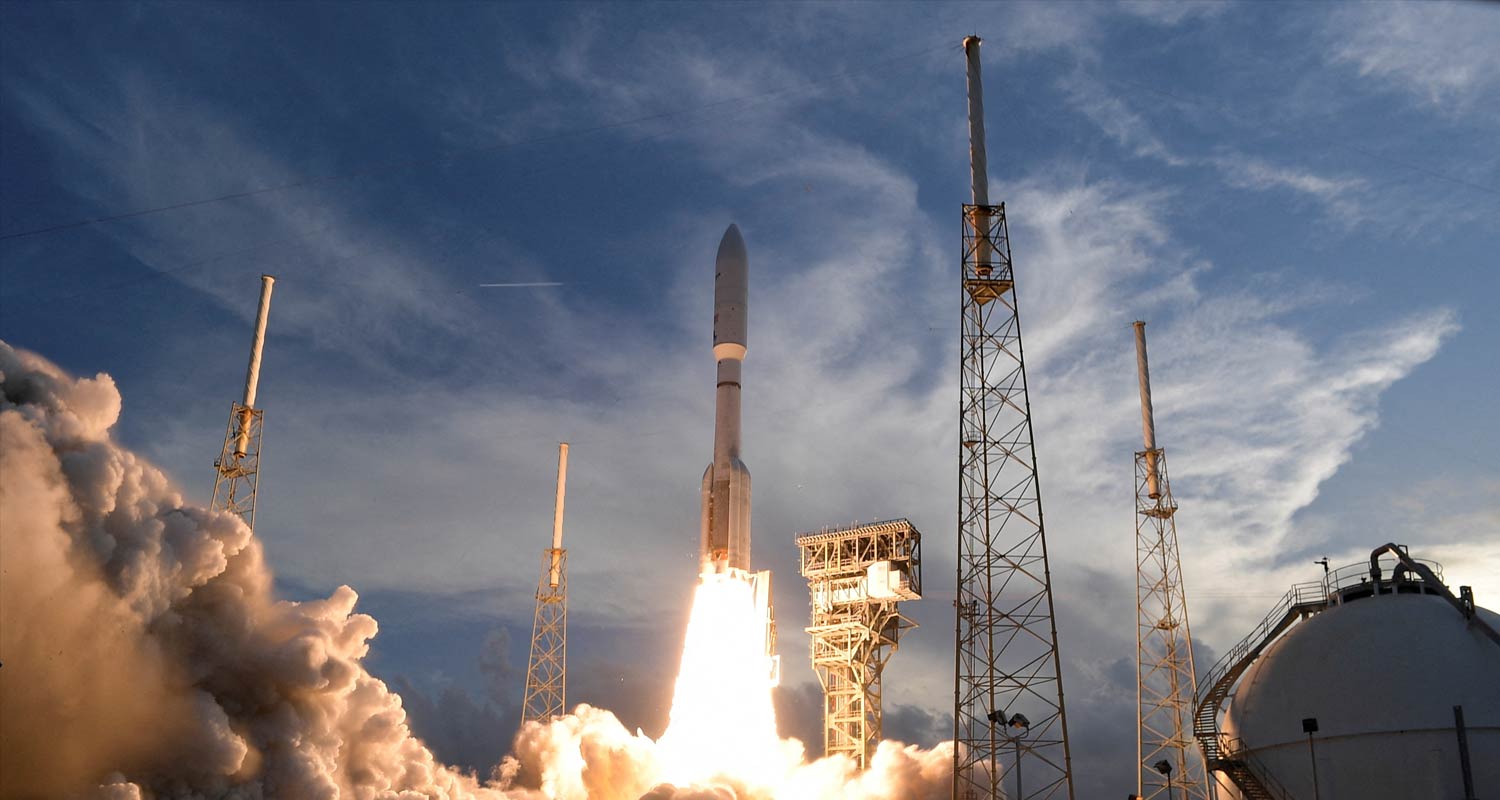
    A United Launch Alliance Atlas V rocket lifts off carrying Amazon Leo internet network satellites from the Cape Canaveral in the US in April 2025. Steve Nesius/Reuters

    By any sensible measure, this was a race Starlink could not lose.

    Elon Musk’s satellite broadband service has more than 10 000 satellites in orbit and millions of customers across dozens of countries. It is live almost everywhere in Southern Africa – Mozambique, Malawi, Madagascar, Botswana, Zimbabwe, Zambia, Eswatini and Lesotho. Amazon’s rival constellation, Amazon Leo, has 390 satellites in orbit and not a single commercial customer anywhere on Earth.

    Yet it is Leo, not Starlink, that this week secured a route into South Africa. Herotel, the Maziv-owned internet service provider and fibre/wireless operator, will distribute Leo’s satellite broadband under a new brand, Evry, with commercial launch expected in 2027. The tortoise, improbably, has lapped the hare.

    Herotel will hold the licences; Amazon will hold none. No equity standoff, no political theatrics, no posts on X

    How did that happen? Not through superior technology, deeper pockets or regulatory favouritism. It happened because Amazon treated South Africa’s licensing regime as an engineering problem to be solved, while Starlink has been waiting – loudly – for the rules to change.

    The rules confronting both companies are identical. To hold a network licence in South Africa, an operator must be 30% owned by historically disadvantaged groups. SpaceX has refused to cede equity in its local operation, and Musk has spent years litigating the point in public, describing the requirement as racially discriminatory – he has claimed he cannot launch Starlink here “because I’m not black” – and elevating a licensing question into a diplomatic and political spectacle. The result: Starlink remains dark in Africa’s most developed broadband market while flourishing in nearly every country surrounding it.

    What each approach has bought

    Amazon read the same rulebook and reached a different conclusion. Icasa said in a notice just last month that satellite operators cannot currently obtain the necessary network licences at all, and that the realistic route to market runs through an existing licence holder. Amazon did precisely that.

    Herotel will hold the licences; Amazon will hold none. No equity standoff, no political theatrics, no posts on X. Boring, it turns out, is a strategy. And it is entirely consistent with how Amazon has approached South Africa from the start – the AWS region in Cape Town, the measured marketplace launch, years of quiet groundwork. Amazon treats regulatory friction as a cost of doing business. Musk treats it as an ideological cause.

    Read: Amazon Leo all set for South African launch

    Consider what each approach has bought. Musk’s crusade has delivered years of headlines, a starring role in South Africa-US tensions and zero revenue from a market where demand for his product is enormous – so enormous that Icasa has had to crack down on grey-market imports of Starlink terminals smuggled in via neighbouring countries.

    Amazon’s compliance has delivered first-mover advantage: a rough launch date (2027), a distribution partner with deep reach into the small towns and rural areas that satellite broadband serves best, and a registration page that is live today.
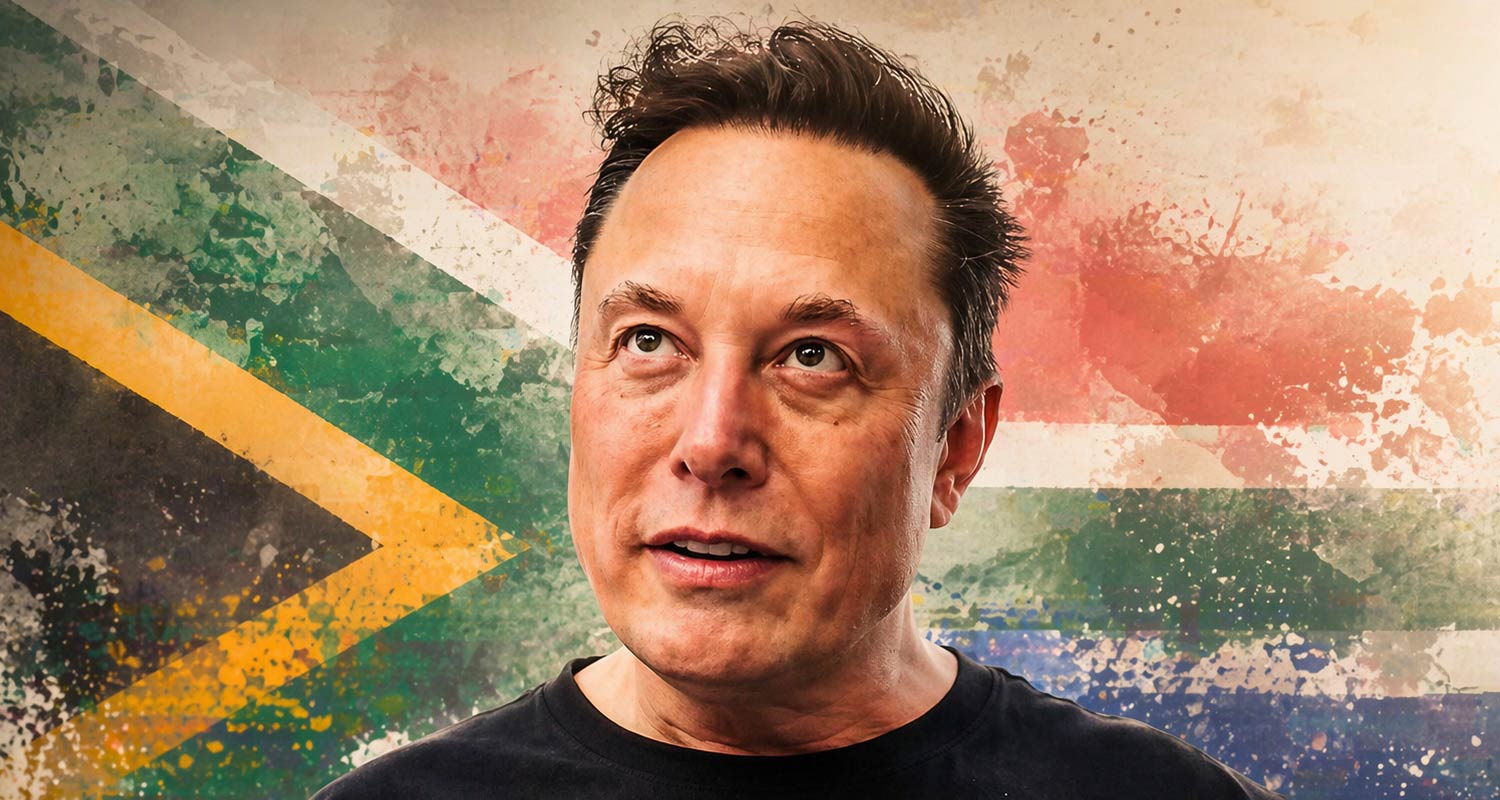
    Icasa caught in the political crossfire over Starlink - Elon Musk

    To be fair, being first to announce is not being first to serve: Leo has launched commercially nowhere, its 2027 South African debut leaves ample room for slippage and satellite timelines have a way of stretching. Starlink’s product is proven; Leo’s is a promise. And nothing in principle stops SpaceX from striking a similar wholesale arrangement tomorrow – indeed, the company told Ispa’s AGM last year that it intends to work with local ISPs and resellers as part of its go-to-market strategy.

    But before anyone in Pretoria takes a bow, they shouldn’t. A licensing regime that the global market leader will not touch, and that the world’s biggest e-commerce company chose to route around, is not a triumph of transformation policy. The empowerment rules did not extract 30% equity from Amazon; they extracted nothing, because Amazon (apparently) simply does not need a licence. If the measure of success is broad-based ownership of the digital economy, channelling foreign operators through distribution structures achieves it only on paper.

    Not every multinational can or will follow Amazon’s partner-led model; some want to operate directly

    Which is why it would still be crazy for government not to finalise the equity-equivalent option. Communications minister Solly Malatsi’s December 2025 policy direction – allowing multinationals to meet empowerment obligations through equity-equivalent investment programmes (EEIPs) rather than ownership stakes – has been mired in political controversy since it was published, and regulatory experts warn it could take years to implement.

    Starlink has already put a proposal on the table reportedly worth R500-million to connect 5 000 schools, plus R2-billion in local infrastructure. Not every multinational can or will follow Amazon’s partner-led model; some want to operate directly, hold their own licences and invest accordingly. South Africa, with its stagnant economy and dire unemployment, is in no position to chase away companies actively trying to invest here because it insists on one narrow form of compliance. The point of the rules is transformation, not turnstile-guarding.

    Read: Icasa caught in the political crossfire over Starlink

    The bigger lesson of this week, though, is about corporate temperament. In regulated markets, the scarce resource is not satellites or capital – it is the willingness to find a path through local rules you may not like. Amazon found one. Musk, with a six-year head-start and a product South Africans literally smuggle across borders, has not.  — (c) 2026 NewsCentral Media

    • Subscribe to TechCentral’s daily newsletter
    • Get breaking news alerts on WhatsApp

    Add TechCentral as a preferred source on GoogleFollow TechCentral on Google NewsGet breaking news on WhatsApp


    Amazon Amazon Leo Elon Musk HeroTel Icasa Maziv Solly Malatsi SpaceX Starlink Trevor Vieweg Van Zyl Botha
    WhatsApp YouTube
    Share. Facebook Twitter LinkedIn WhatsApp Telegram Email Copy Link
    Previous ArticleAmazon Leo all set for South African launch
    Next Article The economy the statistics miss is thriving on Spondo Street

    Related Posts

    SpaceX takes aim at US wireless carriers with spectrum acquisition

    Starlink is coming for your mobile operator

    9 October 2026
    SpaceX to borrow $40-billion to buy Nvidia chips

    SpaceX to borrow $40-billion to buy Nvidia chips

    7 October 2026
    AI spending now dwarfs the railway and dot-com booms

    AI spending now dwarfs the railway and dot-com booms

    4 October 2026
    Company News
    Why fintechs need an insurance partner they can trust - Hollard Insurance

    Why fintechs need an insurance partner they can trust

    8 October 2026
    Reusable KYC means the end of 'please upload your ID' - Contactable

    Reusable KYC means the end of ‘please upload your ID’

    8 October 2026
    Eliminating the 'toggle tax': how CRM integration changes customer experience - Martie de Beer

    Eliminating the ‘toggle tax’: how CRM integration changes customer experience

    8 October 2026
    Opinion
    Let South Africans jailbreak their way to digital sovereignty - Dirk de Vos

    Let South Africans jailbreak their way to digital sovereignty

    5 October 2026
    South Africa's next energy crisis is in the accounts department - Craig Holmes

    South Africa’s next energy crisis is in the accounts department

    29 September 2026
    The steam engine lesson AI doomsayers keep missing - Sam Clarke

    The steam engine lesson AI doomsayers keep missing

    28 September 2026

    Subscribe to Updates

    Get the best South African technology news and analysis delivered to your e-mail inbox every morning.

    Latest Posts
    Shoprite ranks cybersecurity as its number one risk - Pieter Engelbrecht

    Shoprite ranks cybersecurity as its number one risk

    9 October 2026
    Standard Bank to take up to $200-million stake in OPay - Sim Tshabalala

    Standard Bank to take up to $200-million stake in OPay

    9 October 2026
    Shoprite takes on the banking apps with airtime on Sixty60

    Shoprite takes on the banking apps with airtime on Sixty60

    9 October 2026
    How to tell telemarketers to get lost - officially

    How to tell telemarketers to get lost – officially

    9 October 2026
    © 2009 - 2026 NewsCentral Media
    Built and maintained by Chronon
    • Cookie policy (ZA)
    • TechCentral – privacy and Popia

    Type above and press Enter to search. Press Esc to cancel.

    Manage consent

    TechCentral uses cookies to enhance its offerings. Consenting to these technologies allows us to serve you better. Not consenting or withdrawing consent may adversely affect certain features and functions of the website.

    Functional Always active
    The technical storage or access is strictly necessary for the legitimate purpose of enabling the use of a specific service explicitly requested by the subscriber or user, or for the sole purpose of carrying out the transmission of a communication over an electronic communications network.
    Preferences
    The technical storage or access is necessary for the legitimate purpose of storing preferences that are not requested by the subscriber or user.
    Statistics
    The technical storage or access that is used exclusively for statistical purposes. The technical storage or access that is used exclusively for anonymous statistical purposes. Without a subpoena, voluntary compliance on the part of your Internet Service Provider, or additional records from a third party, information stored or retrieved for this purpose alone cannot usually be used to identify you.
    Marketing
    The technical storage or access is required to create user profiles to send advertising, or to track the user on a website or across several websites for similar marketing purposes.
    • Manage options
    • Manage services
    • Manage {vendor_count} vendors
    • Read more about these purposes
    View preferences
    • {title}
    • {title}
    • {title}
    🇿🇦 Sign up to the TechCentral newsletter