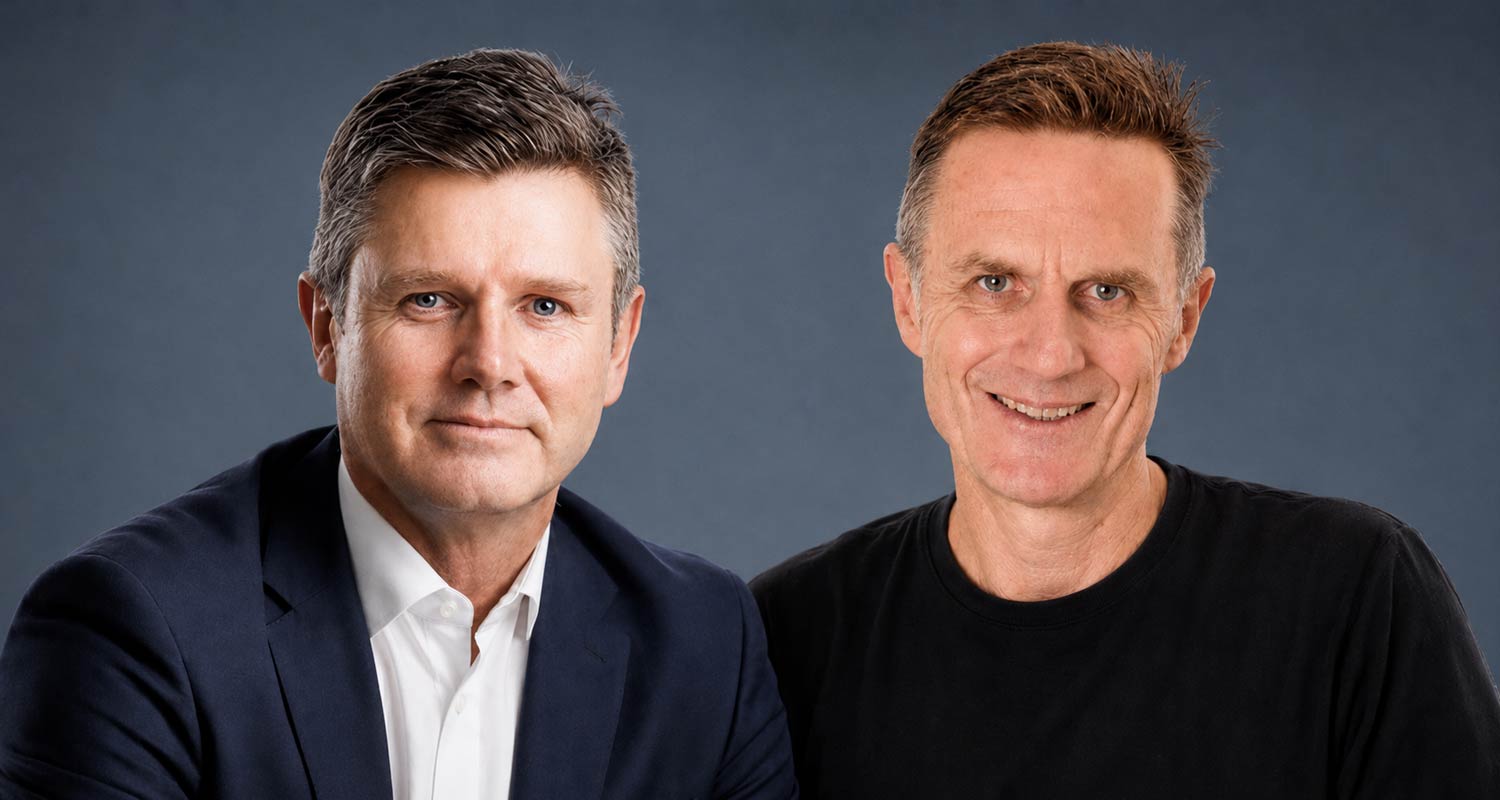
Anthonie de Beer has been group CEO of Reunert for five months, and he has already outlawed an excuse.
“Don’t come and speak to me about the market or inflation or things are tough and the copper price and all that,” he told TechCentral at iqbusiness’s Geshidocon conference at Kyalami on Wednesday. “What are you doing about capturing this proportionate amount of the opportunity set in a supercycle?”
De Beer, who took over from Alan Dickson in March, has described the group, founded all the way back in 1888, as sitting inside three long-running structural booms at once.
“I very quickly realised in studying this business that we operate in three supercycles: energy transition, technology — AI is the acceleration — and defence,” he said. “A company that operates in three supercycles is very fortunate, but the question is not where you operate; it’s what you are going to do about it.”
It is interesting messaging for a group that has just had a rough financial half-year. In the six months to 31 March 2026, group operating profit fell 23% to R453-million and headline earnings per share dropped 22% to 185c, while the interim dividend was held flat at 90c.
Almost all of the damage came from electrical engineering, where operating profit fell 40% to R138-million on revenue of R3.5-billion, a margin of 3.9%. The segment accounts for 55% of Reunert’s revenue but under a quarter of the combined operating profit of its three reporting segments.
‘Pivoting harder’
The comparison that hangs over Reunert is long-running rival Altron, which has restructured aggressively around technology platforms and in May surprised the market with a special dividend of nearly R500-million. Does Reunert regret not pivoting as hard? “No, I think we are pivoting harder,” De Beer said.
His argument is that Reunert’s ICT businesses have never been made to work as a single system. There is Reunert Connect for connectivity, iqbusiness for digital acceleration and consulting, a national dealer channel he says reaches 25 000 businesses, and Quince Capital, the group’s rental and asset finance arm.
Read: Reunert’s iqbusiness sets sights on tech consolidation
“Historically, we haven’t connected the dots between them all,” he said. The funding leg is what makes the rest work, he argued: a company that needs to spend R500 000 upgrading its data stack can have Quince assess and fund it. “That’s the secret sauce in actually helping unlock that.”
ICT is already carrying the group. Revenue fell 4% to R1.86-billion but operating profit rose 1% to R321-million, lifting the margin from 16.4% to 17.2%. On 29% of group revenue, it delivered more than half of the three segments’ combined operating profit before central costs.
Reunert’s ICT growth ambitions run largely through iqbusiness, in which the group agreed to buy a 74.2% stake in March 2023 and which Rob Godlonton was named to lead in November, replacing Adam Craker after 15 years. In May, Godlonton told TechCentral the market was entering a significant consolidation phase.
One deal is further along than has been reported. “We’ve signed the heads of agreement with a platform business in the financial services sector that is delivering to two clients in financial services,” Godlonton said. “We’ll look for the same in mining and manufacturing.”
He does not much like the word “acquisition”, though that is what it is. “We don’t call it an acquisition strategy; we call it a joining strategy because we want businesses to join the platform, to scale up and to deliver to our clients,” he said. That platform includes common HR, finance and legal systems a business can plug into.
Iqbusiness is hunting in three areas: data and AI, where Godlonton says the consulting capability is strong and the gap is in platforms; cloud and managed services; and industry-specific platforms, on a view that IT and operational technology are converging in mining and manufacturing.
Silversoft, announced in May on undisclosed terms, operates in South Africa, the UK and the Middle East and is a platinum regional partner of enterprise software firm Deltek. The UK move, Godlonton said, is “to deliver services from South Africa as part of our global business services”.
Hanging onto cables
Asked whether, as a career private equity investor, he thought an asset like electrical engineering should be fixed, shrunk or sold, De Beer was unambiguous: “Selling an asset at the wrong point in time is absolutely the wrong thing to do. It’s the biggest mistake you can make,” he said. “You never sell a business when you’re sitting at this point.”
Instead, the job is to build choices. “We are creating maximum optionality out of our cables businesses, and we are running them as efficiently as we can,” he said — cost work, investment behind efficiency and hunting for parts of the market Reunert is not reaching, so that when the upturn comes, the group can accelerate or consider alternatives. “That’s where we are right now — at a very low point.”
Applied electronics, which houses Reunert’s defence businesses, lifted operating profit 41% to R110-million on 9% more revenue, and has produced the group’s most concrete strategic move of the period. Alongside the interim results, Reunert announced a joint venture with Czechoslovak Group in which it takes 51% of an electronic fuze manufacturing operation in Slovakia, putting Reunert-designed technology inside the Nato supply chain.
“We are doubling down on all three,” De Beer said, “defence (obviously a massive opportunity), technology because of all the reasons we both know, and the energy transition.” — © 2026 NewsCentral Media
- Subscribe to TechCentral’s daily newsletter
- Get breaking news alerts on WhatsApp