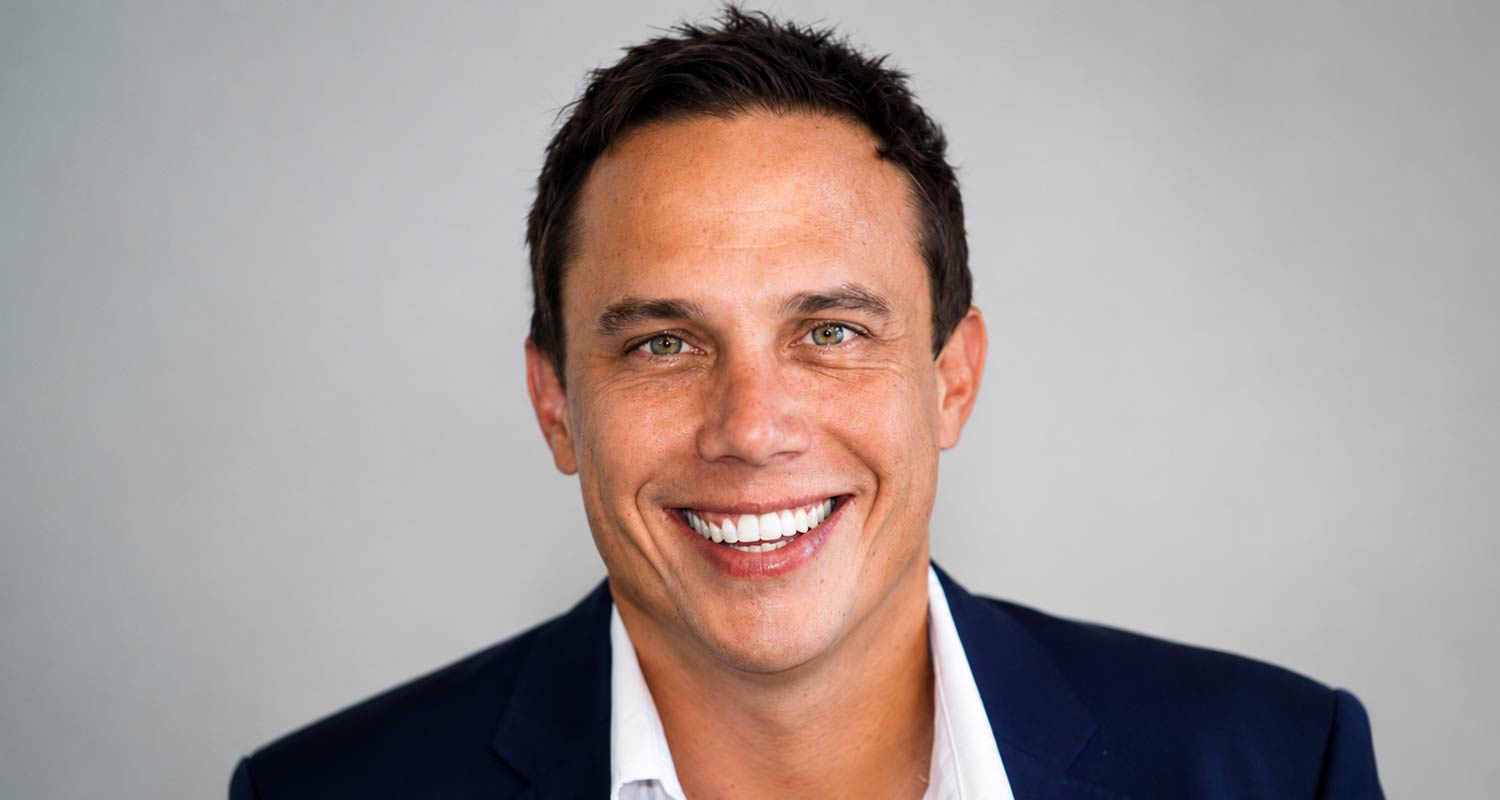
Herotel intends to sell Amazon’s low-Earth orbit satellite broadband at prices that closely track its existing fibre packages, and will carry the currency risk on terminals landed in South Africa, CEO Van Zyl Botha has told the TechCentral Show podcast.
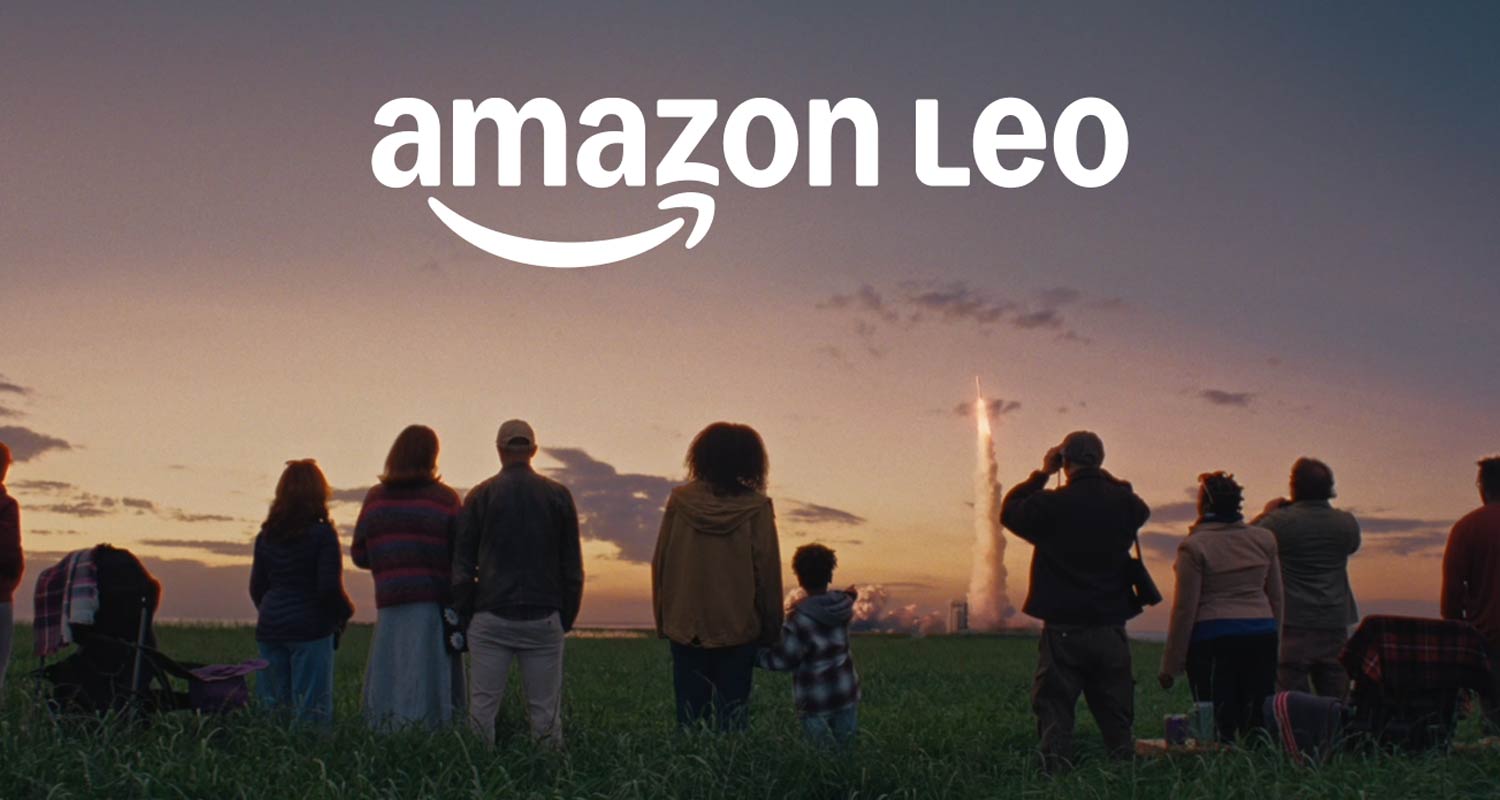
It is the clearest signal yet on what Evry will cost – the brand Maziv-owned Herotel unveiled in July as the retail face of Amazon Leo. Registrations are open, but the service will not switch on before sometime next year.
“We’ll be the importer of record, so we’ll land the terminals in South Africa. So, that’ll be our risk,” Botha said. Pricing, he indicated, would be held as far as possible over an initial three-year period rather than moving directly with the rand-dollar exchange rate.
He would not release product detail, but pointed at Herotel’s current price list. “If you look at Herotel’s website and the fibre products we have, we try and be a value provider. We don’t have middlemen or ISPs between us and the customer. We service the customer direct,” he said. “The reason why this product was appealing is that we could match almost entirely our current fibre prices. So, that gives you a pretty good idea of what will come.”
That price list is public. Herotel advertises four uncapped fibre packages, priced on 11 August at R399/month for new customers, R629, R799 and R1 049, with promotional pricing in some towns. The site does not publish a speed against each tier, giving 60Mbit/s, 120Mbit/s and 200Mbit/s only as examples. On the Evry pages, the Nano antenna is listed at up to 100Mbit/s and the Pro at up to 300Mbit/s.
Connecting the unconnected
Customers will be offered the choice of buying the terminal outright or financing it, Botha said, with longstanding Herotel customers preferred.
Botha cited a wide range for the addressable market. “We’ve seen studies that say 480 000 and then we’ve seen studies that say 2.4 million,” he said. “It gives you a bit of a range.”
Satellite is “not a perfect technology for density”, he conceded. “I think LEO is more about connecting the unconnected and reaching those spaces that were impossible than it’s about competing in the metro against 5G.”
Read: Amazon Leo all set for South African launch
The agreement is not exclusive. Amazon Leo global business head Trevor Vieweg said in July that Herotel is “our first announced partner in South Africa” and that “we will likely work with other partners”. Botha’s answer was scale: “We’ve got presence in about 100 towns outside the metros, 1 400 people and about 600 vehicles.
“We’d like to have the first bite at the distribution, so I think we have a couple of years to really go and sell the product… We’re happy with competition, we don’t shy away from it. We just want to be first for now.”
Pressed on how long the head-start over Starlink could last, Botha said. “If we compete, then we must just play by the same rules. We can’t have some people subject to the rules and others not. But we, in essence, welcome competition.”
Herotel will hold every necessary licence; Amazon will hold none and needs none, because it sits upstream as a wholesaler – a structure that sidesteps the impasse that has kept its biggest rival out. Communications regulator Icasa told the market in June that new satellite operators cannot obtain network licences directly, while SpaceX’s route to a licence stays blocked over the 30% historically disadvantaged ownership requirement.
He reached for the fibre analogy. “In fibre, we assume there will be two fibre networks everywhere. So, are we the best one? It just goes the same with LEO. We prefer a head-start and we like it, but let’s assume there’s competition. And in a couple of years’ time, there’ll be competition from China… The business isn’t static.”
Botha argued the wholesale/retail split leaves more behind on the continent, because the revenue share Herotel keeps “enables us to appoint local people to sell the service, local people to install the service, to support and maintain the service”. “Where some other, let’s say ‘competitors’, go directly to market, directly to customer, directly to consumer, they leave nothing behind in country,” he said pointedly.
Amazon Leo has not launched commercial service anywhere in the world, though it is serving beta customers and has signed agreements with JetBlue, Delta and AT&T.
Amazon has launched 396 satellites of an authorised 3 236, which it says is enough to begin an initial service later this year.
Cannibalisation
It missed a US Federal Communications Commission milestone requiring 1 618 satellites in orbit by 30 July, and was granted a conditional waiver in June that moves the deadline to July 2027 while temporarily demoting the spectral priority of satellites launched after the original date.
“I understand they’re already testing the product — so it’s working. And Amazon wants to go live in the US and Europe this year,” Botha said. He could not narrow down when next year the service will launch: “I can’t give a firm date in 2027 because, as you say, it depends on launching satellites.”
Read: How Amazon outmanoeuvred Starlink in South Africa
Herotel expects some cannibalisation. “We assume some customers will move. The way we view it is another tool in the toolbox,” Botha said. “We don’t lock people into contracts.”
Vodacom owns 30% of Maziv and can increase that to 34.95%. Botha would not say whether Vodacom had backed the Amazon agreement, noting only that the shareholding change was already done. “For now our business is operationally autonomous.” — © 2026 NewsCentral Media
- The full interview with Van Zyl Botha will be published on the TechCentral Show later this week
- Subscribe to TechCentral’s daily newsletter
- Get breaking news alerts on WhatsApp