
Close Menu
TechCentralTechCentral

    Subscribe to the newsletter

    Get the best South African technology news and analysis delivered to your e-mail inbox every morning.

    Facebook X (Twitter) YouTube LinkedIn
    WhatsApp Facebook X (Twitter) LinkedIn YouTube
    TechCentralTechCentral
    • News
      The economist who thinks AI could double South Africa's growth rate

      The economist who thinks AI could double South Africa’s growth rate

      11 August 2026
      The quiet rewiring of the world's financial plumbing

      The quiet rewiring of the world’s financial plumbing

      11 August 2026
      New rand stablecoin market opens into a potential regulatory wall

      New rand stablecoin market opens into a potential regulatory wall

      10 August 2026
      Simon Dingle

      ‘South Africa has to abolish exchange control’

      10 August 2026
      The most dangerous customer is the quiet one - Jannie van Zyl

      The most dangerous customer is the quiet one

      10 August 2026
    • World
      Russia building its own Starlink - and faster than expected - Vadym Skibitskyi

      Russia building its own Starlink – and faster than expected

      11 August 2026
      Meta AI will now tell parents if their teen is in crisis

      Meta AI will now tell parents if their teen is in crisis

      17 July 2026
      IBM shares crash 25% as AI upends software spending - Arvind Krishna

      IBM shares crash 25% as AI upends software spending

      15 July 2026
      Jony Ive's first OpenAI device: an AI smart speaker - Jony Ive and Sam Altman

      Jony Ive’s first OpenAI device: an AI smart speaker

      15 July 2026
      Stripe, Advent in talks to buy PayPal for $53-billion

      Stripe, Advent in talks to buy PayPal for $53-billion

      15 July 2026
    • In-depth
      The plan to stop AI from breaking the world - Google DeepMind CEO Demis Hassabis. Image: John Sears

      The plan to stop AI from breaking the world

      16 July 2026
      The internet has a Strait of Hormuz problem

      The internet has a Strait of Hormuz problem

      15 July 2026
      AI boom sparks rally, frenzy and fear

      AI boom sparks rally, frenzy and fear

      11 June 2026
      Every plug-in hybrid on sale in South Africa, ranked by price - Lamborghini Temerario

      Every plug-in hybrid on sale in South Africa, ranked by price

      7 June 2026
      What Wi-Fi 8 will mean for wireless networks

      What Wi-Fi 8 will mean for wireless networks

      1 June 2026
    • TCS
      TCS+ | Specops' Darren James on continuous trust in an AI world

      TCS+ | Specops’ Darren James on continuous trust in an AI world

      7 August 2026
      TCS+ | How AI is turning hardware into a subscription service - Shane van der Merwe Merchant West

      TCS+ | How AI is turning hardware into a subscription service

      6 August 2026
      TCS+ | Why South African workers must become supervisors of digital labour - Accelera Digital Group Cliff de Wit

      TCS+ | Why South African workers must become supervisors of digital labour

      31 July 2026
      TCS | Rapid deployment rules can't work without municipalities: ACT - Nomvuyiso Batyi

      TCS | Icasa’s rules skip the real bottleneck: ACT

      30 July 2026
      TCS+ | iStore Business on why Apple makes sense for SMEs - Sudesh Pillay and Tamia Nontsikelelo

      TCS+ | iStore Business on why Apple makes sense for SMEs

      30 July 2026
    • Opinion
      The author, Jannie van Zyl

      Selling vapour is corporate suicide in slow motion

      16 July 2026
      Brazil's online gambling crackdown is a lesson for South Africa

      How Amazon outmanoeuvred Starlink in South Africa

      15 July 2026
      The Popia problem with agentic AI - Herman Haasbroek

      The Popia problem with agentic AI

      14 July 2026
      The author, Fanie van Rooyen

      South Africa can still catch the AI wave – here’s how

      7 July 2026
      The author, Fanie van Rooyen

      The AI utopia South Africa can’t afford

      1 July 2026
    • Company Hubs
      • 1Stream
      • Africa Data Centres
      • AfriGIS
      • Altron Digital Business
      • Altron Document Solutions
      • Altron Group
      • Arctic Wolf
      • Ascent Technology
      • AvertITD
      • BBD
      • Braintree
      • CallMiner
      • CambriLearn
      • CM Telecom
      • Contactable
      • CYBER1 Solutions
      • Digicloud Africa
      • Digimune
      • Domains.co.za
      • ESET
      • Euphoria Telecom
      • HOSTAFRICA
      • Incredible Business
      • iONLINE
      • IQbusiness
      • Iris Network Systems
      • Kaspersky
      • LSD Open
      • Mitel
      • NEC XON
      • Netstar
      • Network Platforms
      • Next DLP
      • Ovations
      • Paracon
      • Paratus
      • Q-KON
      • SevenC
      • SkyWire
      • Solid8 Technologies
      • Telit Cinterion
      • Telviva
      • Tenable
      • Vertiv
      • Videri Digital
      • Vodacom Business
      • Vox
      • Wipro
      • Workday
      • XLink
    • Sections
      • AI and machine learning
      • Banking
      • Broadcasting and Media
      • Cloud services
      • Contact centres and CX
      • Cryptocurrencies
      • Education and skills
      • Electronics and hardware
      • Energy and sustainability
      • Enterprise software
      • Financial services
      • HealthTech
      • Information security
      • Internet and connectivity
      • Internet of Things
      • Investment
      • IT services
      • Lifestyle
      • Policy and regulation
      • Public sector
      • Retail and e-commerce
      • Satellite communications
      • Science
      • SMEs and start-ups
      • Social media
      • Talent and leadership
      • Telecoms
      • Watts & Wheels
    • Events
    • Advertise
    TechCentralTechCentral
    Home » Sections » Investment » The economist who thinks AI could double South Africa’s growth rate

    The economist who thinks AI could double South Africa’s growth rate

    Three forecasts about what AI could mean for South Africa's economic growth show a very wide gap between them.
    By Fanie van Rooyen11 August 2026
    Twitter LinkedIn Facebook WhatsApp Email Telegram Copy Link
    News Alerts
    WhatsApp

    The economist who thinks AI could double South Africa's growth rate

    AI could add as much as two percentage points to South Africa’s annual economic growth rate, on top of whatever the economy would otherwise manage, according to Efficient Group chief economist Dawie Roodt – an estimate that towers over what either the World Bank or PwC have put on the table.

    “AI can easily add 2% to GDP growth,” Roodt has told TechCentral, responding to the World Bank’s World Development Report 2026, which calls AI a lifeline for developing economies and finds that they have more to gain – and less to fear – from AI than richer ones, because far fewer of their jobs are exposed to automation. That is a claim about the balance of risk and reward, not about the size of the prize: the bank’s own modelling still puts the productivity dividend to emerging markets at well under half that of advanced economies.

    Asked whether he meant the annual growth rate or a one-off lift to the level of output, Roodt confirmed the former: whatever growth turns out to be, AI can add 2% on top of it, each year. The lower end of his range, 1%, is what he expects as things stand; the 2% assumes the skills and policy constraints are dealt with.

    Like electricity in the 20th century, AI has the potential to create more jobs than it displaces…

    “Current GDP growth is less than 1%, for most of the past 15 years,” Roodt said. Population growth of about 1.4% on his estimate means “we are getting poorer on a per capita basis” and that “most GDP growth comes from population growth”.

    Stats SA’s latest mid-year estimates put population growth lower, at 1.2%, but his broader point holds: the economy grew 1.1% in 2025, just short of the rate at which the population expanded.

    Growth picked up to 1.9% year on year in the first quarter of 2026. Roodt reads the longer-run shortfall as a productivity failure: “Under normal circumstances, productivity growth should add approximately 1%, which means our productivity growth is dismal.”

    PwC much less bullish

    PwC’s modelling, published in its South Africa Economic Outlook in October last year, makes a very different finding. Under what it calls a tense transition – “probably the most realistic future scenario”, in which regionalisation and nationalism fragment the technology landscape – South Africa sees “a small annual gain in real GDP and an aggregate benefit of 1.2 percentage points over the 10-year period” to 2035.

    That is cumulative, not annual, and PwC is explicit about the difference. Globally it puts the upside at up to 15 percentage points of output over the decade, which “would effectively add one percentage point to annual real GDP growth rates”. On the same basis, 1.2 points over 10 years works out to roughly a tenth of a point a year – making Roodt’s estimate more than 15 times PwC’s most realistic local scenario, and about two-and-a-half times the World Bank’s most optimistic figure for emerging markets.

    The gap narrows if both sides are read as conditional. PwC’s better outcome, if South Africa “can reduce inequality of access to AI tools”, is six percentage points towards 2035 – still cumulative, or about 0.6 of a point a year. Roodt’s conditional 2% is more than three times even that. In a “turbulent times” scenario, where AI destroys more work than it creates, PwC has it subtracting from GDP altogether.
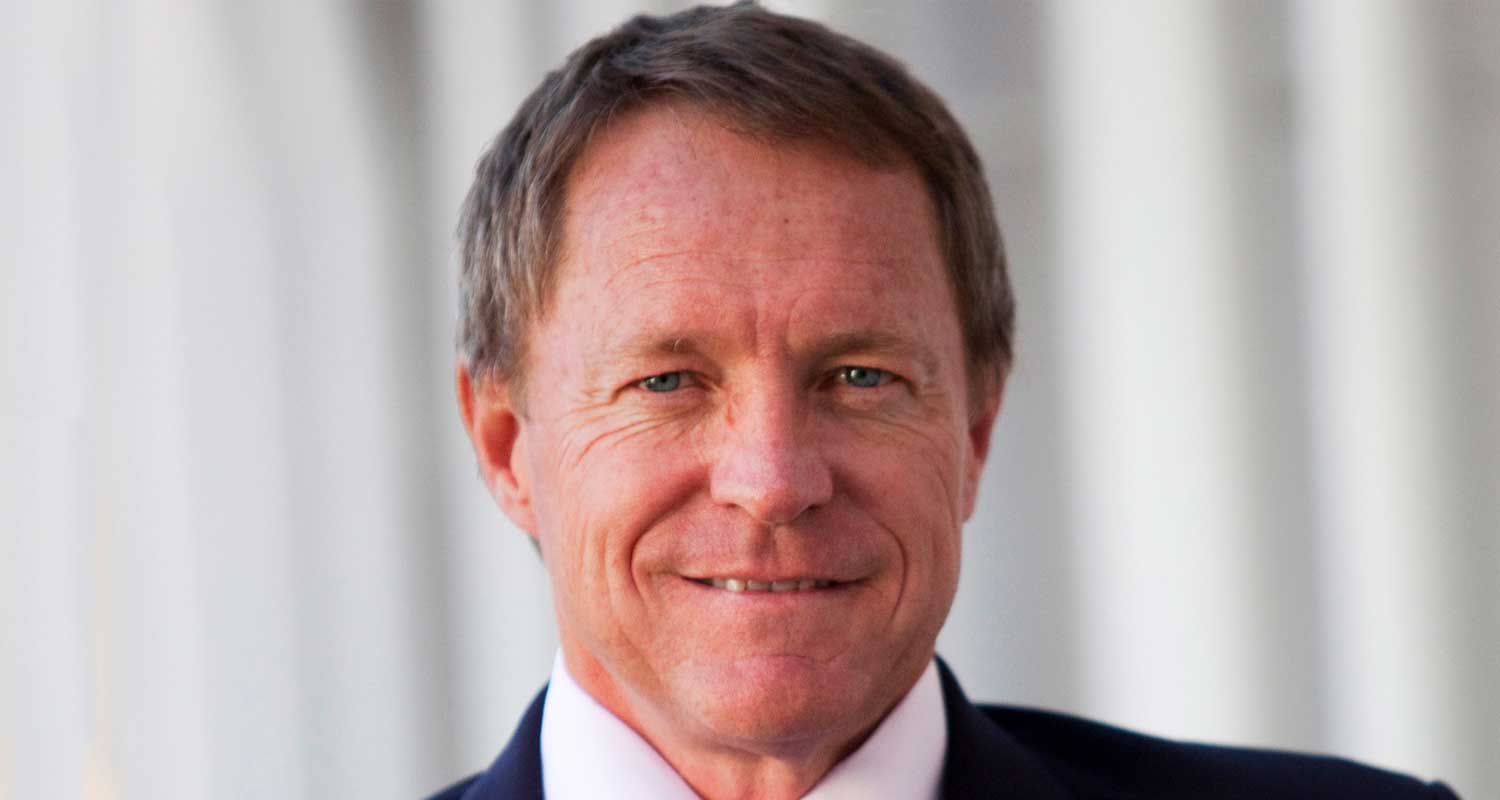
    Economist Dawie Roodt
    Economist Dawie Roodt

    The reason for the local discount is structural: the country “has a smaller potential economic benefit from AI compared to the global average due to high levels of social inequality”, with a large marginalised and informal sector that has almost no exposure to the technology. Only 2% of South African job vacancies in 2024 specified AI-related skills, about 17 000 of 845 000.

    “Like electricity in the 20th century, AI has the potential to create more jobs than it displaces if it is used to pioneer new forms of economic activity,” PwC South Africa chief economist Lullu Krugel says in the report. “But – and this is very important – South Africa needs to use AI to the benefit of society as a whole, or risk leaving behind many people that have less access to technology.”

    The World Bank’s view

    The World Bank’s numbers fall between the two. Extending a method devised by MIT economist and Nobel laureate Daron Acemoglu across 52 countries, it finds expected productivity gains in advanced economies are “more than double” those in emerging markets: its most optimistic scenario lifts advanced-economy potential growth from 1.2% to 3.6% over the 2020s, against 4.1% to 4.9% for emerging markets, or eight-tenths of a point.

    Chief economist Indermit Gill nonetheless calls AI a lifeline “they should grasp before it slips away”, arguing that even the worst case would lift developing-economy potential growth “above the dismal average of the first half of the 2020s”, at a time when development progress “has dipped to a 75-year low”. The mechanism is scarcity: “A technology tends to achieve the largest gains where the resource that it augments is in shortest supply.”

    Policy changes can lift GDP growth to 3% easily. Add say 2% of AI to that, then 5% is possible

    Only 4.5% of jobs in low- and middle-income countries are susceptible to automation by generative AI, against 14.2% in high-income countries. Gill’s “more to gain” rests on that ratio rather than on the growth projections. Where they agree, the two groups are close: 16.2% of jobs in developing economies could see a meaningful productivity boost, against 18.7% in high-income ones. The bank warns the adoption gap between rich and poor countries is set to widen.

    Skills, infrastructure and policy

    Roodt’s conditions are not technological. “Skills is a major constraint. And infrastructure. And policy,” he said, pointing to the delay in licensing satellite broadband, which has kept SpaceX’s Starlink out of South Africa, and to the regulatory settlement around mining, a reference to mineral & petroleum resources minister Gwede Mantashe and black ownership requirements.

    He also expects the gains to come from an unexpected place – “the primary and secondary part of the economy is likely to benefit most” – though the World Bank puts agriculture and manufacturing employment among the least exposed to AI, and PwC’s index ranks labourers and machine operators at the bottom of its own.

    Read: SA experts split on whether the singularity has begun

    All three accounts converge on uptake as the binding constraint. About two-thirds of the productivity gap between rich and developing economies is not structural on the bank’s calculation, but a matter of adoption.

    By April 2025, nearly 25% of internet users in high-income countries had used ChatGPT, against 5.8% in upper-middle-income countries, the band South Africa falls into, and the bank projects the adoption gap widening from 24 percentage points to 46pps by 2035. “The window to get this right is narrow,” said Gaurav Nayyar, who directed the report.

    Data suggests South Africa's economy is on the mend

    South Africa may be poorly placed to hit it. The bank counts more than 80 countries with published national AI strategies as of mid-2026 and excludes South Africa because communications minister Solly Malatsi withdrew the draft national AI policy on 26 April, after the 86-page document was found to contain fabricated academic citations.

    A redrafted, lighter-touch version is due at cabinet in November. The same report names South Africa’s “chronic load shedding” (now seemingly resolved) as a reason hyperscale AI investment is going to Brazil and Malaysia instead, and pegs local nominal GDP at about $427-billion against roughly $775-billion in projected 2026 capital spending by five American AI hyperscalers.

    Roodt’s arithmetic survives all of this, but only as a conditional. “Without AI, certain policy changes can lift GDP to 3% easily,” he said. “Add say 2% of AI to that, then a 5% GDP is certainly possible, even more.”

    None of it happens by itself.  — © 2026 NewsCentral Media

    • Subscribe to TechCentral’s daily newsletter
    • Get breaking news alerts on WhatsApp

    Follow TechCentral on Google News Add TechCentral as your preferred source on Google


    Daron Acemoglu Dawie Roodt Efficient Group Gaurav Nayyar Gwede Mantashe Indermit Gill Lullu Krugel PwC Sars Solly Malatsi SpaceX World Bank
    WhatsApp YouTube
    Share. Facebook Twitter LinkedIn WhatsApp Telegram Email Copy Link
    Previous ArticleThe quiet rewiring of the world’s financial plumbing

    Related Posts

    Russia building its own Starlink - and faster than expected - Vadym Skibitskyi

    Russia building its own Starlink – and faster than expected

    11 August 2026
    SpaceX shares keep sliding - Elon Musk

    SpaceX shares keep sliding

    6 August 2026
    Solly Malatsi stakes South Africa's AI future on staying neutral

    Solly Malatsi stakes South Africa’s AI future on staying neutral

    5 August 2026
    Company News
    African Bank signs on as GEC+Africa 2026 partner

    African Bank signs on as GEC+Africa 2026 partner

    7 August 2026
    What a cloud review reveals about how a company actually runs - LSD Open

    What a cloud review reveals about how a company actually runs

    6 August 2026
    Manufacturing from a garage is now a realistic business plan - MaxLaser

    Manufacturing from a garage is now a realistic business plan

    6 August 2026
    Opinion
    The author, Jannie van Zyl

    Selling vapour is corporate suicide in slow motion

    16 July 2026
    Brazil's online gambling crackdown is a lesson for South Africa

    How Amazon outmanoeuvred Starlink in South Africa

    15 July 2026
    The Popia problem with agentic AI - Herman Haasbroek

    The Popia problem with agentic AI

    14 July 2026

    Subscribe to Updates

    Get the best South African technology news and analysis delivered to your e-mail inbox every morning.

    Latest Posts
    The economist who thinks AI could double South Africa's growth rate

    The economist who thinks AI could double South Africa’s growth rate

    11 August 2026
    The quiet rewiring of the world's financial plumbing

    The quiet rewiring of the world’s financial plumbing

    11 August 2026
    Russia building its own Starlink - and faster than expected - Vadym Skibitskyi

    Russia building its own Starlink – and faster than expected

    11 August 2026
    New rand stablecoin market opens into a potential regulatory wall

    New rand stablecoin market opens into a potential regulatory wall

    10 August 2026
    © 2009 - 2026 NewsCentral Media
    Built and maintained by Chronon
    • Cookie policy (ZA)
    • TechCentral – privacy and Popia

    Type above and press Enter to search. Press Esc to cancel.

    Manage consent

    TechCentral uses cookies to enhance its offerings. Consenting to these technologies allows us to serve you better. Not consenting or withdrawing consent may adversely affect certain features and functions of the website.

    Functional Always active
    The technical storage or access is strictly necessary for the legitimate purpose of enabling the use of a specific service explicitly requested by the subscriber or user, or for the sole purpose of carrying out the transmission of a communication over an electronic communications network.
    Preferences
    The technical storage or access is necessary for the legitimate purpose of storing preferences that are not requested by the subscriber or user.
    Statistics
    The technical storage or access that is used exclusively for statistical purposes. The technical storage or access that is used exclusively for anonymous statistical purposes. Without a subpoena, voluntary compliance on the part of your Internet Service Provider, or additional records from a third party, information stored or retrieved for this purpose alone cannot usually be used to identify you.
    Marketing
    The technical storage or access is required to create user profiles to send advertising, or to track the user on a website or across several websites for similar marketing purposes.
    • Manage options
    • Manage services
    • Manage {vendor_count} vendors
    • Read more about these purposes
    View preferences
    • {title}
    • {title}
    • {title}