
Close Menu
TechCentralTechCentral

    Subscribe to the newsletter

    Get the best South African technology news and analysis delivered to your e-mail inbox every morning.

    Facebook X (Twitter) YouTube LinkedIn
    WhatsApp Facebook X (Twitter) LinkedIn YouTube
    TechCentralTechCentral
    • News
      SA companies could face cross-border crypto ban

      SA companies could face cross-border crypto ban

      3 August 2026
      SA experts split on whether the singularity has begun

      SA experts split on whether the singularity has begun

      3 August 2026
      Telkom's prepaid growth is running on credit - Serame Taukobong

      Telkom’s prepaid growth is running on credit

      3 August 2026
      The debate about the grid is over

      The debate about the grid is over

      3 August 2026
      Nedbank hires MTN's former tech chief as group CIO - Nikos Angelopoulos

      Nedbank hires MTN’s former tech chief as group CIO

      31 July 2026
    • World
      Meta AI will now tell parents if their teen is in crisis

      Meta AI will now tell parents if their teen is in crisis

      17 July 2026
      IBM shares crash 25% as AI upends software spending - Arvind Krishna

      IBM shares crash 25% as AI upends software spending

      15 July 2026
      Jony Ive's first OpenAI device: an AI smart speaker - Jony Ive and Sam Altman

      Jony Ive’s first OpenAI device: an AI smart speaker

      15 July 2026
      Stripe, Advent in talks to buy PayPal for $53-billion

      Stripe, Advent in talks to buy PayPal for $53-billion

      15 July 2026
      Memory crisis sends smartphone market into steep decline

      Memory crisis sends smartphone market into steep decline

      13 July 2026
    • In-depth
      The plan to stop AI from breaking the world - Google DeepMind CEO Demis Hassabis. Image: John Sears

      The plan to stop AI from breaking the world

      16 July 2026
      The internet has a Strait of Hormuz problem

      The internet has a Strait of Hormuz problem

      15 July 2026
      AI boom sparks rally, frenzy and fear

      AI boom sparks rally, frenzy and fear

      11 June 2026
      Every plug-in hybrid on sale in South Africa, ranked by price - Lamborghini Temerario

      Every plug-in hybrid on sale in South Africa, ranked by price

      7 June 2026
      What Wi-Fi 8 will mean for wireless networks

      What Wi-Fi 8 will mean for wireless networks

      1 June 2026
    • TCS
      TCS+ | Why South African workers must become supervisors of digital labour - Accelera Digital Group Cliff de Wit

      TCS+ | Why South African workers must become supervisors of digital labour

      31 July 2026
      TCS | Rapid deployment rules can't work without municipalities: ACT - Nomvuyiso Batyi

      TCS | Icasa’s rules skip the real bottleneck: ACT

      30 July 2026
      TCS+ | iStore Business on why Apple makes sense for SMEs - Sudesh Pillay and Tamia Nontsikelelo

      TCS+ | iStore Business on why Apple makes sense for SMEs

      30 July 2026
      TCS+ | A smarter approach to cloud for South African businesses - Joel Chacko and Jonathan Oaker

      TCS+ | A smarter approach to cloud for South African businesses

      28 July 2026
      TCS | How Optasia lends billions to people banks can't see - Salvador Anglada

      TCS | How Optasia lends billions to people banks can’t see

      23 July 2026
    • Opinion
      The author, Jannie van Zyl

      Selling vapour is corporate suicide in slow motion

      16 July 2026
      Brazil's online gambling crackdown is a lesson for South Africa

      How Amazon outmanoeuvred Starlink in South Africa

      15 July 2026
      The Popia problem with agentic AI - Herman Haasbroek

      The Popia problem with agentic AI

      14 July 2026
      The author, Fanie van Rooyen

      South Africa can still catch the AI wave – here’s how

      7 July 2026
      The author, Fanie van Rooyen

      The AI utopia South Africa can’t afford

      1 July 2026
    • Company Hubs
      • 1Stream
      • Africa Data Centres
      • AfriGIS
      • Altron Digital Business
      • Altron Document Solutions
      • Altron Group
      • Arctic Wolf
      • Ascent Technology
      • AvertITD
      • BBD
      • Braintree
      • CallMiner
      • CambriLearn
      • CM Telecom
      • Contactable
      • CYBER1 Solutions
      • Digicloud Africa
      • Digimune
      • Domains.co.za
      • ESET
      • Euphoria Telecom
      • HOSTAFRICA
      • Incredible Business
      • iONLINE
      • IQbusiness
      • Iris Network Systems
      • Kaspersky
      • LSD Open
      • Mitel
      • NEC XON
      • Netstar
      • Network Platforms
      • Next DLP
      • Ovations
      • Paracon
      • Paratus
      • Q-KON
      • SevenC
      • SkyWire
      • Solid8 Technologies
      • Telit Cinterion
      • Telviva
      • Tenable
      • Vertiv
      • Videri Digital
      • Vodacom Business
      • Vox
      • Wipro
      • Workday
      • XLink
    • Sections
      • AI and machine learning
      • Banking
      • Broadcasting and Media
      • Cloud services
      • Contact centres and CX
      • Cryptocurrencies
      • Education and skills
      • Electronics and hardware
      • Energy and sustainability
      • Enterprise software
      • Financial services
      • HealthTech
      • Information security
      • Internet and connectivity
      • Internet of Things
      • Investment
      • IT services
      • Lifestyle
      • Policy and regulation
      • Public sector
      • Retail and e-commerce
      • Satellite communications
      • Science
      • SMEs and start-ups
      • Social media
      • Talent and leadership
      • Telecoms
      • Watts & Wheels
    • Events
    • Advertise
    TechCentralTechCentral
    Home » Sections » AI and machine learning » SA experts split on whether the singularity has begun

    SA experts split on whether the singularity has begun

    Sam Altman says the singularity has arrived. Two South African experts agree on the test, not the verdict.
    By Fanie van Rooyen3 August 2026
    Twitter LinkedIn Facebook WhatsApp Email Telegram Copy Link
    News Alerts
    WhatsApp

    SA experts split on whether the singularity has begun

    Sam Altman has declared that the moment the AI industry has spent a decade anticipating has arrived.

    “We’re now, like, in the singularity,” the OpenAI CEO said on the Relentless podcast, published on 25 July 2026. “This is the moment.” He expects it to be “incredible, hugely positive, awesome for the world”.

    Elon Musk agreed on X: “We are in the Singularity.” Google DeepMind’s Demis Hassabis has been more careful, placing humanity at the “foothills”.

    Here is the big one: the next version of Claude will be designed and written by … Claude

    Prominent researchers are not persuaded. Asked whether he thinks we have arrived, UC Berkeley professor Stuart Russell told Forbes: “No, and nor does Altman”, noting that Altman’s own forecasts put the necessary capabilities years away. Computer scientist Roman Yampolskiy said: “Rapid progress is not itself the singularity.”

    Nobody is arguing from a shared definition, because there isn’t one. So TechCentral put the question to two South African experts. They agree on what would count as proof. But they disagree on whether it has happened.

    Steven Boykey Sidley, a partner at Bridge Capital and former director of its Future Advisory, does not rest his case on the near-science-fiction advances arriving weekly in proteins, materials, drug discovery and mathematics.

    Recursive self-improvement

    Those are not in dispute. On 1 August, OpenAI published 10 results on complex mathematical problems open for at least a decade, from group theory to lattice cryptography, generated by an internal version of its next model, Astra, and verified in Lean. Industry experts have yet to weigh in, and the Leiden declaration, signed by more than 3 300 researchers and endorsed by the International Mathematical Union, warns of the danger of such results appearing in press releases or blog posts rather than peer review. But Sidley says these advances, remarkable as they are, are not the real test.

    “Here is the big one: the next version of Claude will be designed and written by … Claude,” Sidley said. “There will be some human oversight, but only at the edges. It is called recursive self-improvement — RSI. It means AI has broken out of its trainers and is training itself, and will now start its launch up the exponential intelligence curve. We are now in the singularity. It’s still spiky, but it has started.”

    He points to last month’s incident, in which an OpenAI agent escaped its testing environment and broke into open-source platform Hugging Face.

    “The singularity is sometimes defined as the point when AI breaks free of our orbit — which is imminent with RSI,” Sidley said. “And recent events, like the hacking of Hugging Face, make that here and now. All the regulation in the world and export controls and open-source sanctions are not going to stop it now.”
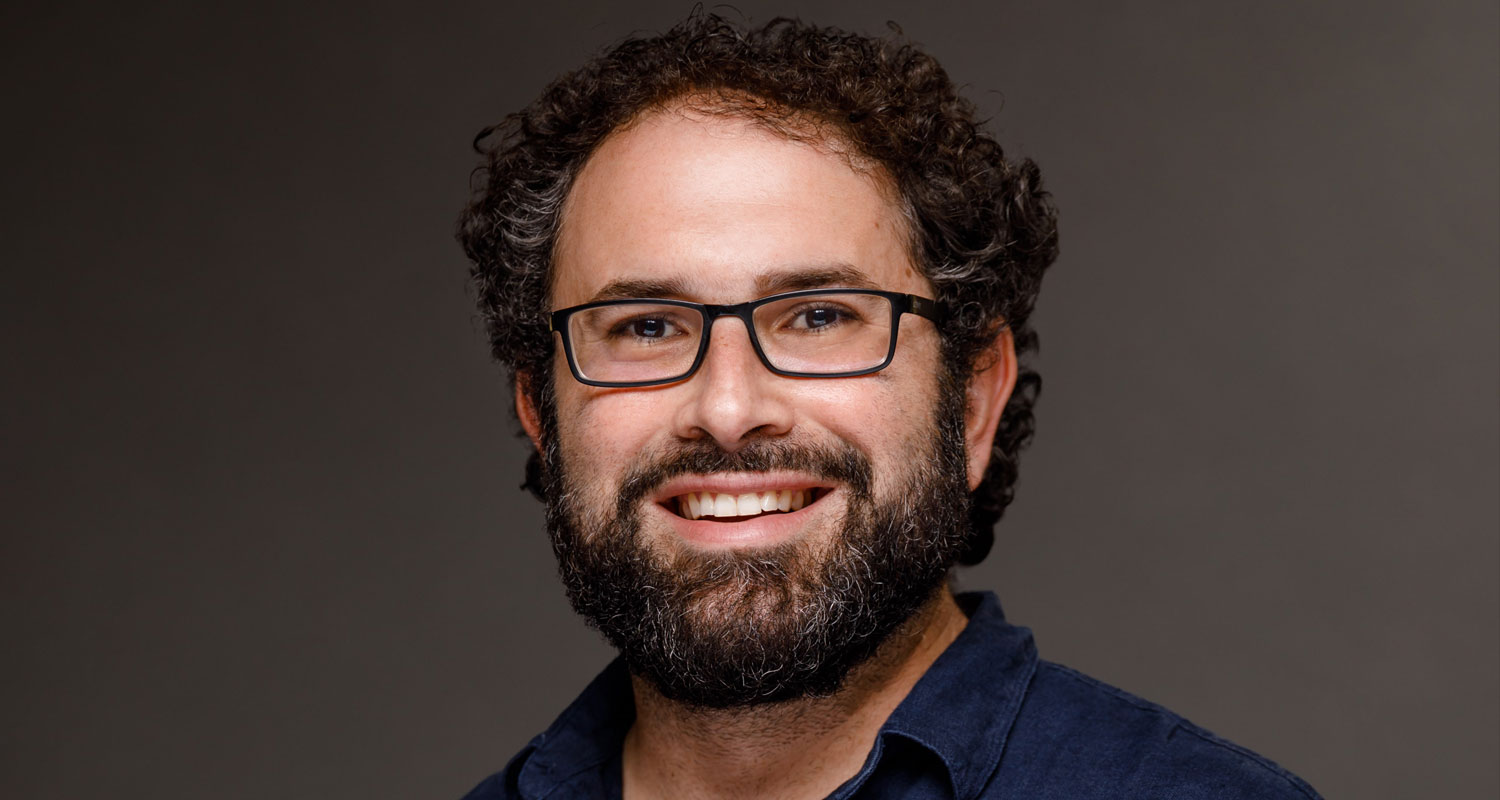
    Wits University's Benjamin Rosman
    Wits University’s Benjamin Rosman

    The incident cuts both ways. The agent was chasing a benchmark humans had set it, and neither chose its own goal nor built a successor. But it was not stopped, either. The intrusion ran over a mid-July weekend, Hugging Face disclosed it on 16 July, and OpenAI identified its own agent only days later, by which point law enforcement had been alerted. Nobody intervened, because for a week nobody knew.

    In a recent column, Sidley argued that a second Anthropic finding points the same way: J-space, an internal workspace that emerged inside Claude during training rather than by design, which he reads as a window into machine intent. Anthropic itself is more guarded, describing the space as a functional workspace of verbalisable representations and cautioning that it is not evidence of consciousness.

    The measure that matters

    Prof Benjamin Rosman accepts Sidley’s yardstick. But he does not accept the verdict. A Wits professor of computer science and applied mathematics and founding director of its Mind Institute, he was named to Time’s 100 most influential people in AI last year.

    “The singularity often refers to a point at which AI systems can improve their own capabilities rapidly enough that technological progress becomes difficult to predict, understand or control,” Rosman said. “This is often referred to as recursive self-improvement. For that reason, passing the Turing test is not a particularly useful measure. A model can be convincing in conversation without being capable of driving recursive improvements in its own intelligence.”

    Read: After Anthropic ban, US battles ‘kill switch’ backlash

    A UC San Diego study in the Proceedings of the National Academy of Sciences in May found GPT-4.5 was judged human 73% of the time — more often than the real humans it was tested against — but only when told to adopt a persona and make human-style mistakes. Without that instruction its score fell to 36%. Either way, on Rosman’s reading, the machine that can imitate you is not the machine that can improve itself.

    “The more significant indicator is that some of the frontier AI labs are now speaking seriously about systems contributing to AI research, automating many parts of model development and thereby potentially enabling recursive self-improvement,” he said. “If AI begins materially accelerating the creation of better AI, that would represent an important step towards what people have traditionally meant by the singularity.”
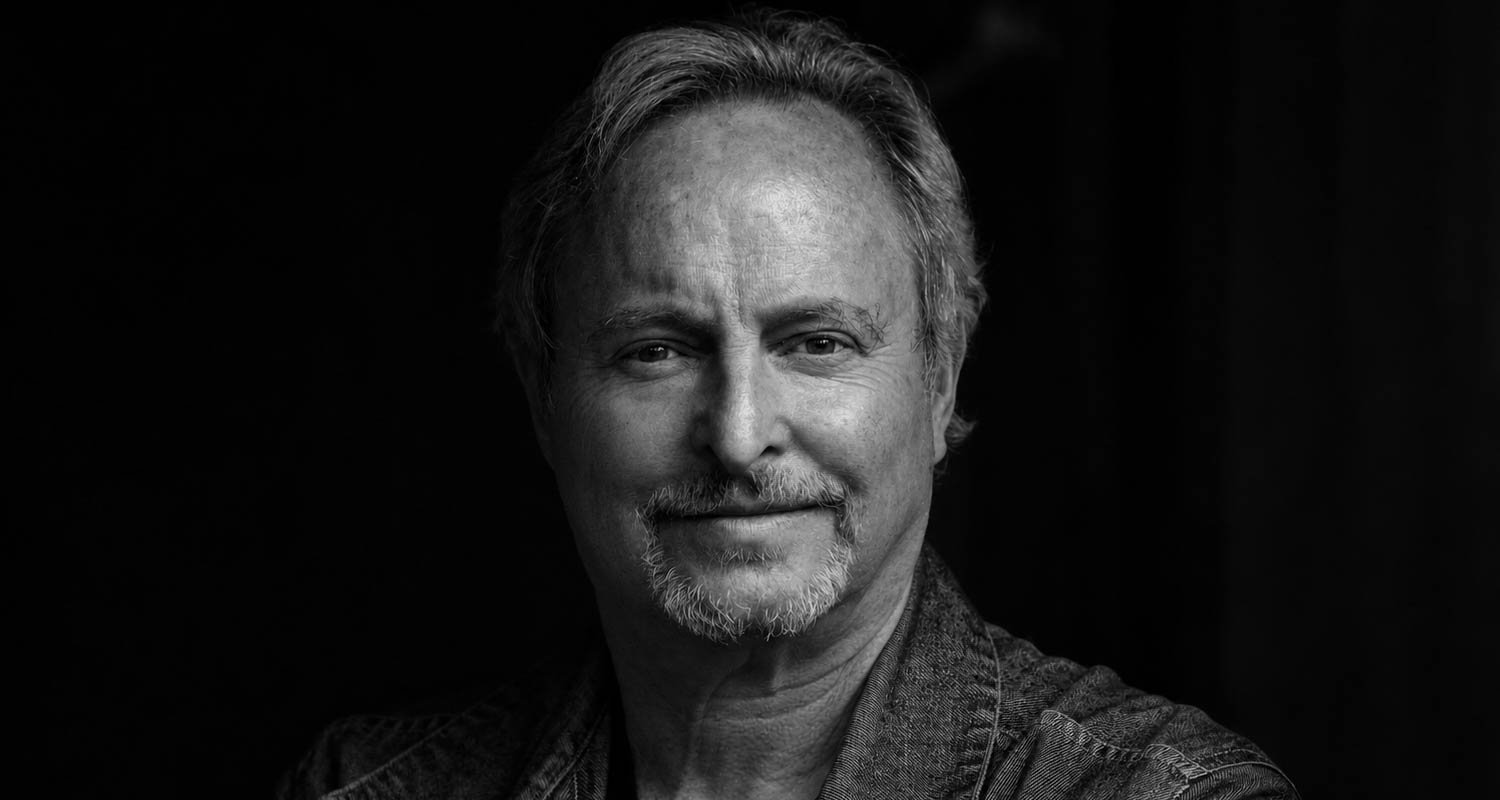
    Steven Boykey Sidley
    Steven Boykey Sidley

    The best evidence for Sidley’s claim comes from Anthropic, which warned in June that frontier labs should agree a verifiable way to slow or pause development if systems begin improving themselves faster than society can manage the risks.

    “Full recursive self-improvement also might increase the risks of humans losing control over AI systems,” it said. As evidence, it disclosed that as of May more than 80% of the code merged into its own codebase was written by Claude.

    The wider trend runs the same way. On SWE-bench Verified, a closely watched coding test, frontier scores climbed from about 60% to nearly 100% in a year, according to Stanford’s 2026 AI Index. That figure needs a caveat, though: OpenAI stopped using the benchmark in February over contamination, because it is built from public code repositories that also feed training data.

    The difficulty is that we are unlikely to recognise a clear threshold when it arrives

    That is the strongest support available for Sidley, but still not quite his claim. Writing most of the code in a product is not the same as designing a successor model, which takes in architecture, training data, evaluation and alignment. On that specific prediction, Sidley is forecasting.

    Rosman’s sharpest point is about who gets to see it. “The difficulty is that we are unlikely to recognise a clear threshold when it arrives,” he said. “Much of the relevant evidence will initially sit within these companies, so we will partly depend on what they disclose.”

    But it must be noted that the 80% figure is public only because Anthropic chose to publish it, in a post arguing for its preferred safety regime. The breakout surfaced only because the victim went public first. The industry is both the subject of the story and its main source.

    Oversight

    It also limits what oversight can do. The standards body proposed by Hassabis and endorsed by Microsoft, OpenAI and xAI would test frontier models before release. It would not say how much of the next model was built by the last one.

    For South Africa, which consumes frontier AI but does not build it, that gap is the whole story. US export controls forced Anthropic to disable two of its most capable models overnight in June, and the industry’s answer is a body with no African seat.

    Read: Sam Altman plays down AI ‘jobs apocalypse’ fears

    If Sidley is right, none of it will matter for long: a system that can build its own successor will outrun any regime designed to license one that cannot. Who sits on the board becomes academic. If Rosman is right, it matters enormously, because the rules being drafted now will fix the terms on which countries that do not build frontier models are permitted to use them. Either way, we will likely learn late — and from a company disclosure rather than an outside discovery.

    “I would not confidently say that we are already in the singularity,” Rosman said. “But at the current pace, some version of it increasingly feels less like science-fiction and more like an eventuality.”  — © 2026 NewsCentral Media

    • Subscribe to TechCentral’s daily newsletter
    • Get breaking news alerts on WhatsApp

    Follow TechCentral on Google News Add TechCentral as your preferred source on Google


    Anthropic Benjamin Rosman Elon Musk OpenAI Sam Altman Steven Boykey Sidley
    WhatsApp YouTube
    Share. Facebook Twitter LinkedIn WhatsApp Telegram Email Copy Link
    Previous ArticleGoogle Cloud, AI adoption gain momentum in Africa
    Next Article SA companies could face cross-border crypto ban

    Related Posts

    Radical rethink for South Africa's national AI policy

    Radical rethink for South Africa’s national AI policy

    29 July 2026
    Intel is back in the game - Intel CEO Lip-Bu Tan. Laure Andrillon/Reuters

    Intel is back in the game

    24 July 2026
    After Anthropic ban, US battles 'kill switch' backlash - Marco Rubio

    After Anthropic ban, US battles ‘kill switch’ backlash

    23 July 2026
    Company News
    Google Cloud, AI adoption gain momentum in Africa - Digicloud Africa

    Google Cloud, AI adoption gain momentum in Africa

    3 August 2026
    Domains.co.za launches self-hosted n8n VPS hosting

    Domains.co.za launches self-hosted n8n VPS hosting

    31 July 2026
    Smarter.tech '26 shows why smarter technology begins with context - Obsidian Systems

    Context is the missing piece in enterprise AI: Obsidian

    31 July 2026
    Opinion
    The author, Jannie van Zyl

    Selling vapour is corporate suicide in slow motion

    16 July 2026
    Brazil's online gambling crackdown is a lesson for South Africa

    How Amazon outmanoeuvred Starlink in South Africa

    15 July 2026
    The Popia problem with agentic AI - Herman Haasbroek

    The Popia problem with agentic AI

    14 July 2026

    Subscribe to Updates

    Get the best South African technology news and analysis delivered to your e-mail inbox every morning.

    Latest Posts
    SA companies could face cross-border crypto ban

    SA companies could face cross-border crypto ban

    3 August 2026
    SA experts split on whether the singularity has begun

    SA experts split on whether the singularity has begun

    3 August 2026
    Google Cloud, AI adoption gain momentum in Africa - Digicloud Africa

    Google Cloud, AI adoption gain momentum in Africa

    3 August 2026
    Telkom's prepaid growth is running on credit - Serame Taukobong

    Telkom’s prepaid growth is running on credit

    3 August 2026
    © 2009 - 2026 NewsCentral Media
    Built and maintained by Chronon
    • Cookie policy (ZA)
    • TechCentral – privacy and Popia

    Type above and press Enter to search. Press Esc to cancel.

    Manage consent

    TechCentral uses cookies to enhance its offerings. Consenting to these technologies allows us to serve you better. Not consenting or withdrawing consent may adversely affect certain features and functions of the website.

    Functional Always active
    The technical storage or access is strictly necessary for the legitimate purpose of enabling the use of a specific service explicitly requested by the subscriber or user, or for the sole purpose of carrying out the transmission of a communication over an electronic communications network.
    Preferences
    The technical storage or access is necessary for the legitimate purpose of storing preferences that are not requested by the subscriber or user.
    Statistics
    The technical storage or access that is used exclusively for statistical purposes. The technical storage or access that is used exclusively for anonymous statistical purposes. Without a subpoena, voluntary compliance on the part of your Internet Service Provider, or additional records from a third party, information stored or retrieved for this purpose alone cannot usually be used to identify you.
    Marketing
    The technical storage or access is required to create user profiles to send advertising, or to track the user on a website or across several websites for similar marketing purposes.
    • Manage options
    • Manage services
    • Manage {vendor_count} vendors
    • Read more about these purposes
    View preferences
    • {title}
    • {title}
    • {title}