Intel forecast quarterly profit and revenue above estimates on Thursday, pushing its shares up 5.2% in after-hours trade and helping prompt the company to boost spending plans over the next two years as an AI data centre buildout increases demand for its CPUs.
Intel expects third-quarter revenue between US$15.8-billion and $16.8-billion, compared with analysts’ average estimate of $15.1 billion, according to data compiled by LSEG. Adjusted profit is expected to be $0.38/share, compared with analyst estimates of $0.27.
Intel is benefiting from a boom in what is known as agentic AI, where autonomous agents carry out tasks such as computer coding on behalf of human users. Its shares have declined more than 25% from a record close on 22 June amid a broader selloff in chip stocks, though shares remain up more than 170% for the year.
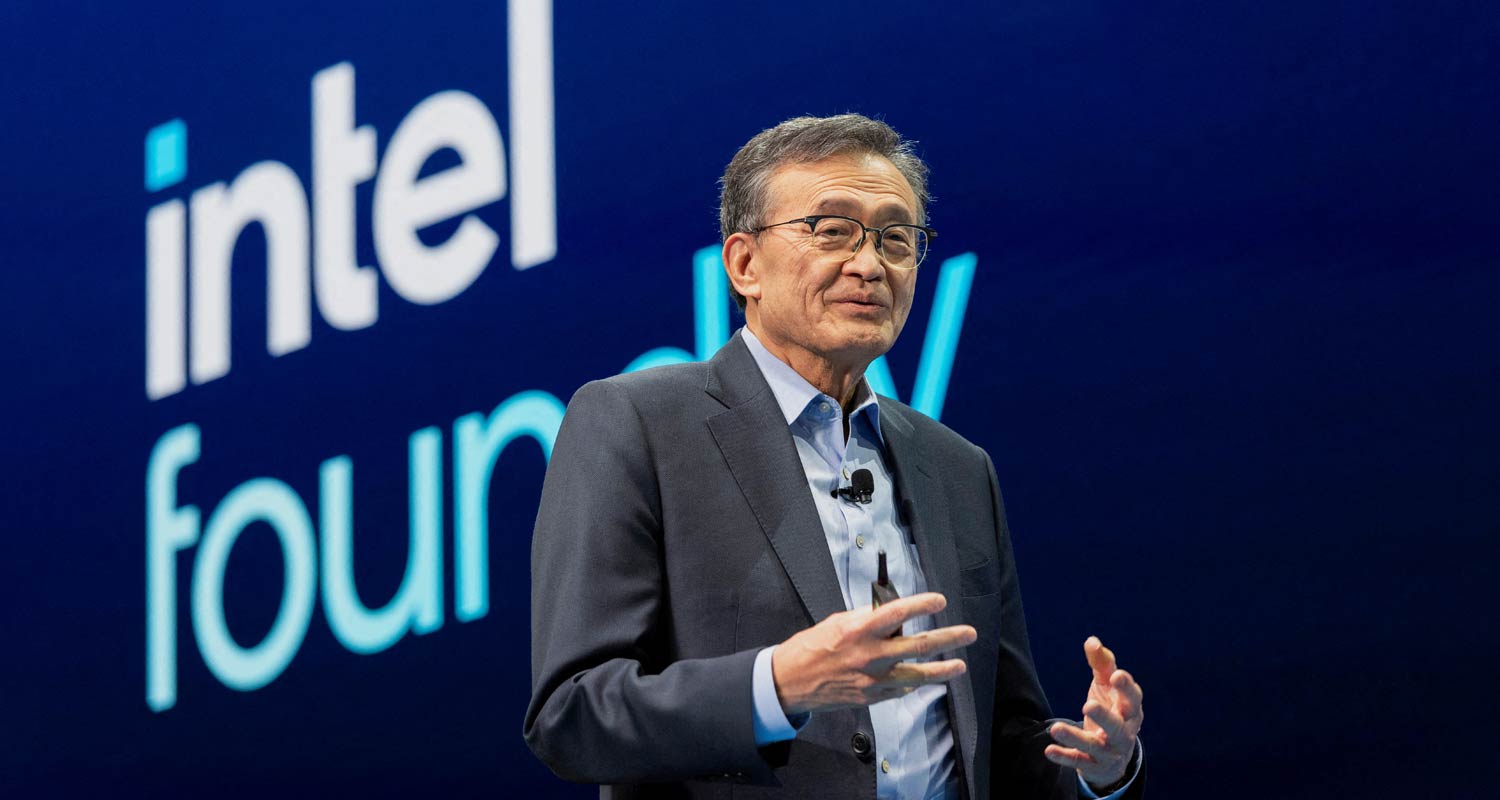
The results vindicate CEO Lip-Bu Tan’s strategy to regain technology leadership and compete with rivals like Nvidia and AMD in the booming market for AI chips. Investors are closely watching Intel’s data centre and foundry (contract manufacturing) businesses as key indicators of the turnaround’s success.
On a conference call with analysts, Tan said second-quarter developments prompted Intel to become “fully committed” to high-volume production of chips made with its forthcoming 14A manufacturing technology in 2028. Last year, Intel had warned it might be forced to abandon 14A if it could not find a major customer, which would have effectively put the US out of the race to make the world’s fastest chips.
“I’m pleased to see the increasing momentum on customer engagements for Intel 14A, and I’m increasingly confident that the 14A will be a highly competitive process,” Tan said.
Resurgence of demand
For the second quarter ended 27 June, Intel said sales rose 25.4% to $16.13-billion and adjusted profit was $0.42/share, compared with estimates of $14.42-billion and $0.21/share. Adjusted gross margin came in at 41.8%, versus estimates of 38.8%.
“The stock can continue revaluing if Intel converts the current data centre shortage into sustained revenue growth, improves foundry economics and finally announces the external customers needed to validate the next stage of the manufacturing turnaround,” said Shay Boloor, chief market strategist for tech research firm Futurum Group.
Read: How Panther Lake put Intel back in contention
The shift towards AI agents has driven a resurgence of demand for data centre CPUs, with Intel’s leaders saying earlier this year that it caught them off-guard, with CPU orders outstripping the company’s ability to manufacture the chips.
In an interview, chief financial officer David Zinsner said that booming demand has prompted Intel to raise its capital expenditure forecast for this year from $18-billion to $20-billion, with spending expected to be “up meaningfully next year” as well.
Zinsner said Intel has signed long-term agreements with customers for data centre CPUs and specialised chips called XPUs, ranging from three to five years, with some containing both volume and price commitments and others only volume commitments. He cautioned that Intel would remain disciplined about spending, noting such deals can be renegotiated when conditions change.
Zinsner said Intel has about $30-billion in cash and a $10-billion line of credit, and did not rule out a share sale, though none is currently authorised. “I wouldn’t dismiss the possibility that we would do that. But no specific plans at this point,” he said.
For Intel’s data centre and AI business, second-quarter revenue was $6.26-billion, compared with estimates of $5.37-billion.
Intel said sales in its laptop and desktop segment were $8.88-billion in the second quarter, compared with estimates of $7.89-billion. Zinsner said unit sales were down but average prices were up as Intel shifted away from lower-cost chips for entry-level machines and back to chips for higher-end devices.
Intel’s foundry business had $5.77-billion in second-quarter sales, compared with analyst estimates of $5.55 billion. The unit secured Elon Musk’s Tesla as a customer for its next-generation 14A process for the “Terafab” AI chip project. Expectations of another high-profile win rose in April after US President Donald Trump announced that Apple had agreed to make processors with Intel. Neither company has confirmed the deal.
Read: Apple knocks Nvidia off its perch
“There have been lingering questions ever since Lip-Bu Tan took over, and it put a cloud of uncertainty around the foundry business,” said Bob O’Donnell, president and chief analyst of Technalysis Research. “All those clouds are now removed.” — Anhata Rooprai, Stephen Nellis and Max A Cherney, with Noel Randewich, (c) 2026 Reuters
- Subscribe to TechCentral’s daily newsletter
- Get breaking news alerts on WhatsApp