Last Sunday morning, Dewald van Staden, technical co-founder of local AI start-up Siglia, woke up to a silent disaster.
Just 48 hours earlier, everything had been running flawlessly. A virtual workforce of 275 software bots was humming along, building digital products for his corporate clients.
On Friday, he had spent the day deploying new bots powered by Claude Fable 5, Anthropic’s newly released and most powerful model, marvelling at the speed of technological progress. He spent Saturday relaxing with his daughter, confident the bots were working in the background as usual.
By Sunday morning, his entire digital workforce was effectively dead.
“On Friday afternoon, my team of AI agents was working swimmingly,” Van Staden recalls, his voice still carrying the shock. “When I woke up on Sunday, my entire staff corps was dead. Cancelled, stopped … dead.”
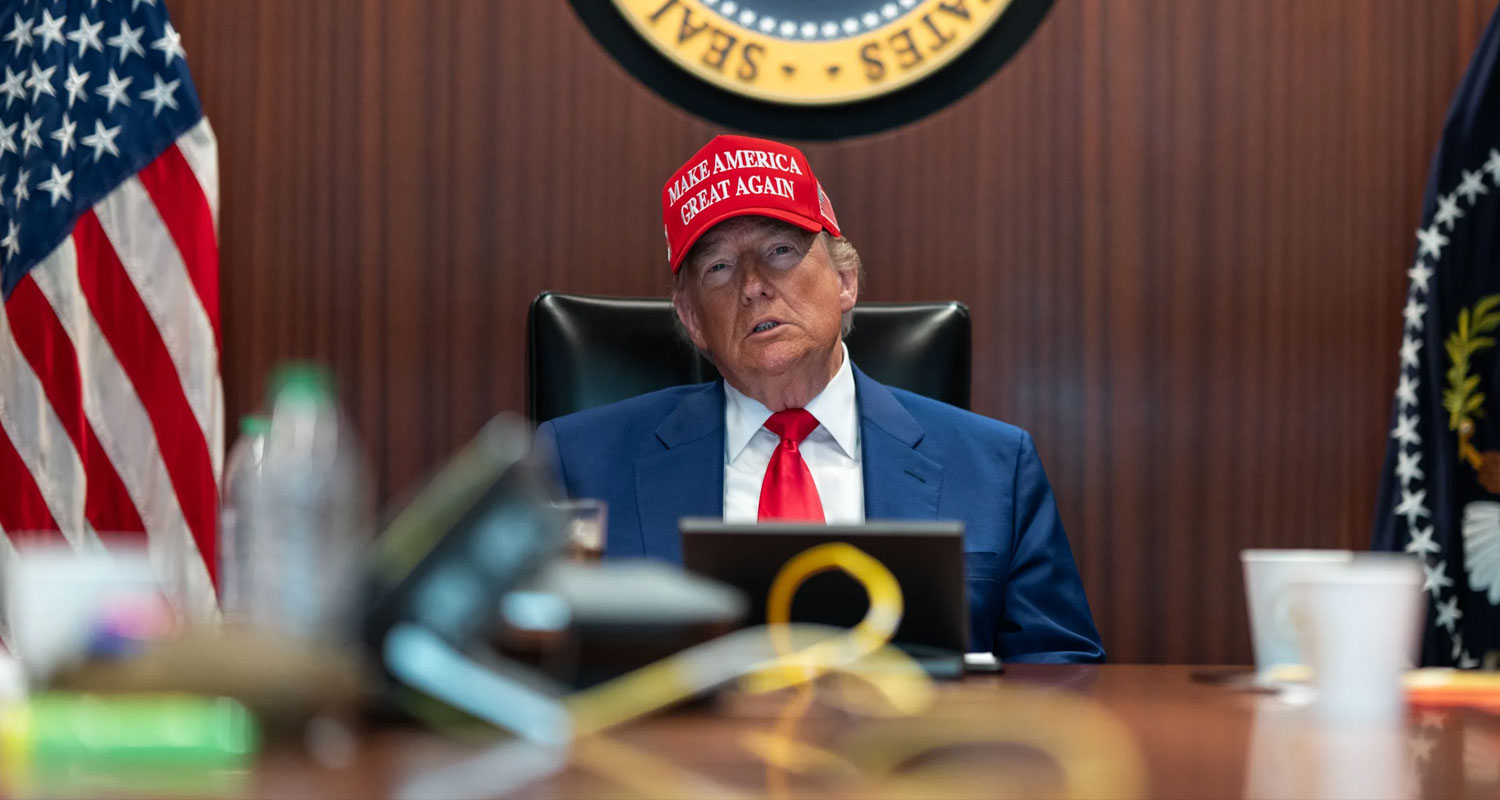
The cause was a geopolitical tremor from Washington. In an unprecedented move, the US government under President Donald Trump had ordered Anthropic to block all foreign nationals — inside or outside the US — from using its two latest models, Claude Fable 5 and Claude Mythos 5, presumably for fear they could be used to threaten US national security.
In response, Anthropic disabled access to both models globally. “We believe this is a misunderstanding and are working to restore access as soon as possible,” the company said in a statement. Van Staden’s access to Fable 5 — which had launched to global acclaim just four days earlier — was cut off in an instant.
Global elitism?
“I can at least understand the motivation when Donald Trump places insane trade tariffs on certain countries, but this is effectively a 100% embargo on top-tier AI,” Van Staden said.
He could be right. Unchallenged, this looks like the start of a new global elitism — sovereign “intelligence hoarding”, and something close to a declaration of technological warfare. It exposes a chilling reality for South Africa and the wider developing world: the digital revolution is no longer a shared global endeavour.
Read: US scored ‘own goal’ with ban on top Anthropic model
Van Staden compares the embargo to the vaccine nationalism of the Covid-19 pandemic, when wealthy Western nations hoarded life-saving doses and left Africa at the back of the queue. Today, he argues, the US is doing the same with AI. What happens when OpenAI and Google release their own top-tier models — will those, too, be reserved for the US?
Van Staden cites OpenRouter estimates that 90% of global AI web traffic and 35% of API traffic runs through American frontier labs. On that reading, the Global South is wholly reliant on foreign goodwill for its cognitive infrastructure — and the Fable 5 embargo shows that goodwill can vanish overnight at the whim of a US president.

The immediate consequence is a widening — perhaps insurmountable — chasm in global competitiveness. Local developers are relegated to older, less capable models while their US counterparts keep unrestricted access to multi-agent frontier systems.
“The more immediate impact is on the poor programmer sitting in America,” Van Staden explains. “A foreign national working in the US as a developer could find himself having to roll back to a dumber model at the behest of the president and can no longer perform cutting-edge work. So, even in a single US office, half the workforce might be stuck on dumber, older models. Imagine if you are now a middle manager and you realise you can now only give high-level work to the local Americans, and the rest have to make do.”
Running AI locally, on owned hardware, is one answer, but a fraught one. It requires the right hardware, and the global supply of advanced GPUs is severely constrained as deep-pocketed American labs buy up the available stock.
The implications extend well beyond South Africa. By hoarding frontier AI, the US risks driving the Global South straight into the arms of Beijing.
Washington has signalled that it intends to monopolise the supply of advanced AI. Shut out of Western platforms, much of the developing world will have little choice but to align with China.
We can no longer afford the illusion that global technology platforms are neutral utilities. They are instruments of state power, and they will most likely be used as such.
Hostile new world
If South Africa is to compete in this hostile new world, the state needs an aggressive, independent plan. That means investing heavily in open-source AI models that cannot be switched off by foreign decree, treating GPU hardware as a strategic national asset, and moving fast to fix the infrastructure and energy constraints that stand in the way of digital independence.
If we sleep through this crisis, we risk being relegated to a digital dark age while a handful of wealthy nations divide the future among themselves. — © 2026 NewsCentral Media
- The author, Fanie van Rooyen, is deputy editor of TechCentral
- Subscribe to TechCentral’s daily newsletter
- Get breaking news alerts on WhatsApp