Close Menu
TechCentralTechCentral

    Subscribe to the newsletter

    Get the best South African technology news and analysis delivered to your e-mail inbox every morning.

    Facebook X (Twitter) YouTube LinkedIn
    WhatsApp Facebook X (Twitter) LinkedIn YouTube
    TechCentralTechCentral
    • News
      South Africa's stablecoin silence is becoming a policy failure

      South Africa’s stablecoin silence is becoming a policy failure

      6 February 2026
      Every electric car you can buy in South Africa in early 2026, ranked by price

      Every electric car you can buy in South Africa in early 2026, ranked by price

      6 February 2026
      From stocks to crypto, markets reel as AI doubts grow

      From stocks to crypto, markets reel as AI doubts grow

      6 February 2026
      South Africa deepens China ties as US trade tensions escalate

      South Africa deepens China ties as US trade tensions escalate

      6 February 2026
      Big changes at Lesaka as Bank Zero deal nears completion - Lincoln Mali

      Big changes at Lesaka as Bank Zero deal nears completion

      6 February 2026
    • World
      AI won't replace software, says Nvidia CEO amid market rout - Jensen Huang

      AI won’t replace software, says Nvidia CEO amid market rout

      4 February 2026
      Apple acquires audio AI start-up Q.ai

      Apple acquires audio AI start-up Q.ai

      30 January 2026
      SpaceX IPO may be largest in history

      SpaceX IPO may be largest in history

      28 January 2026
      Nvidia throws AI at the weather

      Nvidia throws AI at weather forecasting

      27 January 2026
      Debate erupts over value of in-flight Wi-Fi

      Debate erupts over value of in-flight Wi-Fi

      26 January 2026
    • In-depth
      How liberalisation is rewiring South Africa's power sector

      How liberalisation is rewiring South Africa’s power sector

      21 January 2026
      The top-performing South African tech shares of 2025

      The top-performing South African tech shares of 2025

      12 January 2026
      Digital authoritarianism grows as African states normalise internet blackouts

      Digital authoritarianism grows as African states normalise internet blackouts

      19 December 2025
      TechCentral's South African Newsmakers of 2025

      TechCentral’s South African Newsmakers of 2025

      18 December 2025
      Black Friday goes digital in South Africa as online spending surges to record high

      Black Friday goes digital in South Africa as online spending surges to record high

      4 December 2025
    • TCS
      TCS+ | How Cloud On Demand is helping SA businesses succeed in the cloud - Xhenia Rhode, Dion Kalicharan

      TCS+ | Cloud On Demand and Consnet: inside a real-world AWS partner success story

      30 January 2026
      Watts & Wheels S1E3: 'BYD's Corolla Cross challenger'

      Watts & Wheels S1E3: ‘BYD’s Corolla Cross challenger’

      30 January 2026
      Watts & Wheels S1E3: 'BYD's Corolla Cross challenger'

      Watts & Wheels S1E2: ‘China attacks, BMW digs in, Toyota’s sublime supercar’

      23 January 2026

      TCS+ | Why cybersecurity is becoming a competitive advantage for SA businesses

      20 January 2026
      Watts & Wheels S1E3: 'BYD's Corolla Cross challenger'

      Watts & Wheels: S1E1 – ‘William, Prince of Wheels’

      8 January 2026
    • Opinion
      South Africa's skills advantage is being overlooked at home - Richard Firth

      South Africa’s skills advantage is being overlooked at home

      29 January 2026
      Why Elon Musk's Starlink is a 'hard no' for me - Songezo Zibi

      Why Elon Musk’s Starlink is a ‘hard no’ for me

      26 January 2026
      South Africa's new fibre broadband battle - Duncan McLeod

      South Africa’s new fibre broadband battle

      20 January 2026
      AI moves from pilots to production in South African companies - Nazia Pillay SAP

      AI moves from pilots to production in South African companies

      20 January 2026
      South Africa's new fibre broadband battle - Duncan McLeod

      ANC’s attack on Solly Malatsi shows how BEE dogma trumps economic reality

      14 December 2025
    • Company Hubs
      • Africa Data Centres
      • AfriGIS
      • Altron Digital Business
      • Altron Document Solutions
      • Altron Group
      • Arctic Wolf
      • AvertITD
      • Braintree
      • CallMiner
      • CambriLearn
      • CYBER1 Solutions
      • Digicloud Africa
      • Digimune
      • Domains.co.za
      • ESET
      • Euphoria Telecom
      • Incredible Business
      • iONLINE
      • IQbusiness
      • Iris Network Systems
      • LSD Open
      • NEC XON
      • Netstar
      • Network Platforms
      • Next DLP
      • Ovations
      • Paracon
      • Paratus
      • Q-KON
      • SevenC
      • SkyWire
      • Solid8 Technologies
      • Telit Cinterion
      • Tenable
      • Vertiv
      • Videri Digital
      • Vodacom Business
      • Wipro
      • Workday
      • XLink
    • Sections
      • AI and machine learning
      • Banking
      • Broadcasting and Media
      • Cloud services
      • Contact centres and CX
      • Cryptocurrencies
      • Education and skills
      • Electronics and hardware
      • Energy and sustainability
      • Enterprise software
      • Financial services
      • Information security
      • Internet and connectivity
      • Internet of Things
      • Investment
      • IT services
      • Lifestyle
      • Motoring
      • Public sector
      • Retail and e-commerce
      • Satellite communications
      • Science
      • SMEs and start-ups
      • Social media
      • Talent and leadership
      • Telecoms
    • Events
    • Advertise
    TechCentralTechCentral
    Home » In-depth » How to wreck the world’s fastest-growing renewables programme

    How to wreck the world’s fastest-growing renewables programme

    By Agency Staff1 February 2018
    Twitter LinkedIn Facebook WhatsApp Email Telegram Copy Link
    News Alerts
    WhatsApp
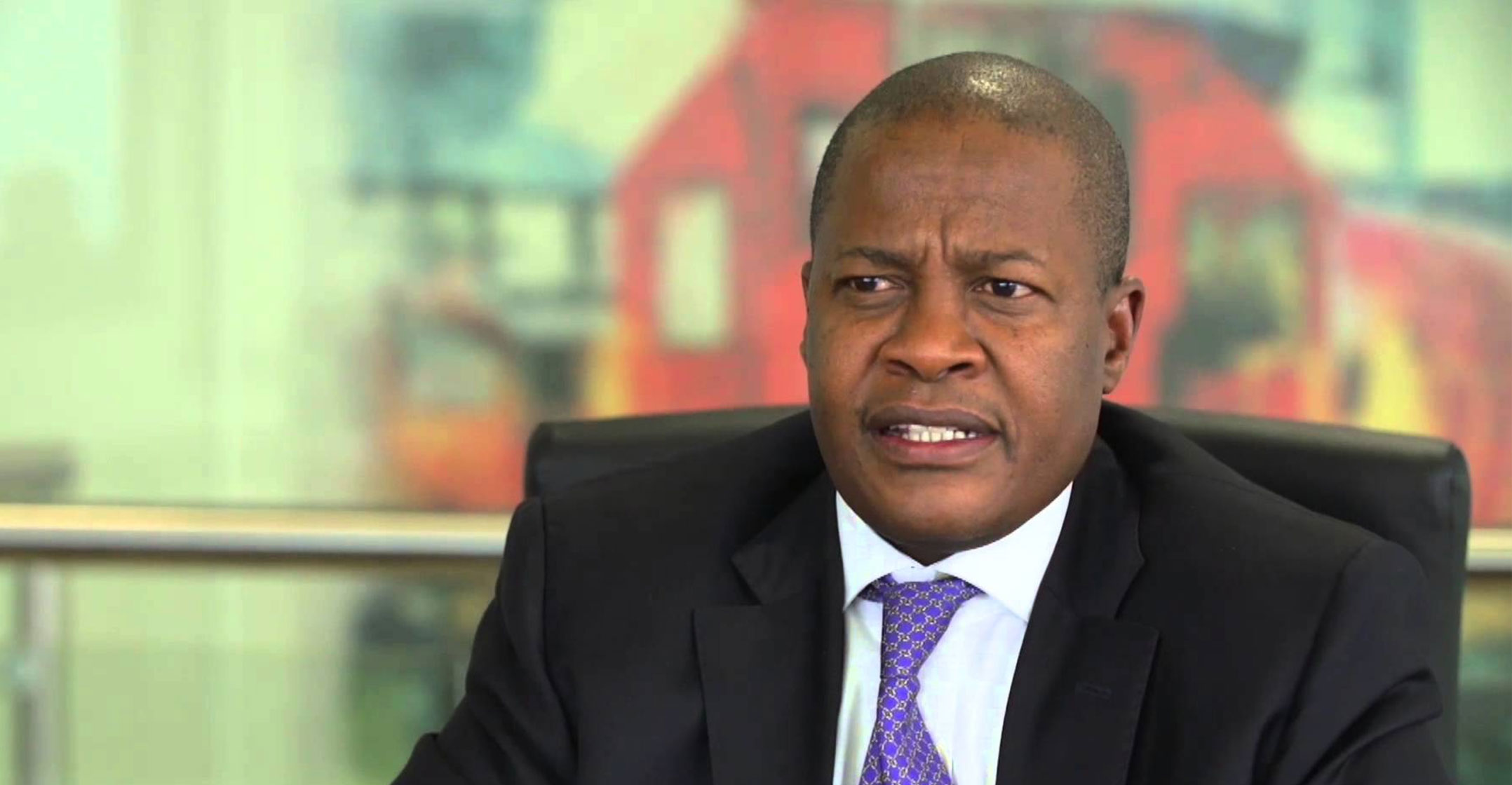
    Former Eskom CEO Brian Molefe

    Soon after it began in 2011, South Africa’s renewable power programme became the world’s fastest-growing.

    Almost US$15bn poured into clean energy in seven years, financing everything from wind farms to solar towers. New independent power producers mushroomed, signing electricity-purchase agreements with national utility Eskom that were guaranteed by the government.

    Then Brian Molefe, whom a subsequent graft probe would show was closely connected to President Jacob Zuma, became Eskom’s CEO in 2015. He stopped signing new contracts, saying the country didn’t need more renewable production because it was too expensive. At the same time, power demand lagged as companies generated their own and the economy slowed. And Eskom was put in charge of an expensive nuclear construction programme championed by Zuma.

    Eskom and the South African government have done potentially irreparable damage to one of the most effective renewables auction programs in the world

    As a result, renewable financing dropped to a trickle of $4m last year, with more than two dozen projects that were near the point of breaking ground still waiting. The freeze-out risks driving away badly needed investors — many of whom are now expanding elsewhere.

    “Eskom and the South African government have done potentially irreparable damage to one of the most effective renewables auction programs in the world,” said Victoria Cuming, head of policy analysis in Europe, the Middle East and Africa at Bloomberg New Energy Finance. “Even if the government proceeds with the auction scheme, political and policy risk will be much higher, increasing project costs and making it harder to secure financing.”

    It’s a painful example of the economic erosion occurring under Zuma. Graft and mismanagement of state-owned companies have scared off investors, and the country had its second recession in less than a decade earlier last year. Zuma himself is alleged to have taken more than $300 000 in bribes from arms dealers, and is trying to persuade prosecutors to drop charges of corruption, racketeering, fraud and money laundering. After some back-and-forth, Molefe was pushed out in 2017.

    Cyril Ramaphosa, who assumed leadership of the ruling party last month — and thus became Zuma’s probable successor — has started making efforts to reverse the damage. He called in November for an expansion of renewable energy to reduce carbon and create jobs, saying “we could again become the investment destination of choice for activities that are electricity intensive”.

    Little more than hope

    At present, investors are left with little more than hope. The energy department will make an announcement on the renewable contracts “once the decision is made”, spokeswoman Nomvula Khalo said in an e-mailed response to questions.

    While the role of renewables is still likely to grow in South Africa, delays “have put significant pressure on developers who have invested a great deal in development costs to date”, said Nandu Bhula, deputy MD for Southern Africa at Saudi Arabia’s ACWA Power International, which is seeking to develop its second solar programme in the country. “With all financing and technical contracts requiring renegotiation to remain valid, these costs continue to increase.”

    At the time the renewable programme began, the national power grid was dealing with a shortage of capacity and overdue maintenance on its coal plants, which in 2015 resulted in sustained electricity cuts. The clean energy projects could be installed quickly, compared to the mammoth coal facilities the country had been building, usually both late and over budget by billions of dollars. The auction programme was accelerated, with extra rounds added to bring more power generation as soon as possible.
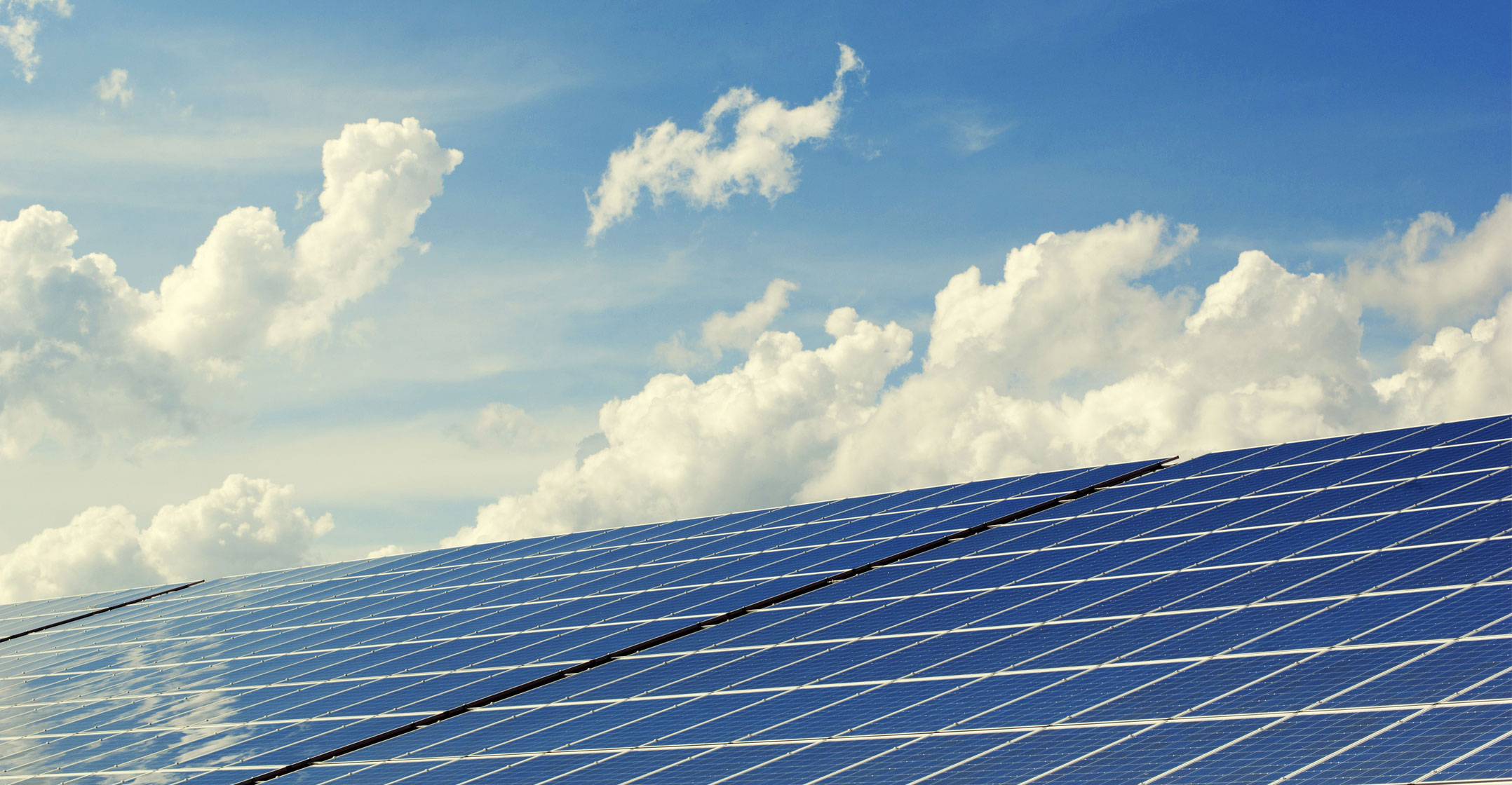
    But just a year later, enough coal-fired capacity had been added to the grid to end the blackouts, especially amid weak demand. Eskom had surplus power generation capacity. In media interviews, Molefe questioned the cost and reliability of renewables, and he started promoting nuclear power as a better alternative.

    The loss of confidence in the programme has been exacerbated by a revolving door in the energy ministry, said Siyabonga Mbanjwa, regional managing director of SENER Southern Africa, an EPC contractor for renewable projects. A succession of energy ministers — David Mahlobo was the third person to serve in the role last year — promised that the agreements with independent power producers would be signed, and failed. Zuma, in his annual state-of-the-nation speech in February 2017, also said the deals would be completed. There’s been no result.

    We have moved from having one of the most successful renewable-energy IPP procurement programmes in the world to a deadlock that has resulted in job losses

    “We have moved from having one of the most successful renewable-energy IPP procurement programmes in the world to a deadlock that has resulted in job losses,” Mbanjwa said in an interview.

    SMA Solar Technology closed its South African operations. Another plant that made wind turbines shut down. International firms such as ACWA and Enel have maintained efforts to build their portfolios elsewhere, bidding for renewables deals throughout the continent in nations including Morocco and Ethiopia.

    Energy policy must be consistent to make it attractive to foreign investors, Jasandra Nyker, CEO of developer BioTherm Energy, said at a government-organised energy conference last month. “When we have ‘stop-start’ strategies it kills the local supply chain,” she said.

    New leadership could help revive the programme, according to Anton Eberhard, professor at the University of Cape Town’s Graduate School of Business. Ramaphosa “is likely to stop the nuclear procurement and restart the renewables programme, although probably at a reduced scale,” he said.  — Reported by Paul Burkhardt, (c) 2018 Bloomberg LP


    Brian Molefe Eskom Jacob Zuma top
    WhatsApp YouTube Follow on Google News Add as preferred source on Google
    Share. Facebook Twitter LinkedIn WhatsApp Telegram Email Copy Link
    Previous ArticleMultiChoice pulls the plug on ANN7
    Next Article Bitcoin’s value plunged by R525bn in January

    Related Posts

    Outa warns homeowners against rushing to register rooftop solar

    Outa warns homeowners against rushing to register rooftop solar

    27 January 2026
    How liberalisation is rewiring South Africa's power sector

    How liberalisation is rewiring South Africa’s power sector

    21 January 2026
    No risk of load shedding after Koeberg output scaled back

    No risk of load shedding after Koeberg output scaled back

    21 January 2026
    Company News
    The skills gap is a thinking gap: why South African employers can't find problem solvers

    The skills gap is a thinking gap: why SA employers can’t find problem solvers

    6 February 2026
    Vox Kiwi Wireless: fibre-like broadband for South African homes

    Vox Kiwi Wireless: fibre-like broadband for South African homes

    5 February 2026
    NEC XON achieves an African first with full Fortinet accreditation - Ian Kruger

    NEC XON achieves an African first with full Fortinet accreditation

    5 February 2026
    Opinion
    South Africa's skills advantage is being overlooked at home - Richard Firth

    South Africa’s skills advantage is being overlooked at home

    29 January 2026
    Why Elon Musk's Starlink is a 'hard no' for me - Songezo Zibi

    Why Elon Musk’s Starlink is a ‘hard no’ for me

    26 January 2026
    South Africa's new fibre broadband battle - Duncan McLeod

    South Africa’s new fibre broadband battle

    20 January 2026

    Subscribe to Updates

    Get the best South African technology news and analysis delivered to your e-mail inbox every morning.

    Latest Posts
    South Africa's stablecoin silence is becoming a policy failure

    South Africa’s stablecoin silence is becoming a policy failure

    6 February 2026
    Every electric car you can buy in South Africa in early 2026, ranked by price

    Every electric car you can buy in South Africa in early 2026, ranked by price

    6 February 2026
    From stocks to crypto, markets reel as AI doubts grow

    From stocks to crypto, markets reel as AI doubts grow

    6 February 2026
    South Africa deepens China ties as US trade tensions escalate

    South Africa deepens China ties as US trade tensions escalate

    6 February 2026
    © 2009 - 2026 NewsCentral Media
    • Cookie policy (ZA)
    • TechCentral – privacy and Popia

    Type above and press Enter to search. Press Esc to cancel.

    Manage consent

    TechCentral uses cookies to enhance its offerings. Consenting to these technologies allows us to serve you better. Not consenting or withdrawing consent may adversely affect certain features and functions of the website.

    Functional Always active
    The technical storage or access is strictly necessary for the legitimate purpose of enabling the use of a specific service explicitly requested by the subscriber or user, or for the sole purpose of carrying out the transmission of a communication over an electronic communications network.
    Preferences
    The technical storage or access is necessary for the legitimate purpose of storing preferences that are not requested by the subscriber or user.
    Statistics
    The technical storage or access that is used exclusively for statistical purposes. The technical storage or access that is used exclusively for anonymous statistical purposes. Without a subpoena, voluntary compliance on the part of your Internet Service Provider, or additional records from a third party, information stored or retrieved for this purpose alone cannot usually be used to identify you.
    Marketing
    The technical storage or access is required to create user profiles to send advertising, or to track the user on a website or across several websites for similar marketing purposes.
    • Manage options
    • Manage services
    • Manage {vendor_count} vendors
    • Read more about these purposes
    View preferences
    • {title}
    • {title}
    • {title}