Close Menu
TechCentralTechCentral

    Subscribe to the newsletter

    Get the best South African technology news and analysis delivered to your e-mail inbox every morning.

    Facebook X (Twitter) YouTube LinkedIn
    WhatsApp Facebook X (Twitter) LinkedIn YouTube
    TechCentralTechCentral
    • News
      South Africa is sleepwalking into another AI policy failure - Celeste Labuschagne

      South Africa is sleepwalking into another AI policy failure

      20 May 2026
      Eskom to go to market for 5.2GW of new nuclear within a year

      Eskom to go to market for 5.2GW of new nuclear within a year

      20 May 2026
      The Mythos hacking threat is looking overblown

      The Mythos hacking threat is looking overblown

      20 May 2026
      Inflation spikes higher - and the worst is still to come

      Inflation spikes higher – and the worst is still to come

      20 May 2026
      MTN to work with police to fight E Cape base station crime - Charles Molapisi MTN South Africa CEO

      MTN to turn its African towers into an AI inference grid

      20 May 2026
    • World
      Vatican confronts the age of artificial intelligence. Edgar Beltrán/The Pillar 

      Vatican confronts the age of artificial intelligence

      19 May 2026
      The walkout that could hit every laptop and AI server - Samsung

      The walkout that could hit every laptop and AI server

      18 May 2026
      Pop star sues Samsung for $15-million - Dua Lipa

      Pop star sues Samsung for $15-million

      11 May 2026
      OpenAI's new audio APIs aim for conversational voice agents

      OpenAI’s new audio APIs aim for conversational voice agents

      8 May 2026
      'It was my idea': Musk claims paternity of OpenAI - Elon Musk

      ‘It was my idea’: Musk claims paternity of OpenAI

      29 April 2026
    • In-depth
      Alfa's electric rebel - Alfa Romeo Junior Elettrica Veloce

      Alfa’s electric rebel

      29 April 2026
      Africa switches on as Europe dims the lights

      Africa switches on as Europe dims the lights

      9 April 2026
      The biggest untapped EV market on Earth is hiding in plain sight

      The biggest untapped EV market on Earth is hiding in plain sight

      1 April 2026
      Datatec is firing on all cylinders - Jens Montanana

      The R16-billion tech giant hiding in plain sight

      26 March 2026
      The last generation of coders

      The last generation of coders

      18 February 2026
    • TCS
      TCS+ | The Up&Up Group on the hidden cost of AI - Jason Harrison

      TCS+ | The Up&Up Group on the hidden cost of AI

      13 May 2026
      Michael Rossouw

      TCS+ | The retirement decision most South Africans get wrong

      6 May 2026
      TCS | The Cape Town start-up listening for TB with AI - Braden van Breda

      TCS | The Cape Town start-up listening for TB with AI

      4 May 2026

      TCS+ | ‘The ISP for ISPs’: Vox’s shift to wholesale aggregator

      20 April 2026
      TCS | Werner Lindemann on how AI is rewriting the infosec rulebook

      TCS | Werner Lindemann on how AI is rewriting the infosec rulebook

      15 April 2026
    • Opinion
      AI won't fix your culture - it will expose it - Jackie Kennedy

      AI won’t fix your culture – it will expose it

      19 May 2026
      Free calls, dead voice and Shameel Joosub's Spanish ghost - Duncan McLeod

      Free calls, dead voice and Shameel Joosub’s Spanish ghost

      22 April 2026
      The conflict of interest at the heart of PayShap's slow adoption - Cheslyn Jacobs

      The conflict of interest at the heart of PayShap’s slow adoption

      26 March 2026
      South Africa's energy future hinges on getting wheeling right - Aishah Gire

      South Africa’s energy future hinges on getting wheeling right

      10 March 2026
      Free calls, dead voice and Shameel Joosub's Spanish ghost - Duncan McLeod

      Apple just dropped a bomb on the Windows world

      5 March 2026
    • Company Hubs
      • 1Stream
      • Africa Data Centres
      • AfriGIS
      • Altron Digital Business
      • Altron Document Solutions
      • Altron Group
      • Arctic Wolf
      • Ascent Technology
      • AvertITD
      • BBD
      • Braintree
      • CallMiner
      • CambriLearn
      • CM Telecom
      • Contactable
      • CYBER1 Solutions
      • Digicloud Africa
      • Digimune
      • Domains.co.za
      • ESET
      • Euphoria Telecom
      • HOSTAFRICA
      • Incredible Business
      • iONLINE
      • IQbusiness
      • Iris Network Systems
      • Kaspersky
      • LSD Open
      • Mitel
      • NEC XON
      • Netstar
      • Network Platforms
      • Next DLP
      • Ovations
      • Paracon
      • Paratus
      • Q-KON
      • SevenC
      • SkyWire
      • Solid8 Technologies
      • Telit Cinterion
      • Telviva
      • Tenable
      • Vertiv
      • Videri Digital
      • Vodacom Business
      • Wipro
      • Workday
      • XLink
    • Sections
      • AI and machine learning
      • Banking
      • Broadcasting and Media
      • Cloud services
      • Contact centres and CX
      • Cryptocurrencies
      • Education and skills
      • Electronics and hardware
      • Energy and sustainability
      • Enterprise software
      • Financial services
      • HealthTech
      • Information security
      • Internet and connectivity
      • Internet of Things
      • Investment
      • IT services
      • Lifestyle
      • Motoring
      • Policy and regulation
      • Public sector
      • Retail and e-commerce
      • Satellite communications
      • Science
      • SMEs and start-ups
      • Social media
      • Talent and leadership
      • Telecoms
    • Events
    • Advertise
    TechCentralTechCentral
    Home » Sections » Energy and sustainability » How liberalisation is rewiring South Africa’s power sector
    How liberalisation is rewiring South Africa's power sector

    How liberalisation is rewiring South Africa’s power sector

    By Amy Musgrave21 January 2026

    South Africa’s renewable energy policy landscape in 2026 will be shaped by market liberalisation and the roll-out of frameworks introduced last year to stimulate energy investment and economic growth.

    One of gamechangers is the South African Wholesale Electricity Market (Sawem), which will be launched on 1 April. It will replace the historic single-buyer model, dominated by Eskom. It represents a structural shift in how electricity is bought, sold and priced – with far-reaching implications for energy security, costs and investment.

    “The approval and implementation of the Sawem market code by [energy regulator] Nersa prior to the launch of Sawem is the single policy that will make the biggest difference,” said Dom Wills, executive director for Sola Group.

    In time, financial derivatives and carbon markets will be built on top of these initial products

    “The rules for trading in a wholesale electricity market in South Africa will allow more market participants to enter the market and will grow new electricity offerings such as intra-day trading, capacity and ancillary service markets. In time, financial derivatives and carbon markets will be built on top of these initial products.”

    The National Transmission Company South Africa, which is central to the operation and success of Sawem, received its market operator licence in November. However, the final licence conditions were deferred pending resolution of conflict-of-interest concerns while it remains an Eskom subsidiary.

    This month, the Electricity Market Advisory Forum begins operational work, starting with a review of the market rules and market code. It was established late last year and will advise Nersa on electricity market reform, including trading arrangements, market codes and regulations.

    Policies and regulations

    South African Photovoltaic Industry Association (Sapvia) spokesman Frank Spencer said other policies and regulations that will dominate the sector this year are Nersa’s grid capacity allocation rules (GCAR), which were finalised last year, and the targets set in the integrated resource plan approved by cabinet last year.

    The implementation by network service providers will be a focus. The rules will help reduce uncertainty, prevent preferential treatment and help developers make informed decisions.

    Read: Billions flow into renewables as South Africa races to fix its grid

    He said industry engaged constructively in the consultation process. However, Sapvia and other stakeholders still questioned whether “grid hogging” (the reason used by Eskom to implement its interim GCAR in 2023) was really a problem in the first place.

    Spencer said the existing budget quote process already imposed time limits and costs that prevented indefinite capacity holding. However, a positive outcome is that unlike Eskom’s interim GCAR, the final rules from Nersa do not require developers to demonstrate a confirmed off-taker before receiving grid allocation.

    Sapvia spokesman Frank Spencer
    Sapvia spokesman Frank Spencer

    This removes a circular barrier where projects couldn’t secure off-take without grid access and could not get grid access without off-take. Asked if this will address constraints on renewable energy, Spencer said not significantly.

    While the GCAR addresses queue management, physical grid availability remains the binding constraint. Spencer said real enablers for 2026 and beyond will be transmission infrastructure expansion and transitional measures like the new congestion curtailment rules that allow connection ahead of grid upgrades.

    Meanwhile, the Independent Transmission Programme (ITP), which has pre-qualified seven consortia with the final request for proposals, is expected in the third quarter of 2026. This follows alignment with a credit guarantee vehicle – being developed by national treasury with support from the World Bank – expected to be operational in July. The programme will unlock large-scale investment in transmission infrastructure.

    The plan signals to investors that government views renewables-linked industrialisation as a strategic priority

    The ITP marks South Africa’s first effort to attract private capital into transmission infrastructure, easing pressure on Eskom’s balance sheet while addressing the mismatch between renewable-rich regions and limited grid capacity.

    There have, however, been delays in getting the ITP off the ground.

    Spencer said the final request for proposals, originally expected in late 2025, has been pushed to the third quarter of this year to align with the operationalisation of the credit vehicle.

    This is necessary because bidders and lenders need full clarity on the guarantee framework before they can price their bids. But it means that construction will only start next year.

    Sapvia has welcomed the launch of the ITP, but it shares industry concerns about the structure of its first phase. All seven pre-qualified consortia are led by international companies.

    Structural

    The difficulty is structural: South African contractors have built Eskom’s existing transmission network, but as subcontractors rather than as principals on greenfield independent power producer-style projects. This experience did not count towards the request for qualification thresholds.

    Energy minister Kgosientsho Ramokgopa has committed to South African companies taking the lead in future phases.

    Read: Billions flow into renewables as South Africa races to fix its grid

    Sapvia said it will hold the government to this commitment. It said the 49% local equity requirement exists, but unless it explicitly includes construction and manufacturing capacity, rather than just financial participation, it risks becoming a vehicle for passive investors rather than genuine industrial development.

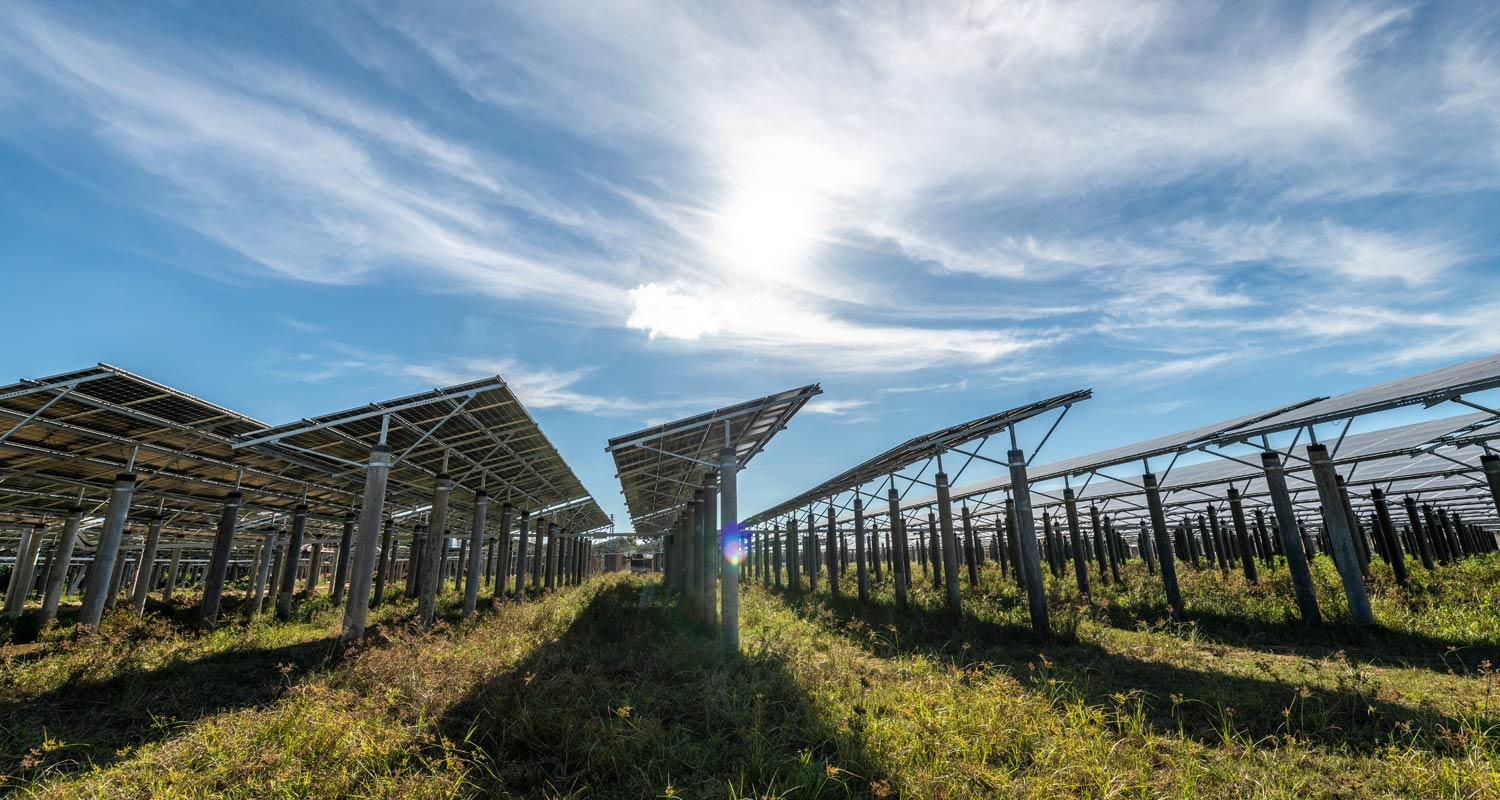
    “The programme is a pilot/proof of concept for private participation in transmission, rather than a comprehensive solution. Even if phase 1 proceeds on the revised timeline, the lines will not be operational until 2028 or later. In the meantime, grid constraints will continue to be the major constraint for new utility scale projects,” said Spencer.
    solar farm

    He said transitional measures like curtailing congestion in the Eastern and Western Cape, and minor incremental grid strengthening, will determine how much renewable capacity can connect in the near term. The ITP is part of the long-term answer, but it is not a 2026 solution.

    Another policy that is expected to have some impact on the sector is the South African Renewable Energy Masterplan, approved by cabinet in June last year.

    “The plan signals to investors that government views renewables-linked industrialisation as a strategic priority. For firms considering long-term investments in South African manufacturing capacity, this policy clarity matters, even if the masterplan itself carries no legal force,” said Spencer.

    Read: Big solar and energy storage projects going live across South Africa

    But its success will depend on whether the complementary measures of industrial finance, skills development, trade policy and, especially, grid expansion, materialise to make local procurement an attractive choice. – © 2026 NewsCentral Media

    Get breaking news from TechCentral on WhatsApp. Sign up here.

    Follow TechCentral on Google News Add TechCentral as your preferred source on Google


    Dom Wills Eskom Frank Spencer Kgosientsho Ramokgopa Sapvia Sawem SOLA Group South African Wholesale Electricity Market
    WhatsApp YouTube
    Share. Facebook Twitter LinkedIn WhatsApp Telegram Email Copy Link
    Previous ArticleSouth African digital radio trial is about to go live
    Next Article Trends shaping the use of AI to improve CX

    Related Posts

    Eskom to go to market for 5.2GW of new nuclear within a year

    Eskom to go to market for 5.2GW of new nuclear within a year

    20 May 2026
    Eskom threatens to cut power to Joburg

    Eskom threatens to cut power to Joburg

    19 May 2026
    South Africa marks a full year without load shedding

    South Africa marks a full year without load shedding

    15 May 2026
    Company News
    Why online learning is the future of education - Mweb

    Why online learning is the future of education

    20 May 2026

    Best payment processing providers in Africa

    20 May 2026
    Network with industry leaders at Pan African DataCentres event

    Network with industry leaders at Pan African DataCentres event

    20 May 2026
    Opinion
    AI won't fix your culture - it will expose it - Jackie Kennedy

    AI won’t fix your culture – it will expose it

    19 May 2026
    Free calls, dead voice and Shameel Joosub's Spanish ghost - Duncan McLeod

    Free calls, dead voice and Shameel Joosub’s Spanish ghost

    22 April 2026
    The conflict of interest at the heart of PayShap's slow adoption - Cheslyn Jacobs

    The conflict of interest at the heart of PayShap’s slow adoption

    26 March 2026

    Subscribe to Updates

    Get the best South African technology news and analysis delivered to your e-mail inbox every morning.

    Latest Posts
    South Africa is sleepwalking into another AI policy failure - Celeste Labuschagne

    South Africa is sleepwalking into another AI policy failure

    20 May 2026
    Eskom to go to market for 5.2GW of new nuclear within a year

    Eskom to go to market for 5.2GW of new nuclear within a year

    20 May 2026
    The Mythos hacking threat is looking overblown

    The Mythos hacking threat is looking overblown

    20 May 2026
    Inflation spikes higher - and the worst is still to come

    Inflation spikes higher – and the worst is still to come

    20 May 2026
    © 2009 - 2026 NewsCentral Media
    • Cookie policy (ZA)
    • TechCentral – privacy and Popia

    Type above and press Enter to search. Press Esc to cancel.

    Manage consent

    TechCentral uses cookies to enhance its offerings. Consenting to these technologies allows us to serve you better. Not consenting or withdrawing consent may adversely affect certain features and functions of the website.

    Functional Always active
    The technical storage or access is strictly necessary for the legitimate purpose of enabling the use of a specific service explicitly requested by the subscriber or user, or for the sole purpose of carrying out the transmission of a communication over an electronic communications network.
    Preferences
    The technical storage or access is necessary for the legitimate purpose of storing preferences that are not requested by the subscriber or user.
    Statistics
    The technical storage or access that is used exclusively for statistical purposes. The technical storage or access that is used exclusively for anonymous statistical purposes. Without a subpoena, voluntary compliance on the part of your Internet Service Provider, or additional records from a third party, information stored or retrieved for this purpose alone cannot usually be used to identify you.
    Marketing
    The technical storage or access is required to create user profiles to send advertising, or to track the user on a website or across several websites for similar marketing purposes.
    • Manage options
    • Manage services
    • Manage {vendor_count} vendors
    • Read more about these purposes
    View preferences
    • {title}
    • {title}
    • {title}