Close Menu
TechCentralTechCentral

    Subscribe to the newsletter

    Get the best South African technology news and analysis delivered to your e-mail inbox every morning.

    Facebook X (Twitter) YouTube LinkedIn
    WhatsApp Facebook X (Twitter) LinkedIn YouTube
    TechCentralTechCentral
    • News
      Malatsi runs out of patience with Icasa on BEE reform - Solly Malatsi

      Malatsi runs out of patience with Icasa on BEE reform

      24 April 2026
      DeepSeek's long-awaited V4 model enters preview

      DeepSeek’s long-awaited V4 model enters preview

      24 April 2026
      South Africa planning big overhaul of public sector IT - State IT Agency Sita

      South Africa planning big overhaul of public sector IT

      23 April 2026
      Usaasa's 30-year run nears its end - Communications minister Solly Malatsi. Image c/o DCDT

      Usaasa’s 30-year run nears its end

      23 April 2026
      Charge to switch on first N3 off-grid EV stations in May - Joubert Roux

      Charge to switch on first N3 off-grid EV stations in May

      23 April 2026
    • World
      More organic compounds detected on Mars - Nasa Curiosity rover

      More organic compounds detected on Mars

      21 April 2026
      Adobe bets on AI agents to fend off cheaper rivals

      Adobe bets on AI agents to fend off cheaper rivals

      16 April 2026
      Google poised to lose ad crown to Meta

      Google poised to lose ad crown to Meta

      14 April 2026
      Grand Theft Data - hackers hit Rockstar Games - Grand Theft Auto

      Grand Theft Data – hackers hit Rockstar Games

      14 April 2026
      UK PM Keir Starmer declares war on doomscrolling

      UK PM Keir Starmer declares war on doomscrolling

      13 April 2026
    • In-depth
      Africa switches on as Europe dims the lights

      Africa switches on as Europe dims the lights

      9 April 2026
      The biggest untapped EV market on Earth is hiding in plain sight

      The biggest untapped EV market on Earth is hiding in plain sight

      1 April 2026
      The R18-billion tech giant hiding in plain sight - Jens Montanana

      The R16-billion tech giant hiding in plain sight

      26 March 2026
      The last generation of coders

      The last generation of coders

      18 February 2026
      Sentech is in dire straits

      Sentech is in dire straits

      10 February 2026
    • TCS

      TCS+ | ‘The ISP for ISPs’: Vox’s shift to wholesale aggregator

      20 April 2026
      TCS | Werner Lindemann on how AI is rewriting the infosec rulebook

      TCS | Werner Lindemann on how AI is rewriting the infosec rulebook

      15 April 2026
      TCS | Donovan Marsh on AI and the future of filmmaking

      TCS | Donovan Marsh on AI and the future of filmmaking

      7 April 2026
      TCS+ | Vodacom Business moves to crack the SME tech gap - Andrew Fulton, Sannesh Beharie

      TCS+ | Vodacom Business moves to crack the SME tech gap

      7 April 2026
      TCS | MTN's Divysh Joshi on the strategy behind Pi - Divyesh Joshi

      TCS | MTN’s Divyesh Joshi on the strategy behind Pi

      1 April 2026
    • Opinion
      The conflict of interest at the heart of PayShap's slow adoption - Cheslyn Jacobs

      The conflict of interest at the heart of PayShap’s slow adoption

      26 March 2026
      South Africa's energy future hinges on getting wheeling right - Aishah Gire

      South Africa’s energy future hinges on getting wheeling right

      10 March 2026
      Hold the doom: the case for a South African comeback - Duncan McLeod

      Apple just dropped a bomb on the Windows world

      5 March 2026
      R230-million in the bag for Endeavor's third Harvest Fund - Alison Collier

      VC’s centre of gravity is shifting – and South Africa is in the frame

      3 March 2026
      Hold the doom: the case for a South African comeback - Duncan McLeod

      Hold the doom: the case for a South African comeback

      26 February 2026
    • Company Hubs
      • 1Stream
      • Africa Data Centres
      • AfriGIS
      • Altron Digital Business
      • Altron Document Solutions
      • Altron Group
      • Arctic Wolf
      • Ascent Technology
      • AvertITD
      • BBD
      • Braintree
      • CallMiner
      • CambriLearn
      • CYBER1 Solutions
      • Digicloud Africa
      • Digimune
      • Domains.co.za
      • ESET
      • Euphoria Telecom
      • HOSTAFRICA
      • Incredible Business
      • iONLINE
      • IQbusiness
      • Iris Network Systems
      • Kaspersky
      • LSD Open
      • Mitel
      • NEC XON
      • Netstar
      • Network Platforms
      • Next DLP
      • Ovations
      • Paracon
      • Paratus
      • Q-KON
      • SevenC
      • SkyWire
      • Solid8 Technologies
      • Telit Cinterion
      • Telviva
      • Tenable
      • Vertiv
      • Videri Digital
      • Vodacom Business
      • Wipro
      • Workday
      • XLink
    • Sections
      • AI and machine learning
      • Banking
      • Broadcasting and Media
      • Cloud services
      • Contact centres and CX
      • Cryptocurrencies
      • Education and skills
      • Electronics and hardware
      • Energy and sustainability
      • Enterprise software
      • Financial services
      • HealthTech
      • Information security
      • Internet and connectivity
      • Internet of Things
      • Investment
      • IT services
      • Lifestyle
      • Motoring
      • Policy and regulation
      • Public sector
      • Retail and e-commerce
      • Satellite communications
      • Science
      • SMEs and start-ups
      • Social media
      • Talent and leadership
      • Telecoms
    • Events
    • Advertise
    TechCentralTechCentral
    Home » Sections » Motoring » The biggest untapped EV market on Earth is hiding in plain sight
    The biggest untapped EV market on Earth is hiding in plain sight
    Photo: Lewis Seymour

    The biggest untapped EV market on Earth is hiding in plain sight

    By Thinus Booysen1 April 2026

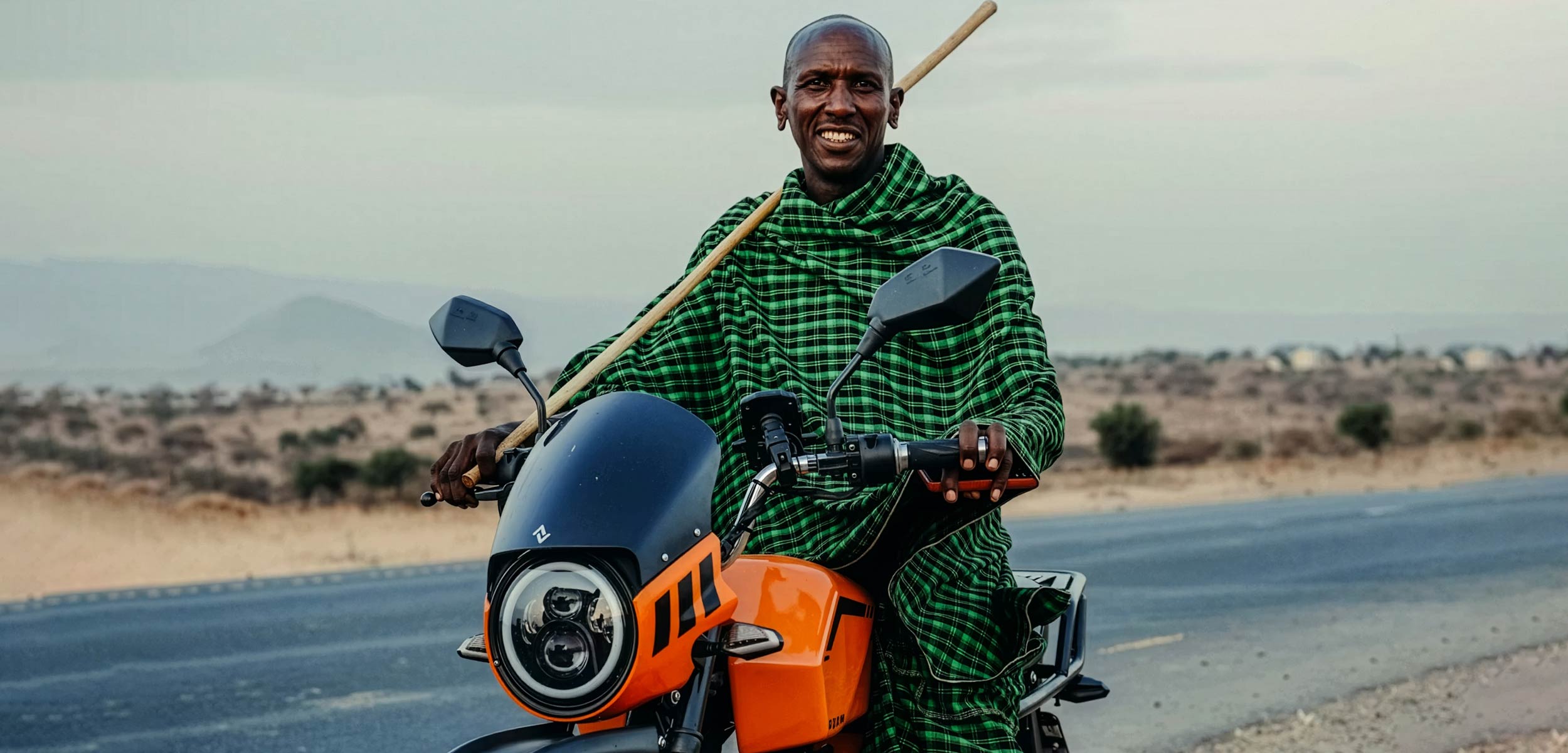
    Across much of Africa, motorcycles are not leisure vehicles. They are workhorses. They carry commuters, schoolchildren, goods, medicines and deliveries. For millions of people, they provide the most affordable and accessible form of transport, while also creating livelihoods for riders and small businesses.

    In many places, they fill the gap left by limited public transport. Kenya alone has about 1.5 million riders.

    Of the 27 million motorbikes in sub-Saharan Africa, only about 0.1% are electric, running on clean and low-cost energy.

    Electric motorcycles with battery swapping fit the realities of mobility demand in African countries

    As part of a team of electrical and industrial engineers at Stellenbosch University, I work (and go on adventures!) to see if that share can be increased.

    When our team rode a locally manufactured electric motorbike from Kenya to South Africa in 2024, charging it with only solar power and battery storage along the way, we were not only testing a vehicle. We were testing whether Africa could build and power its own electric mobility future.

    The journey covered roughly 6 000km via cities, rural roads and border posts, showing that electric two-wheelers are not a distant dream for sub-Saharan Africa. They are already practical, and they point to a much bigger opportunity.

    Feasible

    Electric motorcycles with battery swapping fit the realities of mobility demand in African countries: relatively short daily trips, constant use, tight operating margins and the need for low-cost transport. It’s already been estimated that electrifying this segment will reduce total cost of ownership for riders by 35-40%, improve urban air quality, cut greenhouse gas emissions and lower dependence on imported fuel.

    Our own research suggests this transition is both technically and economically feasible.

    Read: Toyota SA CEO: NEV inaction will cost South Africa its motoring industry

    We found that electrifying Nairobi’s boda bodas could cut carbon emissions by about 85%, and that solar-powered systems would be better suited to battery swapping than home charging.

    Our modelling of 39 005 delivery trips in Cape Town showed that electrification works even better when fleets are right-sized and charging aligned with solar cycles.

    Together these findings suggest that electric micromobility in Africa is not only technically viable, but can be paired with local solar systems in ways that improve affordability, resilience and access.
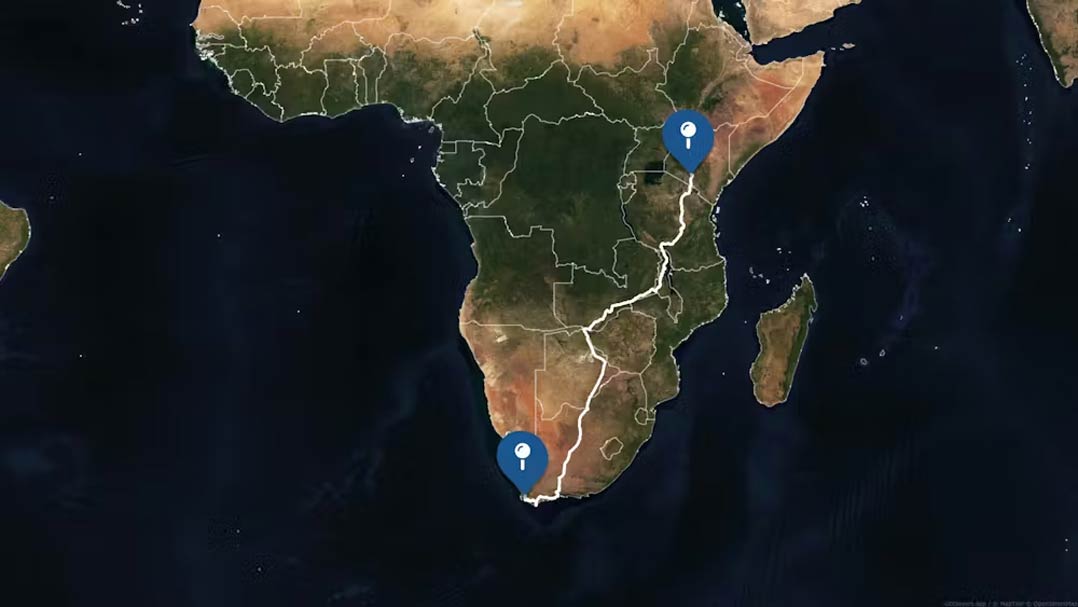
    The route of the test journey

    Africa should not simply become a market for electric vehicles designed and manufactured elsewhere. It should become a place where they are built, adapted and improved for African conditions. The continent’s mobility needs are specific. Vehicles must cope with rough roads, heavier loads, long operating hours and uneven access to charging. A motorcycle designed for Europe or Asia is not always right for a boda boda rider in Kenya or a delivery rider in South Africa.

    In one study, we developed and validated a physics-based model twin of an electric motorcycle under African operating conditions, showing that energy use can be predicted with good accuracy from real trips, terrain and payload. This digital twin can be used in virtual assessments of electric fleet deployments.

    Local production would also create local jobs. It can create opportunities in assembly, fabrication, battery integration, electronics, software, data analytics, servicing and charging infrastructure. It would give young engineers, technicians and entrepreneurs a foothold in an industry that is already growing quickly.

    Compared with cars or buses, small vehicle batteries are far easier to charge from decentralised solar

    But that growth will not happen on its own. It needs policy support. Ethiopia banned imports of internal combustion engine vehicles in 2024. This rapidly accelerated EV adoption and altered the economics of vehicle imports. South Africa’s belated 150% tax incentive for local electric vehicle production is a step in the right direction.

    Sub-Saharan Africa has some of the best solar resources in the world. At the same time, many communities still face unreliable grid electricity or no access at all. That may sound like a barrier to electrified transport, but it is also an opportunity.

    Compared with large cars or buses, small vehicle batteries are far easier to charge from decentralised solar systems. Solar-powered charging points, battery swap stations, mini-grids and storage systems can all support electric motorcycles where conventional infrastructure is weak.

    Decentralised

    Charging has already been demonstrated on solar-hybrid mini-grids, particularly for rural electric two-wheelers, with documented cases in Nigeria and operator-led deployments in Sierra Leone.

    Our research has found that decentralised solar can help power this transition: a school-centred solar trading model serving households and electric motorbikes achieved payback periods of under five years in favourable cases and improved supply reliability for external users by about 60%.

    This matters especially in rural and peri-urban areas, where mobility poverty is often most severe. A locally manufactured electric motorcycle charged with solar power is more than a cleaner vehicle. It is a tool for inclusion. It can improve access to jobs, education, healthcare and markets while reducing exposure to fuel price shocks.

    Read: GoMetro puts a date on its electric minibus taxi launch

    That is why this transition should not be framed only as a climate issue. It is a development issue.

    African governments must make it easier to produce and sell electric vehicles locally. At present, many local manufacturers face the strange situation where importing a finished vehicle is cheaper and simpler than building one domestically. High duties on components, inconsistent regulations, costly certification, weak access to finance and uncertain policy signals all work against local industry.

    If governments are serious about industrial development, electric micromobility is a practical place to start. Support could include lower tariffs on components for local assembly, tax incentives for domestic manufacturing, development finance, clear technical standards and public procurement policies that create dependable demand. The aim should not be permanent protection, but smart support that helps African firms scale and compete.

    Governments must support cross-border collaboration. Africa’s challenges are shared, but our responses are often fragmented. Countries create separate standards, separate pilot projects and separate industrial plans, even when their transport needs and energy constraints are remarkably similar. This duplication makes progress slower and more expensive.

    Many African borders were imposed in colonial times. They do not reflect the deeper connections between economies, people or problems. Fuel insecurity, unemployment, poor public transport, congestion and unreliable electricity are not isolated national problems. They are regional realities. The response should therefore also be regional.
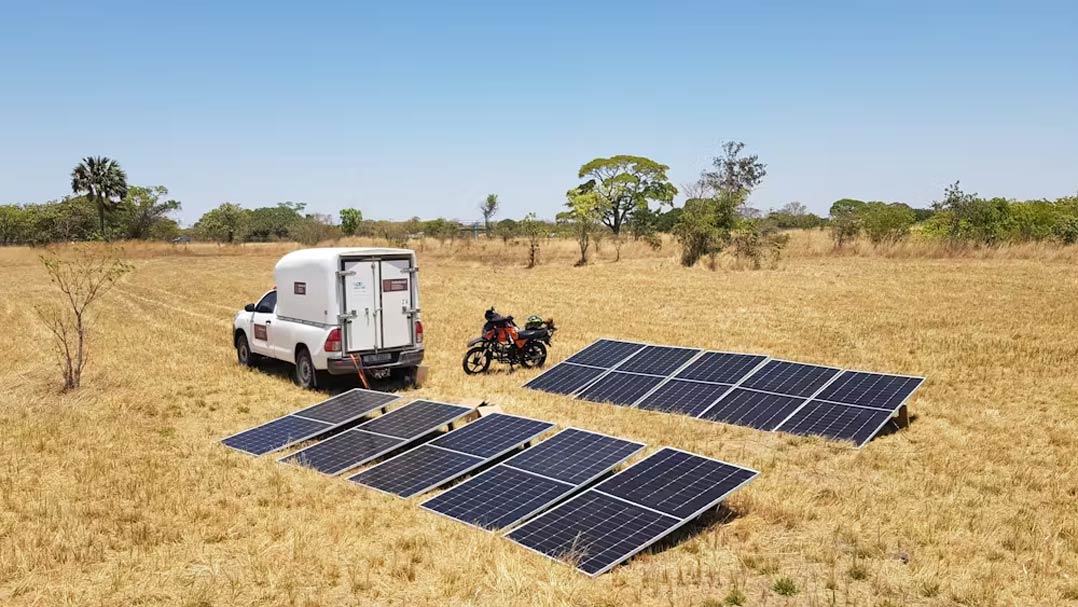
    Solar panels. Image: Lewis Seymour

    That means harmonised standards, easier trade in locally made vehicles and components, shared research platforms and coordinated industrial policy. A larger, more integrated African market would help manufacturers scale up, reduce costs and justify investment in skills and supply chains. It would also allow innovations developed in one country to spread more quickly across the continent.

    Electric mobility policy must be linked to energy policy, especially solar energy.

    Our journey from Nairobi to Stellenbosch, now told in our seven-episode documentary series, Recharging Hope, was not a publicity stunt. It was a practical demonstration that locally made electric motorbikes, powered by solar energy, can work across African roads and real African conditions. The question is no longer whether this future is possible. It is whether policy and investment will help Africa build it for itself.

    Mobility future

    With the right policies, partnerships and investment, electric micromobility can help the region move people more affordably, build local industry more confidently and use the power of the African sun more fully.

    Africa’s mobility future should be built in Africa and powered by its own abundant renewable energy.The Conversation

    • The author, Thinus Booysen, is professor in engineering at Stellenbosch University
    • This article is republished from under a Creative Commons licence

    Follow TechCentral on Google News Add TechCentral as your preferred source on Google


    Thinus Booysen
    WhatsApp YouTube
    Share. Facebook Twitter LinkedIn WhatsApp Telegram Email Copy Link
    Previous ArticleMining’s problem isn’t output, it’s execution – Workday
    Next Article TCS | MTN’s Divyesh Joshi on the strategy behind Pi

    Related Posts

    Thinking of going solar? Read this first

    18 February 2023

    What happens if the Eskom grid collapses?

    6 November 2021
    Company News
    Cybersecurity in the age of AI: why speed and trust now define resilience - iqbusiness

    Cybersecurity in the AI age: speed and trust define resilience

    24 April 2026
    Security by design is the channel's strongest pitch - Othelo Vieira

    Security by design is the channel’s strongest pitch

    23 April 2026
    Your brand is invisible to the AI that's choosing your competitor - Michelle Losco

    Your brand is invisible to the AI that’s choosing your competitor

    23 April 2026
    Opinion
    The conflict of interest at the heart of PayShap's slow adoption - Cheslyn Jacobs

    The conflict of interest at the heart of PayShap’s slow adoption

    26 March 2026
    South Africa's energy future hinges on getting wheeling right - Aishah Gire

    South Africa’s energy future hinges on getting wheeling right

    10 March 2026
    Hold the doom: the case for a South African comeback - Duncan McLeod

    Apple just dropped a bomb on the Windows world

    5 March 2026

    Subscribe to Updates

    Get the best South African technology news and analysis delivered to your e-mail inbox every morning.

    Latest Posts
    Cybersecurity in the age of AI: why speed and trust now define resilience - iqbusiness

    Cybersecurity in the AI age: speed and trust define resilience

    24 April 2026
    Malatsi runs out of patience with Icasa on BEE reform - Solly Malatsi

    Malatsi runs out of patience with Icasa on BEE reform

    24 April 2026
    DeepSeek's long-awaited V4 model enters preview

    DeepSeek’s long-awaited V4 model enters preview

    24 April 2026
    South Africa planning big overhaul of public sector IT - State IT Agency Sita

    South Africa planning big overhaul of public sector IT

    23 April 2026
    © 2009 - 2026 NewsCentral Media
    • Cookie policy (ZA)
    • TechCentral – privacy and Popia

    Type above and press Enter to search. Press Esc to cancel.

    Manage consent

    TechCentral uses cookies to enhance its offerings. Consenting to these technologies allows us to serve you better. Not consenting or withdrawing consent may adversely affect certain features and functions of the website.

    Functional Always active
    The technical storage or access is strictly necessary for the legitimate purpose of enabling the use of a specific service explicitly requested by the subscriber or user, or for the sole purpose of carrying out the transmission of a communication over an electronic communications network.
    Preferences
    The technical storage or access is necessary for the legitimate purpose of storing preferences that are not requested by the subscriber or user.
    Statistics
    The technical storage or access that is used exclusively for statistical purposes. The technical storage or access that is used exclusively for anonymous statistical purposes. Without a subpoena, voluntary compliance on the part of your Internet Service Provider, or additional records from a third party, information stored or retrieved for this purpose alone cannot usually be used to identify you.
    Marketing
    The technical storage or access is required to create user profiles to send advertising, or to track the user on a website or across several websites for similar marketing purposes.
    • Manage options
    • Manage services
    • Manage {vendor_count} vendors
    • Read more about these purposes
    View preferences
    • {title}
    • {title}
    • {title}