Close Menu
TechCentralTechCentral

    Subscribe to the newsletter

    Get the best South African technology news and analysis delivered to your e-mail inbox every morning.

    Facebook X (Twitter) YouTube LinkedIn
    WhatsApp Facebook X (Twitter) LinkedIn YouTube
    TechCentralTechCentral
    • News
      South Africa's stablecoin silence is becoming a policy failure

      South Africa’s stablecoin silence is becoming a policy failure

      6 February 2026
      Every electric car you can buy in South Africa in early 2026, ranked by price

      Every electric car you can buy in South Africa in early 2026, ranked by price

      6 February 2026
      From stocks to crypto, markets reel as AI doubts grow

      From stocks to crypto, markets reel as AI doubts grow

      6 February 2026
      South Africa deepens China ties as US trade tensions escalate

      South Africa deepens China ties as US trade tensions escalate

      6 February 2026
      Big changes at Lesaka as Bank Zero deal nears completion - Lincoln Mali

      Big changes at Lesaka as Bank Zero deal nears completion

      6 February 2026
    • World
      AI won't replace software, says Nvidia CEO amid market rout - Jensen Huang

      AI won’t replace software, says Nvidia CEO amid market rout

      4 February 2026
      Apple acquires audio AI start-up Q.ai

      Apple acquires audio AI start-up Q.ai

      30 January 2026
      SpaceX IPO may be largest in history

      SpaceX IPO may be largest in history

      28 January 2026
      Nvidia throws AI at the weather

      Nvidia throws AI at weather forecasting

      27 January 2026
      Debate erupts over value of in-flight Wi-Fi

      Debate erupts over value of in-flight Wi-Fi

      26 January 2026
    • In-depth
      How liberalisation is rewiring South Africa's power sector

      How liberalisation is rewiring South Africa’s power sector

      21 January 2026
      The top-performing South African tech shares of 2025

      The top-performing South African tech shares of 2025

      12 January 2026
      Digital authoritarianism grows as African states normalise internet blackouts

      Digital authoritarianism grows as African states normalise internet blackouts

      19 December 2025
      TechCentral's South African Newsmakers of 2025

      TechCentral’s South African Newsmakers of 2025

      18 December 2025
      Black Friday goes digital in South Africa as online spending surges to record high

      Black Friday goes digital in South Africa as online spending surges to record high

      4 December 2025
    • TCS
      TCS+ | How Cloud On Demand is helping SA businesses succeed in the cloud - Xhenia Rhode, Dion Kalicharan

      TCS+ | Cloud On Demand and Consnet: inside a real-world AWS partner success story

      30 January 2026
      Watts & Wheels S1E3: 'BYD's Corolla Cross challenger'

      Watts & Wheels S1E3: ‘BYD’s Corolla Cross challenger’

      30 January 2026
      Watts & Wheels S1E3: 'BYD's Corolla Cross challenger'

      Watts & Wheels S1E2: ‘China attacks, BMW digs in, Toyota’s sublime supercar’

      23 January 2026

      TCS+ | Why cybersecurity is becoming a competitive advantage for SA businesses

      20 January 2026
      Watts & Wheels S1E3: 'BYD's Corolla Cross challenger'

      Watts & Wheels: S1E1 – ‘William, Prince of Wheels’

      8 January 2026
    • Opinion
      South Africa's skills advantage is being overlooked at home - Richard Firth

      South Africa’s skills advantage is being overlooked at home

      29 January 2026
      Why Elon Musk's Starlink is a 'hard no' for me - Songezo Zibi

      Why Elon Musk’s Starlink is a ‘hard no’ for me

      26 January 2026
      South Africa's new fibre broadband battle - Duncan McLeod

      South Africa’s new fibre broadband battle

      20 January 2026
      AI moves from pilots to production in South African companies - Nazia Pillay SAP

      AI moves from pilots to production in South African companies

      20 January 2026
      South Africa's new fibre broadband battle - Duncan McLeod

      ANC’s attack on Solly Malatsi shows how BEE dogma trumps economic reality

      14 December 2025
    • Company Hubs
      • Africa Data Centres
      • AfriGIS
      • Altron Digital Business
      • Altron Document Solutions
      • Altron Group
      • Arctic Wolf
      • AvertITD
      • Braintree
      • CallMiner
      • CambriLearn
      • CYBER1 Solutions
      • Digicloud Africa
      • Digimune
      • Domains.co.za
      • ESET
      • Euphoria Telecom
      • Incredible Business
      • iONLINE
      • IQbusiness
      • Iris Network Systems
      • LSD Open
      • NEC XON
      • Netstar
      • Network Platforms
      • Next DLP
      • Ovations
      • Paracon
      • Paratus
      • Q-KON
      • SevenC
      • SkyWire
      • Solid8 Technologies
      • Telit Cinterion
      • Tenable
      • Vertiv
      • Videri Digital
      • Vodacom Business
      • Wipro
      • Workday
      • XLink
    • Sections
      • AI and machine learning
      • Banking
      • Broadcasting and Media
      • Cloud services
      • Contact centres and CX
      • Cryptocurrencies
      • Education and skills
      • Electronics and hardware
      • Energy and sustainability
      • Enterprise software
      • Financial services
      • Information security
      • Internet and connectivity
      • Internet of Things
      • Investment
      • IT services
      • Lifestyle
      • Motoring
      • Public sector
      • Retail and e-commerce
      • Satellite communications
      • Science
      • SMEs and start-ups
      • Social media
      • Talent and leadership
      • Telecoms
    • Events
    • Advertise
    TechCentralTechCentral
    Home » In-depth » ‘How to fix SA broadband’

    ‘How to fix SA broadband’

    By Duncan McLeod29 June 2012
    Twitter LinkedIn Facebook WhatsApp Email Telegram Copy Link
    News Alerts
    WhatsApp

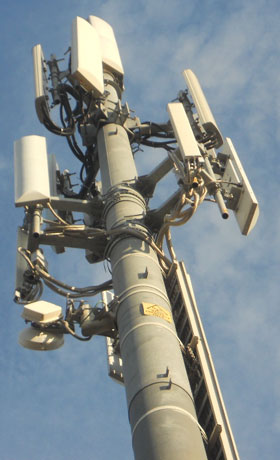
    Spectrum trading, use-it-or-lose-it conditions and wholesale and open-access networks will deliver the broadband growth governments in SA and sub-Saharan Africa are looking for, according to a new research report published by telecommunications investment group Convergence Partners.

    The report, titled “Let My People Go (Online)”, says that without proper spectrum management for wireless connectivity, regulators risk short-circuiting Africa’s wireless broadband revolution.

    “Informa Telecoms estimates that by 2015, 20% of Internet traffic on the continent will be carried by cellular networks, compared to the global average of 3%,” the report says. “[This] translates into an increase in spectrum bandwidth demand.”

    Yet, it says, telecoms regulators in sub-Saharan Africa have not kept pace with their peers in Europe and the US in making spectrum available for telecoms. An average of only 360MHz of spectrum has been made available to telecoms operators in sub-Saharan Africa, compared to an average of 550MHz in the US and Europe.

    “These developed countries plan to nearly double this allocation, while African regulators are navel-gazing and have yet to decide on even an optimal spectrum allocation model for the continent,” the report says. “In practice, demand for additional spectrum in sub-Saharan Africa is likely to be even greater than in high-income countries owing to the phenomenal mobile growth on the continent and as wireless and mobile broadband only supplements wireline broadband in the first world as it is not their primary means of access to the Internet.”

    The Convergence Partners report, which was authored by Envir Fraser and Teni Ntoi, also criticises the “vertically integrated” approach to running telecoms companies. This is where operators own and operate all elements of their networks. This, it says, is an “outdated business model that not only inhibits investment into telecoms infrastructure but also acts as a barrier to entry to new players, owing to the high sunk costs central to rolling out a network.”

    Furthermore, it says current frameworks, both policy and regulatory, are a “disincentive to investment as they are technically and economically inefficient giving rise to above-cost prices at a socially undesirable level of output”.

    Convergence Partners proposes a radical shake-up in the way spectrum is awarded and managed, saying the “administrative rigidities of the current static allocation model not only result in vast underuse of spectrum due to the inflexibility of the current licensing system, but also promote rent-seeking behaviour among incumbent operators seeking to use the regulatory process to protect their economic rents, as evidenced by the submissions to the regulator, the Independent Communications Authority of SA, concerning the spectrum licensing framework for high-demand bands”.

    “It is critical that the regulatory authorities and incumbent operators look to innovative business models such as network sharing and wholesale network deployments to accelerate broadband penetration.”

    Convergence Partners is a proponent of a national, wholesale and open-access wireless network using the bands such as 800MHz and 2,6GHz as a way of delivering broadband connections to more South Africans. It has formed a new company, called SpectraCo, to investigate options and to lobby for changes to policy and regulation.

    The report says the digital dividend — the spectrum around 800MHz that will be freed up for telecoms purposes when the country’s broadcasters move to digital terrestrial television — should be used to improve rural connectivity. It does not want the band simply to be allocated to incumbent operators to extend their offerings in urban centres only.

    “The strategic management of the digital dividend and currently underutilised but in high demand spectrum at 2,6GHz and 3,5GHz on the continent are likely to advance broadband to a critical point where network effects and economies of scale accelerate broadband adoption,” the report says.

    “Regulators should permit the existence of secondary markets to mitigate the inefficiencies of the current static allocation of spectrum.”

    The report also cautions against using auctions as a way of allocating spectrum, saying that although this maximises revenue generation for the state it leads to market failures and favours incumbent operators with large financial resources. “This may also have the undesired effect of compounding the digital divide between urban and less commercially viable rural areas as spectrum owners look to recover the cost of the spectrum by deploying networks in higher income centres as opposed to rolling out services to rural communities.”

    It argues that the network operators’ vertically integrated models, where they have built end-to-end networks, has “hampered meaningful broadband penetration by stifling service-based competition and meaningful access to the incumbent operators’ infrastructure”.

    “We are of the view that an independent wholesale player would provide significant benefit for both operators (incumbents and new entrants) and consumers,” the report says, adding regulators should allow for dynamic usage of frequencies and allow reuse and reallocation of spectrum. “An open-access, carrier-neutral wholesale network is the most appropriate model to achieving developmental imperatives.”

    This model splits the infrastructure and service layers, allowing more service-based competition, the report says. “Open-access networks are able to fill a gap left by the failure of the incumbent operators to roll out broadband to underserviced areas at sustainable prices, as infrastructure sharing in a liberalised market provides the incentive and market signals for costly infrastructure deployment.”

    It also encourages market entry and competition by lowering the barriers to entry, as operators no longer have to deploy costly network infrastructure.

    Creating a wholesale network operator also creates concerns that it would be bestowed with monopoly pricing powers. The report says that to mitigate the risk, regulation needs to balance the commercial interests of the wholesaler with developmental imperatives.

    “As with toll-road concessions, the allocation of wholesale licences needs to be a regulated, transparent and competitive process,” it says.

    “If regulators continue allocating spectrum in the piecemeal manner they have, there will neither be sufficient incentive for incumbent operators to deploy infrastructure in rural areas nor an enabling environment for new entrants to scale the high barriers to entry.”  — (c) 2012 NewsCentral Media

    • The full Convergence Partners report is available here


    Convergence Partners Envir Fraser Icasa Informa Telecoms Teni Ntoi
    WhatsApp YouTube Follow on Google News Add as preferred source on Google
    Share. Facebook Twitter LinkedIn WhatsApp Telegram Email Copy Link
    Previous ArticleThe Woman in Black: silly yet scary
    Next Article Vodacom fires new salvo in voice war

    Related Posts

    Starlink hype vs reality in South Africa

    Starlink hype vs reality in South Africa

    26 January 2026
    Mobile operators face tougher rules on data and billing

    Mobile operators face tougher rules on data and billing

    26 January 2026
    Icasa to target Sentech with tougher broadcast pricing rules

    Icasa to target Sentech with tougher broadcast pricing rules

    19 January 2026
    Company News
    The skills gap is a thinking gap: why South African employers can't find problem solvers

    The skills gap is a thinking gap: why SA employers can’t find problem solvers

    6 February 2026
    Vox Kiwi Wireless: fibre-like broadband for South African homes

    Vox Kiwi Wireless: fibre-like broadband for South African homes

    5 February 2026
    NEC XON achieves an African first with full Fortinet accreditation - Ian Kruger

    NEC XON achieves an African first with full Fortinet accreditation

    5 February 2026
    Opinion
    South Africa's skills advantage is being overlooked at home - Richard Firth

    South Africa’s skills advantage is being overlooked at home

    29 January 2026
    Why Elon Musk's Starlink is a 'hard no' for me - Songezo Zibi

    Why Elon Musk’s Starlink is a ‘hard no’ for me

    26 January 2026
    South Africa's new fibre broadband battle - Duncan McLeod

    South Africa’s new fibre broadband battle

    20 January 2026

    Subscribe to Updates

    Get the best South African technology news and analysis delivered to your e-mail inbox every morning.

    Latest Posts
    South Africa's stablecoin silence is becoming a policy failure

    South Africa’s stablecoin silence is becoming a policy failure

    6 February 2026
    Every electric car you can buy in South Africa in early 2026, ranked by price

    Every electric car you can buy in South Africa in early 2026, ranked by price

    6 February 2026
    From stocks to crypto, markets reel as AI doubts grow

    From stocks to crypto, markets reel as AI doubts grow

    6 February 2026
    South Africa deepens China ties as US trade tensions escalate

    South Africa deepens China ties as US trade tensions escalate

    6 February 2026
    © 2009 - 2026 NewsCentral Media
    • Cookie policy (ZA)
    • TechCentral – privacy and Popia

    Type above and press Enter to search. Press Esc to cancel.

    Manage consent

    TechCentral uses cookies to enhance its offerings. Consenting to these technologies allows us to serve you better. Not consenting or withdrawing consent may adversely affect certain features and functions of the website.

    Functional Always active
    The technical storage or access is strictly necessary for the legitimate purpose of enabling the use of a specific service explicitly requested by the subscriber or user, or for the sole purpose of carrying out the transmission of a communication over an electronic communications network.
    Preferences
    The technical storage or access is necessary for the legitimate purpose of storing preferences that are not requested by the subscriber or user.
    Statistics
    The technical storage or access that is used exclusively for statistical purposes. The technical storage or access that is used exclusively for anonymous statistical purposes. Without a subpoena, voluntary compliance on the part of your Internet Service Provider, or additional records from a third party, information stored or retrieved for this purpose alone cannot usually be used to identify you.
    Marketing
    The technical storage or access is required to create user profiles to send advertising, or to track the user on a website or across several websites for similar marketing purposes.
    • Manage options
    • Manage services
    • Manage {vendor_count} vendors
    • Read more about these purposes
    View preferences
    • {title}
    • {title}
    • {title}