Close Menu
TechCentralTechCentral

    Subscribe to the newsletter

    Get the best South African technology news and analysis delivered to your e-mail inbox every morning.

    Facebook X (Twitter) YouTube LinkedIn
    WhatsApp Facebook X (Twitter) LinkedIn YouTube
    TechCentralTechCentral
    • News
      Big Microsoft 365 price increases coming next year

      Big Microsoft price increases coming next year

      5 December 2025
      Vodacom to take control of Safaricom in R36-billion deal - Shameel Joosub

      Vodacom to take control of Safaricom in R36-billion deal

      4 December 2025
      Black Friday goes digital in South Africa as online spending surges to record high

      Black Friday goes digital in South Africa as online spending surges to record high

      4 December 2025
      BYD takes direct aim at Toyota with launch of sub-R500 000 Sealion 5 PHEV

      BYD takes direct aim at Toyota with launch of sub-R500 000 Sealion 5 PHEV

      4 December 2025
      'Get it now': Takealot in new instant deliveries pilot

      ‘Get it now’: Takealot in new instant deliveries pilot

      4 December 2025
    • World
      Amazon and Google launch multi-cloud service for faster connectivity

      Amazon and Google launch multi-cloud service for faster connectivity

      1 December 2025
      Google makes final court plea to stop US breakup

      Google makes final court plea to stop US breakup

      21 November 2025
      Bezos unveils monster rocket: New Glenn 9x4 set to dwarf Saturn V

      Bezos unveils monster rocket: New Glenn 9×4 set to dwarf Saturn V

      21 November 2025
      Tech shares turbocharged by Nvidia's stellar earnings

      Tech shares turbocharged by stellar Nvidia earnings

      20 November 2025
      Config file blamed for Cloudflare meltdown that disrupted the web

      Config file blamed for Cloudflare meltdown that disrupted the web

      19 November 2025
    • In-depth
      Jensen Huang Nvidia

      So, will China really win the AI race?

      14 November 2025
      Valve's Linux console takes aim at Microsoft's gaming empire

      Valve’s Linux console takes aim at Microsoft’s gaming empire

      13 November 2025
      iOCO's extraordinary comeback plan - Rhys Summerton

      iOCO’s extraordinary comeback plan

      28 October 2025
      Why smart glasses keep failing - no, it's not the tech - Mark Zuckerberg

      Why smart glasses keep failing – it’s not the tech

      19 October 2025
      BYD to blanket South Africa with megawatt-scale EV charging network - Stella Li

      BYD to blanket South Africa with megawatt-scale EV charging network

      16 October 2025
    • TCS
      TCS+ | How Cloud on Demand helps partners thrive in the AWS ecosystem - Odwa Ndyaluvane and Xenia Rhode

      TCS+ | How Cloud On Demand helps partners thrive in the AWS ecosystem

      4 December 2025
      TCS | MTN Group CEO Ralph Mupita on competition, AI and the future of mobile

      TCS | Ralph Mupita on competition, AI and the future of mobile

      28 November 2025
      TCS | Dominic Cull on fixing South Africa's ICT policy bottlenecks

      TCS | Dominic Cull on fixing South Africa’s ICT policy bottlenecks

      21 November 2025
      TCS | BMW CEO Peter van Binsbergen on the future of South Africa's automotive industry

      TCS | BMW CEO Peter van Binsbergen on the future of South Africa’s automotive industry

      6 November 2025
      TCS | Why Altron is building an AI factory - Bongani Andy Mabaso

      TCS | Why Altron is building an AI factory in Johannesburg

      28 October 2025
    • Opinion
      Your data, your hardware: the DIY AI revolution is coming - Duncan McLeod

      Your data, your hardware: the DIY AI revolution is coming

      20 November 2025
      Zero Carbon Charge founder Joubert Roux

      The energy revolution South Africa can’t afford to miss

      20 November 2025
      It's time for a new approach to government IT spend in South Africa - Richard Firth

      It’s time for a new approach to government IT spend in South Africa

      19 November 2025
      How South Africa's broken Rica system fuels murder and mayhem - Farhad Khan

      How South Africa’s broken Rica system fuels murder and mayhem

      10 November 2025
      South Africa's AI data centre boom risks overloading a fragile grid - Paul Colmer

      South Africa’s AI data centre boom risks overloading a fragile grid

      30 October 2025
    • Company Hubs
      • Africa Data Centres
      • AfriGIS
      • Altron Digital Business
      • Altron Document Solutions
      • Altron Group
      • Arctic Wolf
      • AvertITD
      • Braintree
      • CallMiner
      • CambriLearn
      • CYBER1 Solutions
      • Digicloud Africa
      • Digimune
      • Domains.co.za
      • ESET
      • Euphoria Telecom
      • Incredible Business
      • iONLINE
      • IQbusiness
      • Iris Network Systems
      • LSD Open
      • NEC XON
      • Netstar
      • Network Platforms
      • Next DLP
      • Ovations
      • Paracon
      • Paratus
      • Q-KON
      • SevenC
      • SkyWire
      • Solid8 Technologies
      • Telit Cinterion
      • Tenable
      • Vertiv
      • Videri Digital
      • Vodacom Business
      • Wipro
      • Workday
      • XLink
    • Sections
      • AI and machine learning
      • Banking
      • Broadcasting and Media
      • Cloud services
      • Contact centres and CX
      • Cryptocurrencies
      • Education and skills
      • Electronics and hardware
      • Energy and sustainability
      • Enterprise software
      • Financial services
      • Information security
      • Internet and connectivity
      • Internet of Things
      • Investment
      • IT services
      • Lifestyle
      • Motoring
      • Public sector
      • Retail and e-commerce
      • Satellite communications
      • Science
      • SMEs and start-ups
      • Social media
      • Talent and leadership
      • Telecoms
    • Events
    • Advertise
    TechCentralTechCentral
    Home » Sections » Electronics and hardware » Huawei’s plan to end reliance on Windows and Android

    Huawei’s plan to end reliance on Windows and Android

    More than 900 million devices, including smartphones, watches and car systems, are already running on HarmonyOS.
    By David Kirton28 June 2024
    Twitter LinkedIn Facebook WhatsApp Email Telegram Copy Link
    News Alerts
    WhatsApp
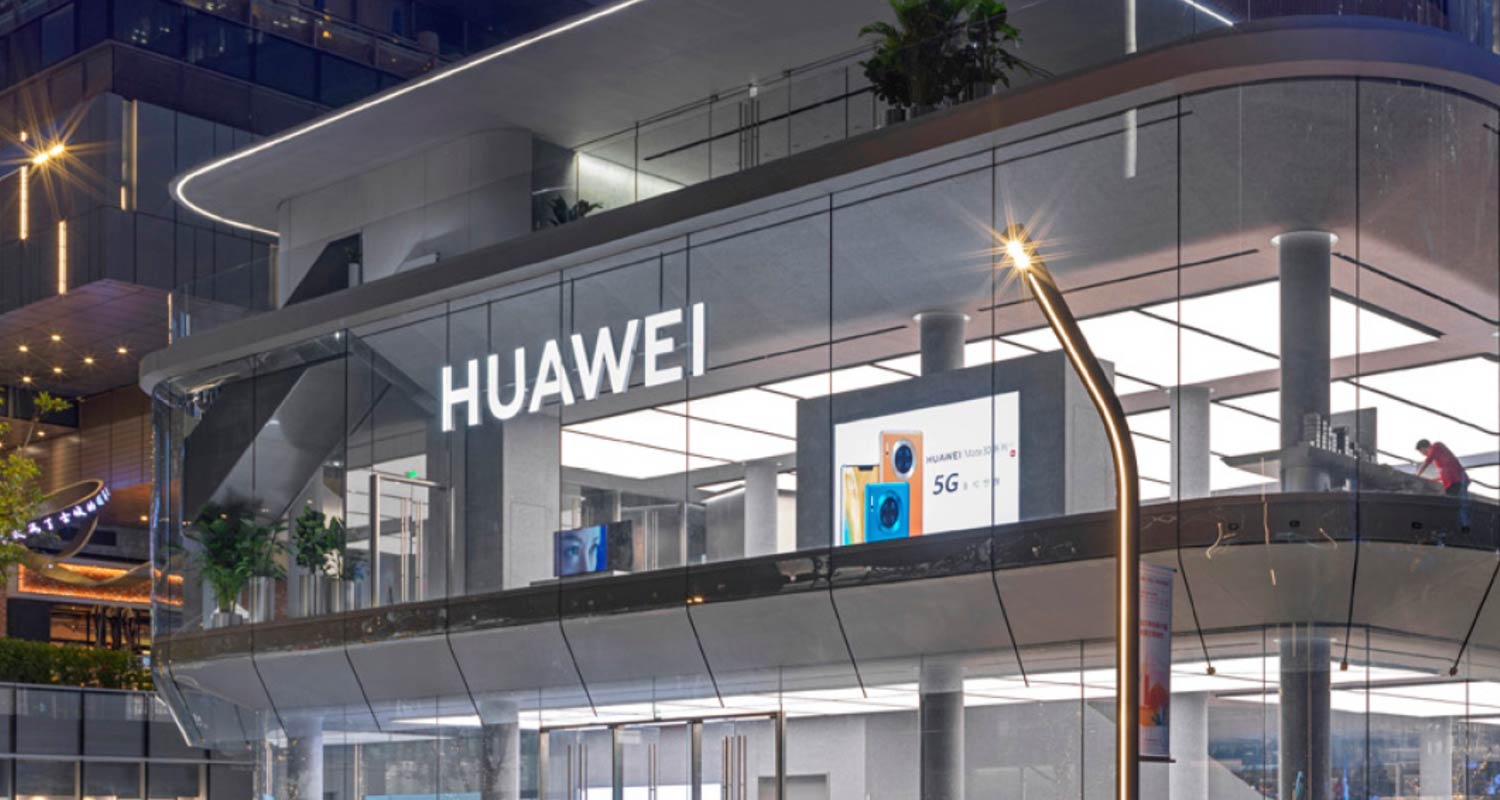
    Huawei’s flagship store in Shenzhen. Image: Saguez & Partners

    Packed into a small room, a drone, bipedal robot, supermarket checkout and other devices showcase a vision of China’s software future — one where an operating system developed by national champion Huawei has replaced Windows and Android.

    The collection is at the Harmony Ecosystem Innovation Centre in the southern city of Shenzhen, a local government-owned entity that encourages authorities, companies and hardware makers to develop software using OpenHarmony, an open-source version of the operating system Huawei launched five years ago after US sanctions cut off support for Google’s Android.

    While Huawei’s recent strong-selling smartphone launches have been closely watched for signs of advances in China’s chip supply chain, the company has also quietly built up expertise in sectors crucial to Beijing’s vision of technology self-sufficiency, from operating systems to in-vehicle software.

    OpenHarmony is now being widely promoted within China as a ‘national operating system’

    President Xi Jinping last year told the Communist Party’s elite politburo that China must wage a difficult battle to localise operating systems and other technology “as soon as possible” as the US cracks down on exports of advanced chips and other components.

    OpenHarmony is now being widely promoted within China as a “national operating system” amid concerns that other major companies could be severed from the Microsoft Windows and Android products upon which many systems rely.

    “This strategic move will likely erode the market share of Western operating systems like Android and Windows in China, as local products gain traction,” said Sunny Cheung, an associate fellow at the Jamestown Foundation, a US defence policy group.

    In the first quarter of 2024, Huawei’s HarmonyOS, the company’s in-house version of the operating system, surpassed Apple’s iOS to become the second best-selling mobile operating system in China behind Android, research firm Counterpoint said. It has not been launched on smartphones outside China.

    OpenAtom Foundation

    Huawei no longer controls OpenHarmony, having gifted its source code to a non-profit called the OpenAtom Foundation in 2020 and 2021, according to an internal memo and other releases.

    But both the innovation centre and government documents often refer to OpenHarmony and HarmonyOS interchangeably as part of a broader Harmony ecosystem. The growth of HarmonyOS, expected to be rolled out in a PC version this year or next, will spur adoption of OpenHarmony, analysts said.

    Read: In China, Huawei is giving Nvidia a run for its money

    “Harmony has created a powerful foundational operating system for the future of China’s devices,” said Richard Yu, the chairman of Huawei’s consumer business group, at the opening of a developer conference last week.

    Huawei did not respond to a request for further comment.

    Huawei first unveiled Harmony in August 2019, three months after Washington placed it under trade restrictions over alleged security concerns. Huawei denies its equipment poses a risk.

    Huawei’s latest Pura 70 smartphone

    Since then, China has stepped up its self-sufficiency efforts, cutting itself off from the main code sharing hub Github and championing a local version, Gitee.

    China banned the use of Windows on government computers in 2014 and they now use mostly Linux-based operating systems. Microsoft earns only about 1.5% of its revenue from China, its president said this month.

    Originally built on an open-source Android system, this year Huawei launched its first “pure” version of HarmonyOS that no longer supports Android-based apps, in a move that further bifurcates China’s app ecosystem from the rest of the world.

    OpenHarmony was the fastest-growing open-source operating system for smart devices last year

    A report from the Jamestown Foundation last month said OpenHarmony’s owner OpenAtom appeared to be coordinating efforts among Chinese firms to develop a viable alternative to US technologies, including for defence applications such as satellites.

    Beijing-based OpenAtom did not respond to a request for comment.

    OpenHarmony was the fastest-growing open-source operating system for smart devices last year, with more than 70 organisations contributing to it and more than 460 hardware and software products built across finance, education, aerospace and industry, Huawei said in its 2023 annual report.

    The aim of making it open source is to replicate Android’s success in removing licensing costs for users and to give companies a customisable springboard for their own products, said Charlie Cheng, deputy manager of the Harmony Ecosystem Innovation Centre.

    Mainstream

    “Harmony will definitely grow into a mainstream operating system and will give the world a new choice of operating system besides iOS and Android,” he said. “China is learning from the West.”

    Google, Apple and Microsoft did not respond to requests for comment.

    The Harmony ecosystem has seen strong support from Huawei’s home city of Shenzhen, a city historically used as a trial site for policies later adopted across China.

    Read: US steps up its assault on China’s Huawei

    Along with a Harmony centre that opened in the south-western city of Chengdu, 10 more are expected in a further 10 cities, according to a Shenzhen centre presentation.

    Key OpenHarmony developers include Shenzhen Kaihong Digital, headed by Wang Chenglu, a former Huawei employee known as Harmony’s “godfather”, and Chinasoft. Both have worked on infrastructure software, at Tianjin Port and for mines in China’s top coal-producing province Shaanxi.

    While OpenHarmony is largely confined to China, Brussels-based open-source group the Eclipse Foundation said it was using it to develop a system called Oniro for use in mobile phones and internet-of-things devices.

    China’s previous efforts to build major open-source projects have struggled to gain traction among developers, but Huawei’s growing smartphone market share and extra work to develop a broader ecosystem gives Harmony an advantage, analysts said.

    More than 900 million devices, including smartphones, watches and car systems are running on HarmonyOS, while 2.4 million developers were coding in the ecosystem, Huawei’s Yu said this month.

    “OpenHarmony will need more time and iterations so that these developers will be more confident to work with OpenHarmony,” said Emma Xu, an analyst with research firm Canalys. “But the reputation, behaviour and confidence that HarmonyOS has achieved will definitely bring a positive effect.”  — (c) 2024 Reuters

    Read next: Huawei says sanctions have made it stronger


    Google HarmonyOS Huawei Microsoft OpenAtom OpenAtom Foundation OpenHarmony
    Subscribe to TechCentral Subscribe to TechCentral
    Share. Facebook Twitter LinkedIn WhatsApp Telegram Email Copy Link
    Previous ArticleAnalogue TV switch-off ‘must not marginalise the poor’
    Next Article DTT has failed in South Africa – now scrap it, says eMedia

    Related Posts

    Big Microsoft 365 price increases coming next year

    Big Microsoft price increases coming next year

    5 December 2025
    What South Africans searched for most in 2025

    What South Africans searched for most in 2025, according to Google

    4 December 2025
    Unlock smarter computing with your surface Copilot+ PC

    Unlock smarter computing with your Surface Copilot+ PC

    4 December 2025
    Company News
    AI is not a technology problem - iqbusiness

    AI is not a technology problem – iqbusiness

    5 December 2025
    Telcos are sitting on a data gold mine - but few know what do with it - Phillip du Plessis

    Telcos are sitting on a data gold mine – but few know what do with it

    4 December 2025
    Unlock smarter computing with your surface Copilot+ PC

    Unlock smarter computing with your Surface Copilot+ PC

    4 December 2025
    Opinion
    Your data, your hardware: the DIY AI revolution is coming - Duncan McLeod

    Your data, your hardware: the DIY AI revolution is coming

    20 November 2025
    Zero Carbon Charge founder Joubert Roux

    The energy revolution South Africa can’t afford to miss

    20 November 2025
    It's time for a new approach to government IT spend in South Africa - Richard Firth

    It’s time for a new approach to government IT spend in South Africa

    19 November 2025

    Subscribe to Updates

    Get the best South African technology news and analysis delivered to your e-mail inbox every morning.

    Latest Posts
    Big Microsoft 365 price increases coming next year

    Big Microsoft price increases coming next year

    5 December 2025
    AI is not a technology problem - iqbusiness

    AI is not a technology problem – iqbusiness

    5 December 2025
    Vodacom to take control of Safaricom in R36-billion deal - Shameel Joosub

    Vodacom to take control of Safaricom in R36-billion deal

    4 December 2025
    Black Friday goes digital in South Africa as online spending surges to record high

    Black Friday goes digital in South Africa as online spending surges to record high

    4 December 2025
    © 2009 - 2025 NewsCentral Media
    • Cookie policy (ZA)
    • TechCentral – privacy and Popia

    Type above and press Enter to search. Press Esc to cancel.

    Manage consent

    TechCentral uses cookies to enhance its offerings. Consenting to these technologies allows us to serve you better. Not consenting or withdrawing consent may adversely affect certain features and functions of the website.

    Functional Always active
    The technical storage or access is strictly necessary for the legitimate purpose of enabling the use of a specific service explicitly requested by the subscriber or user, or for the sole purpose of carrying out the transmission of a communication over an electronic communications network.
    Preferences
    The technical storage or access is necessary for the legitimate purpose of storing preferences that are not requested by the subscriber or user.
    Statistics
    The technical storage or access that is used exclusively for statistical purposes. The technical storage or access that is used exclusively for anonymous statistical purposes. Without a subpoena, voluntary compliance on the part of your Internet Service Provider, or additional records from a third party, information stored or retrieved for this purpose alone cannot usually be used to identify you.
    Marketing
    The technical storage or access is required to create user profiles to send advertising, or to track the user on a website or across several websites for similar marketing purposes.
    • Manage options
    • Manage services
    • Manage {vendor_count} vendors
    • Read more about these purposes
    View preferences
    • {title}
    • {title}
    • {title}