Close Menu
TechCentralTechCentral

    Subscribe to the newsletter

    Get the best South African technology news and analysis delivered to your e-mail inbox every morning.

    Facebook X (Twitter) YouTube LinkedIn
    WhatsApp Facebook X (Twitter) LinkedIn YouTube
    TechCentralTechCentral
    • News
      Big Microsoft 365 price increases coming next year

      Big Microsoft price increases coming next year

      5 December 2025
      Vodacom to take control of Safaricom in R36-billion deal - Shameel Joosub

      Vodacom to take control of Safaricom in R36-billion deal

      4 December 2025
      Black Friday goes digital in South Africa as online spending surges to record high

      Black Friday goes digital in South Africa as online spending surges to record high

      4 December 2025
      BYD takes direct aim at Toyota with launch of sub-R500 000 Sealion 5 PHEV

      BYD takes direct aim at Toyota with launch of sub-R500 000 Sealion 5 PHEV

      4 December 2025
      'Get it now': Takealot in new instant deliveries pilot

      ‘Get it now’: Takealot in new instant deliveries pilot

      4 December 2025
    • World
      Amazon and Google launch multi-cloud service for faster connectivity

      Amazon and Google launch multi-cloud service for faster connectivity

      1 December 2025
      Google makes final court plea to stop US breakup

      Google makes final court plea to stop US breakup

      21 November 2025
      Bezos unveils monster rocket: New Glenn 9x4 set to dwarf Saturn V

      Bezos unveils monster rocket: New Glenn 9×4 set to dwarf Saturn V

      21 November 2025
      Tech shares turbocharged by Nvidia's stellar earnings

      Tech shares turbocharged by stellar Nvidia earnings

      20 November 2025
      Config file blamed for Cloudflare meltdown that disrupted the web

      Config file blamed for Cloudflare meltdown that disrupted the web

      19 November 2025
    • In-depth
      Jensen Huang Nvidia

      So, will China really win the AI race?

      14 November 2025
      Valve's Linux console takes aim at Microsoft's gaming empire

      Valve’s Linux console takes aim at Microsoft’s gaming empire

      13 November 2025
      iOCO's extraordinary comeback plan - Rhys Summerton

      iOCO’s extraordinary comeback plan

      28 October 2025
      Why smart glasses keep failing - no, it's not the tech - Mark Zuckerberg

      Why smart glasses keep failing – it’s not the tech

      19 October 2025
      BYD to blanket South Africa with megawatt-scale EV charging network - Stella Li

      BYD to blanket South Africa with megawatt-scale EV charging network

      16 October 2025
    • TCS
      TCS+ | How Cloud on Demand helps partners thrive in the AWS ecosystem - Odwa Ndyaluvane and Xenia Rhode

      TCS+ | How Cloud On Demand helps partners thrive in the AWS ecosystem

      4 December 2025
      TCS | MTN Group CEO Ralph Mupita on competition, AI and the future of mobile

      TCS | Ralph Mupita on competition, AI and the future of mobile

      28 November 2025
      TCS | Dominic Cull on fixing South Africa's ICT policy bottlenecks

      TCS | Dominic Cull on fixing South Africa’s ICT policy bottlenecks

      21 November 2025
      TCS | BMW CEO Peter van Binsbergen on the future of South Africa's automotive industry

      TCS | BMW CEO Peter van Binsbergen on the future of South Africa’s automotive industry

      6 November 2025
      TCS | Why Altron is building an AI factory - Bongani Andy Mabaso

      TCS | Why Altron is building an AI factory in Johannesburg

      28 October 2025
    • Opinion
      Your data, your hardware: the DIY AI revolution is coming - Duncan McLeod

      Your data, your hardware: the DIY AI revolution is coming

      20 November 2025
      Zero Carbon Charge founder Joubert Roux

      The energy revolution South Africa can’t afford to miss

      20 November 2025
      It's time for a new approach to government IT spend in South Africa - Richard Firth

      It’s time for a new approach to government IT spend in South Africa

      19 November 2025
      How South Africa's broken Rica system fuels murder and mayhem - Farhad Khan

      How South Africa’s broken Rica system fuels murder and mayhem

      10 November 2025
      South Africa's AI data centre boom risks overloading a fragile grid - Paul Colmer

      South Africa’s AI data centre boom risks overloading a fragile grid

      30 October 2025
    • Company Hubs
      • Africa Data Centres
      • AfriGIS
      • Altron Digital Business
      • Altron Document Solutions
      • Altron Group
      • Arctic Wolf
      • AvertITD
      • Braintree
      • CallMiner
      • CambriLearn
      • CYBER1 Solutions
      • Digicloud Africa
      • Digimune
      • Domains.co.za
      • ESET
      • Euphoria Telecom
      • Incredible Business
      • iONLINE
      • IQbusiness
      • Iris Network Systems
      • LSD Open
      • NEC XON
      • Netstar
      • Network Platforms
      • Next DLP
      • Ovations
      • Paracon
      • Paratus
      • Q-KON
      • SevenC
      • SkyWire
      • Solid8 Technologies
      • Telit Cinterion
      • Tenable
      • Vertiv
      • Videri Digital
      • Vodacom Business
      • Wipro
      • Workday
      • XLink
    • Sections
      • AI and machine learning
      • Banking
      • Broadcasting and Media
      • Cloud services
      • Contact centres and CX
      • Cryptocurrencies
      • Education and skills
      • Electronics and hardware
      • Energy and sustainability
      • Enterprise software
      • Financial services
      • Information security
      • Internet and connectivity
      • Internet of Things
      • Investment
      • IT services
      • Lifestyle
      • Motoring
      • Public sector
      • Retail and e-commerce
      • Satellite communications
      • Science
      • SMEs and start-ups
      • Social media
      • Talent and leadership
      • Telecoms
    • Events
    • Advertise
    TechCentralTechCentral
    Home » In-depth » Netflix isn’t in the business you think it is

    Netflix isn’t in the business you think it is

    By The Conversation2 May 2016
    Twitter LinkedIn Facebook WhatsApp Email Telegram Copy Link
    News Alerts
    WhatsApp

    netflix-640

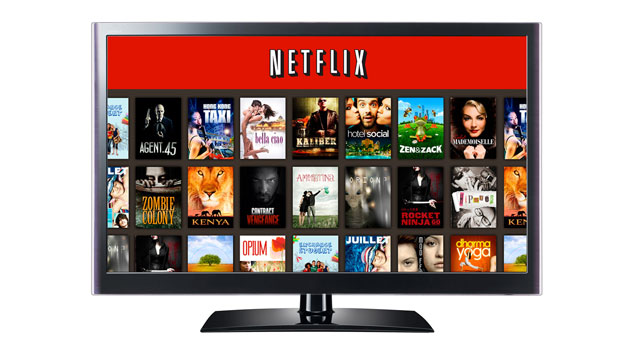
    Netflix has been in the headlines a lot recently, and not in a good way.

    There’s news about competitor Amazon launching a monthly video service, subscription fees going up, its library of content shrinking and lower global subscriber gains than the company had anticipated.

    But since its launch in 1997, Netflix has always been in the headlines.

    Its forays into new territory are often met with suspicion and negative forecasts because of the way it diverges from traditional business models, doing things others have deemed impossible.

    As a professor of media studies who researches and writes about TV’s changing business and technological landscape, I’ve been watching Netflix’s growth and evolution with great curiosity. The company, which arguably invented the US subscription streaming business, continues to change how we view television.

    Now, as Netflix braces itself to disrupt the model of global television distribution, the company appears poised to remain influential — though, again, in unexpected ways.

    It started with a red envelope

    For a brief refresher: Netflix began as a video rental by mail service. It then pioneered broadband video distribution, forcing the television and film industries to evolve or be left behind. Next it proved a broadband-distributed service could produce its own films and series.

    The latest round of headlines comes as the company pivots toward its next endeavour: becoming a global television and film network.

    Like many companies seeking to enter established industries, Netflix built itself on a barely sustainable business model. Companies that require changes in consumer behaviour — like Amazon, with its vast online marketplace — will endure low profit margins for a period of time to encourage people to try their service, whether it’s renting DVDs by mail or buying toothpaste from what you thought was a bookseller.

    In Netflix’s case, in order to prove itself as a source of top-rate programming, the company has spent lavishly on licensing content from studios and on developing its own series and movies. All the while, it maintained a low monthly fee of US$8 — about half that of HBO Now.

    But now that many millions of US subscribers have come to appreciate the experience of ad-free television and films on demand, long-term sustainability requires increasing profitability.

    A 2015 report by industry analyst Matthew Ball noted that Netflix earned only a monthly profit of $0,28 per subscriber (compared with $3,65 for HBO) as a result of its high programming costs, low subscription price and global expansion. Though profitable — which is more than many new media economy businesses can claim — such margins aren’t feasible in the long term.

    Now, the company is simply adjusting prices to increase profits.

    Notably, even with the planned rate increase, few entertainment sources offer comparable value. A January 2016 analysis by BTIG Research found the average Netflix subscriber streams two hours a day. That average subscriber will pay just $0,17/hour of content after the increase to $10/month.

    Going global by cutting out the middleman

    For US subscribers, it is important to note the company’s next aspirations are more about the global market and becoming a global television network than growing its US audience. Netflix’s ability to create original programmes and simultaneously self-distribute them internationally marks a new stage of competition in media distribution.

    This has enormous implications for the business of television. Admittedly, they’re the parts of the business that most viewers know nothing about, but they’re parts that are nonetheless critical to sustaining media companies.

    Netflix’s next strategy bets on vertical integration — that is, on owning its content and using its distribution system to deliver that content to its subscribers. Owning rights and distributing direct to viewers allows Netflix to keep all revenues, rather than sharing with distributors. For example, a distributor such as iTunes keeps roughly 30% of the revenue from the albums, tracks or films it sells.

    Reliance on vertical integration is becoming more common throughout television. Ten years ago, AMC contracted with Lionsgate Television to produce Mad Men. As was the norm, Lionsgate later sold the series to various channels around the world to earn back the costs of production and even secured a lucrative licensing deal with Netflix. Now AMC has its own AMC Studios to produce The Walking Dead and has purchased channels around the globe so that it can self-distribute its hits to a wider audience.

    Wagner Moura as Escobar in Netflix original Narcos
    Wagner Moura as Pablo Escobar in Netflix original Narcos

    While this new stage of Netflix may be best thought of as a global “network”, the fact that it offers a library of content for a fee, rather than a schedule that limits viewers to watching programmes at certain times, makes it part of a wholly new phenomenon.

    And new things are often tricky to evaluate.

    Music streaming services Pandora and Spotify have tried a similar model, but continue to struggle with converting users from advertiser-supported versions into more lucrative subscription versions. Oddly, the closest precursor for Netflix’s business model may be the circulating libraries of the 1700s.

    These libraries existed before public libraries, when books were too expensive for most to afford. Like Netflix, subscribers paid a periodic fee for unlimited access to a library of content. For Netflix, the big difference from these libraries — and from music streaming services — is that they are owning more and more of the content that they’re distributing.

    It’s not TV, it’s Netflix

    The measures long used to evaluate television — ratings, demographics, time slot — don’t matter to Netflix.

    Instead, the value of an original series like Narcos comes when the company owns the series in perpetuity and can distribute it on a global scale. When a distributor owns a show, its value cannot be measured by how many watch it in the first week, month or even year. Netflix is building a library, not a schedule.

    Interestingly, HBO is its closest competitor. Like Netflix, HBO produces a portion of its content, has a business model based on subscriber fees and is working toward a global broadband-distributed service.

    Both will try to find the right balance of subscriber fees and spending on exclusive, original content to maintain subscribers. As broadband-distributed services, they also are able to gather data about what subscribers watch to learn much more about viewing patterns and the value of each piece of content. And they’ve kept that knowledge to themselves, creating an unprecedented advantage.

    In some ways, broadband-distributed portals such as Netflix and HBO Now are merely the next stage of television.

    Just as Netflix revolutionised the experience of watching television for US audiences, it’s now on the verge of rewriting the model of global television distribution.The Conversation

    • Amanda Lotz is professor of communication studies and screen arts & cultures, University of Michigan
    • This article was originally published on The Conversation


    HBO HBO Now Lionsgate Matthew Ball Netflix
    Subscribe to TechCentral Subscribe to TechCentral
    Share. Facebook Twitter LinkedIn WhatsApp Telegram Email Copy Link
    Previous ArticleBitcoin inventor found? Not so fast
    Next Article Coming soon(ish): DNA-powered hard drives

    Related Posts

    Netflix is said to be exploring mega Warner Bros takeover

    Netflix is said to be exploring mega Warner Bros takeover

    31 October 2025

    EU kills ‘Fair Share’ plan favoured by South African operators

    31 July 2025
    Netflix is hiring in South Africa

    Netflix is hiring in South Africa

    24 July 2025
    Company News
    AI is not a technology problem - iqbusiness

    AI is not a technology problem – iqbusiness

    5 December 2025
    Telcos are sitting on a data gold mine - but few know what do with it - Phillip du Plessis

    Telcos are sitting on a data gold mine – but few know what do with it

    4 December 2025
    Unlock smarter computing with your surface Copilot+ PC

    Unlock smarter computing with your Surface Copilot+ PC

    4 December 2025
    Opinion
    Your data, your hardware: the DIY AI revolution is coming - Duncan McLeod

    Your data, your hardware: the DIY AI revolution is coming

    20 November 2025
    Zero Carbon Charge founder Joubert Roux

    The energy revolution South Africa can’t afford to miss

    20 November 2025
    It's time for a new approach to government IT spend in South Africa - Richard Firth

    It’s time for a new approach to government IT spend in South Africa

    19 November 2025

    Subscribe to Updates

    Get the best South African technology news and analysis delivered to your e-mail inbox every morning.

    Latest Posts
    Big Microsoft 365 price increases coming next year

    Big Microsoft price increases coming next year

    5 December 2025
    AI is not a technology problem - iqbusiness

    AI is not a technology problem – iqbusiness

    5 December 2025
    Vodacom to take control of Safaricom in R36-billion deal - Shameel Joosub

    Vodacom to take control of Safaricom in R36-billion deal

    4 December 2025
    Black Friday goes digital in South Africa as online spending surges to record high

    Black Friday goes digital in South Africa as online spending surges to record high

    4 December 2025
    © 2009 - 2025 NewsCentral Media
    • Cookie policy (ZA)
    • TechCentral – privacy and Popia

    Type above and press Enter to search. Press Esc to cancel.

    Manage consent

    TechCentral uses cookies to enhance its offerings. Consenting to these technologies allows us to serve you better. Not consenting or withdrawing consent may adversely affect certain features and functions of the website.

    Functional Always active
    The technical storage or access is strictly necessary for the legitimate purpose of enabling the use of a specific service explicitly requested by the subscriber or user, or for the sole purpose of carrying out the transmission of a communication over an electronic communications network.
    Preferences
    The technical storage or access is necessary for the legitimate purpose of storing preferences that are not requested by the subscriber or user.
    Statistics
    The technical storage or access that is used exclusively for statistical purposes. The technical storage or access that is used exclusively for anonymous statistical purposes. Without a subpoena, voluntary compliance on the part of your Internet Service Provider, or additional records from a third party, information stored or retrieved for this purpose alone cannot usually be used to identify you.
    Marketing
    The technical storage or access is required to create user profiles to send advertising, or to track the user on a website or across several websites for similar marketing purposes.
    • Manage options
    • Manage services
    • Manage {vendor_count} vendors
    • Read more about these purposes
    View preferences
    • {title}
    • {title}
    • {title}