Close Menu
TechCentralTechCentral

    Subscribe to the newsletter

    Get the best South African technology news and analysis delivered to your e-mail inbox every morning.

    Facebook X (Twitter) YouTube LinkedIn
    WhatsApp Facebook X (Twitter) LinkedIn YouTube
    TechCentralTechCentral
    • News
      MTN and Vodacom dwarf South Africa's listed tech sector

      MTN and Vodacom dwarf South Africa’s listed tech sector

      20 March 2026
      SA firm opens Africa's largest space hardware factory

      SA firm opens Africa’s largest space hardware factory

      20 March 2026
      OpenClaw fever grips China

      OpenClaw fever grips China

      20 March 2026
      OpenAI plans desktop 'super app'

      OpenAI plans desktop ‘super app’

      20 March 2026
      How a WhatsApp bundle exposed a fault line in SA mobile

      How a WhatsApp bundle exposed a fault line in SA mobile

      19 March 2026
    • World
      Mystery Chinese AI model revealed to be Xiaomi's

      Mystery Chinese AI model revealed to be Xiaomi’s

      19 March 2026
      A mystery AI model has developers buzzing

      A mystery AI model has developers buzzing

      18 March 2026
      Samsung's trifold gamble ends in retreat

      Samsung’s trifold gamble ends in retreat

      17 March 2026
      Nvidia targets $1-trillion in AI chip sales as inference demand surges - Jensen Huang

      Nvidia targets $1-trillion in AI chip sales as inference demand surges

      17 March 2026
      Peter Thiel's secretive Rome conference draws Church attention

      Peter Thiel’s secretive Rome conference draws Church attention

      16 March 2026
    • In-depth
      The last generation of coders

      The last generation of coders

      18 February 2026
      Sentech is in dire straits

      Sentech is in dire straits

      10 February 2026
      How liberalisation is rewiring South Africa's power sector

      How liberalisation is rewiring South Africa’s power sector

      21 January 2026
      The top-performing South African tech shares of 2025

      The top-performing South African tech shares of 2025

      12 January 2026
      Digital authoritarianism grows as African states normalise internet blackouts

      Digital authoritarianism grows as African states normalise internet blackouts

      19 December 2025
    • TCS
      TCS+ | Arctic Wolf unpacks the evolving threat landscape for SA businesses - Clare Loveridge and Jason Oehley

      TCS+ | Arctic Wolf unpacks the evolving threat landscape for SA businesses

      19 March 2026
      TCS+ | Vox Kiwi: a wireless solution promising a fibre-like experience - Theo van Zyl

      TCS+ | Vox Kiwi: a wireless solution promising a fibre-like experience

      13 March 2026
      TCS+ | Flipping the narrative on AI in the Global South - Josefin Rosén

      TCS+ | Flipping the narrative on AI in the Global South

      13 March 2026
      TCS | Sink or swim? Antony Makins on how AI is rewriting the rules of work

      TCS | Sink or swim? Antony Makins on how AI is rewriting the rules of work

      5 March 2026
      TCS+ | Bolt ups the ante on platform safety - Simo Kalajdzic

      TCS+ | Bolt ups the ante on platform safety

      4 March 2026
    • Opinion
      South Africa's energy future hinges on getting wheeling right - Aishah Gire

      South Africa’s energy future hinges on getting wheeling right

      10 March 2026
      Hold the doom: the case for a South African comeback - Duncan McLeod

      Apple just dropped a bomb on the Windows world

      5 March 2026
      VC's centre of gravity is shifting - and South Africa is in the frame - Alison Collier

      VC’s centre of gravity is shifting – and South Africa is in the frame

      3 March 2026
      Hold the doom: the case for a South African comeback - Duncan McLeod

      Hold the doom: the case for a South African comeback

      26 February 2026
      The AI fraud crisis your bank is not ready for - Andries Maritz

      The AI fraud crisis your bank is not ready for

      18 February 2026
    • Company Hubs
      • 1Stream
      • Africa Data Centres
      • AfriGIS
      • Altron Digital Business
      • Altron Document Solutions
      • Altron Group
      • Arctic Wolf
      • AvertITD
      • Braintree
      • CallMiner
      • CambriLearn
      • CYBER1 Solutions
      • Digicloud Africa
      • Digimune
      • Domains.co.za
      • ESET
      • Euphoria Telecom
      • HOSTAFRICA
      • Incredible Business
      • iONLINE
      • IQbusiness
      • Iris Network Systems
      • LSD Open
      • Mitel
      • NEC XON
      • Netstar
      • Network Platforms
      • Next DLP
      • Ovations
      • Paracon
      • Paratus
      • Q-KON
      • SevenC
      • SkyWire
      • Solid8 Technologies
      • Telit Cinterion
      • Tenable
      • Vertiv
      • Videri Digital
      • Vodacom Business
      • Wipro
      • Workday
      • XLink
    • Sections
      • AI and machine learning
      • Banking
      • Broadcasting and Media
      • Cloud services
      • Contact centres and CX
      • Cryptocurrencies
      • Education and skills
      • Electronics and hardware
      • Energy and sustainability
      • Enterprise software
      • Financial services
      • HealthTech
      • Information security
      • Internet and connectivity
      • Internet of Things
      • Investment
      • IT services
      • Lifestyle
      • Motoring
      • Policy and regulation
      • Public sector
      • Retail and e-commerce
      • Satellite communications
      • Science
      • SMEs and start-ups
      • Social media
      • Talent and leadership
      • Telecoms
    • Events
    • Advertise
    TechCentralTechCentral
    Home » News » AI-controlled fighter jets are closer than we think
    AI-controlled fighter jets are closer than we think

    AI-controlled fighter jets are closer than we think

    By The Conversation26 April 2025

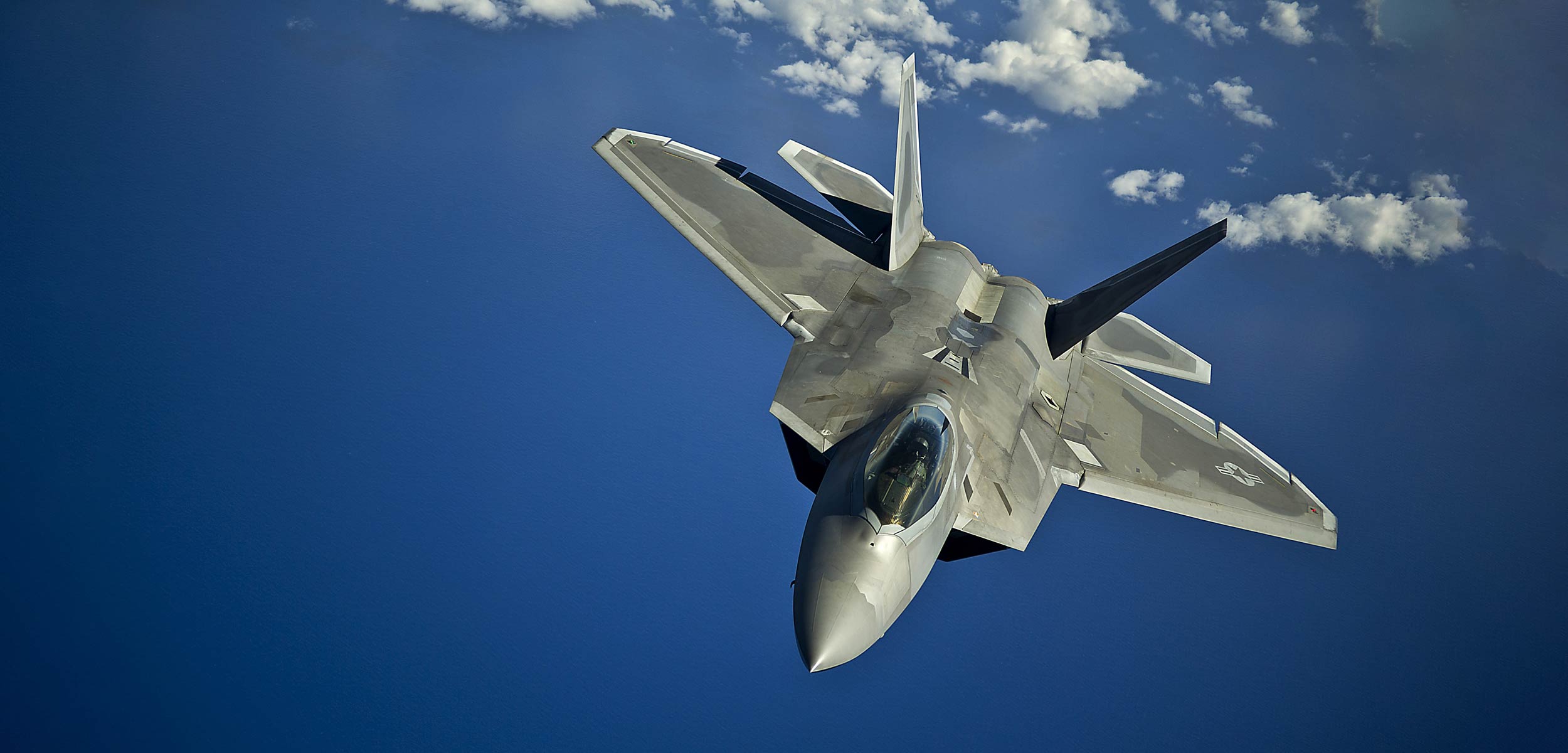
    Could we be on the verge of an era where fighter jets take flight without pilots – and are controlled by artificial intelligence? US R Adm Michael Donnelly recently said that an upcoming combat jet could be the navy’s last one with a pilot in the cockpit. That marks a striking, if not entirely surprising, shift in thinking about the future of aerial warfare.

    The US navy is not alone. Other programmes to develop next-generation fighter jets are also touting uncrewed options as a distinct possibility.

    However, we have been here before. Senior leaders in the US Navy said they believed the last crewed fighter jet had been procured in 2015. As far back as 1957, premature obituaries were being written for the fighter pilot era. So, is there anything different now?

    As far back as 1957, premature obituaries were being written for the fighter pilot era. What’s different now?

    The ability of a fighter jet to manoeuvre, accelerate and maintain high speeds, crucial for air combat, is called kinematic performance. Estimates are as high as 80% on how much pilots reduce kinematic performance. Though this figure may be disputed, there is no question that uncrewed aircraft enjoy several key advantages.

    Without the need for life support systems such as ejection seats and oxygen supplies, these aircraft can perform in ways that are beyond the scope of piloted aircraft. But additional trends are pushing militaries to reconsider the role of the human pilot altogether.

    Systems enabled by AI are already demonstrating superior performance in military exercises. In existing remotely piloted aircraft, a human operator remains in control. This model is known as “human-in-the-loop”. AI is now enabling the possibility of human-on-the-loop (where humans take a step back, supervising and intervening if necessary) and even “human-out-of-the-loop” systems (in which AI selects and engages targets autonomously).

    Controversial

    The latter category, while controversial, may offer decisive advantages. In scenarios where milliseconds matter, a fully autonomous system could outperform any human operator, to the extent that senior defence leaders have expressed a willingness to trust AI with lethal decision making under certain conditions. Others add that autonomous systems could adhere more rigorously to the laws of armed conflict compared with a human operator.

    Unpiloted combat jets also offer potential financial savings. Fighter jets are expensive to build, operate and maintain, not least because of the training and equipment needed to support pilots. A 2011 study found that the life cycle cost of a surveillance drone was roughly half that of a comparable piloted platform. And cheaper aircraft are important because of the likely losses which will be inflicted on air forces in the event of a conflict with Russia or China.

    TCS | How South Africa’s Milkor became a global player in drone innovation

    Another advantage of fully autonomous aircraft is risk mitigation. As Nato militaries grapple with a shortage of trained pilots for potential conflicts between states, uncrewed systems offer a way to restore the balance without putting lives at risk of death or capture.
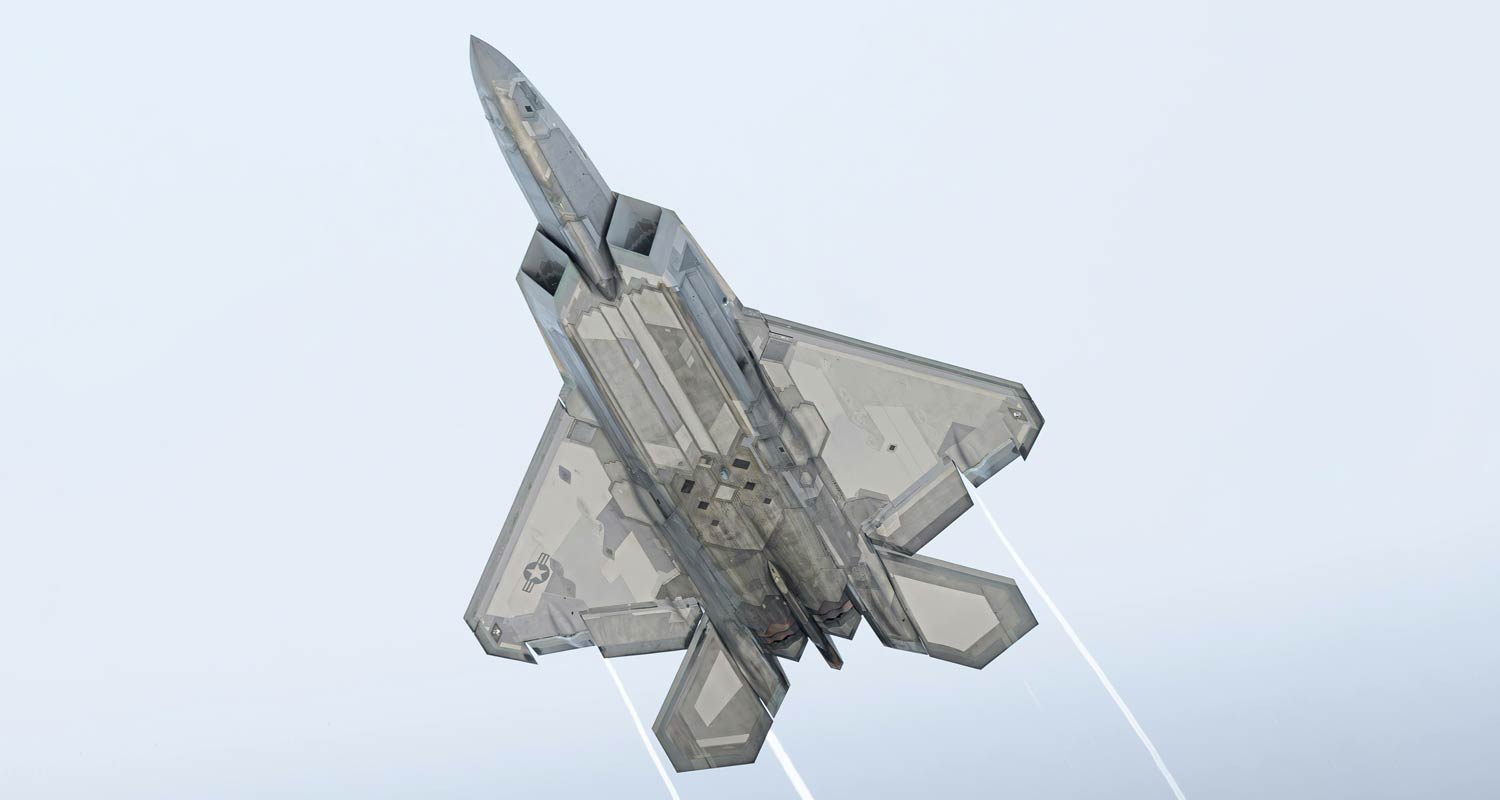
    Therefore, one option for militaries is to expand the use of remotely piloted aircraft – drones like those deployed in Iraq and Afghanistan. Crucially, this would ensure humans maintain control over weapons use. The only difference with the present would be in making these systems the backbone of the fleet, rather than supplementary systems struggling to operate in hostile airspace. This would require upgrading them with state-of-the-art technologies like stealth. This helps aircraft reduce their chances of being detected by the enemy’s radar and infrared (heat) sensors.

    A step up from this would be autonomous combat aircraft, carrying the advantages of on- or off-the-loop technologies. The US Air Force’s Project Venom is training AI in modified F-16 jets for eventual transfer to drones. These drones will operate alongside crewed aircraft, as part of mixed human and machine teams. But if this AI software was retained on the F-16s (or transferred to more advanced fighter jets), it could produce a squadron of autonomous jets just as capable as those piloted by humans.

    A more radical idea is to forgo traditional fighter jets altogether. Proponents of this vision imagine swarms of low-cost, expendable drones working together to overwhelm enemy defences. While current drones have limitations in range, payload and labour requirements, true “swarming” could change the equation.

    Current limitations

    So what is stopping militaries from pressing ahead with these options? A few things. AI isn’t ready, yet. Machine learning – a subset of AI where algorithms learn from experience – underpins all this. But it still struggles with the inherent ambiguity and creativity of war. Simply putting tyres on an aircraft can thwart computer vision – the field of AI that allows computers to interpret images and videos. So training AI to operate in the full range of possible combat situations is a mammoth task. In the words of one air force commander, “robotified warfare … is centuries away”.

    Another issue concerns communications, since remotely operated drone systems, especially interconnected, swarming ones, need data links. Given how much adversaries are investing in jamming these signals, designs may be pushed in opposite directions: either keeping a pilot onboard or embracing autonomy so the aircraft can keep fighting, even if it is cut off.

    Read: 15 amazing inventions that came out of South Africa

    Yet the real limit may be a fear of crossing the Rubicon. While the US and its allies have a de facto “no first use” policy on fully autonomous weapons, the demands of warfare against an enemy willing to use such systems may erode these norms.

    So, the navy’s statement is a warning: the age of the human fighter pilot might be ending. But it’s the next war that could make that decision for us.The Conversation

    Get breaking news from TechCentral on WhatsApp. Sign up here.

    • The author, Arun Dawson, is PhD candidate, department of war studies, King’s College London
    • This article is republished from The Conversation under a Creative Commons licence. Read the original article


    Don’t miss:

    Gases linked to life found in atmosphere of alien planet

    Follow TechCentral on Google News Add TechCentral as your preferred source on Google


    WhatsApp YouTube
    Share. Facebook Twitter LinkedIn WhatsApp Telegram Email Copy Link
    Previous ArticleOnly Google can run Chrome, company says in antitrust trial
    Next Article AI and the future of work

    Related Posts

    MTN and Vodacom dwarf South Africa's listed tech sector

    MTN and Vodacom dwarf South Africa’s listed tech sector

    20 March 2026
    SA firm opens Africa's largest space hardware factory

    SA firm opens Africa’s largest space hardware factory

    20 March 2026
    OpenClaw fever grips China

    OpenClaw fever grips China

    20 March 2026
    Company News

    How South African executives can crack the AI ROI code

    20 March 2026
    Africa's first Nvidia RTX Pro GPU servers have landed

    Africa’s first Nvidia RTX Pro GPU servers have landed

    19 March 2026
    How Acer Africa is bridging the digital divide through local innovation

    How Acer Africa is bridging the digital divide through local innovation

    19 March 2026
    Opinion
    South Africa's energy future hinges on getting wheeling right - Aishah Gire

    South Africa’s energy future hinges on getting wheeling right

    10 March 2026
    Hold the doom: the case for a South African comeback - Duncan McLeod

    Apple just dropped a bomb on the Windows world

    5 March 2026
    VC's centre of gravity is shifting - and South Africa is in the frame - Alison Collier

    VC’s centre of gravity is shifting – and South Africa is in the frame

    3 March 2026

    Subscribe to Updates

    Get the best South African technology news and analysis delivered to your e-mail inbox every morning.

    Latest Posts
    MTN and Vodacom dwarf South Africa's listed tech sector

    MTN and Vodacom dwarf South Africa’s listed tech sector

    20 March 2026
    SA firm opens Africa's largest space hardware factory

    SA firm opens Africa’s largest space hardware factory

    20 March 2026
    OpenClaw fever grips China

    OpenClaw fever grips China

    20 March 2026
    OpenAI plans desktop 'super app'

    OpenAI plans desktop ‘super app’

    20 March 2026
    © 2009 - 2026 NewsCentral Media
    • Cookie policy (ZA)
    • TechCentral – privacy and Popia

    Type above and press Enter to search. Press Esc to cancel.

    Manage consent

    TechCentral uses cookies to enhance its offerings. Consenting to these technologies allows us to serve you better. Not consenting or withdrawing consent may adversely affect certain features and functions of the website.

    Functional Always active
    The technical storage or access is strictly necessary for the legitimate purpose of enabling the use of a specific service explicitly requested by the subscriber or user, or for the sole purpose of carrying out the transmission of a communication over an electronic communications network.
    Preferences
    The technical storage or access is necessary for the legitimate purpose of storing preferences that are not requested by the subscriber or user.
    Statistics
    The technical storage or access that is used exclusively for statistical purposes. The technical storage or access that is used exclusively for anonymous statistical purposes. Without a subpoena, voluntary compliance on the part of your Internet Service Provider, or additional records from a third party, information stored or retrieved for this purpose alone cannot usually be used to identify you.
    Marketing
    The technical storage or access is required to create user profiles to send advertising, or to track the user on a website or across several websites for similar marketing purposes.
    • Manage options
    • Manage services
    • Manage {vendor_count} vendors
    • Read more about these purposes
    View preferences
    • {title}
    • {title}
    • {title}