
Close Menu
TechCentralTechCentral

    Subscribe to the newsletter

    Get the best South African technology news and analysis delivered to your e-mail inbox every morning.

    Facebook X (Twitter) YouTube LinkedIn
    WhatsApp Facebook X (Twitter) LinkedIn YouTube
    TechCentralTechCentral
    • News
      South Africa's stablecoin silence is becoming a policy failure

      South Africa’s stablecoin silence is becoming a policy failure

      6 February 2026
      Every electric car you can buy in South Africa in early 2026, ranked by price

      Every electric car you can buy in South Africa in early 2026, ranked by price

      6 February 2026
      From stocks to crypto, markets reel as AI doubts grow

      From stocks to crypto, markets reel as AI doubts grow

      6 February 2026
      South Africa deepens China ties as US trade tensions escalate

      South Africa deepens China ties as US trade tensions escalate

      6 February 2026
      Big changes at Lesaka as Bank Zero deal nears completion - Lincoln Mali

      Big changes at Lesaka as Bank Zero deal nears completion

      6 February 2026
    • World
      AI won't replace software, says Nvidia CEO amid market rout - Jensen Huang

      AI won’t replace software, says Nvidia CEO amid market rout

      4 February 2026
      Apple acquires audio AI start-up Q.ai

      Apple acquires audio AI start-up Q.ai

      30 January 2026
      SpaceX IPO may be largest in history

      SpaceX IPO may be largest in history

      28 January 2026
      Nvidia throws AI at the weather

      Nvidia throws AI at weather forecasting

      27 January 2026
      Debate erupts over value of in-flight Wi-Fi

      Debate erupts over value of in-flight Wi-Fi

      26 January 2026
    • In-depth
      How liberalisation is rewiring South Africa's power sector

      How liberalisation is rewiring South Africa’s power sector

      21 January 2026
      The top-performing South African tech shares of 2025

      The top-performing South African tech shares of 2025

      12 January 2026
      Digital authoritarianism grows as African states normalise internet blackouts

      Digital authoritarianism grows as African states normalise internet blackouts

      19 December 2025
      TechCentral's South African Newsmakers of 2025

      TechCentral’s South African Newsmakers of 2025

      18 December 2025
      Black Friday goes digital in South Africa as online spending surges to record high

      Black Friday goes digital in South Africa as online spending surges to record high

      4 December 2025
    • TCS
      TCS+ | How Cloud On Demand is helping SA businesses succeed in the cloud - Xhenia Rhode, Dion Kalicharan

      TCS+ | Cloud On Demand and Consnet: inside a real-world AWS partner success story

      30 January 2026
      Watts & Wheels S1E3: 'BYD's Corolla Cross challenger'

      Watts & Wheels S1E3: ‘BYD’s Corolla Cross challenger’

      30 January 2026
      Watts & Wheels S1E3: 'BYD's Corolla Cross challenger'

      Watts & Wheels S1E2: ‘China attacks, BMW digs in, Toyota’s sublime supercar’

      23 January 2026

      TCS+ | Why cybersecurity is becoming a competitive advantage for SA businesses

      20 January 2026
      Watts & Wheels S1E3: 'BYD's Corolla Cross challenger'

      Watts & Wheels: S1E1 – ‘William, Prince of Wheels’

      8 January 2026
    • Opinion
      South Africa's skills advantage is being overlooked at home - Richard Firth

      South Africa’s skills advantage is being overlooked at home

      29 January 2026
      Why Elon Musk's Starlink is a 'hard no' for me - Songezo Zibi

      Why Elon Musk’s Starlink is a ‘hard no’ for me

      26 January 2026
      South Africa's new fibre broadband battle - Duncan McLeod

      South Africa’s new fibre broadband battle

      20 January 2026
      AI moves from pilots to production in South African companies - Nazia Pillay SAP

      AI moves from pilots to production in South African companies

      20 January 2026
      South Africa's new fibre broadband battle - Duncan McLeod

      ANC’s attack on Solly Malatsi shows how BEE dogma trumps economic reality

      14 December 2025
    • Company Hubs
      • Africa Data Centres
      • AfriGIS
      • Altron Digital Business
      • Altron Document Solutions
      • Altron Group
      • Arctic Wolf
      • AvertITD
      • Braintree
      • CallMiner
      • CambriLearn
      • CYBER1 Solutions
      • Digicloud Africa
      • Digimune
      • Domains.co.za
      • ESET
      • Euphoria Telecom
      • Incredible Business
      • iONLINE
      • IQbusiness
      • Iris Network Systems
      • LSD Open
      • NEC XON
      • Netstar
      • Network Platforms
      • Next DLP
      • Ovations
      • Paracon
      • Paratus
      • Q-KON
      • SevenC
      • SkyWire
      • Solid8 Technologies
      • Telit Cinterion
      • Tenable
      • Vertiv
      • Videri Digital
      • Vodacom Business
      • Wipro
      • Workday
      • XLink
    • Sections
      • AI and machine learning
      • Banking
      • Broadcasting and Media
      • Cloud services
      • Contact centres and CX
      • Cryptocurrencies
      • Education and skills
      • Electronics and hardware
      • Energy and sustainability
      • Enterprise software
      • Financial services
      • Information security
      • Internet and connectivity
      • Internet of Things
      • Investment
      • IT services
      • Lifestyle
      • Motoring
      • Public sector
      • Retail and e-commerce
      • Satellite communications
      • Science
      • SMEs and start-ups
      • Social media
      • Talent and leadership
      • Telecoms
    • Events
    • Advertise
    TechCentralTechCentral
    Home » Sections » Electronics and hardware » Biden putting tech, not troops, at centre of US-China strategy

    Biden putting tech, not troops, at centre of US-China strategy

    By Agency Staff2 March 2021
    Twitter LinkedIn Facebook WhatsApp Email Telegram Copy Link
    News Alerts
    WhatsApp
    US President Joe Biden

    The Biden administration is moving to put semiconductors, artificial intelligence and next-generation networks at the heart of US strategy towards Asia, attempting to rally what officials are calling “techno-democracies” to stand up to China and other “techno-autocracies”.

    The new framing for the US rivalry with China has been given added urgency by the sudden global shortage of microchips needed in products such as cars, mobile phones and refrigerators. The strategy would seek to rally an alliance of nations fighting for an edge in semiconductor fabrication and quantum computing, upending traditional arenas of competition such as missile stockpiles and troop numbers.

    Current and former government officials, along with outside experts, say the administration’s plans in the technology sphere are a microcosm of its broader plans to take up a more alliance-orientated but still hostile approach to China after a more chaotic approach under former US President Donald Trump.

    There’s a newfound realisation about the importance that semiconductors are playing in this geopolitical struggle…

    “There’s a newfound realisation about the importance that semiconductors are playing in this geopolitical struggle because chips underlie every tech in the modern era,” said Lindsay Gorman, a fellow for emerging technologies at the German Marshall Fund of the US. “It’s an effort to double down on the technological comparative advantage of the US and its democratic partners.”

    It’s an approach partly based partly on denying China access to certain technology for as long as possible, looking to quash Chinese juggernauts like Huawei Technologies and even taking a page from the Communist Party’s playbook by boosting government involvement in key industries when needed.

    Centrepiece

    It comes as Chinese Communist Party leaders including President Xi Jinping are expected to lay out how they intend to make technology a centrepiece of future development at the National People’s Congress beginning later this week.

    Several people familiar with the administration’s planning, and especially that of Kurt Campbell, the National Security Council’s Asia coordinator, say he foresees a broad approach that puts greater emphasis on a few key partners such as South Korea, Japan and Taiwan, while offering incentives to bring chip fabrication back to the US.

    Chips figure in plans to bolster the Quad — a once-sputtering alliance of the US, Japan, Australia and India that got a boost of support during the Trump era — including by eventually bringing more technology production to South Asia.
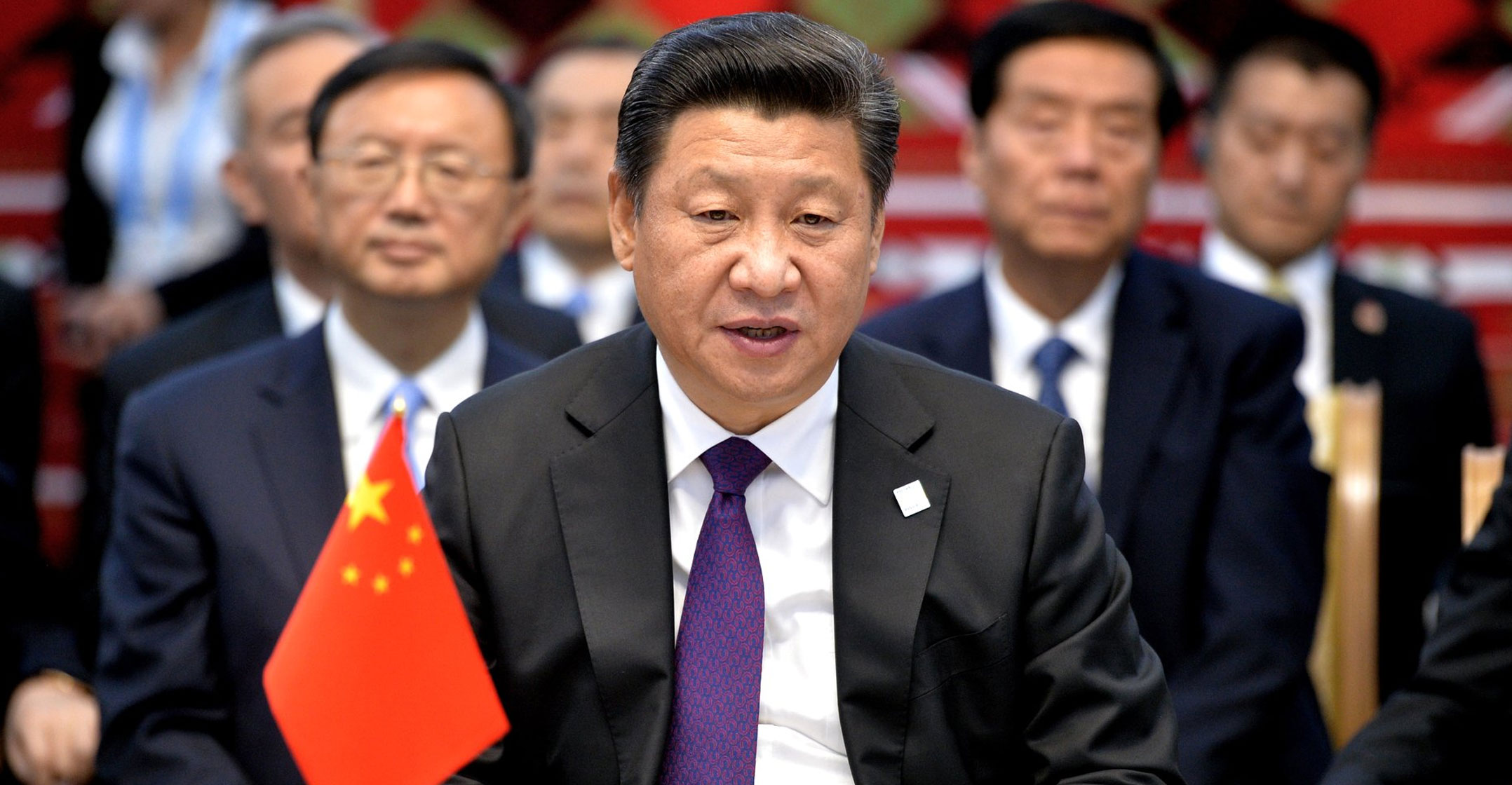
    Chinese President Xi Jinping

    The battle over microchips — and the focus they’re being given in the early days of the Biden administration — is being forced upon the new White House by necessity. A global shortage of chips, due in part to stockpiling by China and a surge in demand during the pandemic, has forced some American car makers to shut plants and exposed weaknesses in US supply chains, with their heavy dependence on a few manufacturers in Asia.

    On Wednesday, President Joe Biden ordered a global supply chain review for microchips as well as large-capacity batteries, pharmaceuticals and critical minerals and strategic materials such as rare earths. Most US chips come from Taiwan, which China still claims as its territory, and the US gets almost all its rare earths from China. China quickly dismissed the pledge to find alternative supply sources as unrealistic.

    Officials say it’s too early to detail what the US strategy will look like. The idea of techno-democracies challenging techno-autocracies appeared in a Foreign Affairs magazine report late last year that called for “an overarching forum in which like-minded countries can come together to hammer out joint responses” to the challenge from China.

    The idea of techno-democracies challenging techno-autocracies appeared in a Foreign Affairs magazine report late last year

    “We have to confront this challenge together — China’s abuse, China’s predatory practices, China’s export of tools it uses to further its brand of techno-authoritarianism,” state department spokesman Ned Price said in a 22 February briefing.

    The approach is already getting a positive response from the US congress, where lawmakers are proposing a number of bills aimed at bolstering US technology, such as the Chips Act, which would offer incentives to bring chip manufacturing back home, and the Endless Frontier Act to invest more broadly in technological advancement.

    ‘Very receptive’

    ”The president was very receptive, as was the vice president,” senator John Cornyn, a Texas Republican, said after meeting Biden at the White House on Wednesday. “We all understand this is important, not only to our economy, but to our national security, because these cutting-edge, high-end semiconductors — they operate on everything from the F-35 fifth-generation stealth fighter to our cellphones.”

    Although many of the ideas in the emerging plan carry over from the Trump administration, its proponents say one of the differences is the effort to align disparate elements into a unified strategy. Under Trump, getting tough on China often clashed with his focus on securing a trade deal with Beijing, muddling the message.

    Biden’s supporters say his strategy will include working more closely with other countries. And it’s looking to strengthen existing partnerships that were rarely utilised. Chief among them is the Quad and the belief that India may be newly willing to set itself against China given recent tensions between the world’s two most populous nations.
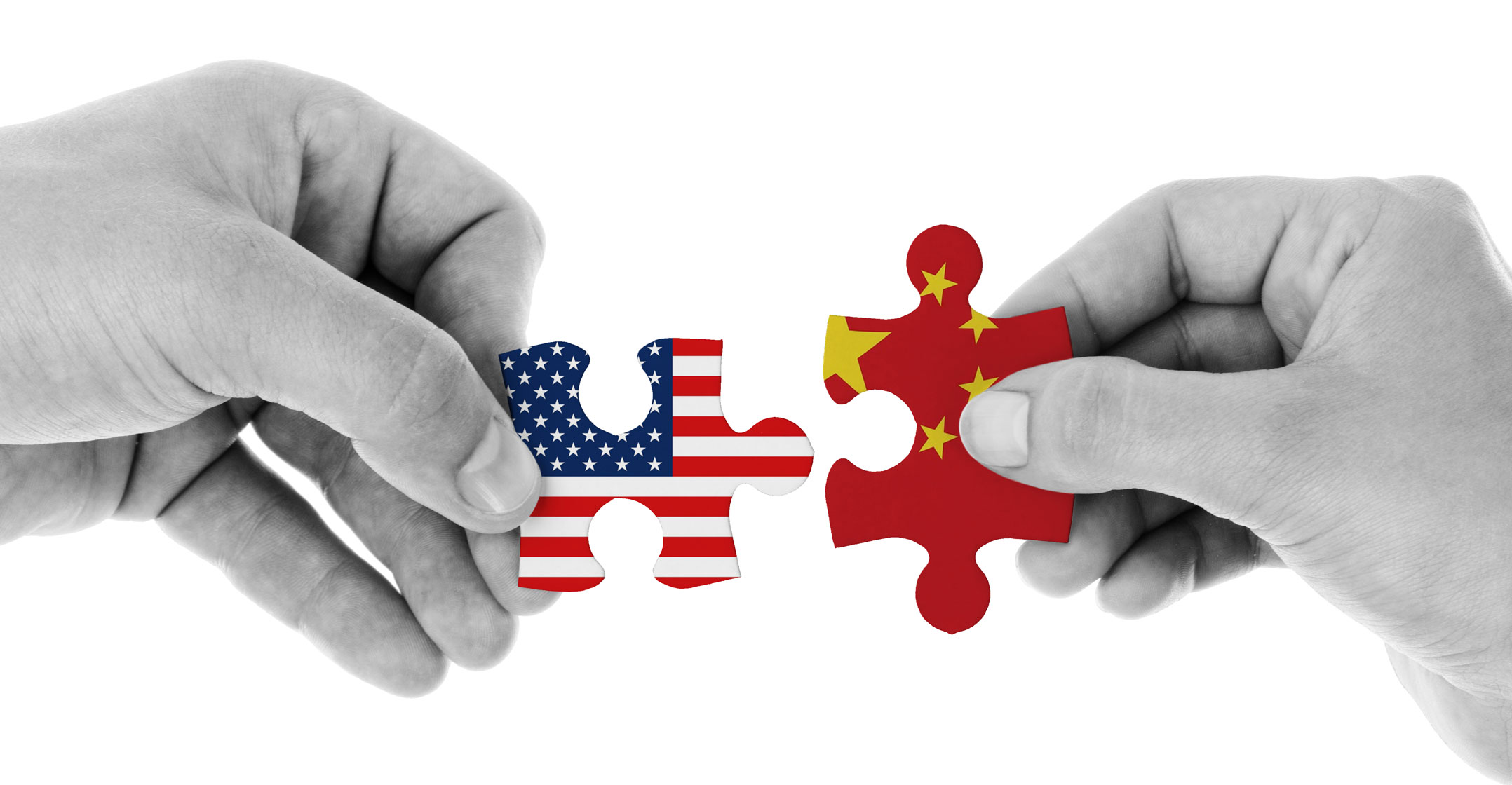
    It’s also based on a sense that China has essentially forced the US to start breaking off elements of business and technology relations in a pattern known as decoupling. China has essentially erected its own Internet infrastructure, barring many US media outlets and social networks such as Twitter and Facebook, and has shown a willingness to use the size of its market and its economic might as a weapon to make other nations fall into line.

    One irony of the state of US-China relations is that for all the traditional hand-wringing in the US about capitalism versus communism, there’s increasing bipartisan support in Washington for a bigger government role in providing incentives and investments in companies.

    “In order to compete we’re going to have to change the way we play the game,” said Elizabeth Economy, a senior fellow at Stanford University’s Hoover Institution. “China’s not going to adapt to the rules of the road as we structured them so we have to adapt.”  — Reported by Nick Wadhams, (c) 2021 Bloomberg LP



    Donald Trump Huawei Joe Biden top Xi Jinping
    WhatsApp YouTube Follow on Google News Add as preferred source on Google
    Share. Facebook Twitter LinkedIn WhatsApp Telegram Email Copy Link
    Previous ArticleWhy telcos need to become ‘techcos’
    Next Article Microsoft steps up push to bring VR and AR to the masses

    Related Posts

    Huawei turns 25 in South Africa, celebrates with major device discounts

    Huawei turns 25 in South Africa, celebrates with major device discounts

    30 January 2026
    Taiwan, US strike strategic AI and chip supply-chain pact - TSMC

    Taiwan, US strike strategic AI and chip supply-chain pact

    20 January 2026
    Nvidia's next AI chips are in full production - Jensen Huang

    Nvidia’s next AI chips are in full production

    6 January 2026
    Company News
    The skills gap is a thinking gap: why South African employers can't find problem solvers

    The skills gap is a thinking gap: why SA employers can’t find problem solvers

    6 February 2026
    Vox Kiwi Wireless: fibre-like broadband for South African homes

    Vox Kiwi Wireless: fibre-like broadband for South African homes

    5 February 2026
    NEC XON achieves an African first with full Fortinet accreditation - Ian Kruger

    NEC XON achieves an African first with full Fortinet accreditation

    5 February 2026
    Opinion
    South Africa's skills advantage is being overlooked at home - Richard Firth

    South Africa’s skills advantage is being overlooked at home

    29 January 2026
    Why Elon Musk's Starlink is a 'hard no' for me - Songezo Zibi

    Why Elon Musk’s Starlink is a ‘hard no’ for me

    26 January 2026
    South Africa's new fibre broadband battle - Duncan McLeod

    South Africa’s new fibre broadband battle

    20 January 2026

    Subscribe to Updates

    Get the best South African technology news and analysis delivered to your e-mail inbox every morning.

    Latest Posts
    South Africa's stablecoin silence is becoming a policy failure

    South Africa’s stablecoin silence is becoming a policy failure

    6 February 2026
    Every electric car you can buy in South Africa in early 2026, ranked by price

    Every electric car you can buy in South Africa in early 2026, ranked by price

    6 February 2026
    From stocks to crypto, markets reel as AI doubts grow

    From stocks to crypto, markets reel as AI doubts grow

    6 February 2026
    South Africa deepens China ties as US trade tensions escalate

    South Africa deepens China ties as US trade tensions escalate

    6 February 2026
    © 2009 - 2026 NewsCentral Media
    • Cookie policy (ZA)
    • TechCentral – privacy and Popia

    Type above and press Enter to search. Press Esc to cancel.

    Manage consent

    TechCentral uses cookies to enhance its offerings. Consenting to these technologies allows us to serve you better. Not consenting or withdrawing consent may adversely affect certain features and functions of the website.

    Functional Always active
    The technical storage or access is strictly necessary for the legitimate purpose of enabling the use of a specific service explicitly requested by the subscriber or user, or for the sole purpose of carrying out the transmission of a communication over an electronic communications network.
    Preferences
    The technical storage or access is necessary for the legitimate purpose of storing preferences that are not requested by the subscriber or user.
    Statistics
    The technical storage or access that is used exclusively for statistical purposes. The technical storage or access that is used exclusively for anonymous statistical purposes. Without a subpoena, voluntary compliance on the part of your Internet Service Provider, or additional records from a third party, information stored or retrieved for this purpose alone cannot usually be used to identify you.
    Marketing
    The technical storage or access is required to create user profiles to send advertising, or to track the user on a website or across several websites for similar marketing purposes.
    • Manage options
    • Manage services
    • Manage {vendor_count} vendors
    • Read more about these purposes
    View preferences
    • {title}
    • {title}
    • {title}