Close Menu
TechCentralTechCentral

    Subscribe to the newsletter

    Get the best South African technology news and analysis delivered to your e-mail inbox every morning.

    Facebook X (Twitter) YouTube LinkedIn
    WhatsApp Facebook X (Twitter) LinkedIn YouTube
    TechCentralTechCentral
    • News
      Cell C cleans up its balance sheet but faces tough trading reality

      Cell C cleans up its balance sheet but faces tough trading reality

      13 February 2026
      MVNO business shines in Cell C's first post-listing results - Jorges Mendes

      MVNO business shines in Cell C’s first post-listing results

      13 February 2026
      Ramaphosa presses ahead with Eskom break-up - Cyril Ramaphosa

      Ramaphosa presses ahead with Eskom break-up

      13 February 2026
      The key technology takeaways from Ramaphosa's 2026 Sona - Cyril Ramaphosa

      The key technology takeaways from Ramaphosa’s 2026 Sona

      13 February 2026
      Toyota SA CEO: NEV inaction will cost South Africa its motoring industry - Andrew Kirby

      Toyota SA CEO: NEV inaction will cost South Africa its motoring industry

      12 February 2026
    • World
      Russia bans WhatsApp

      Russia bans WhatsApp

      12 February 2026
      EU regulators take aim at WhatsApp

      EU regulators take aim at WhatsApp

      9 February 2026
      Musk hits brakes on Mars mission

      Musk hits brakes on Mars mission

      9 February 2026
      Crypto firm accidentally sends R700-billion in bitcoin to its users

      Crypto firm accidentally sends R700-billion in bitcoin to its users

      8 February 2026
      AI won't replace software, says Nvidia CEO amid market rout - Jensen Huang

      AI won’t replace software, says Nvidia CEO amid market rout

      4 February 2026
    • In-depth
      How liberalisation is rewiring South Africa's power sector

      How liberalisation is rewiring South Africa’s power sector

      21 January 2026
      The top-performing South African tech shares of 2025

      The top-performing South African tech shares of 2025

      12 January 2026
      Digital authoritarianism grows as African states normalise internet blackouts

      Digital authoritarianism grows as African states normalise internet blackouts

      19 December 2025
      TechCentral's South African Newsmakers of 2025

      TechCentral’s South African Newsmakers of 2025

      18 December 2025
      Black Friday goes digital in South Africa as online spending surges to record high

      Black Friday goes digital in South Africa as online spending surges to record high

      4 December 2025
    • TCS
      Watts & Wheels S1E4: 'We drive an electric Uber'

      Watts & Wheels S1E4: ‘We drive an electric Uber’

      10 February 2026
      TCS+ | How Cloud On Demand is helping SA businesses succeed in the cloud - Xhenia Rhode, Dion Kalicharan

      TCS+ | Cloud On Demand and Consnet: inside a real-world AWS partner success story

      30 January 2026
      Watts & Wheels S1E4: 'We drive an electric Uber'

      Watts & Wheels S1E3: ‘BYD’s Corolla Cross challenger’

      30 January 2026
      Watts & Wheels S1E4: 'We drive an electric Uber'

      Watts & Wheels S1E2: ‘China attacks, BMW digs in, Toyota’s sublime supercar’

      23 January 2026

      TCS+ | Why cybersecurity is becoming a competitive advantage for SA businesses

      20 January 2026
    • Opinion
      A million reasons monopolies don't work - Duncan McLeod

      A million reasons monopolies don’t work

      10 February 2026
      Eskom unbundling U-turn threatens to undo hard-won electricity gains - Busi Mavuso

      Eskom unbundling U-turn threatens to undo hard-won electricity gains

      9 February 2026
      South Africa's skills advantage is being overlooked at home - Richard Firth

      South Africa’s skills advantage is being overlooked at home

      29 January 2026
      Why Elon Musk's Starlink is a 'hard no' for me - Songezo Zibi

      Why Elon Musk’s Starlink is a ‘hard no’ for me

      26 January 2026
      A million reasons monopolies don't work - Duncan McLeod

      South Africa’s new fibre broadband battle

      20 January 2026
    • Company Hubs
      • Africa Data Centres
      • AfriGIS
      • Altron Digital Business
      • Altron Document Solutions
      • Altron Group
      • Arctic Wolf
      • AvertITD
      • Braintree
      • CallMiner
      • CambriLearn
      • CYBER1 Solutions
      • Digicloud Africa
      • Digimune
      • Domains.co.za
      • ESET
      • Euphoria Telecom
      • Incredible Business
      • iONLINE
      • IQbusiness
      • Iris Network Systems
      • LSD Open
      • Mitel
      • NEC XON
      • Netstar
      • Network Platforms
      • Next DLP
      • Ovations
      • Paracon
      • Paratus
      • Q-KON
      • SevenC
      • SkyWire
      • Solid8 Technologies
      • Telit Cinterion
      • Tenable
      • Vertiv
      • Videri Digital
      • Vodacom Business
      • Wipro
      • Workday
      • XLink
    • Sections
      • AI and machine learning
      • Banking
      • Broadcasting and Media
      • Cloud services
      • Contact centres and CX
      • Cryptocurrencies
      • Education and skills
      • Electronics and hardware
      • Energy and sustainability
      • Enterprise software
      • Financial services
      • Information security
      • Internet and connectivity
      • Internet of Things
      • Investment
      • IT services
      • Lifestyle
      • Motoring
      • Public sector
      • Retail and e-commerce
      • Satellite communications
      • Science
      • SMEs and start-ups
      • Social media
      • Talent and leadership
      • Telecoms
    • Events
    • Advertise
    TechCentralTechCentral
    Home » World » Chinese economy at risk of deeper slowdown than many realise

    Chinese economy at risk of deeper slowdown than many realise

    By Agency Staff25 October 2021
    Twitter LinkedIn Facebook WhatsApp Email Telegram Copy Link
    News Alerts
    WhatsApp

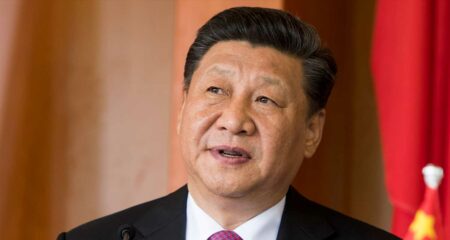
    China’s economy risks slowing faster than investors realise as President Xi Jinping’s push to cut its reliance on real estate and regulate sectors from education to technology combine with a power shortage and the pandemic.

    Bank of America and Citigroup are among those sounding the warning that expansion will fall short this year of the 8.2% anticipated by the consensus of economists. The slump could last into next year, forcing growth below 5%, they warn. Outside 2020’s 2.3%, that would be the weakest in three decades.

    Strategists at Bank of America muse that Xi may even be embracing a once-in-two decades restructuring of the economy akin to Deng Xiaoping’s modernisations of the late-1970s and Zhu Rongji’s revamping of state-enterprises and finance in the 1990s.

    Among those at risk from less investment in China are commodity exporters such as South Africa

    “If so, the data flow from China could confound even the pessimists, and we are on guard for that scenario unfolding,” the strategists, led by Ajay Kapur, told clients in a report last week, in which they predicted growth of 7.7% this year and 4% in 2022.

    Beijing is determined to shift its economic model from its boom years, in which the country loaded up on debt and propelled itself to become the second largest economy.

    Xi is now overseeing a plan to stabilise debt growth — in order to ease financial risks — curb inequality and channel financial resources into hi-tech manufacturing to counter the threat of technology restrictions from the US.

    Data released last week already showed a sharp slowdown in growth to 4.9% in the third quarter from 7.9% in the previous quarter, with more pain likely to come as electricity shortages persist.

    Slower than expected

    Even before the pandemic hit, China was surprising economists with slower-than-expected growth caused by Beijing’s resolve to ease debt risks, which meant it avoided broad stimulus even as the US-China trade war threatened expansion.

    After modest easing to cushion the worst effects of the coronavirus, its debt-control policy resumed, with real estate companies such as China Evergrande Group feeling the biggest impact.

    Xi also set about seeking to reshape the consumer technology, private tutoring and real estate sectors, with officials arguing they represent a wasteful use of the country’s limited resources. Officials have mostly embraced the resulting slowdown.

    China’s Premier Li Keqiang in March announced a growth target of “above 6%” for the year. While analysts saw this as a signal that Beijing was prioritising other policy goals such as financial stability and environmental protection above economic growth, most at the time saw the target as extremely conservative.
    “I’ve joked that maybe Li Keqiang knew more than we did,” said Bert Hofman, a former director of the World Bank’s China office who now heads the National University of Singapore’s East Asian Institute.

    But Beijing has signalled in recent weeks that it could loosen some policies, telling banks to pick up the pace of mortgage lending even as it repeated vows not to use the property sector as a short-term stimulus.

    Any policy loosening in the next few months will be aimed at “preventing disaster” rather than supporting growth, Hofman said. “As long as growth is above 6%, I think China would feel relatively happy,” he added.

    People’s Bank of China Governor Yi Gang recently said he sees about 8% expansion for this year, and to achieve that, the economy would only need to expand 3.9% in the current quarter, according to calculations from Bloomberg Economics.

    China’s slowdown comes as the global recovery from Covid-19 risks losing momentum.

    For now, even the most pessimistic economists expect growth to come in above 7.5% this year, a relatively rapid rate for an economy the size of China’s

    “When China’s economic engine sputters, growth fizzles the world over,” said Frederic Neumann, co-head of Asian economic research at HSBC Holdings in Hong Kong.

    Among those at risk from less investment in China are commodity exporters such as Australia, South Africa and Brazil. Slower trade could also hit the likes of Malaysia, Singapore and Thailand. The impact could be felt further afield, according to Tuuli McCully, Singapore-based head of Asia-Pacific economics at Scotiabank.

    “Countries such as Chile and Peru ship significant amounts of commodities to China and will feel the impact of weaker real estate and other fixed asset investment activity in China,” she said.

    Financial market spillovers may be more contained given the 18% peak to trough correction in China’s CSI 300 Index this year did not spark global contagion, said Alvin Tan, head of Asia foreign-exchange strategy at Royal Bank of Canada in Hong Kong. One possible upside from a cooling Chinese economy is that it could alleviate global inflation pressures, Tan said.

    ‘Decidedly negative’

    “Nonetheless, the net impact is decidedly negative for a world that is still recovering from the pandemic,” Tan said.

    For now, even the most pessimistic economists expect growth to come in above 7.5% this year, a relatively rapid rate for an economy the size of China’s. Beijing has set a goal of doubling GDP from 2020 levels by 2035, which implies annual growth of around 5%. That may prove to be a floor for policy makers.

    China could see real estate investment fall 10% in the first half of next year and still achieve 5% annual growth as its credit cycle is close to its bottom and fiscal policy could pick up ahead of a crucial Communist Party congress in the northern hemisphere autumn, said Bo Zhuang, China economist at Loomis Sayles Investments Asia.

    He predicts Beijing could set a growth target around 5.5% for next year.

    Still, the recent weakness when combined with concerns over Evergrande is prompting analysts to wonder if they remain too sanguine on near-term prospects.
    Bank of America’s strategists outlined a “bearish scenario” involving a disorderly adjustment to the real estate market in which property prices fall 10%, cutting sales and deterring banks from lending to the sector. In that scenario, growth could reach as low as 7.5% this year and 2.2% in 2022.

    The other risk is that China’s policy makers may struggle to flick the switch back to growth mode if they feel that’s needed. Citigroup economists led by Xiangrong Yu noted that the electricity shortages that are crimping industrial production will make it harder to cushion growth by boosting investment in infrastructure. That kind of policy could only work next year once the power crunch eases, they said.

    Local governments are also struggling to find viable projects to invest in while property developers’ tight financing has slowed their land purchases, threatening to undermine a US$1-trillion revenue source for local governments.

    “Property and energy problems will continue to affect growth in the fourth quarter,” said Houze Song, a China economy researcher at US think-tank, the Paulson Institute. It “seems likely that full year growth will end below 8%.”  — Reported by Tom Hancock and Enda Curran, (c) 2021 Bloomberg LP



    Xi Jinping
    WhatsApp YouTube Follow on Google News Add as preferred source on Google
    Share. Facebook Twitter LinkedIn WhatsApp Telegram Email Copy Link
    Previous ArticleShiba inu falls from record after Musk says he doesn’t own any
    Next Article PayPal denies it’s in talks to buy Pinterest

    Related Posts

    China flaunts the future of war

    China flaunts the future of war

    11 September 2025
    China pushes US to loosen AI chip curbs - Xi Jinping

    China pushes US to loosen AI chip curbs

    11 August 2025
    US offensive against China risks faster technological decoupling

    Latest US offensive against China risks faster technological decoupling

    8 January 2025
    Company News
    Cell C delivers maiden results with growth momentum, financial flexibility - Jorges Mendes

    Cell C delivers maiden results with growth momentum, financial flexibility

    13 February 2026
    Start-up king joins Paratus Rwanda - Innocent Mutimura

    Start-up king joins Paratus Rwanda

    13 February 2026
    How NEC XON tackled identity risk for a major telco - Michael de Neuilly Rice

    How NEC XON tackled identity risk for a major telco

    11 February 2026
    Opinion
    A million reasons monopolies don't work - Duncan McLeod

    A million reasons monopolies don’t work

    10 February 2026
    Eskom unbundling U-turn threatens to undo hard-won electricity gains - Busi Mavuso

    Eskom unbundling U-turn threatens to undo hard-won electricity gains

    9 February 2026
    South Africa's skills advantage is being overlooked at home - Richard Firth

    South Africa’s skills advantage is being overlooked at home

    29 January 2026

    Subscribe to Updates

    Get the best South African technology news and analysis delivered to your e-mail inbox every morning.

    Latest Posts
    Cell C cleans up its balance sheet but faces tough trading reality

    Cell C cleans up its balance sheet but faces tough trading reality

    13 February 2026
    MVNO business shines in Cell C's first post-listing results - Jorges Mendes

    MVNO business shines in Cell C’s first post-listing results

    13 February 2026
    Ramaphosa presses ahead with Eskom break-up - Cyril Ramaphosa

    Ramaphosa presses ahead with Eskom break-up

    13 February 2026
    The key technology takeaways from Ramaphosa's 2026 Sona - Cyril Ramaphosa

    The key technology takeaways from Ramaphosa’s 2026 Sona

    13 February 2026
    © 2009 - 2026 NewsCentral Media
    • Cookie policy (ZA)
    • TechCentral – privacy and Popia

    Type above and press Enter to search. Press Esc to cancel.

    Manage consent

    TechCentral uses cookies to enhance its offerings. Consenting to these technologies allows us to serve you better. Not consenting or withdrawing consent may adversely affect certain features and functions of the website.

    Functional Always active
    The technical storage or access is strictly necessary for the legitimate purpose of enabling the use of a specific service explicitly requested by the subscriber or user, or for the sole purpose of carrying out the transmission of a communication over an electronic communications network.
    Preferences
    The technical storage or access is necessary for the legitimate purpose of storing preferences that are not requested by the subscriber or user.
    Statistics
    The technical storage or access that is used exclusively for statistical purposes. The technical storage or access that is used exclusively for anonymous statistical purposes. Without a subpoena, voluntary compliance on the part of your Internet Service Provider, or additional records from a third party, information stored or retrieved for this purpose alone cannot usually be used to identify you.
    Marketing
    The technical storage or access is required to create user profiles to send advertising, or to track the user on a website or across several websites for similar marketing purposes.
    • Manage options
    • Manage services
    • Manage {vendor_count} vendors
    • Read more about these purposes
    View preferences
    • {title}
    • {title}
    • {title}