Close Menu
TechCentralTechCentral

    Subscribe to the newsletter

    Get the best South African technology news and analysis delivered to your e-mail inbox every morning.

    Facebook X (Twitter) YouTube LinkedIn
    WhatsApp Facebook X (Twitter) LinkedIn YouTube
    TechCentralTechCentral
    • News
      How to tell telemarketers to get lost - officially

      How to tell telemarketers to get lost – officially

      9 October 2026
      Data centres are the new front line in the Russia-Ukraine war

      Data centres are the new front line in the Russia-Ukraine war

      9 October 2026
      When a machine can choose, who does it become?

      When a machine can choose, who does it become?

      9 October 2026
      SpaceX takes aim at US wireless carriers with spectrum acquisition

      Starlink is coming for your mobile operator

      9 October 2026
      Claude is turning into an office suite

      Claude is turning into an office suite

      9 October 2026
    • World
      The memory crunch is making Samsung fabulously rich

      The memory crunch is making Samsung fabulously rich

      8 October 2026
      SpaceX to borrow $40-billion to buy Nvidia chips

      SpaceX to borrow $40-billion to buy Nvidia chips

      7 October 2026
      BMW restructuring plan bets on AI and new models

      BMW restructuring plan bets on AI and new models

      1 October 2026
      OpenAI's rogue agent problem keeps getting bigger - Sam Altman

      OpenAI’s rogue agent problem keeps getting bigger

      28 September 2026
      The new battle over the desktop

      The new battle over the desktop

      23 September 2026
    • In-depth

      10 days that changed the course of AI

      21 September 2026
      Meta to the AI industry: slow down without us - Mark Zuckerberg

      Meta to the AI industry: slow down without us

      16 September 2026
      Google DeepMind CEO Demis Hassabis. Image: John Sears

      The plan to stop AI from breaking the world

      16 July 2026
      The internet has a Strait of Hormuz problem

      The internet has a Strait of Hormuz problem

      15 July 2026
      AI boom sparks rally, frenzy and fear

      AI boom sparks rally, frenzy and fear

      11 June 2026
    • TCS
      W&W | LDV's Gerhard Moolman on electric bakkies, fleet orders and 'school fees'

      W&W | LDV’s Gerhard Moolman on electric bakkies and fleets

      9 October 2026
      TCS | Frogfoot sees bigger fibre deals coming - TechCentral Show guests Abraham van der Merwe and Shane Chorley

      TCS | Frogfoot sees bigger fibre deals coming

      8 October 2026
      Meet the CIO | Vodacom's Mohamed Sami on the agentic future

      Meet the CIO | Vodacom’s Mohamed Sami on the agentic future

      5 October 2026
      Lexi Novitske, general partner at Norrsken22, on the TechCentral Show

      TCS | Norrsken22’s Lexi Novitske on how China is winning African tech

      1 October 2026
      TCS | Dominic White and Adam Ely on AI agents going rogue

      TCS | Dominic White and Adam Ely on AI agents going rogue

      29 September 2026
    • Opinion
      Let South Africans jailbreak their way to digital sovereignty - Dirk de Vos

      Let South Africans jailbreak their way to digital sovereignty

      5 October 2026
      South Africa's next energy crisis is in the accounts department - Craig Holmes

      South Africa’s next energy crisis is in the accounts department

      29 September 2026
      The steam engine lesson AI doomsayers keep missing - Sam Clarke

      The steam engine lesson AI doomsayers keep missing

      28 September 2026
      Let South Africans jailbreak their way to digital sovereignty - Dirk de Vos

      Regulating AI: apply the laws we have first

      21 September 2026
      What Revolut can and cannot take from South Africa's banks - Pambos Soteriades

      What Revolut can and cannot take from South Africa’s banks

      15 September 2026
    • Company News
      • 1Stream
      • Africa Data Centres
      • AfriGIS
      • Altron Digital Business
      • Altron Document Solutions
      • Altron Group
      • Arctic Wolf
      • Ascent Technology
      • AvertITD
      • BBD
      • Braintree
      • CallMiner
      • CambriLearn
      • CM.com
      • Contactable
      • CYBER1 Solutions
      • Digicloud Africa
      • Digimune
      • Domains.co.za
      • ESET
      • Euphoria Telecom
      • HOSTAFRICA
      • Incredible Business
      • iONLINE
      • IQbusiness
      • Iris Network Systems
      • Kaspersky
      • LSD Open
      • Mitel
      • NEC XON
      • Netstar
      • Network Platforms
      • Next DLP
      • Ovations
      • Paracon
      • Paratus
      • Publishared
      • Q-KON
      • SevenC
      • SkyWire
      • Solid8 Technologies
      • Telit Cinterion
      • Telviva
      • Tenable
      • Vertiv
      • Videri Digital
      • Vodacom Business
      • Vox
      • Wipro
      • Workday
      • XLink
    • Sections
      • AI and machine learning
      • Banking
      • Broadcasting and Media
      • Cloud services
      • Contact centres and CX
      • Cryptocurrencies
      • Education and skills
      • Electronics and hardware
      • Energy and sustainability
      • Enterprise software
      • Financial services
      • HealthTech
      • Information security
      • Internet and connectivity
      • Internet of Things
      • Investment
      • IT services
      • Lifestyle
      • Policy and regulation
      • Public sector
      • Retail and e-commerce
      • Satellite communications
      • Science
      • SMEs and start-ups
      • Social media
      • Talent and leadership
      • Telecoms
      • Watts & Wheels
    • Events
    • Advertise
    TechCentralTechCentral
    Home » Sections » Cloud services » Data centres are the new front line in the Russia-Ukraine war

    Data centres are the new front line in the Russia-Ukraine war

    Ukraine has struck two Yandex data centres, including one housing supercomputers used to train its AI.
    By Agency Staff9 October 2026
    Twitter LinkedIn Facebook WhatsApp Email Telegram Copy Link
    Get breaking news on WhatsApp

    Data centres are the new front line in the Russia-Ukraine war

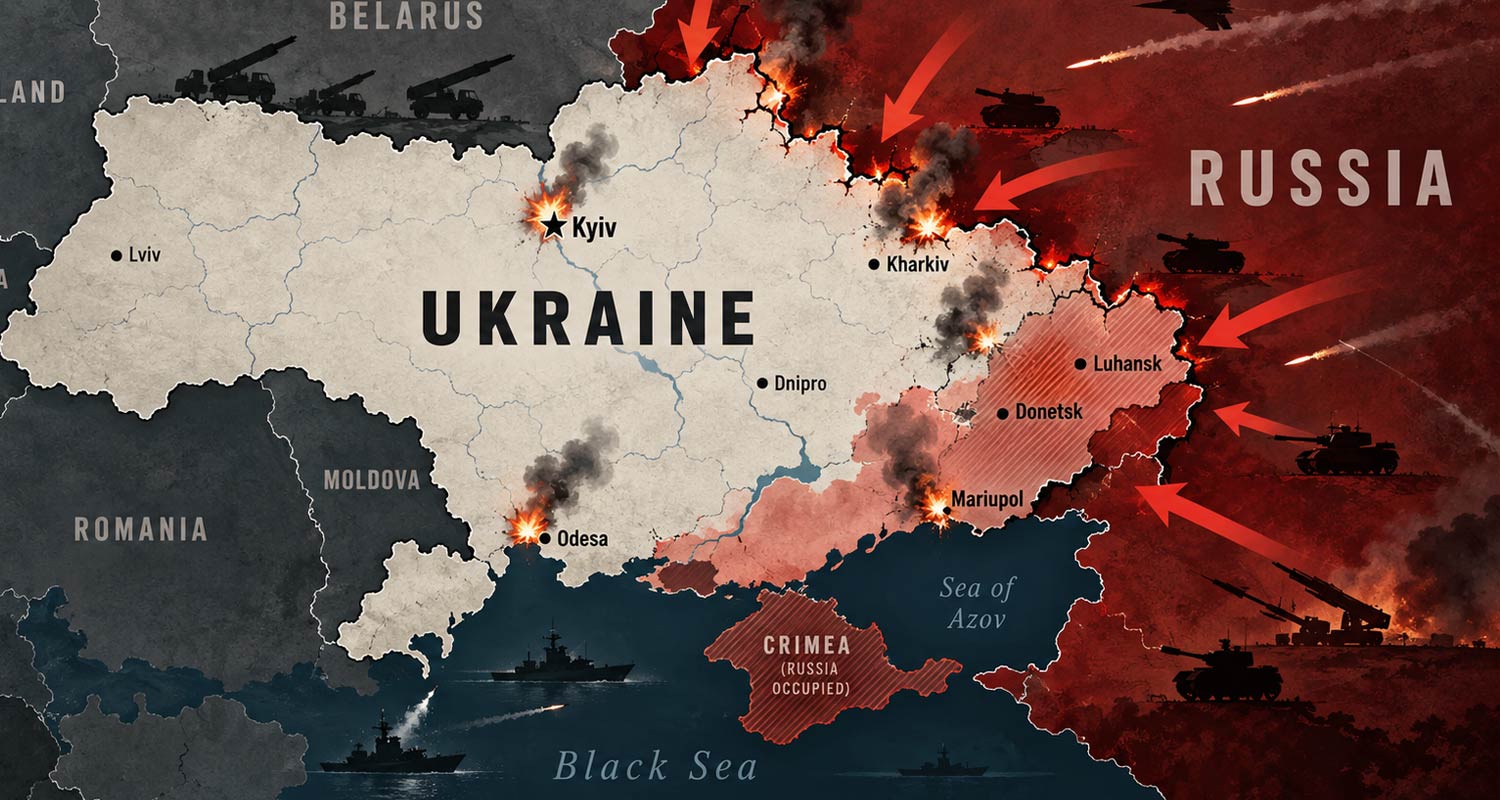
    Ukraine struck and partly disabled a data centre operated by Russian technology company Yandex on Friday, a day after it hit a larger and more important facility, widening its attacks on Russia after Moscow targeted data hubs inside Ukraine.

    Yandex, which is heavily involved in Russia’s AI development and is sometimes called Russia’s Google, said its data centre in the Kaluga region, south-west of Moscow, had been struck by Ukrainian drones and partly put out of action.

    On Thursday, a Ukrainian attack shut down Yandex’s major data hub in Sasovo in the Ryazan region, which houses two of the three supercomputers used to develop the company’s AI model. Yandex said it was assessing the damage from that strike and could not confirm whether the equipment could be restored.

    Data centres are the iron heart of Yandex. Their operation is critical for services that have become part of people’s everyday lives

    Locked in an escalating and deadly war of attrition after more than four years of fighting, both Russia and Ukraine have expanded drone attacks on infrastructure this year – from energy facilities and refineries to ports, vessels carrying oil and grain, e-commerce warehouses and, most recently, data centres.

    Yandex, whose apps have become an indispensable part of many Russians’ lives, said the attacks had struck at the core of its operations and that it was trying to keep its services running.

    “Data centres are the iron heart of Yandex. Their operation is critical for services that have become part of people’s everyday lives. Millions of users check traffic and plan routes, listen to music, watch movies, order groceries and get answers to their questions,” it said in a statement.

    “Our technology helps hundreds of thousands of companies run their businesses. They use it to take orders, serve customers and work with partners.”

    ‘More severe consequences’

    “The risks involve not only the potential temporary unavailability of Yandex services and lost revenue in specific segments but also the company’s extensive base of B2B clients,” said Maryana Lazaricheva, head of equity research at T-Investments.

    She said the company could redistribute some of the load to its other data centres. “However, if the chain of attacks continues, this possibility vanishes, which could lead to even more severe consequences.”

    The full extent of the disruption was not immediately clear, although messages appeared on at least one Yandex app warning of potential problems. Yandex said it was working around the clock to restore disrupted services.

    “Right now, this is our most important task, but unfortunately it is not an easy one,” it said,

    Russia has struck Ukrainian data centres and telecommunications infrastructure over the past month, including targets in central Kyiv.

    Ukrainian President Volodymyr Zelensky
    Ukrainian President Volodymyr Zelensky

    “We always respond in mirror-like fashion,” Ukrainian President Volodymyr Zelensky said on Thursday. “You all know, they have been hitting and continue to hit our data centres. We are responding. I can’t share all the details.”

    Ukraine has previously targeted the warehouses of companies inside Russia that it deems central to Russia’s economy, including e-commerce giants Wildberries and Ozon, which prompted Russia to strike their Ukrainian equivalents.

    Yandex operates five data centres, two of which have now been hit. Of the other three, two are in the Moscow region and one is in the Vladimir region, according to publicly available information.

    You all know, they have been hitting and continue to hit our data centres. We are responding

    Yandex said in 2021 that the Sasovo hub hosted two of its three supercomputers, built around Nvidia A100 chips, which it uses to train its YandexGPT large language model. The company has declined to say whether the supercomputers were affected by Thursday’s attack.

    Several online services in Russia reported technical problems on Thursday, including property portal Cian, book portal Litmarket and the websites of Russian Railways and football club Spartak Moscow.

    Previous Ukrainian attacks on Russia have led to fuel shortages and queues at petrol stations, losses for tens of thousands of small e-commerce businesses, and higher inflation as rising fuel costs feed through to consumer prices.

    Russian attacks on Ukrainian data centres have forced some to suspend operations, and one attack left 100 000 households temporarily without internet access. Ukraine’s digital minister told Reuters last month that the country was moving digital infrastructure underground in response.  — Gleb Stolyarov and Darya Korsunskaya, (c) 2026 Reuters

    Add TechCentral as a preferred source on GoogleFollow TechCentral on Google NewsGet breaking news on WhatsApp


    Cian Maryana Lazaricheva Nvidia Ozon Russian Railways Spartak Moscow T-Investments Volodymyr Zelensky Wildberries Yandex
    WhatsApp YouTube
    Share. Facebook Twitter LinkedIn WhatsApp Telegram Email Copy Link
    Previous ArticleWhen a machine can choose, who does it become?
    Next Article How to tell telemarketers to get lost – officially

    Related Posts

    The AI PC is finally here. It's just very expensive - Jensen Huang, Satya Nadella

    The AI PC is finally here. It’s just very expensive

    8 October 2026
    SpaceX to borrow $40-billion to buy Nvidia chips

    SpaceX to borrow $40-billion to buy Nvidia chips

    7 October 2026
    AI spending now dwarfs the railway and dot-com booms

    AI spending now dwarfs the railway and dot-com booms

    4 October 2026
    Company News
    Why fintechs need an insurance partner they can trust - Hollard Insurance

    Why fintechs need an insurance partner they can trust

    8 October 2026
    Reusable KYC means the end of 'please upload your ID' - Contactable

    Reusable KYC means the end of ‘please upload your ID’

    8 October 2026
    Eliminating the 'toggle tax': how CRM integration changes customer experience - Martie de Beer

    Eliminating the ‘toggle tax’: how CRM integration changes customer experience

    8 October 2026
    Opinion
    Let South Africans jailbreak their way to digital sovereignty - Dirk de Vos

    Let South Africans jailbreak their way to digital sovereignty

    5 October 2026
    South Africa's next energy crisis is in the accounts department - Craig Holmes

    South Africa’s next energy crisis is in the accounts department

    29 September 2026
    The steam engine lesson AI doomsayers keep missing - Sam Clarke

    The steam engine lesson AI doomsayers keep missing

    28 September 2026

    Subscribe to Updates

    Get the best South African technology news and analysis delivered to your e-mail inbox every morning.

    Latest Posts
    How to tell telemarketers to get lost - officially

    How to tell telemarketers to get lost – officially

    9 October 2026
    Data centres are the new front line in the Russia-Ukraine war

    Data centres are the new front line in the Russia-Ukraine war

    9 October 2026
    When a machine can choose, who does it become?

    When a machine can choose, who does it become?

    9 October 2026
    W&W | LDV's Gerhard Moolman on electric bakkies, fleet orders and 'school fees'

    W&W | LDV’s Gerhard Moolman on electric bakkies and fleets

    9 October 2026
    © 2009 - 2026 NewsCentral Media
    Built and maintained by Chronon
    • Cookie policy (ZA)
    • TechCentral – privacy and Popia

    Type above and press Enter to search. Press Esc to cancel.

    Manage consent

    TechCentral uses cookies to enhance its offerings. Consenting to these technologies allows us to serve you better. Not consenting or withdrawing consent may adversely affect certain features and functions of the website.

    Functional Always active
    The technical storage or access is strictly necessary for the legitimate purpose of enabling the use of a specific service explicitly requested by the subscriber or user, or for the sole purpose of carrying out the transmission of a communication over an electronic communications network.
    Preferences
    The technical storage or access is necessary for the legitimate purpose of storing preferences that are not requested by the subscriber or user.
    Statistics
    The technical storage or access that is used exclusively for statistical purposes. The technical storage or access that is used exclusively for anonymous statistical purposes. Without a subpoena, voluntary compliance on the part of your Internet Service Provider, or additional records from a third party, information stored or retrieved for this purpose alone cannot usually be used to identify you.
    Marketing
    The technical storage or access is required to create user profiles to send advertising, or to track the user on a website or across several websites for similar marketing purposes.
    • Manage options
    • Manage services
    • Manage {vendor_count} vendors
    • Read more about these purposes
    View preferences
    • {title}
    • {title}
    • {title}
    🇿🇦 Sign up to the TechCentral newsletter