Close Menu
TechCentralTechCentral

    Subscribe to the newsletter

    Get the best South African technology news and analysis delivered to your e-mail inbox every morning.

    Facebook X (Twitter) YouTube LinkedIn
    WhatsApp Facebook X (Twitter) LinkedIn YouTube
    TechCentralTechCentral
    • News
      Big Microsoft 365 price increases coming next year

      Big Microsoft price increases coming next year

      5 December 2025
      Vodacom to take control of Safaricom in R36-billion deal - Shameel Joosub

      Vodacom to take control of Safaricom in R36-billion deal

      4 December 2025
      Black Friday goes digital in South Africa as online spending surges to record high

      Black Friday goes digital in South Africa as online spending surges to record high

      4 December 2025
      BYD takes direct aim at Toyota with launch of sub-R500 000 Sealion 5 PHEV

      BYD takes direct aim at Toyota with launch of sub-R500 000 Sealion 5 PHEV

      4 December 2025
      'Get it now': Takealot in new instant deliveries pilot

      ‘Get it now’: Takealot in new instant deliveries pilot

      4 December 2025
    • World
      Amazon and Google launch multi-cloud service for faster connectivity

      Amazon and Google launch multi-cloud service for faster connectivity

      1 December 2025
      Google makes final court plea to stop US breakup

      Google makes final court plea to stop US breakup

      21 November 2025
      Bezos unveils monster rocket: New Glenn 9x4 set to dwarf Saturn V

      Bezos unveils monster rocket: New Glenn 9×4 set to dwarf Saturn V

      21 November 2025
      Tech shares turbocharged by Nvidia's stellar earnings

      Tech shares turbocharged by stellar Nvidia earnings

      20 November 2025
      Config file blamed for Cloudflare meltdown that disrupted the web

      Config file blamed for Cloudflare meltdown that disrupted the web

      19 November 2025
    • In-depth
      Jensen Huang Nvidia

      So, will China really win the AI race?

      14 November 2025
      Valve's Linux console takes aim at Microsoft's gaming empire

      Valve’s Linux console takes aim at Microsoft’s gaming empire

      13 November 2025
      iOCO's extraordinary comeback plan - Rhys Summerton

      iOCO’s extraordinary comeback plan

      28 October 2025
      Why smart glasses keep failing - no, it's not the tech - Mark Zuckerberg

      Why smart glasses keep failing – it’s not the tech

      19 October 2025
      BYD to blanket South Africa with megawatt-scale EV charging network - Stella Li

      BYD to blanket South Africa with megawatt-scale EV charging network

      16 October 2025
    • TCS
      TCS+ | How Cloud on Demand helps partners thrive in the AWS ecosystem - Odwa Ndyaluvane and Xenia Rhode

      TCS+ | How Cloud On Demand helps partners thrive in the AWS ecosystem

      4 December 2025
      TCS | MTN Group CEO Ralph Mupita on competition, AI and the future of mobile

      TCS | Ralph Mupita on competition, AI and the future of mobile

      28 November 2025
      TCS | Dominic Cull on fixing South Africa's ICT policy bottlenecks

      TCS | Dominic Cull on fixing South Africa’s ICT policy bottlenecks

      21 November 2025
      TCS | BMW CEO Peter van Binsbergen on the future of South Africa's automotive industry

      TCS | BMW CEO Peter van Binsbergen on the future of South Africa’s automotive industry

      6 November 2025
      TCS | Why Altron is building an AI factory - Bongani Andy Mabaso

      TCS | Why Altron is building an AI factory in Johannesburg

      28 October 2025
    • Opinion
      Your data, your hardware: the DIY AI revolution is coming - Duncan McLeod

      Your data, your hardware: the DIY AI revolution is coming

      20 November 2025
      Zero Carbon Charge founder Joubert Roux

      The energy revolution South Africa can’t afford to miss

      20 November 2025
      It's time for a new approach to government IT spend in South Africa - Richard Firth

      It’s time for a new approach to government IT spend in South Africa

      19 November 2025
      How South Africa's broken Rica system fuels murder and mayhem - Farhad Khan

      How South Africa’s broken Rica system fuels murder and mayhem

      10 November 2025
      South Africa's AI data centre boom risks overloading a fragile grid - Paul Colmer

      South Africa’s AI data centre boom risks overloading a fragile grid

      30 October 2025
    • Company Hubs
      • Africa Data Centres
      • AfriGIS
      • Altron Digital Business
      • Altron Document Solutions
      • Altron Group
      • Arctic Wolf
      • AvertITD
      • Braintree
      • CallMiner
      • CambriLearn
      • CYBER1 Solutions
      • Digicloud Africa
      • Digimune
      • Domains.co.za
      • ESET
      • Euphoria Telecom
      • Incredible Business
      • iONLINE
      • IQbusiness
      • Iris Network Systems
      • LSD Open
      • NEC XON
      • Netstar
      • Network Platforms
      • Next DLP
      • Ovations
      • Paracon
      • Paratus
      • Q-KON
      • SevenC
      • SkyWire
      • Solid8 Technologies
      • Telit Cinterion
      • Tenable
      • Vertiv
      • Videri Digital
      • Vodacom Business
      • Wipro
      • Workday
      • XLink
    • Sections
      • AI and machine learning
      • Banking
      • Broadcasting and Media
      • Cloud services
      • Contact centres and CX
      • Cryptocurrencies
      • Education and skills
      • Electronics and hardware
      • Energy and sustainability
      • Enterprise software
      • Financial services
      • Information security
      • Internet and connectivity
      • Internet of Things
      • Investment
      • IT services
      • Lifestyle
      • Motoring
      • Public sector
      • Retail and e-commerce
      • Satellite communications
      • Science
      • SMEs and start-ups
      • Social media
      • Talent and leadership
      • Telecoms
    • Events
    • Advertise
    TechCentralTechCentral
    Home » Sections » Telecoms » How Huawei landed at the centre of global tech war

    How Huawei landed at the centre of global tech war

    By Agency Staff18 May 2020
    Twitter LinkedIn Facebook WhatsApp Email Telegram Copy Link
    News Alerts
    WhatsApp

    China’s biggest technology firm, Huawei, has risen to global prominence as a leader in 5G, the much ballyhooed, next-generation wireless technology. It’s also become a major target for the US as China’s technological prowess has grown along with its ambitions.

    The US has been trying to convince its allies — including Canada and Germany — to ban Huawei equipment from their networks on worries about spying. So far only a handful have joined the boycott; the UK refused. The Trump administration also moved to further curtail Huawei’s access to vital components by barring any chip maker anywhere using American equipment from supplying Huawei without US government approval. Underlying the wrangling is the question of who will take the lead in the nascent, “everything-connected” era, and who gets left behind.

    1. Why does the US have an issue with Huawei?

    US government officials say Huawei is dangerous in part because it could use its growing share of the telecommunications equipment market to spy for the Chinese government. In 2012, a report by the US house permanent select committee on intelligence tagged Huawei and ZTE as potential security threats. US concerns about Huawei drove the 2018 decision by President Donald Trump to block a hostile takeover bid from Broadcom, based at the time in Singapore, for the US chip maker Communal. The transaction could have curtailed American investments in chip and wireless technologies and handed global leadership in those spheres to Huawei. Such concerns have expanded as carriers prepare to spend billions of dollars on new 5G networks, which will collect data and enable services on an unparalleled scale.

    2. How important is Huawei?

    In just over three decades, it’s grown from an electronics reseller into one of the world’s biggest private companies, with leading positions in telecoms gear, smartphones, cloud computing and cybersecurity, and substantial operations in Asia, Europe and Africa. Huawei generated 850-billion yuan (US$122-billion) in sales in 2019 — more than Boeing. It’s ploughed billions of dollars into 5G and broke into the top 10 recipients of US patents last year. It has helped build 5G networks in more than 10 countries and expects to do the same in another 20 in 2020. US sanctions spooked some Huawei customers and suppliers globally, while Chinese consumers and carriers rallied to its side.
    3. Why is its equipment a security issue?

    The US government — like the Chinese and others — is wary of employing foreign technology in vital communications for fear that manufacturers could install hidden “backdoors” for spies to access sensitive data, or that the companies themselves would hand it over to their home governments. US secretary of state Michael Pompeo has said the US might hold back intelligence-sharing with Nato allies if they use Huawei equipment, a threat met with some scepticism. The 5G networks are of particular concern because they will go beyond making smartphone downloads faster to enable new technologies like self-driving cars and the Internet of things. UK-based carrier Vodafone Group was said to have found and fixed backdoors on Huawei equipment used in its Italian business in 2011 and 2012. While it’s hard to know if the vulnerabilities were nefarious or accidental, the revelation dealt a blow to Huawei’s reputation.

    4. Who’s using Huawei and who’s not?

    Japan and Australia are among a handful of countries that have joined the US boycott, with Vietnam quietly following suit. But Huawei does have plenty of supporters. Its equipment tends to be less expensive than alternatives from Nokia and Ericsson and is often higher quality. The company has won 5G customers in Russia, the Middle East and Southeast Asia, including the Philippines and Thailand. In Malaysia, the prime minister has trumpeted the advantages of Huawei’s gear, saying his country will use “as much as possible”.

    5. What’s going on elsewhere?

    The UK will allow Huawei to help build Britain’s 5G system, though it banned the company from some core parts of the network. Its intelligence agencies reportedly argued that Huawei is a manageable risk. Some companies warn that a full ban would delay the roll-out and cost hundreds of millions of pounds. Norway decided against a ban, leaving the choice to individual companies; so far two have gone with Ericsson. In the European Union, there are signs of a coordinated balancing act. German Chancellor Angela Merkel is grappling with a potential revolt by lawmakers who want to effectively ban Huawei equipment. China’s ambassador to Germany threatened Berlin with retaliation if such a ban were adopted, citing the millions of vehicles German car makers sell in China. Brazil has said it isn’t excluding anyone from bidding. South Africa also has no intention of limiting Huawei’s access to the market.
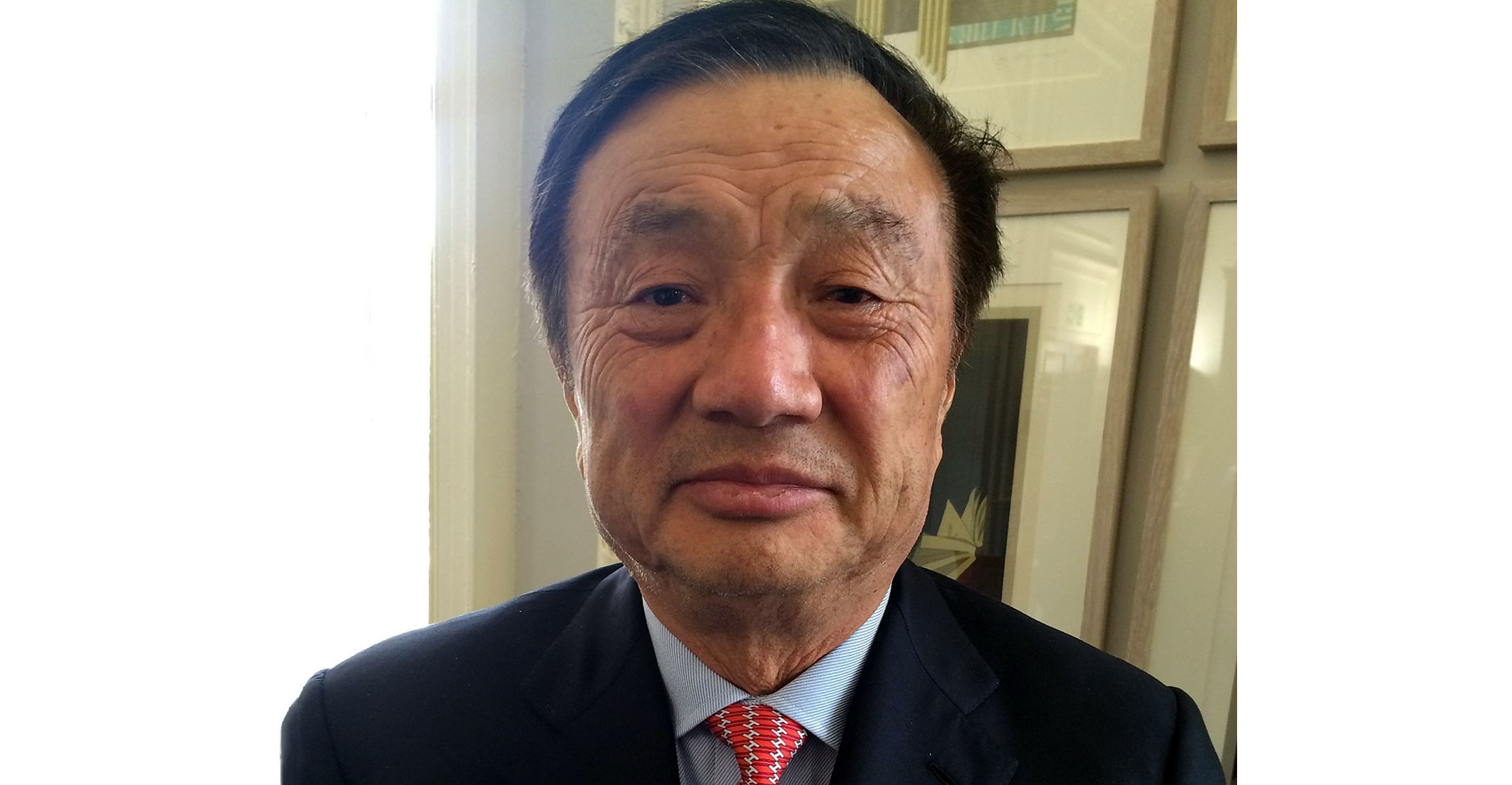
    Huawei founder Ren Zhengfei

    6. What else has the US done?

    The US has moved to curb Huawei’s ability to sell equipment in the US and, more significantly, to buy parts from US suppliers, by adding Huawei to a commerce department blacklist in 2019. Accusing the company of seeking to “undermine” those export controls, the department on 15 May imposed further restrictions on chip makers using American gear in designing or producing semiconductors, meaning suppliers such as Taiwan Semiconductor Manufacturing Co will have to cut off Huawei unless they get a waiver from Washington — or potentially face penalties. The Federal Communications Commission prohibited the use of federal subsidies to buy equipment made by Huawei and ZTE and said it would consider requiring carriers now using the products to remove them.

    7. What’s going on in Canada?

    In December 2018, at the request of the US, Canadian authorities arrested Huawei’s chief financial officer, Meng Wanzhou, who’s also the daughter of the company’s founder, Ren Zhengfei. The US is seeking her extradition as part of a criminal case alleging that she conspired to defraud banks into unwittingly clearing transactions linked to Iran in violation of US sanctions. Both Meng, who is also deputy chairwoman, and the company have denied wrongdoing. Canada is still deciding whether or not to allow Huawei to play a bigger role in developing 5G.

    8. Who else has accused Huawei?

    In 2003, Cisco Systems sued Huawei for allegedly infringing on its patents and illegally copying source code used in routers and switches. Huawei removed the contested code, manuals and command-line interfaces and the case was dropped. Motorola sued in 2010 for allegedly conspiring with former employees to steal trade secrets. That lawsuit was later settled. In 2017, a jury found Huawei liable for stealing robotic technology from T-Mobile US, and on 28 January 2019, the justice department indicted Huawei for theft of trade secrets related to that case. The same month, Poland, a staunch US ally, arrested a Huawei employee on suspicion of spying for the Chinese government. Huawei fired the employee and denied any involvement in his alleged actions.

    Huawei’s P30 Pro smartphone

    9. What does Huawei say?

    That US restrictions are not about cybersecurity but are really designed to safeguard American dominance of global tech. It has repeatedly denied that it helps Beijing spy on other governments or companies. But bracing for continued pressure, it outlined plans to shake up its management ranks as revenue growth slowed. The company, which says it’s owned by Ren as well as its employees through a union, has in recent years begun releasing financial results, spent more on marketing and engaged with foreign media in an effort to boost transparency. Ren has become more outspoken as he fights to save his company. While he said he was proud of his military career and Communist Party membership, he rejected suggestions he was doing Beijing’s bidding or that Huawei handed over customer information. In March 2019, Huawei went on the offensive, filing a lawsuit in federal court against a statute that blocks US government agencies from using its equipment.

    10. Are other Chinese companies feeling the heat?

    Yes. In October, the Trump administration placed eight other Chinese tech giants on its blacklist, accusing them of being implicated in human rights violations against minority Muslims in the country’s Xinjiang region. They included Hikvision and Dahua, which by some accounts control as much as a third of the global market for video surveillance; SenseTime Group, the world’s most valuable artificial intelligence start-up; and fellow AI giant Megvii Technology. ZTE almost collapsed after the US commerce department banned it for three months in 2018 from buying American technology. The US justice department has charged state-owned Fujian Jinhua Integrated Circuit Co, its Taiwanese partner and three individuals with conspiring to steal trade secrets from Micron Technology.  — (c) 2020 Bloomberg LP



    Donald Trump Huawei Meng Wanzhou Ren Zhengfei top
    Subscribe to TechCentral Subscribe to TechCentral
    Share. Facebook Twitter LinkedIn WhatsApp Telegram Email Copy Link
    Previous ArticleMounting criticism of lockdown puts Ramaphosa on the back foot
    Next Article Southstar Drug gets ready for the future with Huawei Wi-Fi 6

    Related Posts

    Huawei makes the season brighter with service offers that truly care

    Huawei makes the season brighter with service offers that truly care

    3 December 2025
    Samsung's first trifold smartphone is here

    Samsung’s first trifold smartphone is here

    2 December 2025
    The AI threat to Cape Town's film industry - Julia Finnis-Bedford

    The AI threat to Cape Town’s film industry

    1 December 2025
    Company News
    AI is not a technology problem - iqbusiness

    AI is not a technology problem – iqbusiness

    5 December 2025
    Telcos are sitting on a data gold mine - but few know what do with it - Phillip du Plessis

    Telcos are sitting on a data gold mine – but few know what do with it

    4 December 2025
    Unlock smarter computing with your surface Copilot+ PC

    Unlock smarter computing with your Surface Copilot+ PC

    4 December 2025
    Opinion
    Your data, your hardware: the DIY AI revolution is coming - Duncan McLeod

    Your data, your hardware: the DIY AI revolution is coming

    20 November 2025
    Zero Carbon Charge founder Joubert Roux

    The energy revolution South Africa can’t afford to miss

    20 November 2025
    It's time for a new approach to government IT spend in South Africa - Richard Firth

    It’s time for a new approach to government IT spend in South Africa

    19 November 2025

    Subscribe to Updates

    Get the best South African technology news and analysis delivered to your e-mail inbox every morning.

    Latest Posts
    Big Microsoft 365 price increases coming next year

    Big Microsoft price increases coming next year

    5 December 2025
    AI is not a technology problem - iqbusiness

    AI is not a technology problem – iqbusiness

    5 December 2025
    Vodacom to take control of Safaricom in R36-billion deal - Shameel Joosub

    Vodacom to take control of Safaricom in R36-billion deal

    4 December 2025
    Black Friday goes digital in South Africa as online spending surges to record high

    Black Friday goes digital in South Africa as online spending surges to record high

    4 December 2025
    © 2009 - 2025 NewsCentral Media
    • Cookie policy (ZA)
    • TechCentral – privacy and Popia

    Type above and press Enter to search. Press Esc to cancel.

    Manage consent

    TechCentral uses cookies to enhance its offerings. Consenting to these technologies allows us to serve you better. Not consenting or withdrawing consent may adversely affect certain features and functions of the website.

    Functional Always active
    The technical storage or access is strictly necessary for the legitimate purpose of enabling the use of a specific service explicitly requested by the subscriber or user, or for the sole purpose of carrying out the transmission of a communication over an electronic communications network.
    Preferences
    The technical storage or access is necessary for the legitimate purpose of storing preferences that are not requested by the subscriber or user.
    Statistics
    The technical storage or access that is used exclusively for statistical purposes. The technical storage or access that is used exclusively for anonymous statistical purposes. Without a subpoena, voluntary compliance on the part of your Internet Service Provider, or additional records from a third party, information stored or retrieved for this purpose alone cannot usually be used to identify you.
    Marketing
    The technical storage or access is required to create user profiles to send advertising, or to track the user on a website or across several websites for similar marketing purposes.
    • Manage options
    • Manage services
    • Manage {vendor_count} vendors
    • Read more about these purposes
    View preferences
    • {title}
    • {title}
    • {title}