Close Menu
TechCentralTechCentral

    Subscribe to the newsletter

    Get the best South African technology news and analysis delivered to your e-mail inbox every morning.

    Facebook X (Twitter) YouTube LinkedIn
    WhatsApp Facebook X (Twitter) LinkedIn YouTube
    TechCentralTechCentral
    • News
      South African IT spending surging as AI boom lands locally

      South African IT spending surging as AI boom lands locally

      29 July 2026
      Radical rethink for South Africa's national AI policy

      Radical rethink for South Africa’s national AI policy

      29 July 2026
      South African tech's compounding debt problem

      South African tech’s compounding debt problem

      29 July 2026
      Russia charges Telegram founder with terrorism - Pavel Durov

      Russia charges Telegram founder with terrorism

      29 July 2026
      Green light for massive new Cape Town data centres

      Green light for massive new Cape Town data centres

      29 July 2026
    • World
      Meta AI will now tell parents if their teen is in crisis

      Meta AI will now tell parents if their teen is in crisis

      17 July 2026
      IBM shares crash 25% as AI upends software spending - Arvind Krishna

      IBM shares crash 25% as AI upends software spending

      15 July 2026
      Jony Ive's first OpenAI device: an AI smart speaker - Jony Ive and Sam Altman

      Jony Ive’s first OpenAI device: an AI smart speaker

      15 July 2026
      Stripe, Advent in talks to buy PayPal for $53-billion

      Stripe, Advent in talks to buy PayPal for $53-billion

      15 July 2026
      Memory crisis sends smartphone market into steep decline

      Memory crisis sends smartphone market into steep decline

      13 July 2026
    • In-depth
      The plan to stop AI from breaking the world - Google DeepMind CEO Demis Hassabis. Image: John Sears

      The plan to stop AI from breaking the world

      16 July 2026
      The internet has a Strait of Hormuz problem

      The internet has a Strait of Hormuz problem

      15 July 2026
      AI boom sparks rally, frenzy and fear

      AI boom sparks rally, frenzy and fear

      11 June 2026
      Every plug-in hybrid on sale in South Africa, ranked by price - Lamborghini Temerario

      Every plug-in hybrid on sale in South Africa, ranked by price

      7 June 2026
      What Wi-Fi 8 will mean for wireless networks

      What Wi-Fi 8 will mean for wireless networks

      1 June 2026
    • TCS
      TCS+ | A smarter approach to cloud for South African businesses - Joel Chacko and Jonathan Oaker

      TCS+ | A smarter approach to cloud for South African businesses

      28 July 2026
      TCS | How Optasia lends billions to people banks can't see - Salvador Anglada

      TCS | How Optasia lends billions to people banks can’t see

      23 July 2026
      The rands-and-cents case for electric trucks - William Kelly Watts & Wheels with Wills

      The rands-and-cents case for electric trucks

      20 July 2026
      Watts & Wheels S1E7: 'Ferrari's EV breaks the internet'

      Watts & Wheels S1E7: ‘Ferrari’s EV breaks the internet’

      8 July 2026
      TCS | Pick n Pay's Enrico Ferigolli on Penny, the AI that shops for you

      TCS | Pick n Pay’s Enrico Ferigolli on Penny, the AI that shops for you

      2 July 2026
    • Opinion
      The author, Jannie van Zyl

      Selling vapour is corporate suicide in slow motion

      16 July 2026
      Brazil's online gambling crackdown is a lesson for South Africa

      How Amazon outmanoeuvred Starlink in South Africa

      15 July 2026
      The Popia problem with agentic AI - Herman Haasbroek

      The Popia problem with agentic AI

      14 July 2026
      The author, Fanie van Rooyen

      South Africa can still catch the AI wave – here’s how

      7 July 2026
      The author, Fanie van Rooyen

      The AI utopia South Africa can’t afford

      1 July 2026
    • Company Hubs
      • 1Stream
      • Africa Data Centres
      • AfriGIS
      • Altron Digital Business
      • Altron Document Solutions
      • Altron Group
      • Arctic Wolf
      • Ascent Technology
      • AvertITD
      • BBD
      • Braintree
      • CallMiner
      • CambriLearn
      • CM Telecom
      • Contactable
      • CYBER1 Solutions
      • Digicloud Africa
      • Digimune
      • Domains.co.za
      • ESET
      • Euphoria Telecom
      • HOSTAFRICA
      • Incredible Business
      • iONLINE
      • IQbusiness
      • Iris Network Systems
      • Kaspersky
      • LSD Open
      • Mitel
      • NEC XON
      • Netstar
      • Network Platforms
      • Next DLP
      • Ovations
      • Paracon
      • Paratus
      • Q-KON
      • SevenC
      • SkyWire
      • Solid8 Technologies
      • Telit Cinterion
      • Telviva
      • Tenable
      • Vertiv
      • Videri Digital
      • Vodacom Business
      • Vox
      • Wipro
      • Workday
      • XLink
    • Sections
      • AI and machine learning
      • Banking
      • Broadcasting and Media
      • Cloud services
      • Contact centres and CX
      • Cryptocurrencies
      • Education and skills
      • Electronics and hardware
      • Energy and sustainability
      • Enterprise software
      • Financial services
      • HealthTech
      • Information security
      • Internet and connectivity
      • Internet of Things
      • Investment
      • IT services
      • Lifestyle
      • Policy and regulation
      • Public sector
      • Retail and e-commerce
      • Satellite communications
      • Science
      • SMEs and start-ups
      • Social media
      • Talent and leadership
      • Telecoms
      • Watts & Wheels
    • Events
    • Advertise
    TechCentralTechCentral
    Home » Sections » AI and machine learning » Nvidia’s next AI chips are in full production

    Nvidia’s next AI chips are in full production

    Nvidia and AMD have unveiled their latest AI chips, promising big performance gains as competition intensifies.
    By Agency Staff6 January 2026
    Twitter LinkedIn Facebook WhatsApp Email Telegram Copy Link
    News Alerts
    WhatsApp
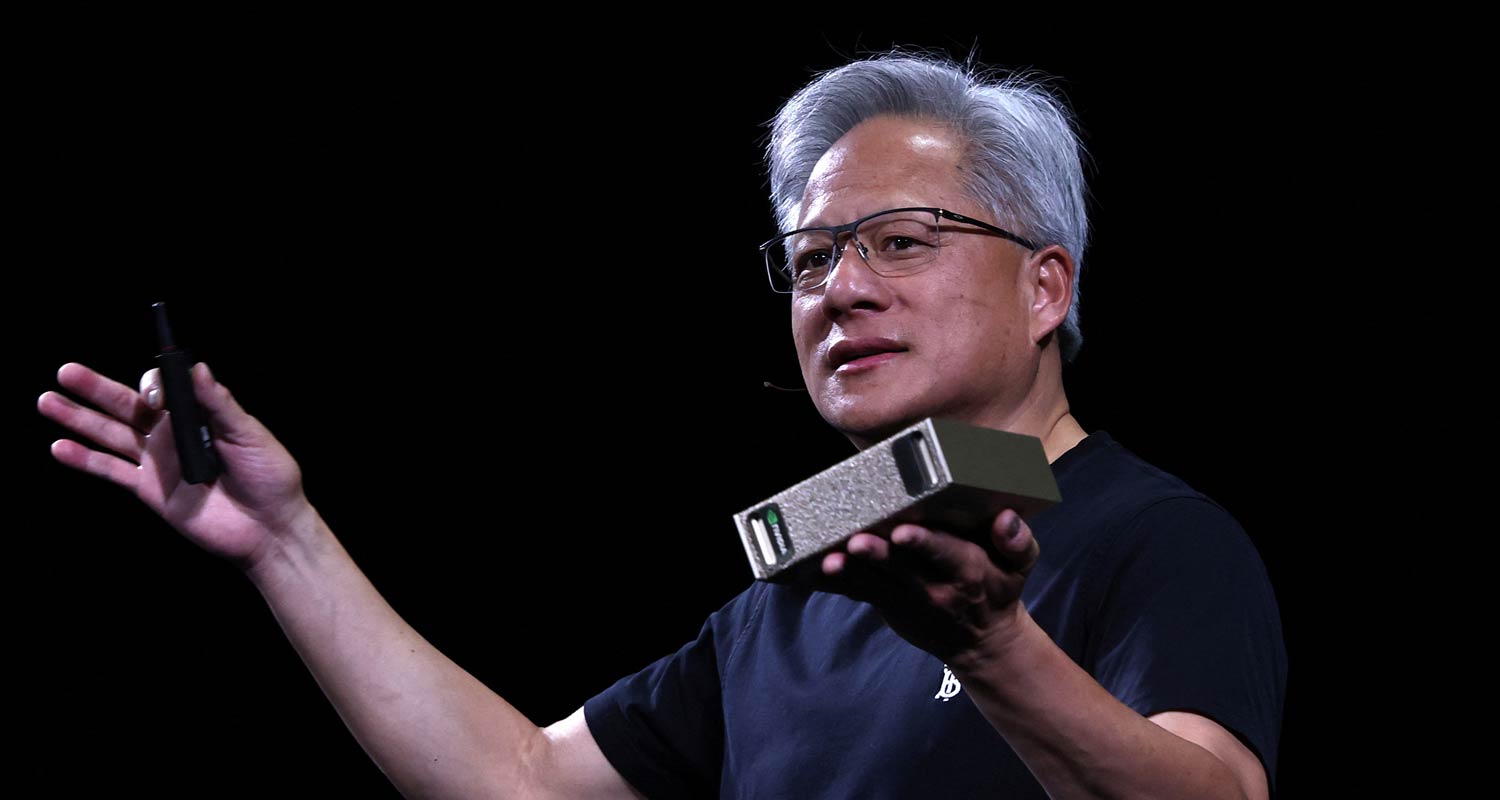
    Nvidia's next AI chips are in full production - Jensen Huang
    Nvidia CEO Jensen Huang

    Nvidia CEO Jensen Huang said on Monday that the company’s next generation of chips is in “full production,” saying they can deliver five times the artificial intelligence computing of the company’s previous chips when serving up chatbots and other AI apps.

    In a speech at the Consumer Electronics Show in Las Vegas, the leader of the world’s most valuable company revealed new details about its chips, which will arrive later this year and which Nvidia executives told Reuters are already in the company’s labs being tested by AI firms, as Nvidia faces increasing competition from rivals as well as its own customers.

    The Vera Rubin platform, made up of six separate Nvidia chips, is expected to debut later this year, with the flagship server containing 72 of the company’s graphics units and 36 of its new central processors. Huang showed how they can be strung together into “pods” with more than a thousand Rubin chips and said they could improve the efficiency of generating what are known as “tokens” – the fundamental unit of AI systems – by 10 times.

    The Rubin chips use a proprietary kind of data that Nvidia hopes the wider industry will adopt.

    To get the new performance results, however, Huang said the Rubin chips use a proprietary kind of data that the company hopes the wider industry will adopt.

    “This is how we were able to deliver such a gigantic step up in performance, even though we only have 1.6 times the number of transistors,” Huang said.

    While Nvidia still dominates the market for training AI models, it faces far more competition – from traditional rivals such as Advanced Micro Devices as well as customers like Alphabet’s Google – in delivering the fruits of those models to hundreds of millions of users of chatbots and other technologies.

    New chips

    Much of Huang’s speech focused on how well the new chips would work for that task, including adding a new layer of storage technology called “context memory storage”, aimed at helping chatbots provide snappier responses to long questions and conversations.

    Nvidia also touted a new generation of networking switches with a new kind of connection called co-packaged optics. The technology, which is key to linking together thousands of machines into one, competes with offerings from Broadcom and Cisco Systems.

    Nvidia said that CoreWeave will be among the first to have the new Vera Rubin systems and that it expects Microsoft, Oracle, Amazon and Alphabet to adopt them as well.

    Read: Intel launches Panther Lake, its next-gen PC chip

    In other announcements, Huang highlighted new software that can help self-driving cars make decisions about which path to take – and leave a paper trail for engineers to use afterward. Nvidia showed research about software, called Alpamayo, late last year, with Huang saying on Monday it would be released more widely, along with the data used to train it so that automakers can make evaluations.

    “Not only do we open source the models; we also open source the data that we use to train those models, because only in that way can you truly trust how the models came to be,” Huang said from a stage in Las Vegas.
    AMD CEO Lisa Su
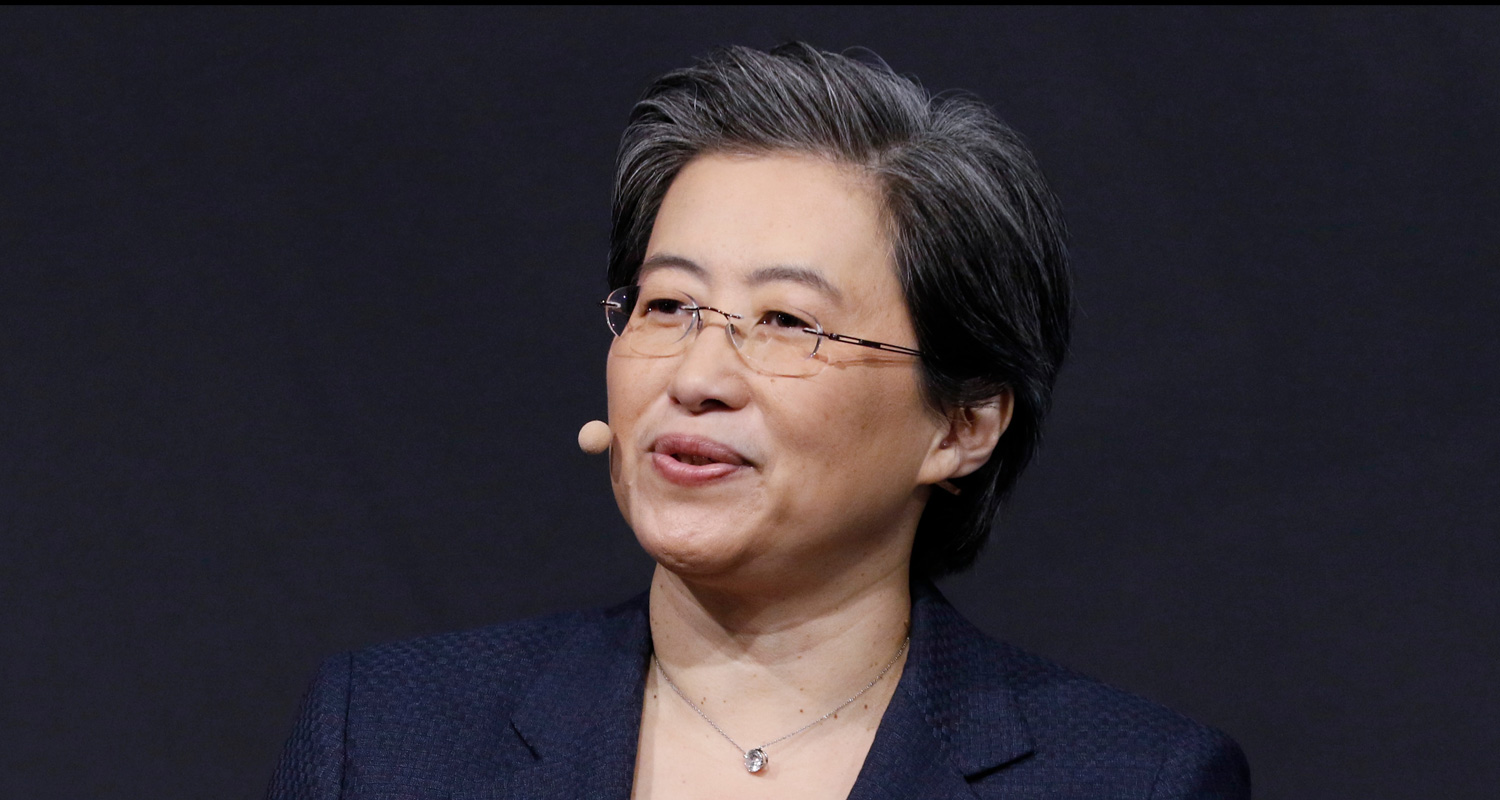
    AMD CEO Lisa Su

    Last month, Nvidia scooped up talent and chip technology from start-up Groq, including executives who were instrumental in helping Alphabet’s Google design its own AI chips. While Google is a major Nvidia customer, its own chips have emerged as one of Nvidia’s biggest threats as Google works closely with Meta Platforms and others to chip away at Nvidia’s AI stronghold.

    During a question-and-answer session with financial analysts after his speech, Huang said the Groq deal “won’t affect our core business” but could result in new products that expand its line-up.

    AMD showed off a number of the company’s AI chips at CES, including its advanced MI455 AI processors

    At the same time, Nvidia is eager to show that its latest products can outperform older chips like the H200, which US President Donald Trump has allowed to flow to China. The chip, which was the predecessor to Nvidia’s current Blackwell chip, is in high demand in China, which has alarmed China hawks across the US political spectrum.

    Huang told financial analysts after his address that demand is strong for the H200 chips in China, and chief financial officer Colette Kress said Nvidia has applied for licences to ship the chips to China but was waiting for approvals from the US and other governments to ship them.

    Meanwhile, AMD CEO Lisa Su showed off a number of the company’s AI chips on Monday at the trade show, including its advanced MI455 AI processors, which are components in the data centre server racks that the company is selling to firms like ChatGPT maker OpenAI.

    Nvidia dominance

    Su also unveiled the MI440X, a version of the MI400 series chip designed for on-premise use at businesses. The so-called enterprise version is designed to fit into infrastructure that is not specifically designed for AI clusters. The MI440X is a version of an earlier chip that the US plans to use in a supercomputer.

    Read: China will get Nvidia H200 chips – but not without paying Washington first

    AMD is one of Nvidia’s strongest rivals but has struggled to have as much success. In October, AMD signed a deal with OpenAI that, in addition to the financial upside, was a major vote of confidence in AMD’s AI chips and software. But it is unlikely to dent Nvidia’s dominance, as the market leader continues to sell every AI chip it can make, analysts said.

    At the Monday event, OpenAI president Greg Brockman joined Su on stage and said chip advancements were critical to OpenAI’s vast computing needs.

    Looking to the future needs of companies like OpenAI, Su previewed the MI500 and said it offered a thousand times the performance of an older version of the processor. The company said the chips would launch in 2027.

    At the event, Su hosted Daniele Pucci, CEO of Generative Bionics, an Italian AI developer, who unveiled GENE.01, a humanoid robot.

    “Our first commercial humanoid robot will be manufactured in the second half of 2026,” Pucci said.

    The first commercial humanoid robot will be manufactured in the second half of 2026

    The AMD deal with ChatGPT maker OpenAI that will add billions of dollars to the company’s annual revenue. The first deployment of AI chips that incorporate AMD’s MI400 series will roll out this year. Nvidia has generated tens of billions of dollars in quarterly revenue from its AI chip sales, a feat that AMD has struggled to achieve thus far.

    OpenAI is a key customer of AMD and executives at the Santa Clara, California-based company expect the deal to lead to significant additional new sales.

    Also on Monday, AMD launched its Ryzen AI 400 Series processors for AI PCs, alongside Ryzen AI Max+ chips for advanced local inference and gaming. Intel held a launch event earlier for its Panther Lake chips that it said would be available for order on Tuesday.  — Stephen Nellis, Max Cherney and Gnaneshwar Rajan, (c) 2026 Reuters

    Get breaking news from TechCentral on WhatsApp. Sign up here.

    Follow TechCentral on Google News Add TechCentral as your preferred source on Google


    AMD ChatGPT Daniele Pucci Donald Trump Generative Bionics Greg Brockman Intel Jensen Huang Lisa Su Nvidia
    WhatsApp YouTube
    Share. Facebook Twitter LinkedIn WhatsApp Telegram Email Copy Link
    Previous ArticleIntel launches Panther Lake, its next-gen PC chip
    Next Article Autonomous AI agents emerge as the next major cybersecurity risk

    Related Posts

    Beijing warns of retaliation over US threats to Chinese AI firms

    Beijing warns of retaliation over US threats to Chinese AI firms

    28 July 2026
    Intel is back in the game - Intel CEO Lip-Bu Tan. Laure Andrillon/Reuters

    Intel is back in the game

    24 July 2026
    After Anthropic ban, US battles 'kill switch' backlash - Marco Rubio

    After Anthropic ban, US battles ‘kill switch’ backlash

    23 July 2026
    Company News
    Huawei Connect 2026: taking South African AI beyond pilots

    Huawei Connect 2026: taking South African AI beyond pilots

    29 July 2026
    Apple at Work: business technology that works as one

    Apple at Work: business technology that works as one

    29 July 2026
    The infrastructure behind smart account-based recurring payments in South Africa - Pay@ Capitec Pay

    The infrastructure behind smart account-based recurring payments in South Africa

    29 July 2026
    Opinion
    The author, Jannie van Zyl

    Selling vapour is corporate suicide in slow motion

    16 July 2026
    Brazil's online gambling crackdown is a lesson for South Africa

    How Amazon outmanoeuvred Starlink in South Africa

    15 July 2026
    The Popia problem with agentic AI - Herman Haasbroek

    The Popia problem with agentic AI

    14 July 2026

    Subscribe to Updates

    Get the best South African technology news and analysis delivered to your e-mail inbox every morning.

    Latest Posts
    Huawei Connect 2026: taking South African AI beyond pilots

    Huawei Connect 2026: taking South African AI beyond pilots

    29 July 2026
    South African IT spending surging as AI boom lands locally

    South African IT spending surging as AI boom lands locally

    29 July 2026
    Apple at Work: business technology that works as one

    Apple at Work: business technology that works as one

    29 July 2026
    Radical rethink for South Africa's national AI policy

    Radical rethink for South Africa’s national AI policy

    29 July 2026
    © 2009 - 2026 NewsCentral Media
    Built and maintained by Chronon
    • Cookie policy (ZA)
    • TechCentral – privacy and Popia

    Type above and press Enter to search. Press Esc to cancel.

    Manage consent

    TechCentral uses cookies to enhance its offerings. Consenting to these technologies allows us to serve you better. Not consenting or withdrawing consent may adversely affect certain features and functions of the website.

    Functional Always active
    The technical storage or access is strictly necessary for the legitimate purpose of enabling the use of a specific service explicitly requested by the subscriber or user, or for the sole purpose of carrying out the transmission of a communication over an electronic communications network.
    Preferences
    The technical storage or access is necessary for the legitimate purpose of storing preferences that are not requested by the subscriber or user.
    Statistics
    The technical storage or access that is used exclusively for statistical purposes. The technical storage or access that is used exclusively for anonymous statistical purposes. Without a subpoena, voluntary compliance on the part of your Internet Service Provider, or additional records from a third party, information stored or retrieved for this purpose alone cannot usually be used to identify you.
    Marketing
    The technical storage or access is required to create user profiles to send advertising, or to track the user on a website or across several websites for similar marketing purposes.
    • Manage options
    • Manage services
    • Manage {vendor_count} vendors
    • Read more about these purposes
    View preferences
    • {title}
    • {title}
    • {title}