
Close Menu
TechCentralTechCentral

    Subscribe to the newsletter

    Get the best South African technology news and analysis delivered to your e-mail inbox every morning.

    Facebook X (Twitter) YouTube LinkedIn
    WhatsApp Facebook X (Twitter) LinkedIn YouTube
    TechCentralTechCentral
    • News
      Tech salaries in South Africa are bouncing back

      Tech salaries in South Africa are bouncing back

      9 February 2026
      Vumatel tops a million subscribers in South African broadband milestone - Dietlof Mare

      Vumatel tops a million subscribers in South African broadband milestone

      9 February 2026

      Washington takes on Beijing in race for Africa’s critical minerals

      9 February 2026
      Vodacom drops R5.6-billion for spectrum in key market

      Vodacom dropping R5.6-billion for spectrum in key market

      9 February 2026
      Nersa blunder triggers sharper electricity tariff increases

      Nersa blunder triggers sharper electricity tariff increases

      9 February 2026
    • World
      EU regulators take aim at WhatsApp

      EU regulators take aim at WhatsApp

      9 February 2026
      Musk hits brakes on Mars mission

      Musk hits brakes on Mars mission

      9 February 2026
      Crypto firm accidentally sends R700-billion in bitcoin to its users

      Crypto firm accidentally sends R700-billion in bitcoin to its users

      8 February 2026
      AI won't replace software, says Nvidia CEO amid market rout - Jensen Huang

      AI won’t replace software, says Nvidia CEO amid market rout

      4 February 2026
      Apple acquires audio AI start-up Q.ai

      Apple acquires audio AI start-up Q.ai

      30 January 2026
    • In-depth
      How liberalisation is rewiring South Africa's power sector

      How liberalisation is rewiring South Africa’s power sector

      21 January 2026
      The top-performing South African tech shares of 2025

      The top-performing South African tech shares of 2025

      12 January 2026
      Digital authoritarianism grows as African states normalise internet blackouts

      Digital authoritarianism grows as African states normalise internet blackouts

      19 December 2025
      TechCentral's South African Newsmakers of 2025

      TechCentral’s South African Newsmakers of 2025

      18 December 2025
      Black Friday goes digital in South Africa as online spending surges to record high

      Black Friday goes digital in South Africa as online spending surges to record high

      4 December 2025
    • TCS
      TCS+ | How Cloud On Demand is helping SA businesses succeed in the cloud - Xhenia Rhode, Dion Kalicharan

      TCS+ | Cloud On Demand and Consnet: inside a real-world AWS partner success story

      30 January 2026
      Watts & Wheels S1E3: 'BYD's Corolla Cross challenger'

      Watts & Wheels S1E3: ‘BYD’s Corolla Cross challenger’

      30 January 2026
      Watts & Wheels S1E3: 'BYD's Corolla Cross challenger'

      Watts & Wheels S1E2: ‘China attacks, BMW digs in, Toyota’s sublime supercar’

      23 January 2026

      TCS+ | Why cybersecurity is becoming a competitive advantage for SA businesses

      20 January 2026
      Watts & Wheels S1E3: 'BYD's Corolla Cross challenger'

      Watts & Wheels: S1E1 – ‘William, Prince of Wheels’

      8 January 2026
    • Opinion
      South Africa's skills advantage is being overlooked at home - Richard Firth

      South Africa’s skills advantage is being overlooked at home

      29 January 2026
      Why Elon Musk's Starlink is a 'hard no' for me - Songezo Zibi

      Why Elon Musk’s Starlink is a ‘hard no’ for me

      26 January 2026
      South Africa's new fibre broadband battle - Duncan McLeod

      South Africa’s new fibre broadband battle

      20 January 2026
      AI moves from pilots to production in South African companies - Nazia Pillay SAP

      AI moves from pilots to production in South African companies

      20 January 2026
      South Africa's new fibre broadband battle - Duncan McLeod

      ANC’s attack on Solly Malatsi shows how BEE dogma trumps economic reality

      14 December 2025
    • Company Hubs
      • Africa Data Centres
      • AfriGIS
      • Altron Digital Business
      • Altron Document Solutions
      • Altron Group
      • Arctic Wolf
      • AvertITD
      • Braintree
      • CallMiner
      • CambriLearn
      • CYBER1 Solutions
      • Digicloud Africa
      • Digimune
      • Domains.co.za
      • ESET
      • Euphoria Telecom
      • Incredible Business
      • iONLINE
      • IQbusiness
      • Iris Network Systems
      • LSD Open
      • NEC XON
      • Netstar
      • Network Platforms
      • Next DLP
      • Ovations
      • Paracon
      • Paratus
      • Q-KON
      • SevenC
      • SkyWire
      • Solid8 Technologies
      • Telit Cinterion
      • Tenable
      • Vertiv
      • Videri Digital
      • Vodacom Business
      • Wipro
      • Workday
      • XLink
    • Sections
      • AI and machine learning
      • Banking
      • Broadcasting and Media
      • Cloud services
      • Contact centres and CX
      • Cryptocurrencies
      • Education and skills
      • Electronics and hardware
      • Energy and sustainability
      • Enterprise software
      • Financial services
      • Information security
      • Internet and connectivity
      • Internet of Things
      • Investment
      • IT services
      • Lifestyle
      • Motoring
      • Public sector
      • Retail and e-commerce
      • Satellite communications
      • Science
      • SMEs and start-ups
      • Social media
      • Talent and leadership
      • Telecoms
    • Events
    • Advertise
    TechCentralTechCentral
    Home » Sections » Telecoms » Huawei is being held to an impossible standard

    Huawei is being held to an impossible standard

    By Leonid Bershidsky30 April 2019
    Twitter LinkedIn Facebook WhatsApp Email Telegram Copy Link
    News Alerts
    WhatsApp

    The Bloomberg report of persistent vulnerabilities found in Huawei telecommunications equipment by major operator Vodafone highlights the Chinese vendor’s current problem: while its competitors are given the benefit of the doubt when their products are found vulnerable, Huawei is held to impossible standards for political reasons.

    This is a problem that probably can’t be solved on a technical level. Huawei will have to drop any legacy resistance to stringent tests by clients and regulators and make more of an effort to clean up its software, but at the same time European countries in particular should expect subtle pressure from China to treat Huawei like any other vendor. The US isn’t the only country that can play that game.

    The headlines that include the words “Huawei” and “backdoor” look damning given the US government’s insistence that American allies view Huawei as a security threat. But it’s not at all unusual for backdoors — software vulnerabilities that allow third-party access to a piece of equipment — to be found in the products of other major suppliers, too. Last year, Cisco Systems — with a long history of its equipment being exploited by US and other spy agencies — removed no fewer than seven backdoors from various products. In February, security firm Tenable Research discovered backdoors in Nokia routers that, like the Huawei vulnerabilities found by Vodafone, allowed potential attackers access via the Telnet protocol.

    It’s standard for equipment vendors to warn investors of such vulnerability risks. Here’s the language from Ericsson’s 2018 annual report:

    It is possible that a cybersecurity incident in Ericsson’s supply chain could have an adverse impact on Ericsson’s ability to deliver products or services to Ericsson’s customers. These incidents may include tampering with components, the inclusion of backdoors or implants, the unintentional inclusion of vulnerabilities in components or software and cybersecurity incidents… Products and infrastructure used by Ericsson may contain vulnerabilities that can be leveraged by a threat actor. In some situations, it may be impossible to detect these vulnerabilities due to their location, or due to the fact that they are unknown vulnerabilities.

    Software is developed by humans, who will, sometimes inadvertently and sometimes on purpose, roll out releases with backdoors in them — often for past or future servicing and maintenance needs. But the telecoms industry’s problem goes beyond human error, laziness and malicious intent. Its fundamental services are based on dated protocols. As the GSMA, the global telecoms operator lobby group, wrote in its most recent threat report, “Many of these protocols are dated and were implemented without an authority model but relied on assumed trust within a closed industry. Couple this insecurity with their essential nature to operate many network functions and any security threats realized against these services will have a high impact.”

    Any security problem, any failure to detect a backdoor and close it will be used as proof that the vendor is an arm of Chinese intelligence

    Since the protocols will continue to be used, even the most vigilant telecoms operators face high security risks. The widespread reliance on vulnerable open-source software is another source of problems.

    But while Western equipment vendors and the mobile operators themselves are expected to deal with these issues to the best of their ability and at their own pace, with inevitable setbacks now and then, that’s no longer the case with Huawei. Any security problem, any failure to detect a backdoor and close it will be used as proof that the vendor is an arm of Chinese intelligence. That imposes tough demands on Huawei if it wants to keep its leadership in the telecoms equipment industry and avoid government bans.

    Impermissible

    Intention matters. The Bloomberg report has the company telling a major client that it’s fixed a vulnerability when it hadn’t. If that was an intentional deception, that’s bad enough. It was at least a poor decision; but in view of the evolved US position, that kind of thing is impermissible now.

    Of course, Huawei’s political problem is not really for the firm to solve. No matter what the Chinese company does, the current US administration will keep going after it for a mix of national security, trade and competition-related reasons which are hard to separate from each other. This requires a pointed response from China, and such a response will undoubtedly follow.
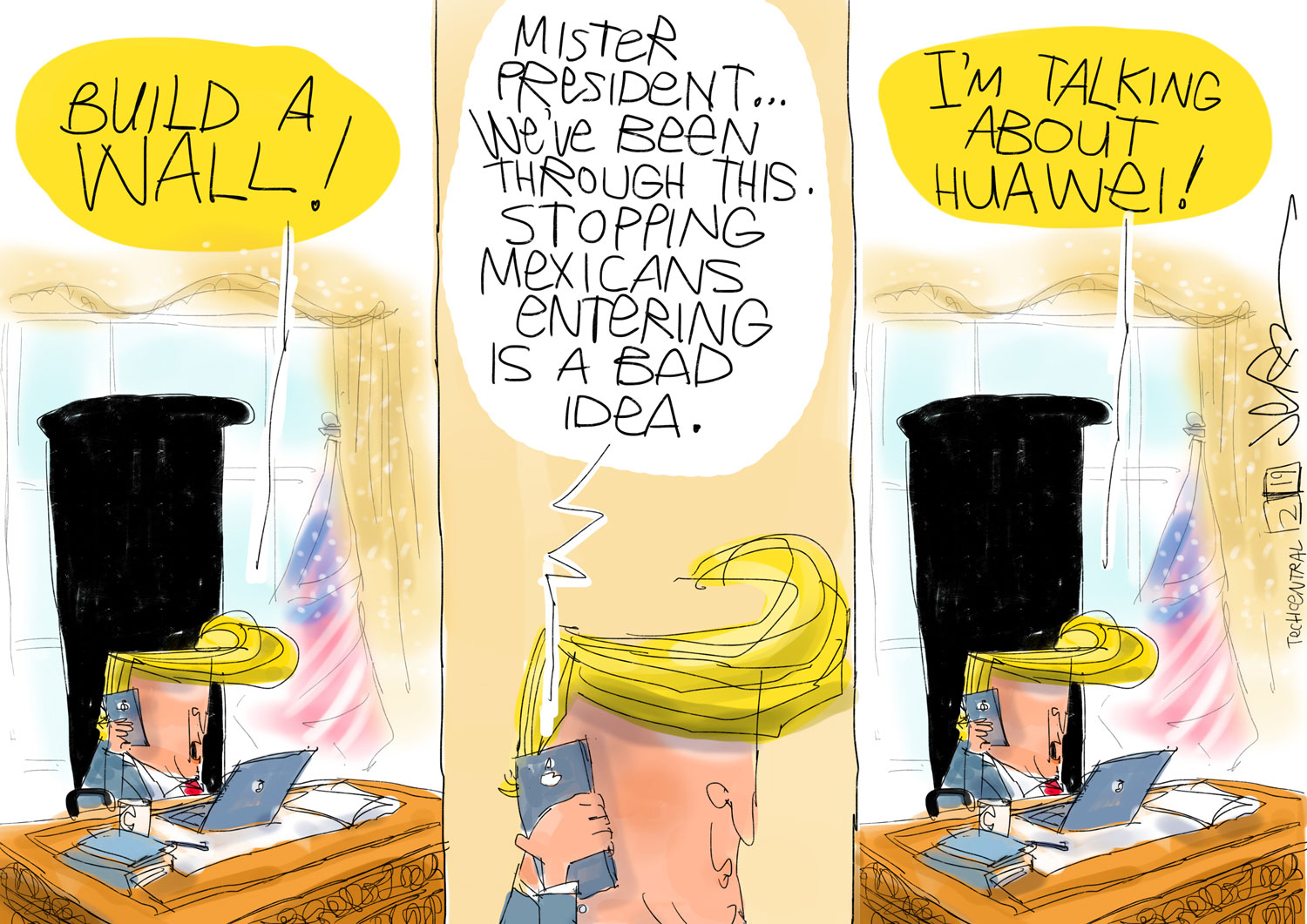
    The UK, where Vodafone is based, will be more exposed to the competing US and Chinese pressures than most other countries if it goes through with Brexit. It will lose the EU’s protection but its market is sufficiently large for both the US and China to try to impose their terms of trade. The US is already warning the UK of possible cuts in intelligence sharing if it doesn’t drop Huawei, but if it caves, the probability of a favourable post-Brexit trade and investment deal with China will recede.

    Even so, Huawei can’t rely solely on its home nation’s support. It needs a conscious effort to build trust. The Chinese vendor might be well-advised to borrow a page from Cisco’s book: the US company is combing systematically through all its software, reporting and fixing the vulnerabilities it finds. That kind of exercise wouldn’t resolve Huawei’s American problem, but it would go a long way toward keeping other clients, major mobile networks, on its side against any government meddling. The Chinese firm is being too defensive and not open enough, and that needs to change.  — (c) 2019 Bloomberg LP



    Cisco Donald Trump Ericsson Huawei Nokia top Vodafone
    WhatsApp YouTube Follow on Google News Add as preferred source on Google
    Share. Facebook Twitter LinkedIn WhatsApp Telegram Email Copy Link
    Previous ArticleSamsung unveils vertical TV aimed at millennials
    Next Article Vodafone is said to have found hidden ‘backdoors’ in Huawei gear

    Related Posts

    Vodacom drops R5.6-billion for spectrum in key market

    Vodacom dropping R5.6-billion for spectrum in key market

    9 February 2026
    Huawei turns 25 in South Africa, celebrates with major device discounts

    Huawei turns 25 in South Africa, celebrates with major device discounts

    30 January 2026
    Taiwan, US strike strategic AI and chip supply-chain pact - TSMC

    Taiwan, US strike strategic AI and chip supply-chain pact

    20 January 2026
    Company News
    The new way of working - an Mweb study

    The new way of working – an Mweb study

    9 February 2026
    Beyond the prompt: Why the future of enterprise AI is hybrid and agentic - LSD Open

    Beyond the prompt: Why the future of enterprise AI is hybrid and agentic

    9 February 2026
    The skills gap is a thinking gap: why South African employers can't find problem solvers

    The skills gap is a thinking gap: why SA employers can’t find problem solvers

    6 February 2026
    Opinion
    South Africa's skills advantage is being overlooked at home - Richard Firth

    South Africa’s skills advantage is being overlooked at home

    29 January 2026
    Why Elon Musk's Starlink is a 'hard no' for me - Songezo Zibi

    Why Elon Musk’s Starlink is a ‘hard no’ for me

    26 January 2026
    South Africa's new fibre broadband battle - Duncan McLeod

    South Africa’s new fibre broadband battle

    20 January 2026

    Subscribe to Updates

    Get the best South African technology news and analysis delivered to your e-mail inbox every morning.

    Latest Posts
    EU regulators take aim at WhatsApp

    EU regulators take aim at WhatsApp

    9 February 2026
    Tech salaries in South Africa are bouncing back

    Tech salaries in South Africa are bouncing back

    9 February 2026
    The new way of working - an Mweb study

    The new way of working – an Mweb study

    9 February 2026
    Vumatel tops a million subscribers in South African broadband milestone - Dietlof Mare

    Vumatel tops a million subscribers in South African broadband milestone

    9 February 2026
    © 2009 - 2026 NewsCentral Media
    • Cookie policy (ZA)
    • TechCentral – privacy and Popia

    Type above and press Enter to search. Press Esc to cancel.

    Manage consent

    TechCentral uses cookies to enhance its offerings. Consenting to these technologies allows us to serve you better. Not consenting or withdrawing consent may adversely affect certain features and functions of the website.

    Functional Always active
    The technical storage or access is strictly necessary for the legitimate purpose of enabling the use of a specific service explicitly requested by the subscriber or user, or for the sole purpose of carrying out the transmission of a communication over an electronic communications network.
    Preferences
    The technical storage or access is necessary for the legitimate purpose of storing preferences that are not requested by the subscriber or user.
    Statistics
    The technical storage or access that is used exclusively for statistical purposes. The technical storage or access that is used exclusively for anonymous statistical purposes. Without a subpoena, voluntary compliance on the part of your Internet Service Provider, or additional records from a third party, information stored or retrieved for this purpose alone cannot usually be used to identify you.
    Marketing
    The technical storage or access is required to create user profiles to send advertising, or to track the user on a website or across several websites for similar marketing purposes.
    • Manage options
    • Manage services
    • Manage {vendor_count} vendors
    • Read more about these purposes
    View preferences
    • {title}
    • {title}
    • {title}