Close Menu
TechCentralTechCentral

    Subscribe to the newsletter

    Get the best South African technology news and analysis delivered to your e-mail inbox every morning.

    Facebook X (Twitter) YouTube LinkedIn
    WhatsApp Facebook X (Twitter) LinkedIn YouTube
    TechCentralTechCentral
    • News
      Icasa caught in the political crossfire over Starlink - Elon Musk

      Icasa caught in the political crossfire over Starlink

      24 April 2026
      Malatsi runs out of patience with Icasa on BEE reform - Solly Malatsi

      Malatsi runs out of patience with Icasa on BEE reform

      24 April 2026
      DeepSeek's long-awaited V4 model enters preview

      DeepSeek’s long-awaited V4 model enters preview

      24 April 2026
      South Africa planning big overhaul of public sector IT - State IT Agency Sita

      South Africa planning big overhaul of public sector IT

      23 April 2026
      Usaasa's 30-year run nears its end - Communications minister Solly Malatsi. Image c/o DCDT

      Usaasa’s 30-year run nears its end

      23 April 2026
    • World
      More organic compounds detected on Mars - Nasa Curiosity rover

      More organic compounds detected on Mars

      21 April 2026
      Adobe bets on AI agents to fend off cheaper rivals

      Adobe bets on AI agents to fend off cheaper rivals

      16 April 2026
      Google poised to lose ad crown to Meta

      Google poised to lose ad crown to Meta

      14 April 2026
      Grand Theft Data - hackers hit Rockstar Games - Grand Theft Auto

      Grand Theft Data – hackers hit Rockstar Games

      14 April 2026
      UK PM Keir Starmer declares war on doomscrolling

      UK PM Keir Starmer declares war on doomscrolling

      13 April 2026
    • In-depth
      Africa switches on as Europe dims the lights

      Africa switches on as Europe dims the lights

      9 April 2026
      The biggest untapped EV market on Earth is hiding in plain sight

      The biggest untapped EV market on Earth is hiding in plain sight

      1 April 2026
      The R18-billion tech giant hiding in plain sight - Jens Montanana

      The R16-billion tech giant hiding in plain sight

      26 March 2026
      The last generation of coders

      The last generation of coders

      18 February 2026
      Sentech is in dire straits

      Sentech is in dire straits

      10 February 2026
    • TCS

      TCS+ | ‘The ISP for ISPs’: Vox’s shift to wholesale aggregator

      20 April 2026
      TCS | Werner Lindemann on how AI is rewriting the infosec rulebook

      TCS | Werner Lindemann on how AI is rewriting the infosec rulebook

      15 April 2026
      TCS | Donovan Marsh on AI and the future of filmmaking

      TCS | Donovan Marsh on AI and the future of filmmaking

      7 April 2026
      TCS+ | Vodacom Business moves to crack the SME tech gap - Andrew Fulton, Sannesh Beharie

      TCS+ | Vodacom Business moves to crack the SME tech gap

      7 April 2026
      TCS | MTN's Divysh Joshi on the strategy behind Pi - Divyesh Joshi

      TCS | MTN’s Divyesh Joshi on the strategy behind Pi

      1 April 2026
    • Opinion
      The conflict of interest at the heart of PayShap's slow adoption - Cheslyn Jacobs

      The conflict of interest at the heart of PayShap’s slow adoption

      26 March 2026
      South Africa's energy future hinges on getting wheeling right - Aishah Gire

      South Africa’s energy future hinges on getting wheeling right

      10 March 2026
      Hold the doom: the case for a South African comeback - Duncan McLeod

      Apple just dropped a bomb on the Windows world

      5 March 2026
      R230-million in the bag for Endeavor's third Harvest Fund - Alison Collier

      VC’s centre of gravity is shifting – and South Africa is in the frame

      3 March 2026
      Hold the doom: the case for a South African comeback - Duncan McLeod

      Hold the doom: the case for a South African comeback

      26 February 2026
    • Company Hubs
      • 1Stream
      • Africa Data Centres
      • AfriGIS
      • Altron Digital Business
      • Altron Document Solutions
      • Altron Group
      • Arctic Wolf
      • Ascent Technology
      • AvertITD
      • BBD
      • Braintree
      • CallMiner
      • CambriLearn
      • CYBER1 Solutions
      • Digicloud Africa
      • Digimune
      • Domains.co.za
      • ESET
      • Euphoria Telecom
      • HOSTAFRICA
      • Incredible Business
      • iONLINE
      • IQbusiness
      • Iris Network Systems
      • Kaspersky
      • LSD Open
      • Mitel
      • NEC XON
      • Netstar
      • Network Platforms
      • Next DLP
      • Ovations
      • Paracon
      • Paratus
      • Q-KON
      • SevenC
      • SkyWire
      • Solid8 Technologies
      • Telit Cinterion
      • Telviva
      • Tenable
      • Vertiv
      • Videri Digital
      • Vodacom Business
      • Wipro
      • Workday
      • XLink
    • Sections
      • AI and machine learning
      • Banking
      • Broadcasting and Media
      • Cloud services
      • Contact centres and CX
      • Cryptocurrencies
      • Education and skills
      • Electronics and hardware
      • Energy and sustainability
      • Enterprise software
      • Financial services
      • HealthTech
      • Information security
      • Internet and connectivity
      • Internet of Things
      • Investment
      • IT services
      • Lifestyle
      • Motoring
      • Policy and regulation
      • Public sector
      • Retail and e-commerce
      • Satellite communications
      • Science
      • SMEs and start-ups
      • Social media
      • Talent and leadership
      • Telecoms
    • Events
    • Advertise
    TechCentralTechCentral
    Home » Opinion » Andrew Fraser » Is 5G all mouth and no trousers?

    Is 5G all mouth and no trousers?

    By Andrew Fraser11 March 2019
    Twitter LinkedIn Facebook WhatsApp Email Telegram Copy Link
    News Alerts
    WhatsApp

    In February, at the Mobile World Congress in Barcelona, manufacturers, technology firms and mobile network operators all preached the gospel of 5G.

    A quick perusal of the press releases and statements from the congress would lead you to think that 5G is the solution to every problem that mankind faces, has faced and will face in the future.

    Filtering out the hype is difficult, often because the agendas of these disparate companies are slightly different.

    Chip manufacturers have an interest in ensuring the adoption of new technologies in order to combat price erosion, mobile phone manufacturers must feed the upgrade cycle and mobile networks need to increase the utilisation of their spectrum in order to deliver returns to their shareholders as their business model becomes that of a utility rather than a differentiated service.

    There’s a very good reason that these bands aren’t widely used. And that reason is physics

    So, if you filter out the hype, what exactly is 5G and what can it do? More importantly, what is it actually going to deliver?

    5G, or the fifth generation of mobile communications, is the term used to distinguish a combination of technologies that aim to provide higher data rates, reduced latency, cost reductions, lower energy usage and improved connectivity scaling versus 4G (for South Africans “4G” means the current LTE — or long-term evolution — connectivity offered by the mobile network operators).

    Theoretically, 5G can offer data transfer rates up to 100 times higher than LTE. Also, theoretically, the signal latency (the time taken for data to travel from the client equipment to the cellular tower and back) is significantly lower — around 1ms (equivalent to fibre connections), compared to 30ms+ for LTE.

    Much wider bandwidth

    In addition, 5G offers much wider bandwidth, making it much more suitable for general-purpose connectivity (such as Internet access for homes and businesses) than LTE, which is much more suited for mobile access.

    All that sounds great, so what’s the catch? As with everything, the devil is in the detail. The incredibly high data rates (up to 10Gbit/s or more) that 5G promises are dependent on specific radio spectrum. These radio frequency bands (called the millimeter-wave bands), are very-high-frequency radio bands (between 26GHz and 86GHz), which allow very wide channel bandwidths of up to 400MHz per channel. In comparison, LTE channel bandwidth is typically 20MHz. If you think of the bandwidth as the size of the pipe that you can pump data through, you can see that you the pipe is up to 20 times bigger for 5G. These millimeter-wave bands are also not in widespread use by other technologies, which means that there is a lot of spectrum available to deploy these services.

    The author, Andrew Fraser, argues that consumers won’t enjoy the full benefits of 5G for years yet

    So far, so good. But there’s a very good reason that these bands aren’t widely used. And that reason is physics. High-frequency electromagnetic waves are more easily disturbed by physical obstacles. This means that the signals get disturbed and blocked more easily by environmental factors such as trees, buildings and even molecules in the atmosphere.

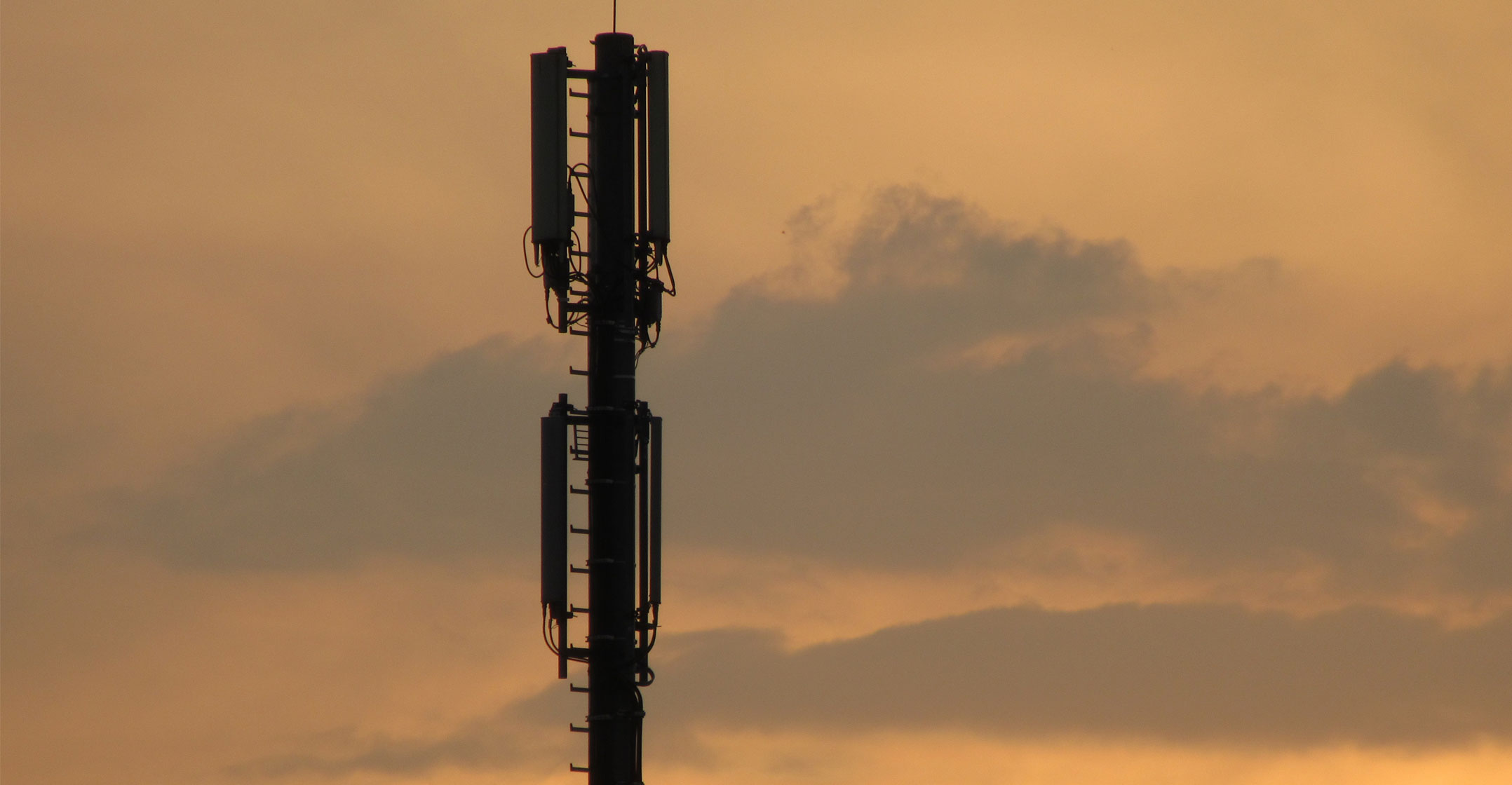
    In practical terms what this means is that a cellular network that uses the millimeter-wave bands needs many more transmitters to cover a similar area as a network using lower frequencies (like current LTE networks). It also means that these networks will require antennae inside buildings because the signals won’t be able to penetrate walls efficiently.

    The scale of deployment of 5G networks is a massive regulatory and infrastructural challenge

    Typically, an LTE tower has a cell radius in the order of kilometres; 5G base stations will have to be much closer together, likely at around 100 metres for outdoor coverage. That means that to cover the same area, millimeter-wave 5G will require roughly a hundred times as many antennas as LTE.

    That’s obviously quite a big problem for network operators. While 5G base stations are typically smaller and more easily deployed than the cell towers we’re used to, the scale of deployment is a massive regulatory and infrastructural challenge.

    But, I hear you say, some operators have already announced 5G networks that are going to be live this year. How can that be, given the obvious challenges? Well, these deployments aren’t typically in the millimeter-wave bands. They’re deployments in the bands we’re already using for LTE, which means that they don’t have the same limitation in terms of coverage or signal propagation. It also means that they won’t deliver anywhere near the data rates that have been touted. 5G deployed in the sub-6GHz frequencies will typically be similar to, or slightly faster than 4G, with equivalent spectrum and antenna density.

    More subtle

    Now that doesn’t mean that there aren’t advantages of these sub-6GHz 5G deployments over 4G, but the advantages are more subtle: they’ll likely deliver better latency than LTE (but how much better is still open to question), and in theory these networks should be more energy efficient than LTE networks. What that’ll mean for consumers is likely slightly better battery life if they’re in a 5G coverage area. Also, it must be noted that most likely these initial networks (in South Africa, anyway), will not be focused on mobile users, but rather as replacement for fixed Internet access – high-speed Internet over the air instead of copper or fibre.

    So, is 5G all mouth and no trousers? Not entirely. Looking at wider use cases, such as real-time machine-to-machine communication and automation, the low energy use, ability to reserve particular bandwidth and low latency of 5G offer some specific advantages. It’s just that they’re probably a few years in the future. We may well first see private networks that use 5G established by industries.

    5G is a big breakthrough, to be sure, but maybe not quite as imminent as the hype would suggest.

    • Andrew Fraser is an independent marketing consultant

    Follow TechCentral on Google News Add TechCentral as your preferred source on Google


    Andrew Fraser Mobile World Congress top
    WhatsApp YouTube
    Share. Facebook Twitter LinkedIn WhatsApp Telegram Email Copy Link
    Previous ArticlePost Office stakes its future on e-commerce
    Next Article Oracle ‘no comment’ on IFMS corruption allegations

    Related Posts

    GSMA coalition targets $40 smartphone to connect millions across Africa

    GSMA coalition targets $40 smartphone to connect millions across Africa

    3 March 2026
    Eskom to rationalise AI pilots as costs rise

    Eskom to rationalise AI pilots as costs rise

    2 March 2026
    AI complexity is crippling IT departments - Thomas Meyer

    AI complexity is crippling IT departments

    2 March 2026
    Company News
    Cybersecurity in the age of AI: why speed and trust now define resilience - iqbusiness

    Cybersecurity in the AI age: speed and trust define resilience

    24 April 2026
    Security by design is the channel's strongest pitch - Othelo Vieira

    Security by design is the channel’s strongest pitch

    23 April 2026
    Your brand is invisible to the AI that's choosing your competitor - Michelle Losco

    Your brand is invisible to the AI that’s choosing your competitor

    23 April 2026
    Opinion
    The conflict of interest at the heart of PayShap's slow adoption - Cheslyn Jacobs

    The conflict of interest at the heart of PayShap’s slow adoption

    26 March 2026
    South Africa's energy future hinges on getting wheeling right - Aishah Gire

    South Africa’s energy future hinges on getting wheeling right

    10 March 2026
    Hold the doom: the case for a South African comeback - Duncan McLeod

    Apple just dropped a bomb on the Windows world

    5 March 2026

    Subscribe to Updates

    Get the best South African technology news and analysis delivered to your e-mail inbox every morning.

    Latest Posts
    Icasa caught in the political crossfire over Starlink - Elon Musk

    Icasa caught in the political crossfire over Starlink

    24 April 2026
    Cybersecurity in the age of AI: why speed and trust now define resilience - iqbusiness

    Cybersecurity in the AI age: speed and trust define resilience

    24 April 2026
    Malatsi runs out of patience with Icasa on BEE reform - Solly Malatsi

    Malatsi runs out of patience with Icasa on BEE reform

    24 April 2026
    DeepSeek's long-awaited V4 model enters preview

    DeepSeek’s long-awaited V4 model enters preview

    24 April 2026
    © 2009 - 2026 NewsCentral Media
    • Cookie policy (ZA)
    • TechCentral – privacy and Popia

    Type above and press Enter to search. Press Esc to cancel.

    Manage consent

    TechCentral uses cookies to enhance its offerings. Consenting to these technologies allows us to serve you better. Not consenting or withdrawing consent may adversely affect certain features and functions of the website.

    Functional Always active
    The technical storage or access is strictly necessary for the legitimate purpose of enabling the use of a specific service explicitly requested by the subscriber or user, or for the sole purpose of carrying out the transmission of a communication over an electronic communications network.
    Preferences
    The technical storage or access is necessary for the legitimate purpose of storing preferences that are not requested by the subscriber or user.
    Statistics
    The technical storage or access that is used exclusively for statistical purposes. The technical storage or access that is used exclusively for anonymous statistical purposes. Without a subpoena, voluntary compliance on the part of your Internet Service Provider, or additional records from a third party, information stored or retrieved for this purpose alone cannot usually be used to identify you.
    Marketing
    The technical storage or access is required to create user profiles to send advertising, or to track the user on a website or across several websites for similar marketing purposes.
    • Manage options
    • Manage services
    • Manage {vendor_count} vendors
    • Read more about these purposes
    View preferences
    • {title}
    • {title}
    • {title}