Close Menu
TechCentralTechCentral

    Subscribe to the newsletter

    Get the best South African technology news and analysis delivered to your e-mail inbox every morning.

    Facebook X (Twitter) YouTube LinkedIn
    WhatsApp Facebook X (Twitter) LinkedIn YouTube
    TechCentralTechCentral
    • News
      Severe geomagnetic storm hits Earth, Sansa confirms

      Severe geomagnetic storm hits Earth, Sansa confirms

      20 January 2026
      South Africa's new fibre broadband battle

      South Africa’s new fibre broadband battle

      20 January 2026
      Icasa to target Sentech with tougher broadcast pricing rules

      Icasa to target Sentech with tougher broadcast pricing rules

      19 January 2026
      Sansa warns of severe solar storm risk in next 24 hours

      Sansa warns of severe solar storm risk in next 24 hours

      19 January 2026
      Why South Africa's internet boom isn't driving an economic boom - Net Nine Nine CEO Albert Oosthuysen

      Why South Africa’s internet boom isn’t driving an economic boom

      19 January 2026
    • World
      Oracle sued as bondholders allege AI debt plans were hidden - Larry Ellison

      Oracle sued as bondholders allege AI debt plans were hidden

      15 January 2026
      Activists call for X, Grok to removed from app stores - Elon Musk

      Activists call for X, Grok to removed from app stores

      14 January 2026
      Uganda shuts down internet ahead of pivotal election

      Uganda shuts down internet ahead of pivotal election

      14 January 2026
      Taiwan seeks arrest of OnePlus CEO - Pete Lau

      Taiwan seeks arrest of OnePlus CEO

      14 January 2026
      Work begins on what will be Africa's biggest airport

      Work begins on what will be Africa’s biggest airport

      13 January 2026
    • In-depth
      Digital authoritarianism grows as African states normalise internet blackouts

      Digital authoritarianism grows as African states normalise internet blackouts

      19 December 2025
      TechCentral's South African Newsmakers of 2025

      TechCentral’s South African Newsmakers of 2025

      18 December 2025
      Black Friday goes digital in South Africa as online spending surges to record high

      Black Friday goes digital in South Africa as online spending surges to record high

      4 December 2025
      DStv dodges channel blackout in last-minute deal with Warner Bros

      Canal+ plays hardball – and DStv viewers feel the pain

      3 December 2025
      Jensen Huang Nvidia

      So, will China really win the AI race?

      14 November 2025
    • TCS
      TCS+ | Africa's digital transformation - unlocking AI through cloud and culture - Cliff de Wit Accelera Digital Group

      TCS+ | Cloud without culture won’t deliver AI: Accelera’s Cliff de Wit

      12 December 2025
      TCS+ | How Cloud on Demand helps partners thrive in the AWS ecosystem - Odwa Ndyaluvane and Xenia Rhode

      TCS+ | How Cloud On Demand helps partners thrive in the AWS ecosystem

      4 December 2025
      TCS | MTN Group CEO Ralph Mupita on competition, AI and the future of mobile

      TCS | Ralph Mupita on competition, AI and the future of mobile

      28 November 2025
      TCS | Dominic Cull on fixing South Africa's ICT policy bottlenecks

      TCS | Dominic Cull on fixing South Africa’s ICT policy bottlenecks

      21 November 2025
      TCS | BMW CEO Peter van Binsbergen on the future of South Africa's automotive industry

      TCS | BMW CEO Peter van Binsbergen on the future of South Africa’s automotive industry

      6 November 2025
    • Opinion
      ANC's attack on Solly Malatsi shows how BEE dogma trumps economic reality - Duncan McLeod

      ANC’s attack on Solly Malatsi shows how BEE dogma trumps economic reality

      14 December 2025
      Netflix, Warner Bros deal raises fresh headaches for MultiChoice - Duncan McLeod

      Netflix, Warner Bros deal raises fresh headaches for MultiChoice

      5 December 2025
      BIN scans, DDoS and the next cybercrime wave hitting South Africa's banks - Entersekt Gerhard Oosthuizen

      BIN scans, DDoS and the next cybercrime wave hitting South Africa’s banks

      3 December 2025
      ANC's attack on Solly Malatsi shows how BEE dogma trumps economic reality - Duncan McLeod

      Your data, your hardware: the DIY AI revolution is coming

      20 November 2025
      Zero Carbon Charge founder Joubert Roux

      The energy revolution South Africa can’t afford to miss

      20 November 2025
    • Company Hubs
      • Africa Data Centres
      • AfriGIS
      • Altron Digital Business
      • Altron Document Solutions
      • Altron Group
      • Arctic Wolf
      • AvertITD
      • Braintree
      • CallMiner
      • CambriLearn
      • CYBER1 Solutions
      • Digicloud Africa
      • Digimune
      • Domains.co.za
      • ESET
      • Euphoria Telecom
      • Incredible Business
      • iONLINE
      • IQbusiness
      • Iris Network Systems
      • LSD Open
      • NEC XON
      • Netstar
      • Network Platforms
      • Next DLP
      • Ovations
      • Paracon
      • Paratus
      • Q-KON
      • SevenC
      • SkyWire
      • Solid8 Technologies
      • Telit Cinterion
      • Tenable
      • Vertiv
      • Videri Digital
      • Vodacom Business
      • Wipro
      • Workday
      • XLink
    • Sections
      • AI and machine learning
      • Banking
      • Broadcasting and Media
      • Cloud services
      • Contact centres and CX
      • Cryptocurrencies
      • Education and skills
      • Electronics and hardware
      • Energy and sustainability
      • Enterprise software
      • Financial services
      • Information security
      • Internet and connectivity
      • Internet of Things
      • Investment
      • IT services
      • Lifestyle
      • Motoring
      • Public sector
      • Retail and e-commerce
      • Satellite communications
      • Science
      • SMEs and start-ups
      • Social media
      • Talent and leadership
      • Telecoms
    • Events
    • Advertise
    TechCentralTechCentral
    Home » In-depth » Just how free is the Internet in SA?

    Just how free is the Internet in SA?

    By Indra de Lanerolle2 June 2016
    Twitter LinkedIn Facebook WhatsApp Email Telegram Copy Link
    News Alerts
    WhatsApp

    Indra-de-Lanerolle-180When most people think or speak about Internet freedom, they are often concerned with the right, for example, to say what you want online without censorship and without being subject to the chilling effects of surveillance.

    These kind of freedoms are sometimes called “negative freedoms” or “freedoms from…”. They address the right not to be interfered with or obstructed in living your life. But there are also “positive freedoms” — “freedoms to…”

    Some constitutions — notably the US constitution — only protect negative rights. But South Africa’s includes both negative and positive rights. Positive rights include, for example, the socio-economic rights to food and shelter.

    In its Internet Freedom Index, Freedom House ranks South Africa as “free” alongside the UK, Argentina and Kenya. The ranking is largely because Freedom House weighs negative freedoms above positive ones. But how “free” is the Internet in South Africa? For most, it is positive Internet freedoms that may be more urgent.

    Freedom is access

    The South African constitution in the bill of rights does not explicitly protect Internet freedom but section 16(1) states that everyone has the right to “freedom to receive or impart information or ideas”. This is a right for everyone and it is not just a freedom from interference — a “freedom from” — but also a “freedom to”: a right to be able to reach others and be reached by others. In this it follows article 19 of the universal declaration of human rights.

    In his book Development as Freedom, Amartya Sen describes freedom as “our capability to lead the kind of lives we have reason to value”. In many ways, the Internet is extending such capabilities.

    More people now go online daily than read a newspaper. They are able to read a much greater variety of voices than are seen in print or on television. And public services are offering improved responsiveness on social media.

    But we are also seeing a new development — instances where Internet access is now a requirement. Examples include:

    • Registering a company,
    • The Gauteng education department now requires parents with children entering primary or high school to apply online. Previously they could apply at the local school, and
    • The SABC has announced that it will no longer advertise its jobs in newspapers, directing job seekers to its own website.

    Indications from government are that we are likely to see more such initiatives. The result will be that South Africans’ ability to lead the kind of lives they value will become increasingly dependent on the physical, procedural, economic and social networks that we call “the Internet”.

    The question of cost

    According to the All Media Products Survey (Amps) of June 2015, fewer than half of South African adults had used the Internet in the previous four weeks. More than half did not.

    When we asked a representative sample of non-users in South Africa in 2012 why they hadn’t gone online, the main reason was that they had no device to connect with (87%). The second reason was that they didn’t know how to use it (76%) and the third was that it was too expensive (60%).

    According to the survey, nine out of 10 South Africans now use a mobile phone but only half of those now have access to smartphones. The most popular phone brand in South Africa is still Nokia. Most of the models in use have limited or no ability to connect to the net. And because only the better off have access to fixed lines at home or at work, the majority of South Africans, when they do get online, are dependent on mobile networks.

    Mobile data is costly.

    The International Telecommunication Union and the United Nations’ Educational, Scientific and Cultural Organisation have set a goal for affordable broadband Internet access. It is that entry-level broadband should not cost more than 5% of average monthly income. Because of a flawed methodology, they state in a 2015 annual report that South Africa falls well within that target. But digging into the figures shows how unaffordable the Internet is for most South Africans.
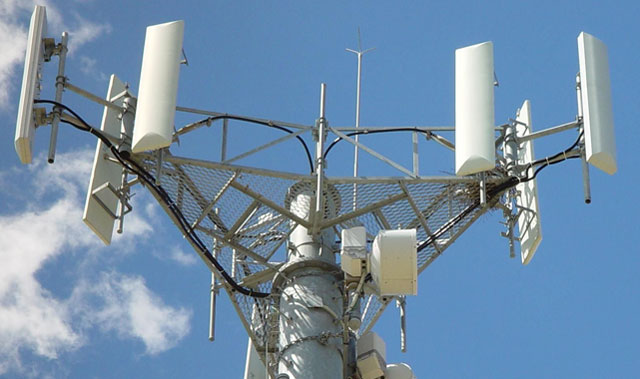
    Most South Africans rely on relatively expensive mobile connections for access
    Most South Africans rely on relatively expensive mobile connections for access

    Statistics South Africa sets an upper bound poverty line of R779 per month per person (in 2011 prices). Most — about 53% — of the South African population live on income below this, according to the last census. So this poverty line is more or less the average income in the country. The poverty line adjusted for inflation to 2016 would be R1 031.

    Taking the international 5% of income goal gives a maximum budget of about R52/month. On three major networks (which account for more than 95% of all mobile customers) 500MB — the amount of data they set as a minimum — of data costs between R85 and R105. So, for the average South African 500MB/month is unaffordable. In fact, mobile data prices would have to fall by about half to be affordable.

    And is 500MB/month enough? It is enough for a lot of instant messaging, or say about half an hour a day of browsing the Web or using Facebook. But it is not enough to participate in otherwise free online courses such as Kahn Academy that often rely heavily on video.

    This is affecting usage. The most popular online activity is instant messaging using applications like WhatsApp. But only one in five people download music online.

    Could mobile data be much cheaper in South Africa? Evidence suggests that the answer is yes. Research ICT Africa’s price index shows that South Africa’s data prices are over 20% more expensive than Nigeria, Uganda and Mozambique and three times as expensive as Kenya.

    It is also worth noting that the poor in South Africa pay much more for data than the better off. If you have a fixed line in your home you can buy pre-paid data bundles for R7/GB or even less, a small fraction of what mobile network users pay.

    Free Internet?

    We could go further and ask if the Internet could and should not only be cheaper but free? In some places and for some people it already is. That includes university students thanks to a network for tertiary institutions funded by the government. It also includes many residents in the metropole of Tshwane — including townships — where there are over 600 Wi-Fi hotspots offering 500MB of data per day at fast speeds for free.

    Just as South African municipalities give poor households a minimum amount of 600l of water and 50kWh of electricity for free, they could extend this model to the Internet.

    As lawyers sometimes say, the right to freedom of expression is an “enabling right” — a right that enables people to access or defend other rights. In the same way the Internet itself is now an enabling technology that is increasingly required to participate in social, political and economic life.

    For many or most South Africans whether or not the Film and Publication Board interferes with their right to view video material online does not affect “their capability to lead the lives they value” because they cannot afford to access video or audio content online. At present, defending “negative” Internet rights is protecting the rights of the few. We need to move to demanding the “positive right” of affordable access if we want Internet freedom for all.The Conversation

    • Indra de Lanerolle is visiting researcher, Network Society Lab, journalism and media programme, Wits University
    • This article was originally published on The Conversation.


    Alison Gillwald Amartya Sen Freedom House Indra de Lanerolle ITU Research ICT Africa
    WhatsApp YouTube Follow on Google News Add as preferred source on Google
    Share. Facebook Twitter LinkedIn WhatsApp Telegram Email Copy Link
    Previous ArticleGlobal CFOs rally behind SA
    Next Article Telkom to sponsor Olympics

    Related Posts

    Ships like Orange Marine's Sophie Germaine are sent out to repair cable breaks when they occur

    Nigeria leads global summit to protect submarine cables from sabotage

    28 February 2025
    A shift in South Africa's communications landscape - Richard Firth

    Telkom urges Icasa to scrap call termination fees completely

    12 December 2024
    6G

    6G is coming – and it could change everything

    13 February 2024
    Company News
    Beyond the hype: trust is the first step to generative AI ROI

    Beyond the hype: trust is the first step to generative AI ROI

    19 January 2026
    New Planet Energy and Span Africa launch landmark solar project

    New Planet Energy and Span Africa launch landmark solar project

    19 January 2026
    Learn before you leap with Binance: why crypto education matters - Hannes Wessels

    Learn before you leap with Binance: why crypto education matters

    15 January 2026
    Opinion
    ANC's attack on Solly Malatsi shows how BEE dogma trumps economic reality - Duncan McLeod

    ANC’s attack on Solly Malatsi shows how BEE dogma trumps economic reality

    14 December 2025
    Netflix, Warner Bros deal raises fresh headaches for MultiChoice - Duncan McLeod

    Netflix, Warner Bros deal raises fresh headaches for MultiChoice

    5 December 2025
    BIN scans, DDoS and the next cybercrime wave hitting South Africa's banks - Entersekt Gerhard Oosthuizen

    BIN scans, DDoS and the next cybercrime wave hitting South Africa’s banks

    3 December 2025

    Subscribe to Updates

    Get the best South African technology news and analysis delivered to your e-mail inbox every morning.

    Latest Posts
    Severe geomagnetic storm hits Earth, Sansa confirms

    Severe geomagnetic storm hits Earth, Sansa confirms

    20 January 2026
    South Africa's new fibre broadband battle

    South Africa’s new fibre broadband battle

    20 January 2026
    Icasa to target Sentech with tougher broadcast pricing rules

    Icasa to target Sentech with tougher broadcast pricing rules

    19 January 2026
    Sansa warns of severe solar storm risk in next 24 hours

    Sansa warns of severe solar storm risk in next 24 hours

    19 January 2026
    © 2009 - 2026 NewsCentral Media
    • Cookie policy (ZA)
    • TechCentral – privacy and Popia

    Type above and press Enter to search. Press Esc to cancel.

    Manage consent

    TechCentral uses cookies to enhance its offerings. Consenting to these technologies allows us to serve you better. Not consenting or withdrawing consent may adversely affect certain features and functions of the website.

    Functional Always active
    The technical storage or access is strictly necessary for the legitimate purpose of enabling the use of a specific service explicitly requested by the subscriber or user, or for the sole purpose of carrying out the transmission of a communication over an electronic communications network.
    Preferences
    The technical storage or access is necessary for the legitimate purpose of storing preferences that are not requested by the subscriber or user.
    Statistics
    The technical storage or access that is used exclusively for statistical purposes. The technical storage or access that is used exclusively for anonymous statistical purposes. Without a subpoena, voluntary compliance on the part of your Internet Service Provider, or additional records from a third party, information stored or retrieved for this purpose alone cannot usually be used to identify you.
    Marketing
    The technical storage or access is required to create user profiles to send advertising, or to track the user on a website or across several websites for similar marketing purposes.
    • Manage options
    • Manage services
    • Manage {vendor_count} vendors
    • Read more about these purposes
    View preferences
    • {title}
    • {title}
    • {title}