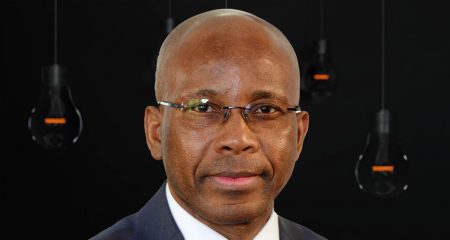
Close Menu
TechCentralTechCentral

    Subscribe to the newsletter

    Get the best South African technology news and analysis delivered to your e-mail inbox every morning.

    Facebook X (Twitter) YouTube LinkedIn
    WhatsApp Facebook X (Twitter) LinkedIn YouTube
    TechCentralTechCentral
    • News
      Cell C cleans up its balance sheet but faces tough trading reality

      Cell C cleans up its balance sheet but faces tough trading reality

      13 February 2026
      MVNO business shines in Cell C's first post-listing results - Jorges Mendes

      MVNO business shines in Cell C’s first post-listing results

      13 February 2026
      Ramaphosa presses ahead with Eskom break-up - Cyril Ramaphosa

      Ramaphosa presses ahead with Eskom break-up

      13 February 2026
      The key technology takeaways from Ramaphosa's 2026 Sona - Cyril Ramaphosa

      The key technology takeaways from Ramaphosa’s 2026 Sona

      13 February 2026
      Toyota SA CEO: NEV inaction will cost South Africa its motoring industry - Andrew Kirby

      Toyota SA CEO: NEV inaction will cost South Africa its motoring industry

      12 February 2026
    • World
      Russia bans WhatsApp

      Russia bans WhatsApp

      12 February 2026
      EU regulators take aim at WhatsApp

      EU regulators take aim at WhatsApp

      9 February 2026
      Musk hits brakes on Mars mission

      Musk hits brakes on Mars mission

      9 February 2026
      Crypto firm accidentally sends R700-billion in bitcoin to its users

      Crypto firm accidentally sends R700-billion in bitcoin to its users

      8 February 2026
      AI won't replace software, says Nvidia CEO amid market rout - Jensen Huang

      AI won’t replace software, says Nvidia CEO amid market rout

      4 February 2026
    • In-depth
      How liberalisation is rewiring South Africa's power sector

      How liberalisation is rewiring South Africa’s power sector

      21 January 2026
      The top-performing South African tech shares of 2025

      The top-performing South African tech shares of 2025

      12 January 2026
      Digital authoritarianism grows as African states normalise internet blackouts

      Digital authoritarianism grows as African states normalise internet blackouts

      19 December 2025
      TechCentral's South African Newsmakers of 2025

      TechCentral’s South African Newsmakers of 2025

      18 December 2025
      Black Friday goes digital in South Africa as online spending surges to record high

      Black Friday goes digital in South Africa as online spending surges to record high

      4 December 2025
    • TCS
      Watts & Wheels S1E4: 'We drive an electric Uber'

      Watts & Wheels S1E4: ‘We drive an electric Uber’

      10 February 2026
      TCS+ | How Cloud On Demand is helping SA businesses succeed in the cloud - Xhenia Rhode, Dion Kalicharan

      TCS+ | Cloud On Demand and Consnet: inside a real-world AWS partner success story

      30 January 2026
      Watts & Wheels S1E4: 'We drive an electric Uber'

      Watts & Wheels S1E3: ‘BYD’s Corolla Cross challenger’

      30 January 2026
      Watts & Wheels S1E4: 'We drive an electric Uber'

      Watts & Wheels S1E2: ‘China attacks, BMW digs in, Toyota’s sublime supercar’

      23 January 2026

      TCS+ | Why cybersecurity is becoming a competitive advantage for SA businesses

      20 January 2026
    • Opinion
      A million reasons monopolies don't work - Duncan McLeod

      A million reasons monopolies don’t work

      10 February 2026
      Eskom unbundling U-turn threatens to undo hard-won electricity gains - Busi Mavuso

      Eskom unbundling U-turn threatens to undo hard-won electricity gains

      9 February 2026
      South Africa's skills advantage is being overlooked at home - Richard Firth

      South Africa’s skills advantage is being overlooked at home

      29 January 2026
      Why Elon Musk's Starlink is a 'hard no' for me - Songezo Zibi

      Why Elon Musk’s Starlink is a ‘hard no’ for me

      26 January 2026
      A million reasons monopolies don't work - Duncan McLeod

      South Africa’s new fibre broadband battle

      20 January 2026
    • Company Hubs
      • Africa Data Centres
      • AfriGIS
      • Altron Digital Business
      • Altron Document Solutions
      • Altron Group
      • Arctic Wolf
      • AvertITD
      • Braintree
      • CallMiner
      • CambriLearn
      • CYBER1 Solutions
      • Digicloud Africa
      • Digimune
      • Domains.co.za
      • ESET
      • Euphoria Telecom
      • Incredible Business
      • iONLINE
      • IQbusiness
      • Iris Network Systems
      • LSD Open
      • Mitel
      • NEC XON
      • Netstar
      • Network Platforms
      • Next DLP
      • Ovations
      • Paracon
      • Paratus
      • Q-KON
      • SevenC
      • SkyWire
      • Solid8 Technologies
      • Telit Cinterion
      • Tenable
      • Vertiv
      • Videri Digital
      • Vodacom Business
      • Wipro
      • Workday
      • XLink
    • Sections
      • AI and machine learning
      • Banking
      • Broadcasting and Media
      • Cloud services
      • Contact centres and CX
      • Cryptocurrencies
      • Education and skills
      • Electronics and hardware
      • Energy and sustainability
      • Enterprise software
      • Financial services
      • Information security
      • Internet and connectivity
      • Internet of Things
      • Investment
      • IT services
      • Lifestyle
      • Motoring
      • Public sector
      • Retail and e-commerce
      • Satellite communications
      • Science
      • SMEs and start-ups
      • Social media
      • Talent and leadership
      • Telecoms
    • Events
    • Advertise
    TechCentralTechCentral
    Home » Sections » Energy and sustainability » New Eskom CEO engaged in questionable stock sales at Sasol

    New Eskom CEO engaged in questionable stock sales at Sasol

    By Agency Staff20 December 2019
    Twitter LinkedIn Facebook WhatsApp Email Telegram Copy Link
    News Alerts
    WhatsApp
    André de Ruyter. Image: Nampak

    André de Ruyter, the incoming head of South Africa’s debt-burdened state power utility, engaged in questionable stock sales while working as a senior executive at Sasol in 2013, according to a forensic audit report.

    De Ruyter, who was Sasol’s senior group executive for global chemicals and North American operations, together with then-chief financial officer, Christine Ramon, knew about cost overruns at a chemical project and sold the company’s stock before that information was disclosed to other executives, says the report, a copy of which was seen by Bloomberg News. The report formed part of a risk and corporate governance assessment commissioned by the petrochemical conglomerate and undertaken by Werksmans Attorneys, a corporate law firm.

    Both executives deny wrongdoing, saying they obtained the necessary authorisation to sell stock and weren’t aware of the Werksmans report. Sasol confirmed that the sales were authorised. The report said, however, that had the information about the overruns been more widely known, approval would not have been given.

    Both executives deny wrongdoing, saying they obtained the necessary authorisation to sell stock and weren’t aware of the Werksmans report

    “It would appear that the information Mr André de Ruyter and Ms Christine Ramon had at their disposal was price-sensitive information when they traded their shares,’’ the report found, citing as evidence e-mail communication between the executives and people working on the project over several months. Most of the e-mails were between De Ruyter and other employees; Ramon was copied on some of them.

    De Ruyter left Sasol in October 2013, before the report was submitted, following a career that spanned more than two decades, to become CEO of Nampak, a packaging company. He is set to take the helm at Eskom by mid-January. Ramon left a month earlier and took up her current role, as CFO of AngloGold Ashanti, the world’s third biggest gold producer, in July 2014.

    Eskom supplies about 95% of South Africa’s power and is struggling to turn itself around after years of mismanagement and alleged graft that have driven it to the brink of insolvency and saddled the company with about R440-billion in debt. As the nation’s biggest state-owned enterprise, the utility is key to maintaining financial and economic stability, and its inability to supply consistent power has hindered the economy.

    Not aware

    The chairman and acting CEO of Eskom, Jabu Mabuza, said the company wasn’t aware of any investigation of De Ruyter. “We can confirm that rigorous integrity and reference checks were performed independently in line with normal recruitment processes and as required by the shareholder in supporting the board’s recommendations for any appointment to the position — these came back with satisfactory results,” he said.

    “In 2013, a review into the share trading of certain executives was undertaken,’’ Sasol said in response to questions. Ramon and De Ruyter left before the report was completed and their departures were not related to it, nor were they told about it, the company said. Sasol added it didn’t believe it needed to report the trades to regulatory authorities.

    Werksmans confirmed it conducted an investigation but declined to comment further, citing attorney-client privilege. Andre Visser, GM of issuer regulation at the JSE, said companies are obliged to report all share dealings by directors.
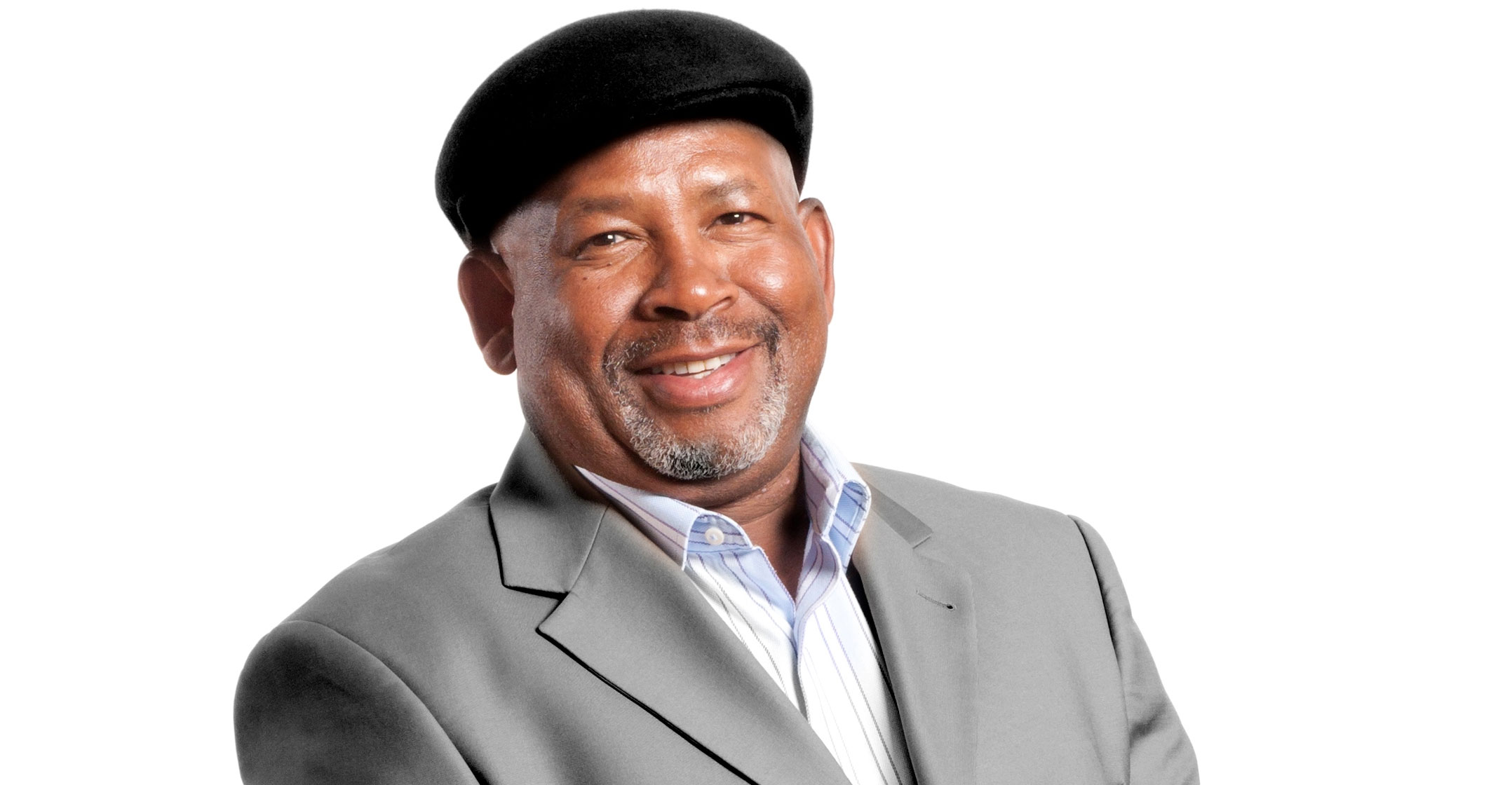
    Eskom interim CEO Jabu Mabuza

    The review came at a time of strained relations between Sasol’s then-CEO, David Constable, and other executives, including De Ruyter and Ramon, according to two people with direct knowledge of the situation. De Ruyter had been a formal contender for the CEO role and lost out to Constable, a Canadian national and former Fluor executive. Constable, currently a board member at Fluor and Rio Tinto, acknowledged a request for comment but did not respond further.

    Stock exchange filings show De Ruyter sold three tranches of the company’s shares for a total of R8.9-million on 14 May 2013, while Ramon sold a single tranche for 33.7 million rand the same day. In both cases, the sales represented the majority of the Sasol stock they held, according to the Werksmans document. Both executives reported to Constable at the time.

    On the day the two executives sold their shares, the company held a meeting at which other executives were told about the escalating costs of expanding a synthetic wax production project, according to the audit report. Internal Sasol correspondence showed De Ruyter and Ramon knew about the issue as early as February 2013, the report said.

    Stock exchange filings show De Ruyter sold three tranches of the company’s shares for a total of R8.9-million on 14 May 2013

    “Both parties are by extension responsible for material misrepresentations in the form of omission and were potentially significantly conflicted in their roles of preparing and finally presenting the material information,’’ the report said.

    On 24 May, Sasol started a so-called closed period, which would have barred executives from trading their stock. On 7 June 2013, Ramon released a financial update revealing that the estimated cost of the wax project in Sasolburg, south of Johannesburg, had surged to R11.9-billion, 40-45% more than previously budgeted. The following month, the company announced a R1.5-billion write-down on the project, which was eventually completed in 2018 at a cost of R13.5-billion.

    De Ruyter said he was responsible for the day-to-day operations of Sasol’s chemical plants and not the execution of projects, and that many executives, including Constable, would have been aware of the problems at the project.

    ‘Unsubstantiated’

    The manner in which the report was produced “smacks of an intent to get the imprimatur of a law firm to cast unsubstantiated and uncorroborated allegations”, De Ruyter said in response to queries. “I do not consider the matter adequately dealt with.’’

    He said the fact that the report had come to light six years after he left Sasol seemed to be an attempt to undermine his credibility as incoming CEO at Eskom. De Ruyter’s appointment was criticised by some labour unions and opposition parties, which saw it as a blow to racial transformation because they said there were suitable black candidates for the Eskom job. These included Jacob Maroga, Eskom CEO from 2007 to 2009, and Dan Marokane, the utility’s former head of group capital, according to people with knowledge of the situation.

    Despite the losses, Sasol’s per-share earnings rose 11% in the year to June 2013 as output from its synthetic fuels business increased. That meant the trades didn’t work out optimally for the two executives: the stock surged 25% between the date they sold and the end of 2013.

    De Ruyter sold R1.49-million worth of Sasol stock in 2011 and 2012, according to stock exchange disclosures. There is no record of Ramon selling stock.

    “I strongly deny that I have acted wrongfully or unlawfully in any manner as alleged or otherwise,” Ramon said. “I strongly deny that I have made any material misrepresentations and that I was conflicted in any manner as alleged. Sasol’s wax production project had no bearing on my decision to sell my securities in Sasol.”

    The audit, which covered the period from 1 February to 31 August 2013, and was concluded after the two executives’ departure, analysed e-mails, regulatory filings and other documents supplied by the company. Its authors said they were given an unrestricted mandate and had unfettered access to information. They didn’t uncover evidence that Sasol board members breached their fiduciary duty during the review period, the report said.

    South Africa’s Financial Markets Act of 2012 specifies that anyone who knowingly deals in securities with undisclosed insider information that could affect their value commits an offence. The JSE’s listing requirement stipulates that directors need written authorisation to trade in their company’s stock and may not be given clearance in any period where they have access to price-sensitive information. Sasol also has American depository receipts, subjecting it to US Securities Exchange Commission rules that require it to disclose material information about legal proceedings and other matters to investors.

    While the conduct of individual managers posed challenges, Sasol’s systems and controls were found to be impeccable, and its risk management and peer review mechanisms were robust, the report concluded. The company’s public disclosure and reporting processes were also compliant with the rules “to a fault,” it said.  — Reported by Antony Sguazzin and Michael Cohen, (c) 2019 Bloomberg LP



    Andre de Ruyter Christine Ramon David Constable Eskom Jabu Mabuza Sasol top
    WhatsApp YouTube Follow on Google News Add as preferred source on Google
    Share. Facebook Twitter LinkedIn WhatsApp Telegram Email Copy Link
    Previous ArticleProsus is set to lose high-stakes bidding war for Just Eat
    Next Article Vodacom, Liquid Telecom in deal to build national 5G network

    Related Posts

    Nersa blunder triggers sharper electricity tariff increases

    Nersa blunder triggers sharper electricity tariff increases

    9 February 2026
    Eskom unbundling U-turn threatens to undo hard-won electricity gains - Busi Mavuso

    Eskom unbundling U-turn threatens to undo hard-won electricity gains

    9 February 2026
    Eskom lifts load reduction for 140 000 customers

    Eskom lifts load reduction for 140 000 customers

    8 February 2026
    Company News
    Cell C delivers maiden results with growth momentum, financial flexibility - Jorges Mendes

    Cell C delivers maiden results with growth momentum, financial flexibility

    13 February 2026
    Start-up king joins Paratus Rwanda - Innocent Mutimura

    Start-up king joins Paratus Rwanda

    13 February 2026
    How NEC XON tackled identity risk for a major telco - Michael de Neuilly Rice

    How NEC XON tackled identity risk for a major telco

    11 February 2026
    Opinion
    A million reasons monopolies don't work - Duncan McLeod

    A million reasons monopolies don’t work

    10 February 2026
    Eskom unbundling U-turn threatens to undo hard-won electricity gains - Busi Mavuso

    Eskom unbundling U-turn threatens to undo hard-won electricity gains

    9 February 2026
    South Africa's skills advantage is being overlooked at home - Richard Firth

    South Africa’s skills advantage is being overlooked at home

    29 January 2026

    Subscribe to Updates

    Get the best South African technology news and analysis delivered to your e-mail inbox every morning.

    Latest Posts
    Cell C cleans up its balance sheet but faces tough trading reality

    Cell C cleans up its balance sheet but faces tough trading reality

    13 February 2026
    MVNO business shines in Cell C's first post-listing results - Jorges Mendes

    MVNO business shines in Cell C’s first post-listing results

    13 February 2026
    Ramaphosa presses ahead with Eskom break-up - Cyril Ramaphosa

    Ramaphosa presses ahead with Eskom break-up

    13 February 2026
    The key technology takeaways from Ramaphosa's 2026 Sona - Cyril Ramaphosa

    The key technology takeaways from Ramaphosa’s 2026 Sona

    13 February 2026
    © 2009 - 2026 NewsCentral Media
    • Cookie policy (ZA)
    • TechCentral – privacy and Popia

    Type above and press Enter to search. Press Esc to cancel.

    Manage consent

    TechCentral uses cookies to enhance its offerings. Consenting to these technologies allows us to serve you better. Not consenting or withdrawing consent may adversely affect certain features and functions of the website.

    Functional Always active
    The technical storage or access is strictly necessary for the legitimate purpose of enabling the use of a specific service explicitly requested by the subscriber or user, or for the sole purpose of carrying out the transmission of a communication over an electronic communications network.
    Preferences
    The technical storage or access is necessary for the legitimate purpose of storing preferences that are not requested by the subscriber or user.
    Statistics
    The technical storage or access that is used exclusively for statistical purposes. The technical storage or access that is used exclusively for anonymous statistical purposes. Without a subpoena, voluntary compliance on the part of your Internet Service Provider, or additional records from a third party, information stored or retrieved for this purpose alone cannot usually be used to identify you.
    Marketing
    The technical storage or access is required to create user profiles to send advertising, or to track the user on a website or across several websites for similar marketing purposes.
    • Manage options
    • Manage services
    • Manage {vendor_count} vendors
    • Read more about these purposes
    View preferences
    • {title}
    • {title}
    • {title}