Close Menu
TechCentralTechCentral

    Subscribe to the newsletter

    Get the best South African technology news and analysis delivered to your e-mail inbox every morning.

    Facebook X (Twitter) YouTube LinkedIn
    WhatsApp Facebook X (Twitter) LinkedIn YouTube
    TechCentralTechCentral
    • News
      Eskom lifts load reduction for 140 000 customers

      Eskom lifts load reduction for 140 000 customers

      8 February 2026
      AI chatbots are coming to Apple CarPlay

      AI chatbots are coming to Apple CarPlay

      8 February 2026
      South Africa's stablecoin silence is becoming a policy failure

      South Africa’s stablecoin silence is becoming a policy failure

      6 February 2026
      Every electric car you can buy in South Africa in early 2026, ranked by price

      Every electric car you can buy in South Africa in early 2026, ranked by price

      6 February 2026
      From stocks to crypto, markets reel as AI doubts grow

      From stocks to crypto, markets reel as AI doubts grow

      6 February 2026
    • World
      Crypto firm accidentally sends R700-billion in bitcoin to its users

      Crypto firm accidentally sends R700-billion in bitcoin to its users

      8 February 2026
      AI won't replace software, says Nvidia CEO amid market rout - Jensen Huang

      AI won’t replace software, says Nvidia CEO amid market rout

      4 February 2026
      Apple acquires audio AI start-up Q.ai

      Apple acquires audio AI start-up Q.ai

      30 January 2026
      SpaceX IPO may be largest in history

      SpaceX IPO may be largest in history

      28 January 2026
      Nvidia throws AI at the weather

      Nvidia throws AI at weather forecasting

      27 January 2026
    • In-depth
      How liberalisation is rewiring South Africa's power sector

      How liberalisation is rewiring South Africa’s power sector

      21 January 2026
      The top-performing South African tech shares of 2025

      The top-performing South African tech shares of 2025

      12 January 2026
      Digital authoritarianism grows as African states normalise internet blackouts

      Digital authoritarianism grows as African states normalise internet blackouts

      19 December 2025
      TechCentral's South African Newsmakers of 2025

      TechCentral’s South African Newsmakers of 2025

      18 December 2025
      Black Friday goes digital in South Africa as online spending surges to record high

      Black Friday goes digital in South Africa as online spending surges to record high

      4 December 2025
    • TCS
      TCS+ | How Cloud On Demand is helping SA businesses succeed in the cloud - Xhenia Rhode, Dion Kalicharan

      TCS+ | Cloud On Demand and Consnet: inside a real-world AWS partner success story

      30 January 2026
      Watts & Wheels S1E3: 'BYD's Corolla Cross challenger'

      Watts & Wheels S1E3: ‘BYD’s Corolla Cross challenger’

      30 January 2026
      Watts & Wheels S1E3: 'BYD's Corolla Cross challenger'

      Watts & Wheels S1E2: ‘China attacks, BMW digs in, Toyota’s sublime supercar’

      23 January 2026

      TCS+ | Why cybersecurity is becoming a competitive advantage for SA businesses

      20 January 2026
      Watts & Wheels S1E3: 'BYD's Corolla Cross challenger'

      Watts & Wheels: S1E1 – ‘William, Prince of Wheels’

      8 January 2026
    • Opinion
      South Africa's skills advantage is being overlooked at home - Richard Firth

      South Africa’s skills advantage is being overlooked at home

      29 January 2026
      Why Elon Musk's Starlink is a 'hard no' for me - Songezo Zibi

      Why Elon Musk’s Starlink is a ‘hard no’ for me

      26 January 2026
      South Africa's new fibre broadband battle - Duncan McLeod

      South Africa’s new fibre broadband battle

      20 January 2026
      AI moves from pilots to production in South African companies - Nazia Pillay SAP

      AI moves from pilots to production in South African companies

      20 January 2026
      South Africa's new fibre broadband battle - Duncan McLeod

      ANC’s attack on Solly Malatsi shows how BEE dogma trumps economic reality

      14 December 2025
    • Company Hubs
      • Africa Data Centres
      • AfriGIS
      • Altron Digital Business
      • Altron Document Solutions
      • Altron Group
      • Arctic Wolf
      • AvertITD
      • Braintree
      • CallMiner
      • CambriLearn
      • CYBER1 Solutions
      • Digicloud Africa
      • Digimune
      • Domains.co.za
      • ESET
      • Euphoria Telecom
      • Incredible Business
      • iONLINE
      • IQbusiness
      • Iris Network Systems
      • LSD Open
      • NEC XON
      • Netstar
      • Network Platforms
      • Next DLP
      • Ovations
      • Paracon
      • Paratus
      • Q-KON
      • SevenC
      • SkyWire
      • Solid8 Technologies
      • Telit Cinterion
      • Tenable
      • Vertiv
      • Videri Digital
      • Vodacom Business
      • Wipro
      • Workday
      • XLink
    • Sections
      • AI and machine learning
      • Banking
      • Broadcasting and Media
      • Cloud services
      • Contact centres and CX
      • Cryptocurrencies
      • Education and skills
      • Electronics and hardware
      • Energy and sustainability
      • Enterprise software
      • Financial services
      • Information security
      • Internet and connectivity
      • Internet of Things
      • Investment
      • IT services
      • Lifestyle
      • Motoring
      • Public sector
      • Retail and e-commerce
      • Satellite communications
      • Science
      • SMEs and start-ups
      • Social media
      • Talent and leadership
      • Telecoms
    • Events
    • Advertise
    TechCentralTechCentral
    Home » Sections » Financial services » PayShap success won’t automatically fix SA’s cross-border payments gap

    PayShap success won’t automatically fix SA’s cross-border payments gap

    Citibank’s Emanuela Saccarola says technology “is not the problem” in cross-border payments.
    By Nkosinathi Ndlovu18 September 2025
    Twitter LinkedIn Facebook WhatsApp Email Telegram Copy Link
    News Alerts
    WhatsApp
    PayShap success won't automatically fix SA's cross-border payments gap - Emanuela Saccarola
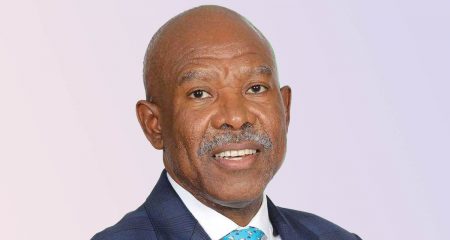
    Emanuela Saccarola. Image: LinkedIn

    The successful modernisation of a country’s domestic payments infrastructure onto faster, instant payment rails like South Africa’s PayShap does not always translate into similar success in the cross-border payments space – and regulation is often a bottleneck.

    Speaking to TechCentral in an interview on Wednesday, Emanuela Saccarola, head of global cross-border payments at Citibank, said countries such as India and Brazil, which have successfully made their domestic payments fast and seamless through modernised infrastructure, continue to struggle to achieve similar levels of proficiency in the cross-border space. This is because their regulatory environments are not as enabling as they could be.

    “There are a lot of people who like to think of cross-border payments as one [monolithic] thing, but the reality is that it is a combination of multiple corridors made up of approximately 200 markets around the world and 20 000 combinations of cross-border payments,” said Saccarola.

    Cross-border payments are important to US-headquartered Citibank, whose South African operations date back to 1920

    “Ideally, when you look at cross-border payments, you should be able to say there are two seamless domestic payment infrastructures with a seamless foreign exchange service in between. Where we achieve that is where the ecosystems in the two domestic countries are seamless and operate with modernised infrastructure and probably very light regulation.”

    Cross-border payments are important to US-headquartered Citibank, whose South African operations date back to 1920 and are focused on corporate and institutional banking. Using its presence in over 200 jurisdictions worldwide, Citibank offers its clients, including some of South Africa’s big banks and fintechs like M-Pesa in Kenya, the underlying infrastructure to process and clear cross-border payments across numerous corridors with differing regulatory regimes.

    Saccarola said the efficiency of cross-border payments differs from country to country, with a payment from Singapore to Thailand, for example, differing to one from the US to Brazil. Other than differences in the “heaviness” or “lightness” of the regulatory regimes of each jurisdiction involved in the transaction, the legal systems used and how financial concepts are fundamentally defined play a role in determining how seamless the transaction will be.

    Reserve Bank goals

    This is the one of the challenges facing the South African Reserve Bank as it aims to harmonise the regulatory landscape across the Southern African Development Community. The goals of the Reserve Bank and its regional counterparts are to digitise the cash-driven remittances market, thereby making it safer and cheaper to move money across the region and simultaneously increase intra-regional trade.

    The modernised technology infrastructure facilitating these changes is called Transactions Cleared on an Immediate Basis (TCIB), which is built and managed by PayInc – previously known as BankservAfrica – and is similar to TCIB’s domestic equivalent, PayShap. According to Sacarrola, Citibank’s global experience shows that “technology is never the problem” whenever efforts to make cross-border payments more efficient are made.

    “Some countries, continents and areas are better than others. There are lots of components to getting harmonisation right and there have been a lot of industry-led proofs of concept around bilateral and multilateral platforms and how to interlink different payment systems,” said Saccarola.

    Read: Fintechs and crypto shake Africa’s banking foundations

    “The technology is never the problem; it is how you define the rules of that scheme. What are the legal interactions, for example, between banks that sit in Zambia and banks that sit in South Africa? What licences do they need? Are they the same in each country? All those things need to be defined.”

    Adding more complexity to regulators ensuring their respective financial systems remain stable as they evolve is the speed at which the financial sector is changing. Fintechs were the first to disrupt the sector and Saccarola admits the industry “needed them to”, adding that the sector “needed the innovation”.

    Sadc Southern AfricaNew payment methods and the digitisation of currency – through cryptocurrencies, stablecoins and central bank digital currencies – mean regulators must adapt to a shifting financial ecosystem at a rapid pace. To keep pace, regulators, banks and other players in the financial ecosystem must work together, she said.

    “Collaboration also has to happen in the public sector. Regulators have a really big job right now because everything is moving quickly and we have to empathise with them, the regulatory scheme managers and central banks.

    “Regulators very often think locally first and then, sometimes, globally. Sometimes the banks, like Citibank, are then needed to advocate and explain best practices or talk to the regulator to have a dialogue to say, ‘Hey, you need to think about cross border’. Some regulators are very receptive and they then amend the rule book, or they potentially evolve the scheme rules,” said Saccarola.

    The key to any success story is adoption – that only happens with incentives or if a regulator makes it mandatory

    An enabling regulatory environment with innovative participating financial ecosystem players achieves little if adoption on the ground is lagging. Saccarola said Africa’s relatively young population is quick to adopt digital payment methods and wallets, allowing the continent to leapfrog some of the intervening technologies, like bank cards, used extensively in more mature markets.

    She added that countries with older populations are less adaptive to change, citing the US, where cheques remain a common way to facilitate payments, and Europe, where “credit card culture” dominates. But Africa has other issues hampering the adoption of new technologies for cross-border payments.

    “The key to any success story is adoption, and adoption only happens either with incentives or if a regulator says something is mandatory and everybody needs to come in and participate.

    Read: EFTs may go in Reserve Bank payments overhaul

    “Other aspects of the infrastructure outside of the payments’ ecosystem are relevant. You need to have a mobile phone and internet access, which is maybe not a very big problem in South Africa, [but is missing] in other parts of the continent,” said Saccarola. –© 2025 NewsCentral Media

    Get breaking news from TechCentral on WhatsApp. Sign up here.

    Don’t miss:

    Reserve Bank bets on PayInc to fix South Africa’s digital payments gap



    Citibank Emanuela Saccarola PayShap Reserve Bank South African Reserve Bank
    WhatsApp YouTube Follow on Google News Add as preferred source on Google
    Share. Facebook Twitter LinkedIn WhatsApp Telegram Email Copy Link
    Previous ArticleNvidia bets $5-billion on Intel, fuelling turnaround hopes
    Next Article Google to anchor Africa subsea cables with four new ‘connectivity hubs’

    Related Posts

    The changing state of fintech - from disruption to infrastructure - BBD Software

    The changing state of fintech – from disruption to infrastructure

    27 January 2026
    Rand breaks through R16/$ - and may have further to run

    Rand breaks through R16/$ – and may have further to run

    26 January 2026
    Consumer demand driving a shift in online payments

    Shoppers forcing merchants to adopt new digital payment methods

    15 January 2026
    Company News
    The skills gap is a thinking gap: why South African employers can't find problem solvers

    The skills gap is a thinking gap: why SA employers can’t find problem solvers

    6 February 2026
    Vox Kiwi Wireless: fibre-like broadband for South African homes

    Vox Kiwi Wireless: fibre-like broadband for South African homes

    5 February 2026
    NEC XON achieves an African first with full Fortinet accreditation - Ian Kruger

    NEC XON achieves an African first with full Fortinet accreditation

    5 February 2026
    Opinion
    South Africa's skills advantage is being overlooked at home - Richard Firth

    South Africa’s skills advantage is being overlooked at home

    29 January 2026
    Why Elon Musk's Starlink is a 'hard no' for me - Songezo Zibi

    Why Elon Musk’s Starlink is a ‘hard no’ for me

    26 January 2026
    South Africa's new fibre broadband battle - Duncan McLeod

    South Africa’s new fibre broadband battle

    20 January 2026

    Subscribe to Updates

    Get the best South African technology news and analysis delivered to your e-mail inbox every morning.

    Latest Posts
    Eskom lifts load reduction for 140 000 customers

    Eskom lifts load reduction for 140 000 customers

    8 February 2026
    Crypto firm accidentally sends R700-billion in bitcoin to its users

    Crypto firm accidentally sends R700-billion in bitcoin to its users

    8 February 2026
    AI chatbots are coming to Apple CarPlay

    AI chatbots are coming to Apple CarPlay

    8 February 2026
    South Africa's stablecoin silence is becoming a policy failure

    South Africa’s stablecoin silence is becoming a policy failure

    6 February 2026
    © 2009 - 2026 NewsCentral Media
    • Cookie policy (ZA)
    • TechCentral – privacy and Popia

    Type above and press Enter to search. Press Esc to cancel.

    Manage consent

    TechCentral uses cookies to enhance its offerings. Consenting to these technologies allows us to serve you better. Not consenting or withdrawing consent may adversely affect certain features and functions of the website.

    Functional Always active
    The technical storage or access is strictly necessary for the legitimate purpose of enabling the use of a specific service explicitly requested by the subscriber or user, or for the sole purpose of carrying out the transmission of a communication over an electronic communications network.
    Preferences
    The technical storage or access is necessary for the legitimate purpose of storing preferences that are not requested by the subscriber or user.
    Statistics
    The technical storage or access that is used exclusively for statistical purposes. The technical storage or access that is used exclusively for anonymous statistical purposes. Without a subpoena, voluntary compliance on the part of your Internet Service Provider, or additional records from a third party, information stored or retrieved for this purpose alone cannot usually be used to identify you.
    Marketing
    The technical storage or access is required to create user profiles to send advertising, or to track the user on a website or across several websites for similar marketing purposes.
    • Manage options
    • Manage services
    • Manage {vendor_count} vendors
    • Read more about these purposes
    View preferences
    • {title}
    • {title}
    • {title}