Close Menu
TechCentralTechCentral

    Subscribe to the newsletter

    Get the best South African technology news and analysis delivered to your e-mail inbox every morning.

    Facebook X (Twitter) YouTube LinkedIn
    WhatsApp Facebook X (Twitter) LinkedIn YouTube
    TechCentralTechCentral
    • News
      Africa's most popular phones have a tracking problem

      Africa’s most popular phones have a tracking problem

      24 July 2026
      Vodacom taps UJ, AWS to build its AI talent pipeline - Vodacom Group CEO Shameel Joosub

      Vodacom taps UJ, AWS to build its AI talent pipeline

      24 July 2026
      Intel is back in the game - Intel CEO Lip-Bu Tan. Laure Andrillon/Reuters

      Intel is back in the game

      24 July 2026
      Fat bonuses at Telkom despite group missing own targets - Serame Taukobong

      Fat bonuses at Telkom despite group missing own targets

      23 July 2026
      Massive changes coming to Amazon Prime Video - Jeff Bezos

      Massive changes coming to Amazon Prime Video

      23 July 2026
    • World
      Meta AI will now tell parents if their teen is in crisis

      Meta AI will now tell parents if their teen is in crisis

      17 July 2026
      IBM shares crash 25% as AI upends software spending - Arvind Krishna

      IBM shares crash 25% as AI upends software spending

      15 July 2026
      Jony Ive's first OpenAI device: an AI smart speaker - Jony Ive and Sam Altman

      Jony Ive’s first OpenAI device: an AI smart speaker

      15 July 2026
      Stripe, Advent in talks to buy PayPal for $53-billion

      Stripe, Advent in talks to buy PayPal for $53-billion

      15 July 2026
      Memory crisis sends smartphone market into steep decline

      Memory crisis sends smartphone market into steep decline

      13 July 2026
    • In-depth
      The plan to stop AI from breaking the world - Google DeepMind CEO Demis Hassabis. Image: John Sears

      The plan to stop AI from breaking the world

      16 July 2026
      The internet has a Strait of Hormuz problem

      The internet has a Strait of Hormuz problem

      15 July 2026
      AI boom sparks rally, frenzy and fear

      AI boom sparks rally, frenzy and fear

      11 June 2026
      Every plug-in hybrid on sale in South Africa, ranked by price - Lamborghini Temerario

      Every plug-in hybrid on sale in South Africa, ranked by price

      7 June 2026
      What Wi-Fi 8 will mean for wireless networks

      What Wi-Fi 8 will mean for wireless networks

      1 June 2026
    • TCS
      TCS | How Optasia lends billions to people banks can't see - Salvador Anglada

      TCS | How Optasia lends billions to people banks can’t see

      23 July 2026
      The rands-and-cents case for electric trucks - William Kelly Watts & Wheels with Wills

      The rands-and-cents case for electric trucks

      20 July 2026
      Watts & Wheels S1E7: 'Ferrari's EV breaks the internet'

      Watts & Wheels S1E7: ‘Ferrari’s EV breaks the internet’

      8 July 2026
      TCS | Pick n Pay's Enrico Ferigolli on Penny, the AI that shops for you

      TCS | Pick n Pay’s Enrico Ferigolli on Penny, the AI that shops for you

      2 July 2026
      TCS+ | How Tracker is turning vehicle data into business strategy - Silvia Schollenberger

      TCS+ | How Tracker is turning vehicle data into business strategy

      1 July 2026
    • Opinion
      Selling vapour is corporate suicide in slow motion - Jannie van Zyl

      Selling vapour is corporate suicide in slow motion

      16 July 2026
      Brazil's online gambling crackdown is a lesson for South Africa

      How Amazon outmanoeuvred Starlink in South Africa

      15 July 2026
      The Popia problem with agentic AI - Herman Haasbroek

      The Popia problem with agentic AI

      14 July 2026
      The author, Fanie van Rooyen

      South Africa can still catch the AI wave – here’s how

      7 July 2026
      The author, Fanie van Rooyen

      The AI utopia South Africa can’t afford

      1 July 2026
    • Company Hubs
      • 1Stream
      • Africa Data Centres
      • AfriGIS
      • Altron Digital Business
      • Altron Document Solutions
      • Altron Group
      • Arctic Wolf
      • Ascent Technology
      • AvertITD
      • BBD
      • Braintree
      • CallMiner
      • CambriLearn
      • CM Telecom
      • Contactable
      • CYBER1 Solutions
      • Digicloud Africa
      • Digimune
      • Domains.co.za
      • ESET
      • Euphoria Telecom
      • HOSTAFRICA
      • Incredible Business
      • iONLINE
      • IQbusiness
      • Iris Network Systems
      • Kaspersky
      • LSD Open
      • Mitel
      • NEC XON
      • Netstar
      • Network Platforms
      • Next DLP
      • Ovations
      • Paracon
      • Paratus
      • Q-KON
      • SevenC
      • SkyWire
      • Solid8 Technologies
      • Telit Cinterion
      • Telviva
      • Tenable
      • Vertiv
      • Videri Digital
      • Vodacom Business
      • Vox
      • Wipro
      • Workday
      • XLink
    • Sections
      • AI and machine learning
      • Banking
      • Broadcasting and Media
      • Cloud services
      • Contact centres and CX
      • Cryptocurrencies
      • Education and skills
      • Electronics and hardware
      • Energy and sustainability
      • Enterprise software
      • Financial services
      • HealthTech
      • Information security
      • Internet and connectivity
      • Internet of Things
      • Investment
      • IT services
      • Lifestyle
      • Policy and regulation
      • Public sector
      • Retail and e-commerce
      • Satellite communications
      • Science
      • SMEs and start-ups
      • Social media
      • Talent and leadership
      • Telecoms
      • Watts & Wheels
    • Events
    • Advertise
    TechCentralTechCentral
    Home » Sections » Financial services » Fintechs and crypto shake Africa’s banking foundations

    Fintechs and crypto shake Africa’s banking foundations

    A new report by Standard Bank CIB shows that fintechs are taking the fight to traditional banks in sub-Saharan Africa.
    By Nkosinathi Ndlovu12 September 2025
    Twitter LinkedIn Facebook WhatsApp Email Telegram Copy Link
    News Alerts
    WhatsApp

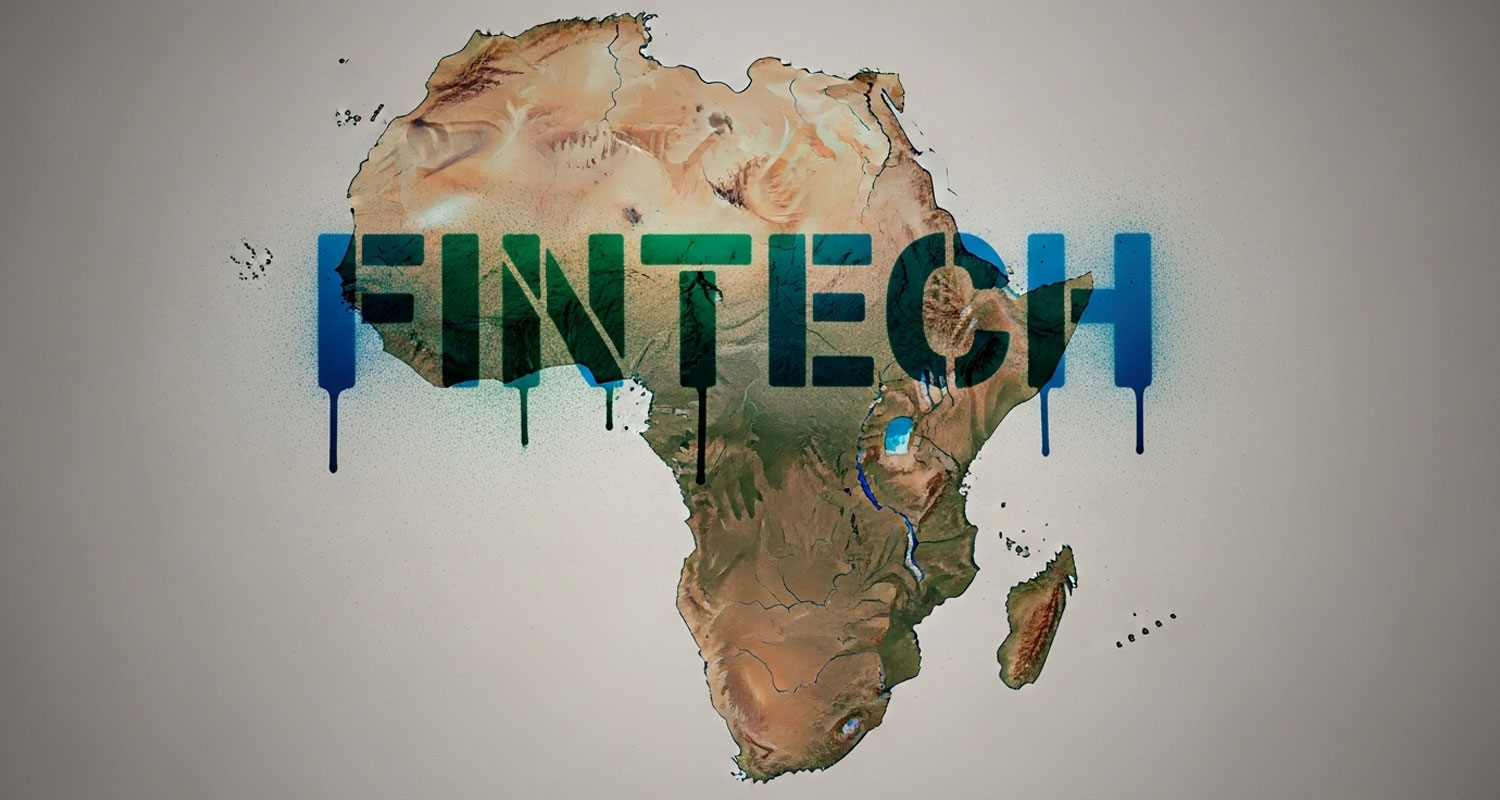
    Fintechs and crypto shake Africa's banking foundationsRapid changes in the payments landscape across Africa are challenging traditional banks, which are being forced to adapt quickly to new modes of facilitating transactions such as mobile money and cryptocurrencies.

    This is according to the Standard Bank Corporate and Investment Banking (CIB) Payments in Africa white paper released last week, which found that increased competition from fintech companies and a rapidly evolving regulatory landscape are among the many challenges faced by traditional banks across the continent.

    “The increasing prevalence of digital technologies, including mobile money and fintech solutions, is driving financial inclusion while simultaneously disrupting existing payment systems,” said Theresa van der Klooster, senior manager for strategy enablement at Standard Bank CIB Africa, in the white paper.

    They often operate with lower overhead costs and are adept at tailoring solutions to meet specific customer needs

    “The emergence of non-bank competitors, particularly fintech companies, is intensifying competition and potentially disintermediating traditional banking services. The agile new entrants often operate with lower overhead costs and are adept at tailoring solutions to meet specific customer needs, putting pressure on corporate banks to innovate and enhance their digital offerings.”

    According to the white paper, some 80 billion mobile transactions were processed in sub-Saharan Africa in 2024, reflecting the increasing importance of alternatives to traditional banking models in the region.

    New types of transactions bring with them new regulatory requirements that make compliance even more complex for all players in the financial ecosystem, including banks. Initiatives such as the introduction of open banking regulations, updated know-your-customer requirements, the use of regulatory sandboxes and the introduction of digital currencies add a regulatory burden that banks must adapt to quickly to thrive.

    Evolving landscape

    “The evolving regulatory landscape, particularly regarding open banking, cryptocurrencies and data privacy, poses a significant compliance challenge for the corporate banks. Navigating these complex and often fragmented regulations requires significant investment in compliance infrastructure, legal expertise and ongoing monitoring of regulatory developments. Failure to comply can result in substantial penalties,” the report said.

    Banks are not the only entities burdened by shifts in the regulatory landscape. Many governments across the continent are working to deeply integrate non-banks into the core of their financial systems. In South Africa, the Reserve Bank has unveiled plans to add non-banks, including mobile network operators and retailers that offer financial services to their customers, into the core payments and settlements system.

    Read: Work under way to make Sadc payments faster and cheaper

    The move is aimed at driving financial inclusion, but it also threatens to overload the incoming fintechs, for whom the financial services they provide may not be their core business, with an outsized compliance burden. As sector regulator, the Reserve Bank has adopted an “activity-based licensing” approach that places different types of financial institutions into different tiers of regulatory intensity depending on the extent of their financial activities. This aims to make the regulatory requirements of a telecommunications operator offering a mobile wallet less onerous than those of a bank offering a larger and more complex set of financial services.

    Responding to questions from TechCentral at the launch of the white paper, Nthabiseng Mohale, head of interbank and domestic payments at Standard Bank Group, said the upcoming regulatory changes also offer traditional banks and fintechs an opportunity to collaborate on compliance.

    Standard Bank CIB’s Theresa van der Klooster

    “Where you find a mobile network operator, for example, that does not require a bank to process a certain transaction, that operator can outsource the compliance and risk capability from the banks because the banks have been doing it for years. Fintechs will have to define what their core operation is and then figure out how they partner with the existing banks – or other participants that are already present in the ecosystem – to deliver that service,” said Mohale.

    Another regulatory challenge highlighted in the white paper is the fragmentation of financial regulation across markets in sub-Saharan Africa. This is problematic for two reasons: firstly, Africa has a large remittances market driven by a massive migrant worker population sending money to relatives back home; and, secondly, a lack of regulatory harmonisation slows down the speed at which money flows between different countries, restricting intra-regional trade.

    For banks to succeed in this dynamic environment, they must carefully navigate key regulatory and risk consideration

    The Reserve Bank and its counterparts in the Southern African Development Community have responded to the harmonisation problem by developing working groups aimed at aligning financial legislation across the region.

    Additionally, the region now makes use of PayInc’s – formerly known as BankServAfrica’s – Transactions Cleared on an Immediate Basis system to facilitate real-time cross-border payments across Sadc. Similar projects are in development in East Africa through the East African Community and West Africa through the Economic Community of West African States.

    “The payments sector in Africa is currently experiencing rapid evolution, creating both exciting opportunities and significant challenges for corporate banks. For banks to succeed in this dynamic environment, they must carefully navigate key regulatory and risk considerations,” said Van der Klooster. –© 2025 NewsCentral Media

    Get breaking news from TechCentral on WhatsApp. Sign up here.

    Don’t miss:

    Reserve Bank bets on PayInc to fix South Africa’s digital payments gap

    Follow TechCentral on Google News Add TechCentral as your preferred source on Google


    Nthabiseng Mohale Reserve Bank South African Reserve Bank Standard Bank Standard Bank CIB Theresa van der Klooster
    WhatsApp YouTube
    Share. Facebook Twitter LinkedIn WhatsApp Telegram Email Copy Link
    Previous ArticleMicrosoft, OpenAI strike provisional deal to reshape AI partnership
    Next Article iPhone 17 price surprise in South Africa

    Related Posts

    South African inflation surges to 5% - a two-year high

    South African inflation surges to 5% – a two-year high

    22 July 2026
    New Standard Bank facility to fund African tower roll-out - Helios Towers

    New Standard Bank facility to fund African tower roll-out

    15 July 2026
    Fintech takes ATM fight to competition regulator

    Fintech takes ATM fight to competition regulator

    14 July 2026
    Company News
    Why Europe is turning to South Africa for cross-border innovation - BBD Software

    Why Europe is turning to South Africa for cross-border innovation

    24 July 2026
    Green dashboards, stalled change: the CIO's blind spot - Change Logic Marchant van den Heever

    Green dashboards, stalled change: the CIO’s blind spot

    24 July 2026
    Why Africa's cloud needs more than one path - Africa Data Centres

    Why Africa’s cloud needs more than one path

    23 July 2026
    Opinion
    Selling vapour is corporate suicide in slow motion - Jannie van Zyl

    Selling vapour is corporate suicide in slow motion

    16 July 2026
    Brazil's online gambling crackdown is a lesson for South Africa

    How Amazon outmanoeuvred Starlink in South Africa

    15 July 2026
    The Popia problem with agentic AI - Herman Haasbroek

    The Popia problem with agentic AI

    14 July 2026

    Subscribe to Updates

    Get the best South African technology news and analysis delivered to your e-mail inbox every morning.

    Latest Posts
    Africa's most popular phones have a tracking problem

    Africa’s most popular phones have a tracking problem

    24 July 2026
    Vodacom taps UJ, AWS to build its AI talent pipeline - Vodacom Group CEO Shameel Joosub

    Vodacom taps UJ, AWS to build its AI talent pipeline

    24 July 2026
    Intel is back in the game - Intel CEO Lip-Bu Tan. Laure Andrillon/Reuters

    Intel is back in the game

    24 July 2026
    Why Europe is turning to South Africa for cross-border innovation - BBD Software

    Why Europe is turning to South Africa for cross-border innovation

    24 July 2026
    © 2009 - 2026 NewsCentral Media
    Built and maintained by Chronon
    • Cookie policy (ZA)
    • TechCentral – privacy and Popia

    Type above and press Enter to search. Press Esc to cancel.

    Manage consent

    TechCentral uses cookies to enhance its offerings. Consenting to these technologies allows us to serve you better. Not consenting or withdrawing consent may adversely affect certain features and functions of the website.

    Functional Always active
    The technical storage or access is strictly necessary for the legitimate purpose of enabling the use of a specific service explicitly requested by the subscriber or user, or for the sole purpose of carrying out the transmission of a communication over an electronic communications network.
    Preferences
    The technical storage or access is necessary for the legitimate purpose of storing preferences that are not requested by the subscriber or user.
    Statistics
    The technical storage or access that is used exclusively for statistical purposes. The technical storage or access that is used exclusively for anonymous statistical purposes. Without a subpoena, voluntary compliance on the part of your Internet Service Provider, or additional records from a third party, information stored or retrieved for this purpose alone cannot usually be used to identify you.
    Marketing
    The technical storage or access is required to create user profiles to send advertising, or to track the user on a website or across several websites for similar marketing purposes.
    • Manage options
    • Manage services
    • Manage {vendor_count} vendors
    • Read more about these purposes
    View preferences
    • {title}
    • {title}
    • {title}