South Africa’s rand stablecoin issuers want treasury’s rewritten cross-border crypto rules to treat their tokens as payments rather than capital flows, and to let companies use them.
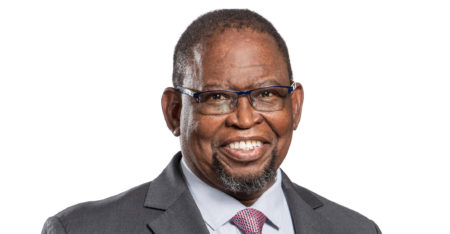
Finance minister Enoch Godongwana told parliament on Wednesday that the draft capital flow management regulations, “which included the cross-border treatment of crypto assets”, had drawn thousands of comments and that “we need to take a different approach to these amendments”.
In his medium-term budget policy statement, he said treasury would shift away from pre-approvals and instead assess transactions for legitimacy and tax compliance, guided by the recommendations of the Financial Stability Board. A revised second draft would follow, but he gave no date and did not say which provisions would change.
Simon Dingle, co-founder of the rand stablecoin Zarp, said the announcement was “a clear sign that treasury and the Reserve Bank listened to the thousands of submissions on the draft rules”.
“A fully reserve-backed rand stablecoin like Zarp is not capital leaving the country,” he said. “Treating every stablecoin payment as a capital flow, when the same payment through a bank wouldn’t be, never made sense. We hope the second draft draws that distinction clearly.”
He also called for the ban on companies moving crypto across borders to be dropped, “because business-to-business payments are where stablecoins add the most value”. A draft crypto asset manual released in August would bar South African companies from moving crypto across the border in either direction, putting the young rand stablecoin market on course for a potential regulatory wall.
Exchange control
“Pre-approval regimes don’t stop capital from leaving in practice. They push activity offshore and into the shadows,” said Dingle, who argued in August that exchange controls had accelerated the outflows they were meant to stop. “Ultimately, the country has to abolish exchange control, and this is a welcome step in that direction.”
Super Group’s ZAR Supercoin (ZARsc) also welcomed the shift. Gideon Greaves, MD of Supercoin, called the move to assessing transactions for legitimacy and tax compliance “a positive step”.
“A licensed, rand-backed stablecoin can work as a transparent local payment. When two South Africans transact in ZARsc, the rand behind the coin stays in a South African bank account,” he said. He hoped the reference to the FSB would mean “rules that recognise the difference between a domestic rand stablecoin and other crypto assets”.
Wiehann Olivier, partner and global co-head of digital assets at Forvis Mazars, said the shift recognised that “regulation should identify and address actual risk rather than prevent legitimate participation before it begins”.

Data published on Tuesday by crypto payments company MoneyBadger shows that monthly checkout value in Zaru, the rand stablecoin issued by BlockTower South Africa, rose from R484 207 in June to R1.28-million in September, 2.64 times the June level. Growth then slowed to 10.6% between August and September.
So far in 2026, Zaru has accounted for 7.7% of checkout spending on MoneyBadger’s network, behind bitcoin at 39.9% and the dollar stablecoin USDT at 36.1%. ZARsc recorded R4 408 in September, up 286.9% from a low base in August.
The growth came during a Luno Pay reward campaign running from 1 June to 31 January 2027, under which Luno customers get 15% back on purchases of R100 or more paid with Zaru, capped at R500 in any 30-day period. The reward is paid in Tether Gold, a gold-backed token, not in rand or Zaru. Luno is now promoting the reward at Engen forecourts.
MoneyBadger also has ties to Zaru’s backers. Its CEO and co-founder, Carel van Wyk, co-founded Luno, which is one of BlockTower’s three shareholders alongside Sanlam. Luno is also one of the exchanges MoneyBadger works with. MoneyBadger’s numbers cover only confirmed checkout activity on its own network, not issuer-wide circulation or trading.
Zaru launched in February with backing from Luno, Sanlam, EasyEquities and Lesaka. Its latest proof-of-reserves report, an agreed-upon procedures engagement by Moore dated 1 October, put circulation at 61.6 million tokens at 31 August, up from 58.4 million at the end of June.
Zarp, which launched in 2021, operates as a representative of licensed financial services provider Inves Capital, with its reserves managed by Old Mutual Wealth. Its public dashboard showed R81.9-million in circulation on Thursday, little changed from R81.5-million in August, backed by reserves of R93.3-million.
“If South African businesses cannot interact efficiently with international platforms and new financial infrastructure, the global market will not wait,” Forvis Mazars’ Olivier said. “It will continue developing through dollar-, euro- and other currency-backed instruments, potentially leaving the rand increasingly peripheral.” – © 2026 NewsCentral Media