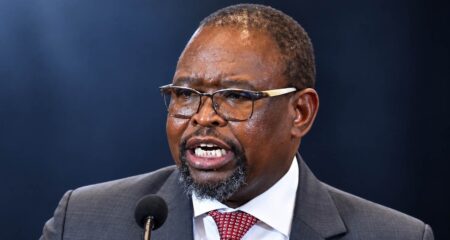
Finance minister Enoch Godongwana will cut the general fuel levy by R3/l on diesel and R1.50/l on petrol from 4 November, the government’s second round of fuel tax relief this year.
The cuts will run until 1 December. From then until 5 January, the relief will be smaller: R1.50/l on diesel and R1/l on petrol. In his medium-term budget policy statement on Wednesday, Godongwana said the measures would provide R10-billion in support, at a cost of R10-billion in foregone revenue.
“This intervention will help ease cost-of-living pressures without compromising the sustainability of the budget,” he said.
To pay for it, R10-billion previously transferred to the Central Energy Fund (CEF) will be returned to the National Revenue Fund and put into the contingency reserve. Treasury director-general Duncan Pieterse said the money came from revenue overruns in 2025/2026 and had been set aside for the CEF in the February budget, Moneyweb reported. “We have agreed with the CEF that they are going to surrender that R10-billion into the National Revenue Fund,” he said.
Godongwana linked the relief to the war that began when the US and Israel attacked Iran soon after the February budget, closing the Strait of Hormuz and driving up oil prices.
The government first cut the levy by R3/l on petrol and diesel for April. Even so, diesel prices rose by more than R7/l and petrol by R3.06/l on 1 April, after Brent crude jumped about 55% in March, from roughly US$73 to more than $115/barrel
Extended
The relief was then extended: R3/l on petrol and R3.93/l on diesel in May, halving to R1.50/l and R1.96/l in June. The government said the foregone tax of R17.2-billion would be covered by higher-than-expected revenue and underspending. The relief ended after June.
The diesel cut matters for the technology sector. Mobile operators and data centre operators run diesel generators for backup power, and delivery fleets depend on it. – © 2026 NewsCentral Media