 At last week’s SA Auto Week in Gqeberha – Naamsa’s annual showcase event – the dominant theme was an industry fighting for survival under tough local and international conditions.
The influx of Chinese-made vehicles into the South African market has had a profound impact. Chinese brands already command 15% of the local market, with September’s sales figures showing they accounted for 20% of all passenger vehicle sales. This rapid market shift is placing significant strain on local manufacturers.
South Africa is not alone in facing this challenge. Governments around the world have introduced tariffs to counterbalance Chinese state manufacturing incentives, which remain opaque to outsiders.
Meanwhile, South Africa’s weak economic growth continues to squeeze consumers. Vehicle sales have only just recovered to roughly pre-Covid-19 levels – still lagging far behind global peers. The recovery is partly due to the R38-billion withdrawn from retirement savings through the new “two-pot” system. Analysts expect this trend to continue, with another sales spike likely in March 2026, when the next round of withdrawals is permitted.
But it’s not just increased competition that’s hurting local manufacturers. Global shifts towards new-energy vehicles are beginning to bite. Europe and the UK – which together account for over 70% of South Africa’s vehicle exports – have set a hard cut-off date of 2035 for zero-emission vehicles.
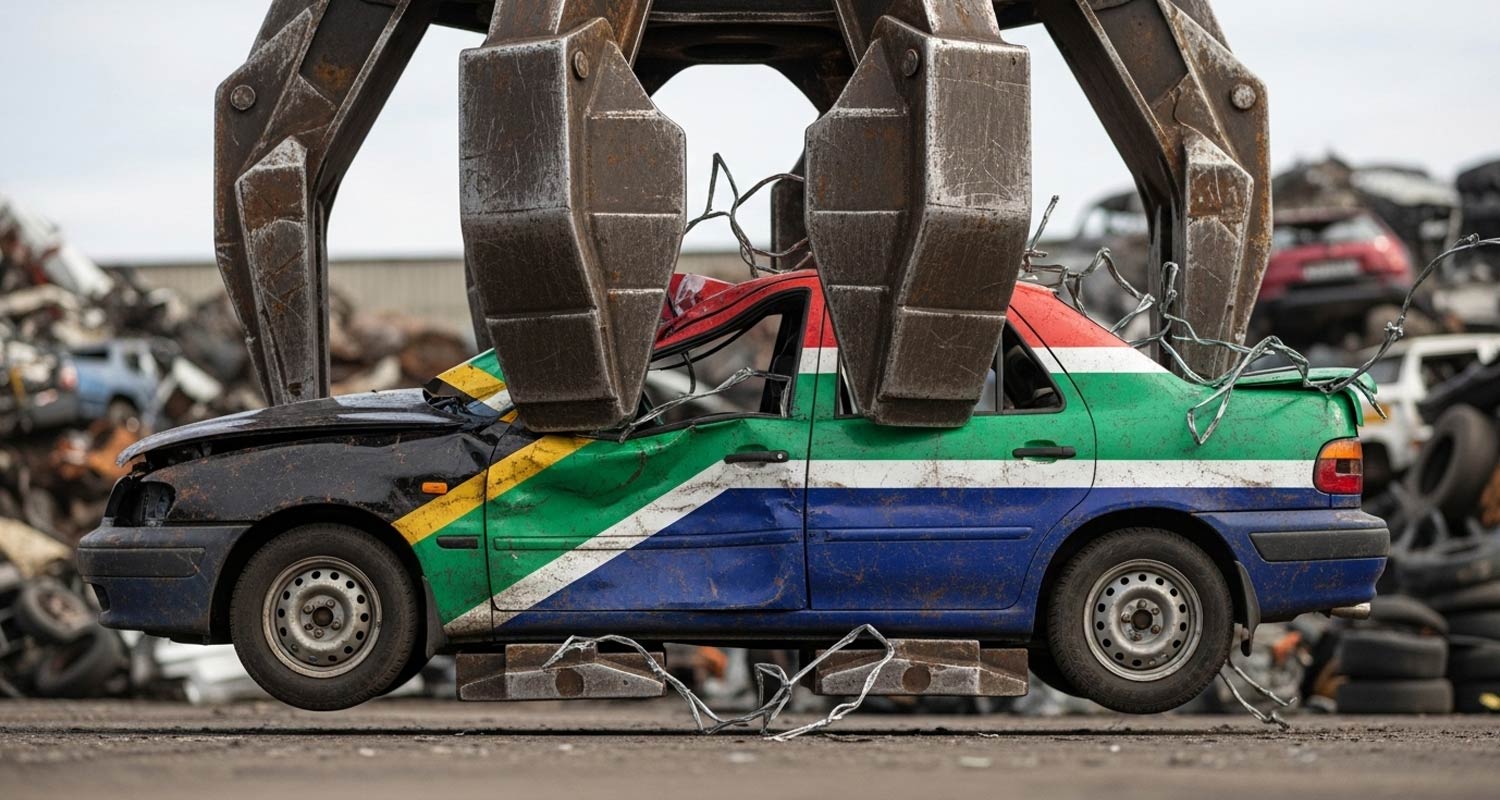
Without a clear local policy to align with these changes, South African manufacturers face the very real prospect of losing access to these key markets after 2035 – a scenario that threatens factory closures and tens of thousands of jobs.
The situation is dire
Alternative markets, particularly in Africa, are not yet attractive. The entire new vehicle market across the continent is just 1.1 million units, with South Africa accounting for slightly more than half that number. And while Africa’s population is growing rapidly, countries such as Morocco, Egypt and Ghana are developing their own vehicle manufacturing industries at a pace that easily outstrips South Africa’s.
Read: South Africa and Europe must forge new EV value chain, says BMW boss
The situation is dire. If South Africa wants to avoid seeing global original equipment manufacturers pull the plug and move production elsewhere, it needs to act – fast. Not next month. Not next week. Now. – © 2025 NewsCentral Media
- William Kelly is co-host of Watts & Wheels, TechCentral’s motoring show focused on new-energy vehicles